Overview -
Liege Lord: Emperor Harold Belmont
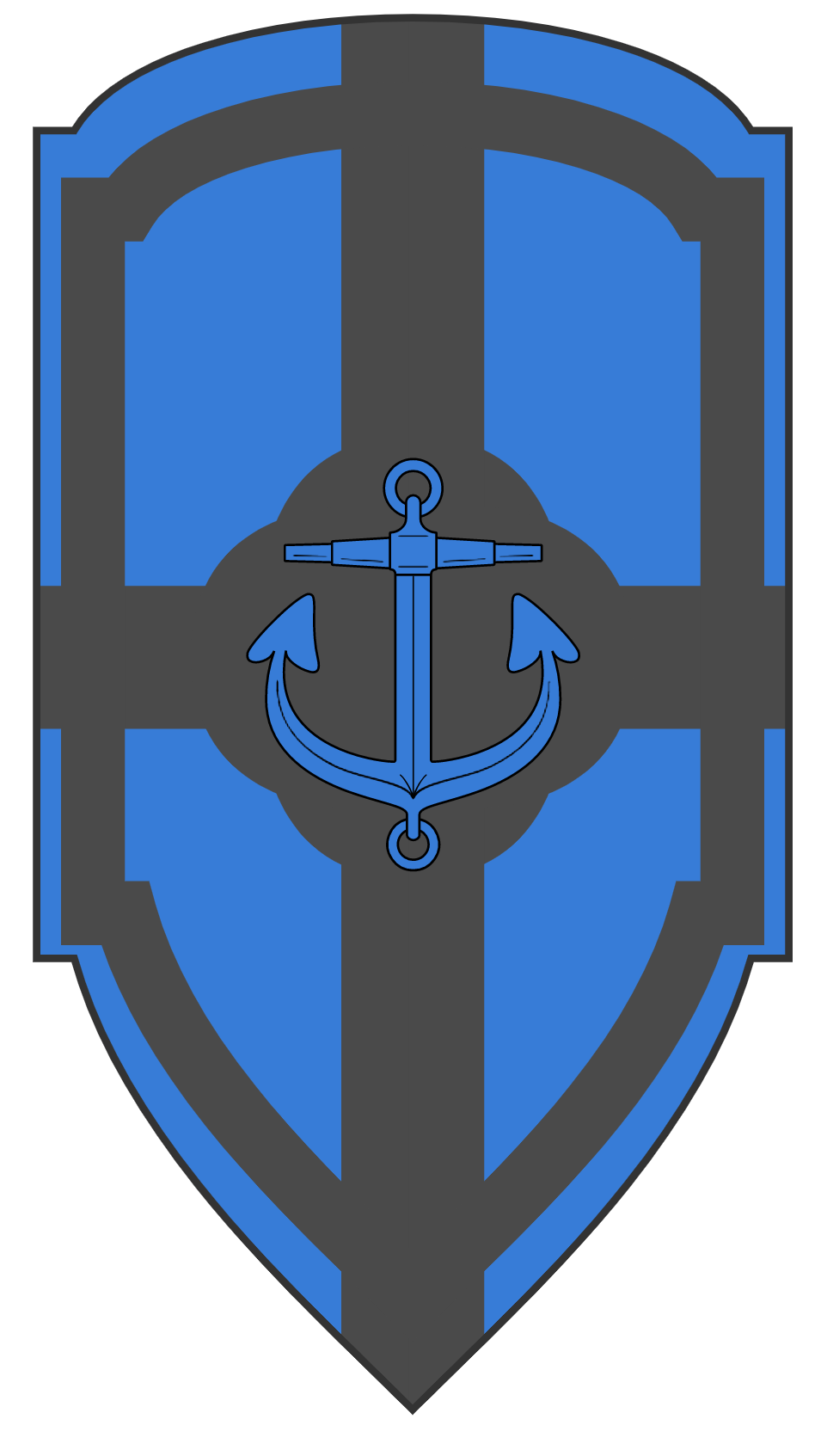
Sigil: The Anchor
Colors: Light Blue and Grey
Trademark Signature: Knowledge and Innovation
Population: 132,500
Description -
Sailing into Harbour Bay is an unforgettable experience that sets it apart from any other destination in Aeligord. The entrance to the bay is flanked by imposing fortifications on either side, framing a narrow passage with a sizable island at its center. The vibrant inner harbor is a hub of activity, bustling with boats and ships of all sizes that dock in the bay's various districts.
As the capital city of Nysonia, it holds an unparalleled status within the Kingdom of Ethyn as the economic powerhouse that drives the kingdom's commerce. It's a vital cog in the trade industry, and as such, it attracts an abundance of resources and wealth that has enriched the city's inhabitants.
The city's massive guilds are a testament to the breadth and depth of Harbour Bay's different trades, and their collective expertise has enabled the city to make some of the most significant technological advancements in the kingdom. Perhaps the most well-known achievement is the Tinkers Guild's steam power, which has revolutionized the way goods are produced and transported throughout the kingdom. The Sky Tram is one of the guild's most noteworthy achievements, showcasing their expertise in harnessing steam power.
Harbour Bay is divided into eight unique districts, each with its own distinct character and charm.
Government -
Structure: The government in Harbour Bay is unique in that the King himself resides on Harbour Island, which sets it apart from most other cities within Nysonia. The King's presence adds an additional layer of authority and prestige to the city, and his proximity allows for easy communication and swift action when necessary. The rest of the City is set up as the typical feudal system of government, with a lord in charge of the entire city itself. The lord has a council to help him with all of the different tasks that need to be taken care of within the city, including managing the economy, ensuring the safety of the citizens, and dealing with any political disputes that arise.
Politics: The Council of Harbour Bay was created to help govern the different districts of the city, and is comprised of a nobleman from each district, as well as the High Priest, the Grand Master of Knowledge, and the Grand Master of the Ivory Knights. The council meets regularly to discuss important issues and make decisions that affect the entire city. This council has a great deal of power and influence, and its members are respected and trusted by the citizens of Harbour Bay.
Code of Law: The laws within the city limits of the districts are made with decrees by the governing lord. Most of these laws are presented to him by the council, but he will always have the final say. The laws are enforced by a group of judges and law enforcement officers, including the city watch and the Ivory Knights. The laws of Harbour Bay are strict, but just, and are designed to maintain order and ensure the safety and well-being of the citizens.
Armed Forces: The City's armed forces are made up of Nobleman and Lords called to arms, the city watch, and the Ivory Knights. The nobleman and lords are expected to provide their own personal armies to aid in the defense of the city, and are given special privileges and authority in exchange. The city watch is responsible for maintaining order within the city, while the Ivory Knights serve as the elite defenders of the city, trained in the art of combat and equipped with the finest armor and weapons.
Defenses: Harbour Bay is a city that takes its defenses seriously. The city has a robust system of walls and fortifications that were built to withstand any possible enemy attack. These walls are high and thick, with towers at strategic points to provide a vantage point for archers and catapults. The city also has a moat that surrounds it, providing an extra layer of defense.
In addition to its physical defenses, the city also has a well-trained and well-equipped army. The Ivory Knights, a group of elite soldiers, form the backbone of the city's defense. They are highly skilled in combat and are equipped with the best armor and weapons available. The city watch is responsible for maintaining order within the city, and can be called upon to assist in defense if necessary.
Harbour Bay also has a navy, with ships that are used to protect the city's coast and trade routes. The navy is composed of highly skilled sailors and warriors, who are trained to navigate treacherous waters and engage in naval combat if necessary.
Culture -
Demographics:
Race Population:
Human (70%)
Halfling (20%)
Gnome (5%)
Dwarf (4%)
Elf (>1%)
Social Classes
Royalty (Upper Class)
Nobles & Lords (Upper Class)
Knights & Vassals (Middle Class)
Merchants & Craftsman (Middle Class)
Peasants & Serfs (Lower Class)
Languages:
Common (English)
Halfling (Hin)
Dwarf
Gnome
Local Holidays:
Name Day - The day the prince or princess is pronounced King or Queen.
Flowering Festival -A celebration of new life, when seeds are planted, foliage starts to bud, and flowers start to bloom. Days are getting longer and warmer.
Harvest Festival - A celebration of harvesting most of the crops. Trees are changing colors, Days are getting shorter, and cooler.
Day of Mourning - A celebration of the people of the past. Celebration of the gods, friends, family, Lords and Ladies that have passed on to the next life.
Guilds/Organizations:
Harbour Bay Trading Company (HTBC)
Architecture:
The architecture in Harbour Bay differs depending on what social class the area is as well as which district you are in because certain districts are much older than others which greatly changes the styles of buildings. Below is a brief description of the different materials used in the architecture of each social class.
Upper Class - Everything for the most part is available to the upper class. Buildings in this class are normally made from various stones (like grey, black, ivory, or marble stone) but have been known to use various types of bricks as well. Wood frames with wattle and daub (wood strips or sticks covered with clay) are used to create a Tudor like sub structures attached to the sides or tops of main buildings. Roofs are often made from slate shingles or wood shingles in various colors as well.
Middle Class - Most buildings in this class are built using timber frames with wattle and daub (wood strips or sticks covered with clay) to create Tudor style buildings. Some of the buildings would have various stones built into the foundations, chimneys, and various other parts of the structures. Roofs in this class would normally be made from colored wood shingles with some being made from thatch on the lower ends of town.
Lower Class - A lot of the buildings in the lower class are made from timber frames with wood siding or a mixture of clay and straw on the sides of the buildings to help seal them up. Most of these would be one or two room buildings big enough for a family to live. The roofs would be made from thatch or some lower end wood shingles.
Landmarks:
Economy -
Manufacturing: Harbour Bay is a center for manufacturing in the Kingdom of Ethyn. The city has a bustling manufacturing industry that produces a wide range of goods, from textiles to weapons. The city is known for its skilled artisans and craftspeople who produce high-quality products using traditional methods. The manufacturing industry is supported by the kingdom's abundant natural resources and skilled workforce. The city is home to several shipyards that produce both naval and commercial vessels. In addition, the textile industry is thriving, with many small-scale producers creating clothing, linens, and other fabrics. Other manufacturing sectors in the city include leather goods, pottery, and furniture.
Infrastructure: Harbour Bay has a well-developed infrastructure, with well-maintained roads and a network of canals and waterways that facilitate transportation and trade. The city has several bridges that span the canals and connect different parts of the city. The city's harbor is a bustling hub of activity, with ships from all over the kingdom and beyond arriving and departing daily. The city also has a network of public buildings, including markets, warehouses, and administrative offices, that serve the needs of the city's residents and visitors.
Main Export: The main export of Harbour Bay is textiles, particularly fine silks and cotton fabrics. The city has a thriving textile industry, with weavers, dyers, and tailors producing high-quality fabrics using traditional techniques. The textiles produced in Harbour Bay are sought after throughout the kingdom and beyond, and the city's merchants export large quantities of fabrics to other parts of the world.
Main Imports: Harbour Bay imports a wide range of goods from other parts of the kingdom and beyond, including food, raw materials, and luxury items such as spices and precious metals. The city's merchants are always on the lookout for new goods and opportunities for trade, and the city's location on the coast makes it a convenient hub for international trade.
Tourism: Harbour Bay is a popular destination for tourists, who come to the city to experience its vibrant culture and rich history. The city has a wide range of attractions, including theaters, taverns, brothels, tourney grounds, and the freak show circus. The city also hosts a wide range of festivals and celebrations throughout the year, including the Harvest Festival and the Summer Joust.
Resources: Harbour Bay is rich in natural resources, including fertile farmland, forests, and abundant mineral deposits. The city's location on the coast also provides access to a wide range of fish and other seafood. The city's natural resources are the foundation of its thriving manufacturing industry, and the city's skilled workforce and artisans are able to produce high-quality products using traditional methods. Additionally, the city's harbor and canals provide easy access to other parts of the kingdom and beyond, making it a hub for trade and commerce.
Geography -
Natural Formations: Harbour Bay is situated on a bay of the same name, which is a natural harbor that has been enhanced by the construction of breakwaters to create a safer port. The bay is surrounded by hills and cliffs, which provide a scenic backdrop for the city. There are also several smaller islands in the bay, which are popular destinations for tourists and fishermen.
Natural Resources: Harbour Bay is known for its rich natural resources, including timber, fish, and minerals. The surrounding forests provide a steady supply of timber for the city's shipbuilding and construction industries. The waters of the bay are teeming with fish, including salmon, herring, and cod, which are caught and processed in the city's fish markets. The hills surrounding the bay also contain deposits of copper, lead, and iron, which are mined and exported to other parts of the kingdom.
Local Fauna: The forests surrounding Harbour Bay are home to a variety of wildlife, including deer, bears, wolves, and smaller animals such as rabbits and squirrels. The bay and surrounding waters are home to a diverse range of fish, as well as seals and sea otters. In addition, there are many species of birds that call Harbour Bay home, including gulls, terns, and cormorants.
Local Flora: The forests around Harbour Bay are primarily made up of coniferous trees such as spruce, pine, and fir. There are also deciduous trees such as maple and oak, as well as smaller plants and shrubs. The hills surrounding the bay are covered in heather and other types of brush. In the spring and summer, the forests and hillsides are ablaze with wildflowers, including bluebells, buttercups, and daisies. The bay and surrounding waters are also home to a variety of seaweeds, including kelp and bladderwrack