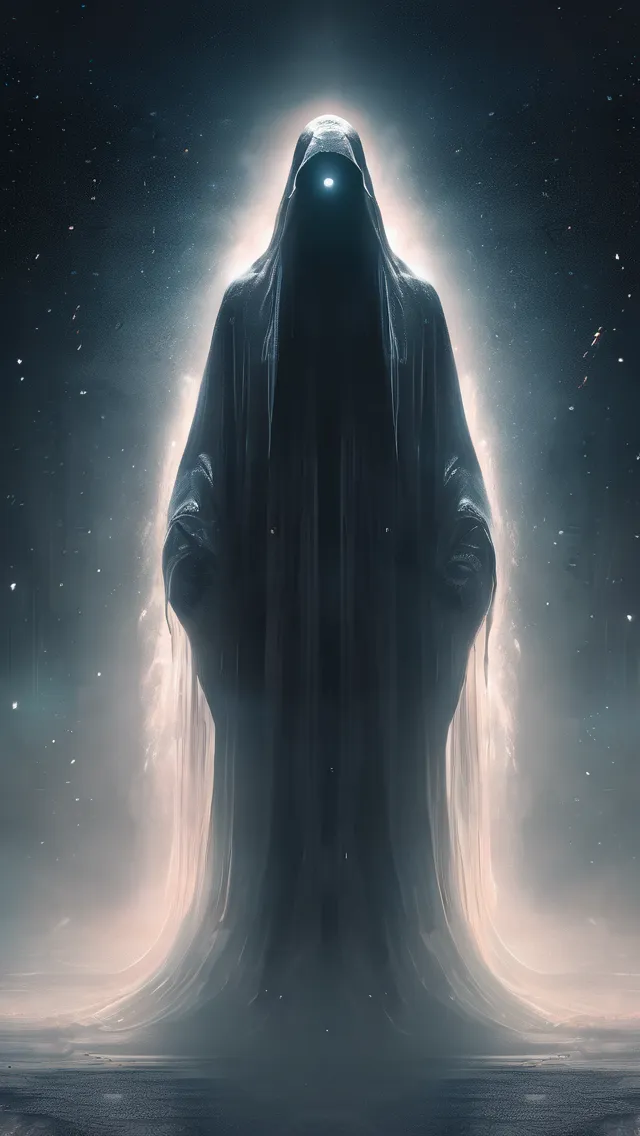
Kelemvor the Dead Guide
Kelemvor is the god of death, the guide to the afterlife, and the grave judge
"Look not upon our sins, Master of Scales, but measure the worth of your most grateful dead.”
— A basic prayer to Kelemvor, Book of the Dead
Lord of Death
Kelemvor is the High God of Death, a powerful and final domain, and embodies the simple transition from life to the afterlife. Kelemvor is a neutral figure, favouring no person or creed. He simply ensures that the soul passes onto the afterlife after death. Kelemvor appears as a solemn and imposing figure. Clad in a simple hooded robe with no features visible underneath, his presence is as heavy as the slamming of a stone tomb.
When Kelemvor first manifested, the eternal order of existence shifted; life was granted a finite span, and death became a certainty. As the first mortals perished, Kelemvor was there to guide them to an afterlife. As the first gods died, Kelemvor was there to ensure their passing. For once death is dealt, it is final.
The Dead Guide
Kelemvor is said to appear to spirits as they leave their mortal body. To most faiths, Kelemvor is not seen as a malevolent figure. He is never the cause of Death, only its arbitrer. He is however neither seen as benevolent, as only powerful and rare magic can persuade the Dead Guide to allow the return of a spirit from the afterlife.
The Grave Judge
The Grave Judge is impartial, no bias moving his judgement.
Titles | Death The Dead Guide The Grave Judge Grim Reaper |
|---|---|
Known Aspects | |
Domain | Death |
Alignment | LN |
Plane | The Void |
Adjective | Kelemvorian |
Ideals & Tenets
Death is Inevitable.
Kelemvor teaches that death is an integral part of existence. His followers believe that all life must come to an end, and rather than fear it, they should embrace the cycle of life and death. This acceptance of mortality fosters a deeper appreciation for life itself, encouraging individuals to live fully and meaningfully.
Guide the Soul.
Those who serve Kelemvor are tasked with guiding souls through their final moments. This includes performing burial rites, comforting the grieving, and ensuring that no soul is left wandering in confusion. As well as having an important role in such funeral rites, his followers are also encouraged to offer guidance to those who fear death and their possible afterlife.
Honour the Dead.
Kelemvor’s devout are encouraged to honour the memories of those who have passed. This can be done through rituals, memorials, and offerings left at temples.
Worship, Faiths, Symbolism
Symbol | A set of scales, or a skull |
Personification | A hooded figure, in either dark or white robes, with no visible face. |
Avatars | |
Divine Beasts | |
Colour | Black |
Worshippers | Gravetenders |
Priests of Kelemvor perform rituals during burials, guiding souls through their final transition and offering prayers for the departed. These ceremonies are often quiet and reflective, honouring the deceased rather than celebrating life.
His temples vary in design. Some austere and stark, reflecting the emptiness of death, while others are adorned with mementos left by loved ones. Offerings may include tokens of remembrance, flowers, lit candles, objects of sentimental value, or even letters written to the deceased.
Most common folk pray to Kelemvor at some time in their life, whether that is in hope of staving off death or to guide the souls of their beloved departed. His most devout followers are usually found among those who tend to the dead and perform burial rites. They are tasked with easing the passing of the dying, treating their mortal remains with great care, and ensuring no foul presence will touch their remains.
Mythos & Deeds
The Birth of Death
It is said that Kelemvor came into being when Death first touched the Mortal Realm. Before this, angels and demons had been slain, yet neither truly had a soul. However, when the The First Dragon was slain by Tiamat, Death came into the cosmos.
Some believe the death of the The First Dragon created Kelemvor while others believe this is simply when he first saw fit to emerge unto the world, being born of the Void before Time. In any case, at The Splintering, Kelemvor emerged to bring order and balance to a chaotic cosmos where life could now meet its inevitable end. Coming into the Cosmos as the first being departed it, Kelemvor would prove that the cycle of life and death had now begun, and he would guide the souls that left for the afterlife.
The Judgment of the Gods
In tales told by scholars and priests alike, Kelemvor is said to have judged many mighty gods as they were destroyed in the War of the Gods. They say when a god falls, the world is shaken as the Grave Judge ensures the soul of the god passes from this existence.
Divine Relations
Shaytas
Kelemvor and Shaytas as cosmologically opposed. Shaytas being a god of that which does not die but limpers on in atrophy and undeath.
Sôlus
Kelemvor is also opposed to Sôlus, the god of life, but this is seen more as a necessary and natural balance. Their domains are two sides of the same coin, each force necessary and existing in a cycle.
Saints and Chosen
Holy Orders, and Organisations
The Graveguard. A holy order devoted to protecting gravesites and destroying undead. The order includes priests and acolytes who tend to graveyards and perform burial rites, but also clerics and paladins who learn divine magic to protect both the living and the dead against undeath. The order also has an inquisitorial arm focused on exorcism, banishing spirits, and hallowing grounds infested with undeath.