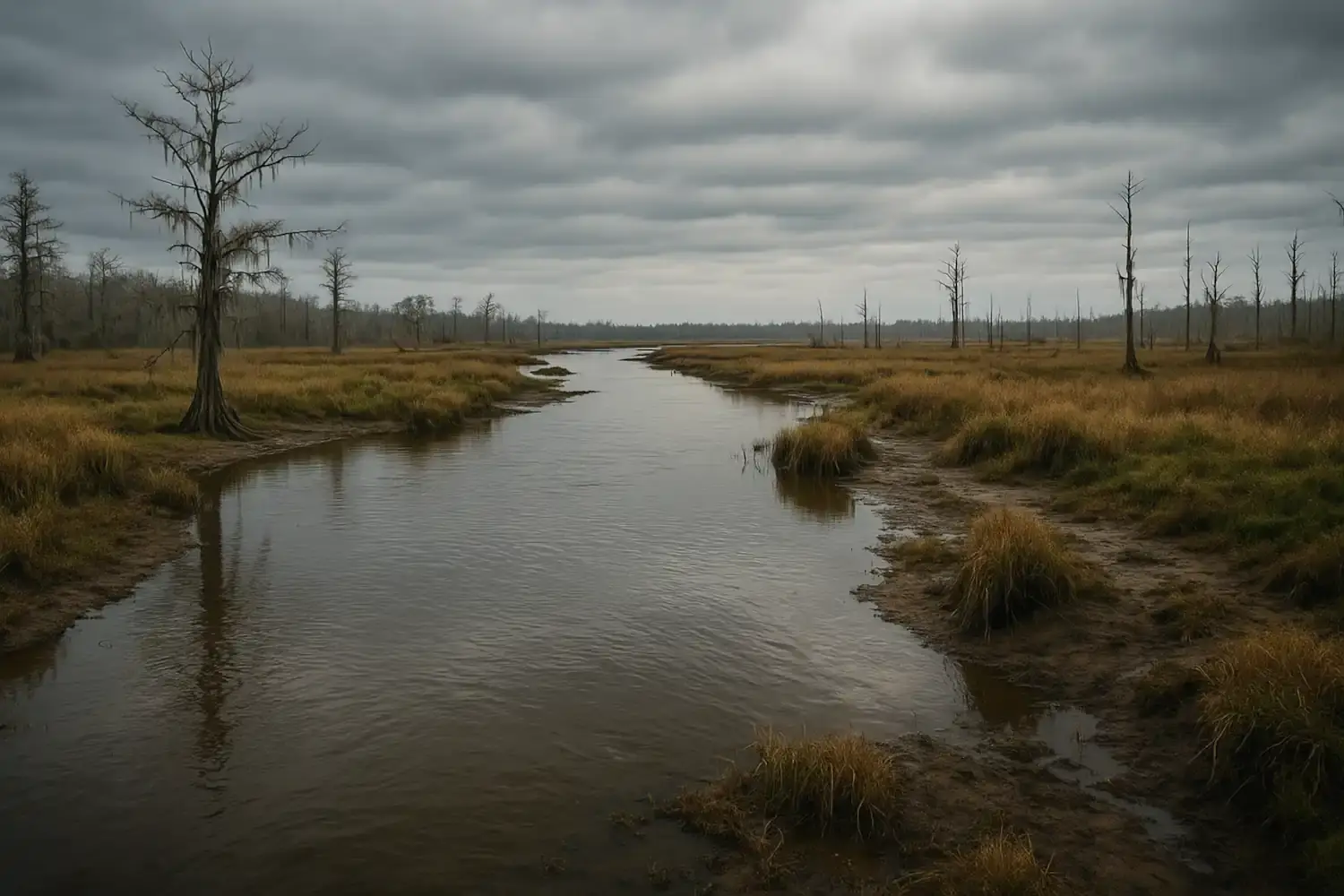
Shrine of Semuanya
(Drowned Forest, Upper Dunwater River)
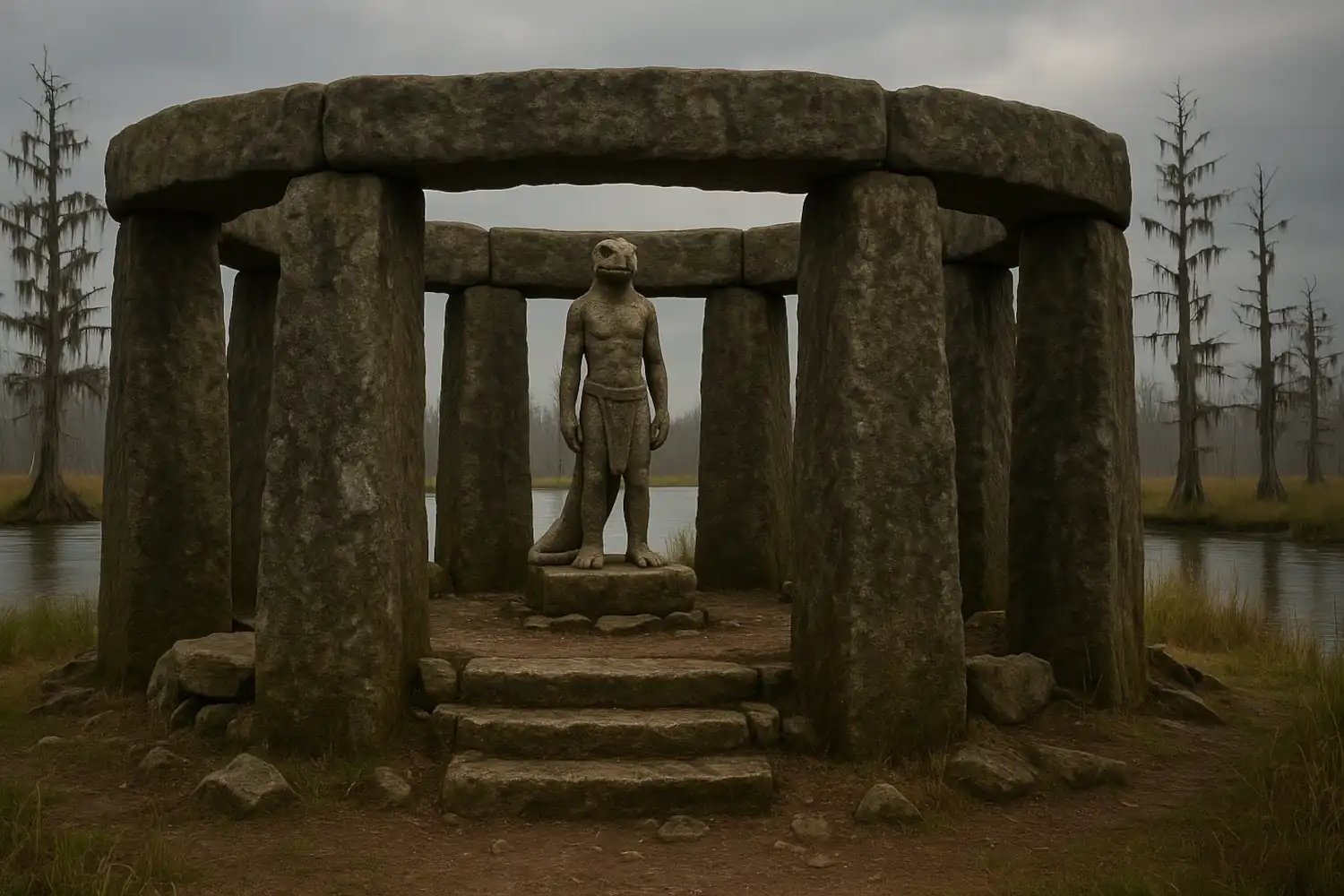
Where the Dunwater River reaches the southern edge of the Drowned Forest, a ring of ancient standing stones rises along the riverbanks. The stones are slick with moss and worn smooth by centuries of floodwater. At the circle’s heart stands a low altar, blackened by countless fires, and the weathered statue of a lizardfolk, the god Semuanya, eternal and unchanging.
The shrine has stood untouched for as long as the lizardfolk remember, a sacred place dedicated to Semuanya, god of survival, instinct, and the endless cycle of life. A thin plume of smoke often rises from the altar, visible for miles across the marsh, a sign that the shrine remains tended and alive.
The Keeper of the Shrine
At all times, a single lizardfolk shaman dwells at the shrine, serving as its caretaker. This role is one of the highest honors among their kind, reserved for those whose faith is absolute.
The Keeper is always an elder shaman who has become infertile, their body no longer able to breed.
The Keeper lives alone, maintaining the altar, cleaning the stones, and making daily offerings. They remain here until death, when another is chosen to replace them.
The current Keeper is both devout and lonely. Years of solitude have sharpened their faith to the edge of fanaticism, yet they are not unkind. Any creature who approaches the shrine in peace and offers tribute to Semuanya is welcomed. The Keeper eagerly shares the stories and teachings of the god, grateful for company, though their fervor and intensity can be unsettling.
The Rituals of the Full Moon
Each full moon, the shamans of the Dunwater tribe travel upriver in long, narrow boats. They journey only by night, their vessels lined with rows of small candles that float through the fog like drifting stars.
Upon arrival, they burn a reed and clay effigy upon the altar, a renewal of Semuanya’s eternal cycle of death and rebirth. They chant deep, rhythmic hymns in the lizardfolk tongue, their hissing voices echoing through the Drowned Forest.
The gathering lasts three to four nights, after which the shamans return home in silence. When they reach their lairs, they extinguish their candles, symbolizing the god’s rest until the next moon.
In times of war, the full-moon rite takes on a darker aspect. The shamans perform a single sacrifice, offering one life, usually a prisoner or enemy, to Semuanya as payment for strength and survival. The victim is slain at the altar and left to the swamp, that their essence might feed the cycle of life.
The Pilgrimage of the Spring Equinox
Once each year, during the spring equinox, the shrine becomes the heart of the Night of Scales, the holiest of lizardfolk festivals, and the season of breeding.
Hundreds of boats glide silently up the Dunwater beneath the moonlight, each carrying lizardfolk pilgrims and flickering candles. The procession moves in utter silence, the only sounds the slow dip of oars and the low murmur of the marsh.
When they arrive at the shrine, silence shatters. For three nights, the swamp roars with the sound of drums, flutes, and chanting. Fires blaze along the riverbank as the lizardfolk dance, hunt, and breed in ecstatic celebration. Their scales are painted in ash and clay, and offerings of fish, eggs, and bone totems are laid upon the altar.
At dawn on the final day, the drumming ceases. The pilgrims return to their boats, gliding downriver in solemn quiet. One by one, the candles are extinguished until the Dunwater lies dark once more.
The Shamans of Semuanya
Lizardfolk shamans serve as both priests and custodians of the natural balance. They ensure the tribe breeds, hunts, and endures as Semuanya commands.
During the spring equinox, they are compelled to mate and bless the clutches of eggs in the god’s name. To refuse is to deny the cycle itself.
When a shaman becomes infertile or barren, they decline and make the lone journey to the shrine to performed ritual suicide. Only one, among the infertile or barren is choosen to server as the Keeper of the Shrine, tending to Semuanya’s holy place until death, the greatest of honors.
This act is not seen as tragic, but as the ultimate offering: a surrender of self in service to the tribe’s survival, ensuring the cycle endures unbroken.
(See: Ghosts of Saltmarsh, Chapter 1 — “Drowned Forest Oddities #3”)
About Semuanya
(The Survivor, the Watcher, the Breeder)
Semuanya (pronounced se-moo-ÆN-yah) is the patron deity of the lizardfolk, the god of survival, instinct, and the natural cycle of life. Semuanya embodies the cold-blooded pragmatism of their people: the will to endure, to hunt, to breed, and to persist no matter the odds.
Neither good nor evil, Semuanya is utterly amoral and unfeeling, a reflection of reptilian detachment from sentiment and morality. To lizardfolk, emotion is weakness, and survival itself is sanctity.
The Dual Aspects of Semuanya
Semuanya is both male and female, a dualistic and androgynous god who shifts according to the needs of the tribe.
In times of hardship or war, the god is venerated as the Watcher, the Survivor, or the Hunter, the masculine aspect who stalks through the primordial jungles seeking prey and enemies alike.
In times of peace and abundance, Semuanya becomes the Breeder, the feminine aspect who lays eggs in the warm earth, guarding the next generation beneath the soil.
This dual nature reflects the balance of instinct and adaptation, of creation and destruction, both necessary for survival.
The Way of Semuanya
To the lizardfolk, Semuanya is not a distant deity but a presence found in every act of endurance: the warmth of a sunning rock, the cycle of egg and hatchling. Worship is not born of devotion, but of respect for the order of nature.
Sacrifices are rare, never for mercy but as a sign of acknowledgment. When survival is threatened, the tribe calls upon Semuanya to strengthen its scales.
The god’s teachings are simple: live, endure, and breed. Those who fail to do so have fallen out of balance with the natural order.
The Faith
Though Semuanya is the god of lizardfolk, the faith is not closed to others. The lizardfolk of the Dunwater welcome any species who come in peace and seek to honor life’s endurance.
Outsiders who approach the Shrine of Semuanya bearing offerings, whether of food, labor, or reverence are treated with respect. The lizardfolk believe that all creatures who struggle to survive are part of the god’s endless cycle.
To the faithful, Semuanya cares for all life, but favors none.