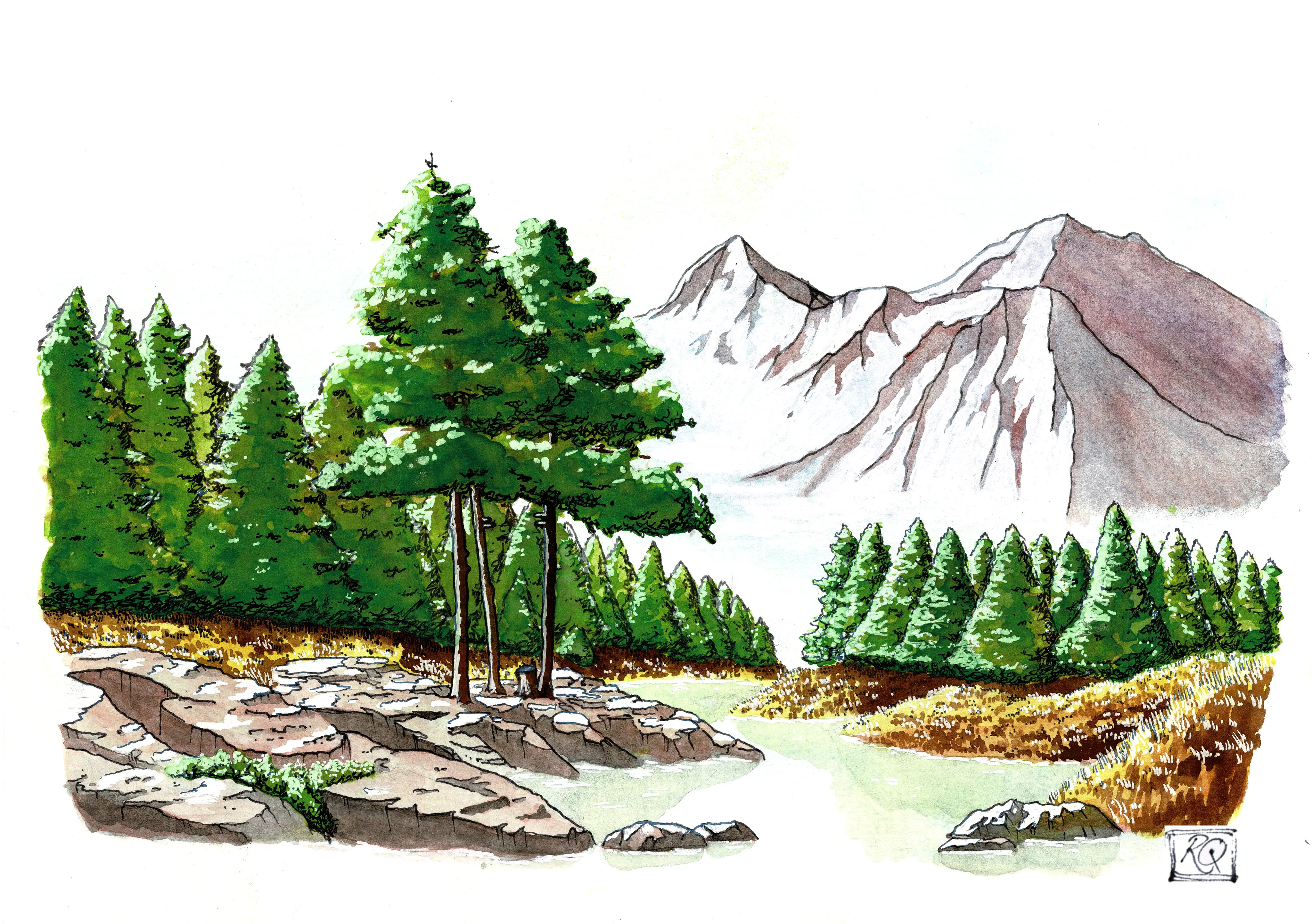

Southendia - where the wind sings through the valleys like a choir of ghosts and the mountains loom like ancient sentinels, watching, waiting. The land here is harsher, the soil thinner, the air sharper. It is a place for those with sturdy boots and stouter hearts, for the mountains do not forgive the careless.
-- Sir Francis de Marr, knight
Tucked into the southernmost reaches of the Valley of Endon, the Duchy of Southendia is a land apart. It does not roll in gentle slopes like Greenmount, nor does it stretch out in endless forests like Mannic. Instead, it rises - steep and craggy, a highland realm hemmed in by the mountains, where the Withywindle River is still young and swift, carving through gorges and feeding icy streams that tumble down from the peaks.
The Settlements of Southendia
Small, walled settlements are common here, but close to the rivers and the lowlands, and away from the giant-ruled mountains. The most significant of these settlements are:
The land is colder here, drier too, the wind forever chasing itself across the moors and rocky outcrops. Summers are brief but bright, and winters - well, those who live here do not speak of them lightly. The snow lingers long, and the frost reaches deep, but the people endure, as they always have.
The River and the Pass
The beating heart of Southendia is Bellswatch, a city of stone and timber built along the banks of the Withywindle. It takes its name from the great brass bells that hang in the watchtowers, ringing out warnings in days gone by. To the southeast, the Iron Pass is the only way through the mountains for sixty miles in either direction, and so Bellswatch has always been a place of trade, of travelers seeking refuge, of soldiers standing guard against whatever might come creeping over the peaks.
The city itself is an open and welcoming settlement, busy with barges and caravans. Inns and market squares bustle with traders from Endon, Greenmount, and the dwarven halls below, while further up the slopes, the great watchtowers rise, their sentries ever-vigilant against the unknown.
The mountains to the south of Southendia are riddled with tunnels, halls, and strongholds of the dwarves, their stone doors hidden from all but those who know where to look. The greatest of these is Heimflad, a city as old as any kingdom, its halls carved into the bones of the world itself. Here, the forges never cool, and the fires never die, their glow reflecting off the gold-veined stone like embers trapped in the rock.
Other dwarven cities are scattered beneath the range - some thriving, some abandoned to darkness. The old roads beneath the mountains, if one dares to walk them, are long and winding, stretching out toward Greenmount, Endon, and beyond. Few surface-dwellers have seen their depths, and fewer still return to tell of them.
The Ruins of the Giants
But the dwarves were not the first to build in these mountains. Long before men, before the elves, before even the dwarves, the giants ruled here. Their ruins still remain - massive stone fortresses perched on lonely cliffs, their names half-forgotten, spoken only in whispers by those who still study the old tales.
Agdu-Skye, the Sky Fortress, sits atop a sheer peak, its walls broken but its towers still defiant against the sky. Agdu-Ild, the Fire Keep, is little more than shattered stone now, but in its depths, the blackened remains of something ancient still linger, scorched into the rock itself. And then there is Agduvar, the Stormlord's Hall, a place of silence and shadow, where even the boldest hunters dare not tread.
The giants are dwindling, their age ended, but their legacy remains, half-buried in the snow, waiting to be unearthed.
The Villages of the Highlanders
Outside of Bellswatch, the land is sparsely settled. Those who live here do not do so for comfort but for necessity, carving out a life in the highlands with stubborn grit. The villages of Southendia are small, huddled against the hills or nestled in the shelter of the trees, their people wary of outsiders but fiercely loyal to their own.
They farm where the soil allows, raising hardy crops that can withstand the chill, and where the land fails them, they turn to sheep, their flocks grazing on the wind-bitten moors. Hunters and trappers ply their trade in the sparse woods, always wary of the ruins and what may still lurk within them.
A Land of Hardship and Glory
Southendia is not a land for the faint-hearted. It is a place of cold winds and hard stone, where survival is won, not given. And yet, there is a beauty here too - a raw, untamed majesty that seeps into the bones of those who walk its highlands. The sky is wider, the stars brighter, the silence deeper.
For those who seek riches, Southendia offers little. But for those who seek challenge, who crave the touch of the wild, who wish to stand where giants once stood and hear the echo of the past in the wind - there is no place quite like it.
And so the bells of Bellswatch continue to ring, the mountains continue to stand, and the people of Southendia endure, as they always have, and always will.
The Riverlands
The Riverlands of Southendia are a patchwork of golden fields, rolling orchards, and slow-moving tributaries that feed the mighty Withywindle River. This fertile valley is the duchy’s breadbasket, its farmlands stretching as far as the eye can see, broken only by the occasional windmill or market town.
Life here is steady, dictated by the rhythms of the river, and though the Withywindle’s gentle currents nourish the land, the locals respect its hidden depths. Tales of water spirits and ancient things lurking beneath its surface abound, and on misty mornings, farmers swear they hear voices rising from the water, calling in languages long forgotten.