This is the story that nans tell their children before sleep…
Millions of years ago, in the vast Outer Nothingness, there was a battle between Sarn, the God-Maker, and Nihaz, the God-Unmaker. In that fateful clash, Sarn was defeated. But the Gods are immortal, and so Nihaz could not simply destroy his enemy. He needed another way to ensure his victory.
To seal Sarn away, Nihaz twisted a fragment of Reality itself, forging it into a planet-shaped prison — the world we now call Sarnout. This prison-world was designed to suppress Sarn’s creative powers, locking him away for eternity.
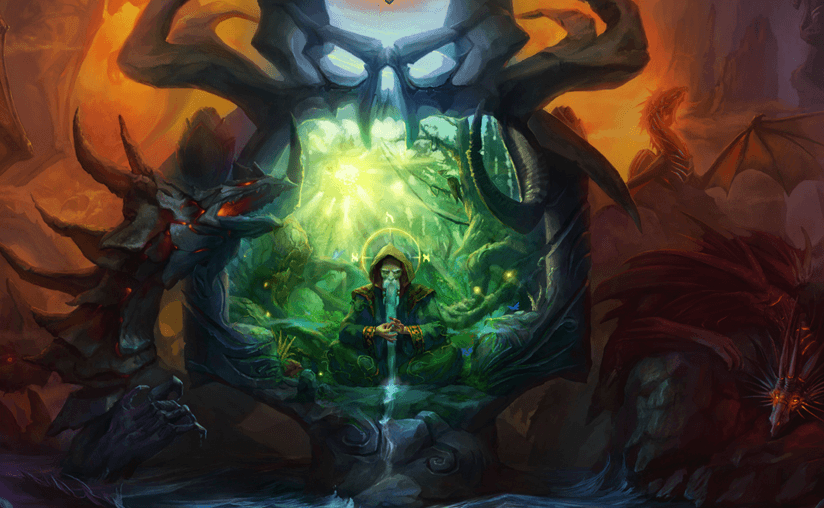
But to maintain the prison, Nihaz needed guardians. He called forth dragons, mighty magical beings from beyond the world. Among them were the Twelve Wardens, the Great Dragons, creatures of immense power. To these twelve, Nihaz granted a fraction of his own might, ensuring that their very existence upheld the integrity of Sarn’s cage.
The dragons are the oldest and most mysterious beings, not native to Sarnout.
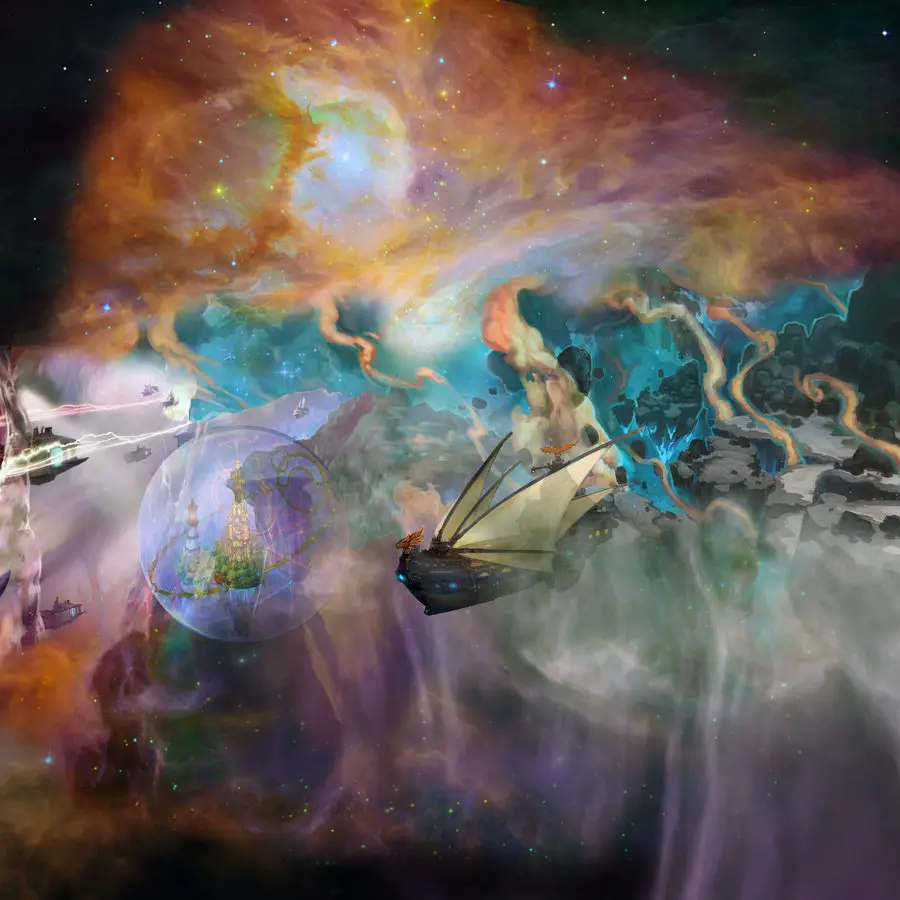
“The Void Dragons... I have heard they dwell in the abyss between worlds, their wings stirring the starry winds. In their image, the Great Dragons who guard Sarn’s dungeon were once made…”
Since Sarnout was forged by the God of Darkness, it was a lifeless, inhospitable wasteland — a world where only dragons, immune to absolute cold and searing heat, could survive.
For millions of years, the Wardens fulfilled their duty, guarding the prison without fail. But then — a meteorite fell from the sky.
Its fragments were scattered across the world. To this day, they are used to forge the strongest armor, weapons, and ship hulls. But most importantly — the meteorite’s metal has a unique property: it repels the destructive forces of the Astral.
When the meteor struck, it shattered a part of Sarnout, killing three of the Warden Dragons and weakening the chains that bound Sarn.
Taking advantage of the cracks in his prison, Sarn began to create.
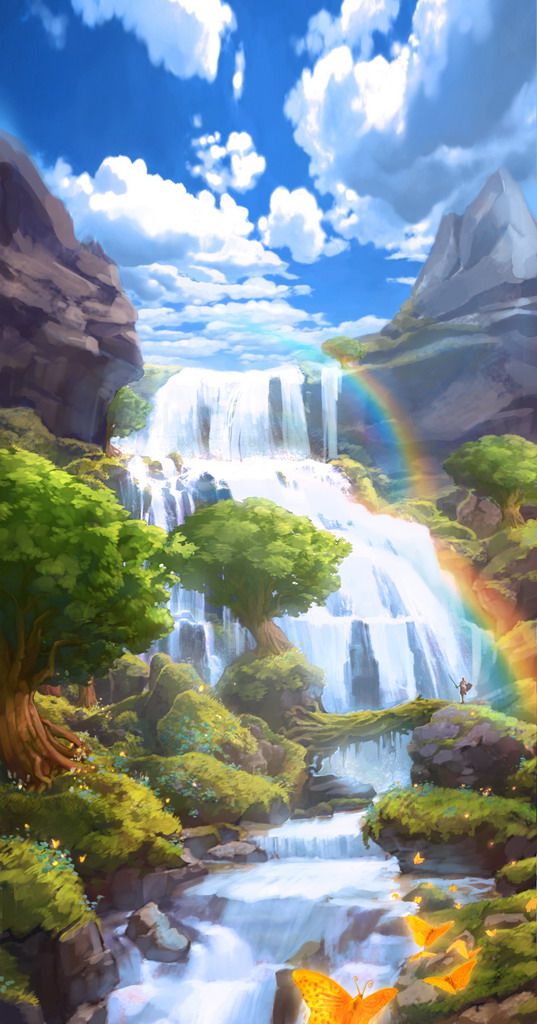
Over millions of years, he reshaped the once desolate Sarnout — a land of snow deserts and lava fields — into a blooming, breathing world. But Sarn’s true work was only beginning. He set out to forge living beings — creatures that could destroy the Dragons and free him.
His first creation was the elves. But Sarn had failed — his children inherited too much of his own nature. They were creators, not destroyers. They longed for beauty and life, not chaos and death.
So he tried again.
He crafted many races, seeking the perfect combination of destructive will and magical potential.
The Orcs and Ogres were powerful warriors, filled with rage and destruction, but poorly attuned to magic. Other races were too creative, too drawn to order rather than chaos.
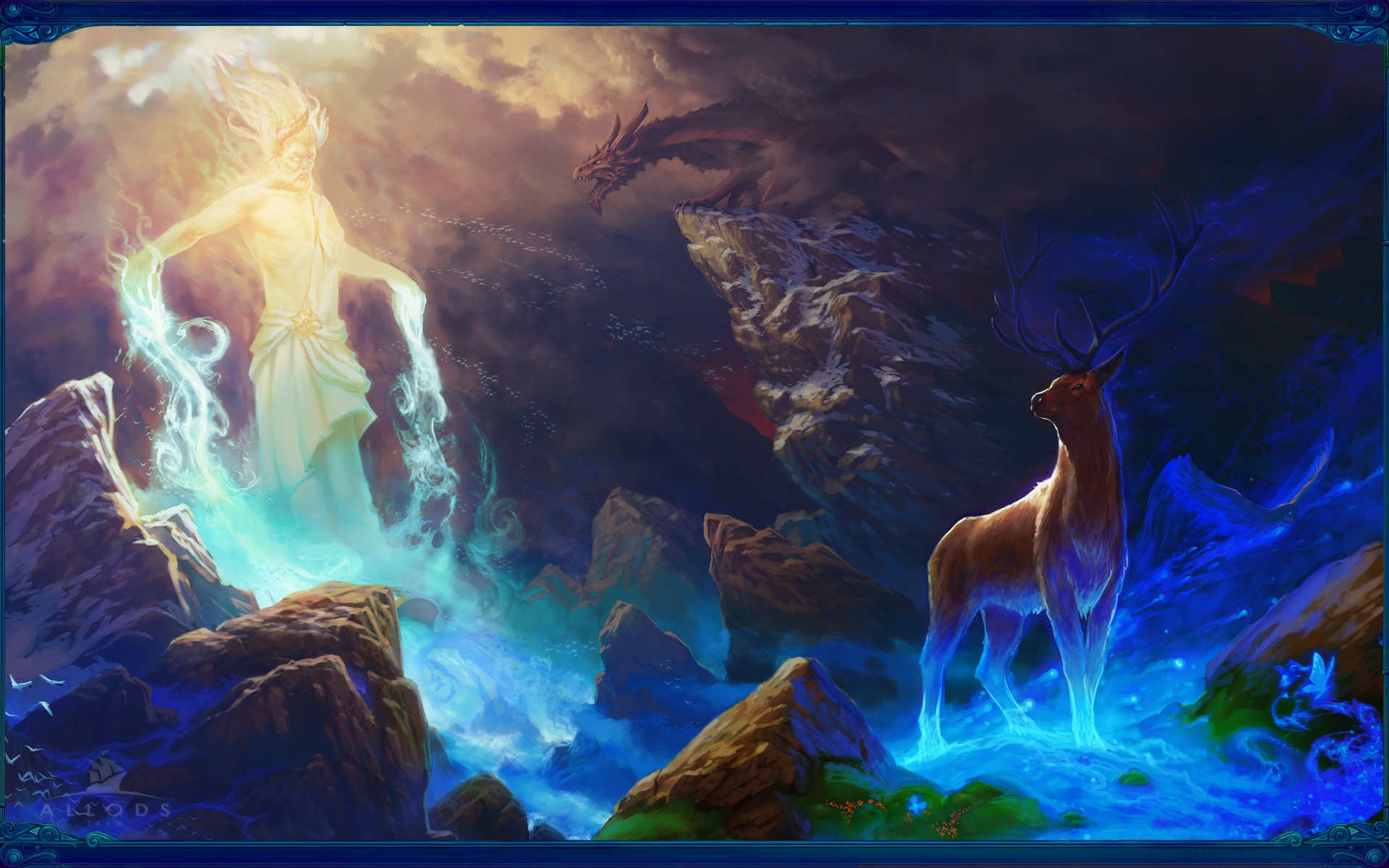
Finally, Sarn succeeded. He created the people of Džun — a race that embodied all the traits he needed.
Of course, the Warden Dragons noticed Sarn’s growing influence and tried to stop him. They hunted his children mercilessly, seeking to stamp out his creations before they could rise against them.
But the people of Džun fought back. They hated the Dragons for what they had done, and they dedicated themselves to their destruction. Dragon Hunters of Džun died by the thousands, driven by their unyielding desire to free the world from the Wardens' rule.
The war raged on. The Dragons, once eternal, began to fall.
Realizing they could not win, the Dragons called out to their master, Nihaz, begging for his aid. And he answered them —
With laughter.
He had no intention of saving them.
In the end, the people of Džun hunted down and slew eight of the twelve Warden Dragons. The last, the Fire Father, escaped, vanishing into the depths of the world, never to be found.
Today, only a few lesser dragons remain, hiding from the gaze of mortals. The great beasts of old — the jailers of Sarn — are gone.
And Sarn?
He waits.
For the last chains to break.