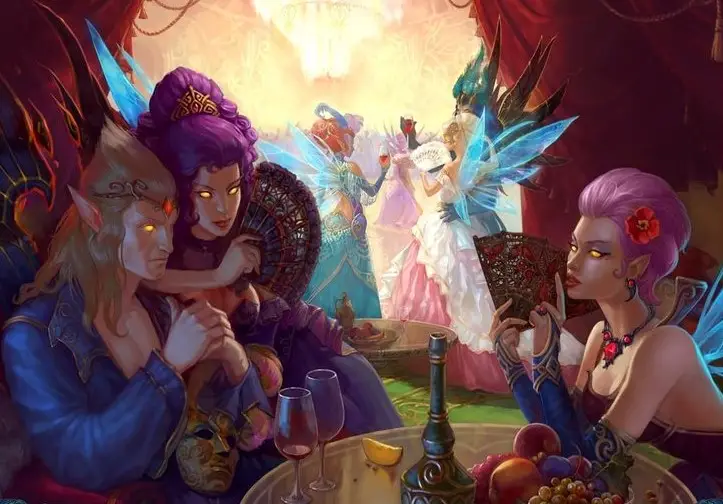
The New Elves (2100 BGC)
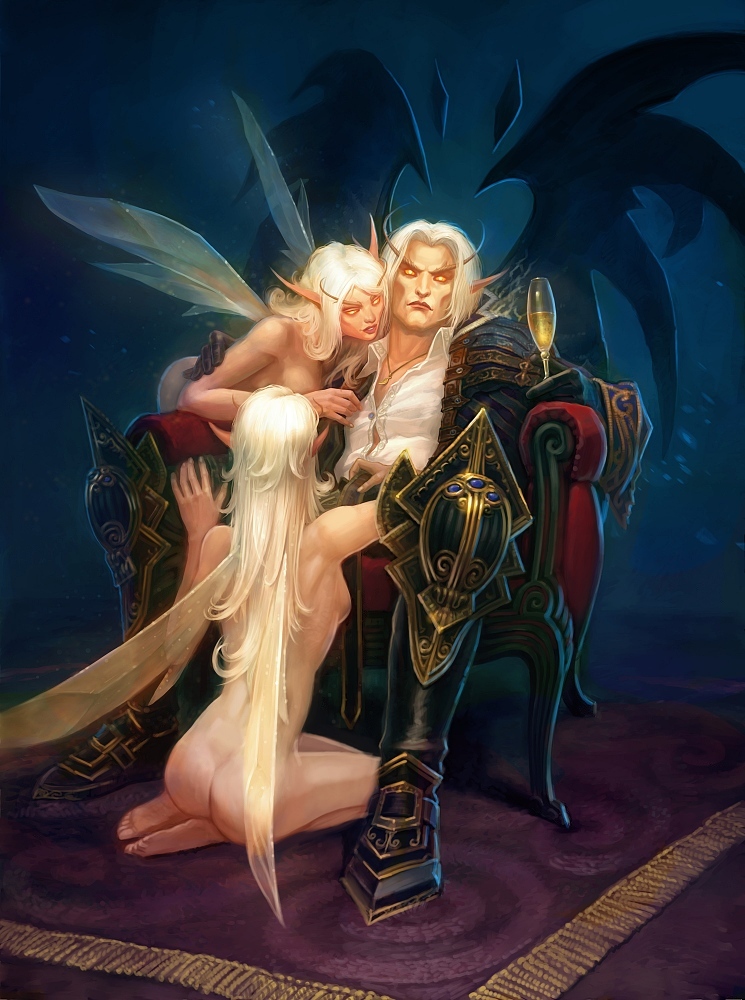
Thus, the new elves were born. Not everything went as planned: their lifespans doubled (to about 300 years), aging came only a few months before death, and the wings they developed allowed them only to hover low above the ground.
Undoubtedly, by refining the Transformation process and repeating it, the elves would eventually have achieved all their goals.
But the need had already vanished: the world had changed.
The Džuns had destroyed nearly all the Dragons – and yet their own civilization perished under a mysterious Curse. New human races began to claim the world. And once again, the elves became the most beautiful beings in Sarnout.
But more importantly: it wasn’t just their physiology that changed. The psychology of the elves shifted as well.
The death of the Dragons – the most beautiful beings in the world – proved that Beauty is not a reason to survive, nor a justification for others to die.
Neither is Strength: the Džuns, the slayers of Dragons, died too.
So what remains?
Nothing.
There is nothing in this world that grants the right to live. Anything can happen. Anyone can die.
And so, the only rational response is to simply live – and take from life everything it offers.
Thus, the concept of Pleasure became central to elven life – the only goal worthy of a mortal being.
The elves began their lives anew. They tried to forget the past – and succeeded.
In his Chronicles, Nayan notes that the history of their race began anew in the year 2100.
The past – a half-remembered, happy childhood dream.
The elves awoke and started life again almost from a blank page.
“That’s why there are so many white patches in the history of the world, and in the history of the elves,” Nayan laments.
“But that's all we have. And there’s no one left who can tell us more than the few ancient elven manuscripts in my library – of which so very few remain.”