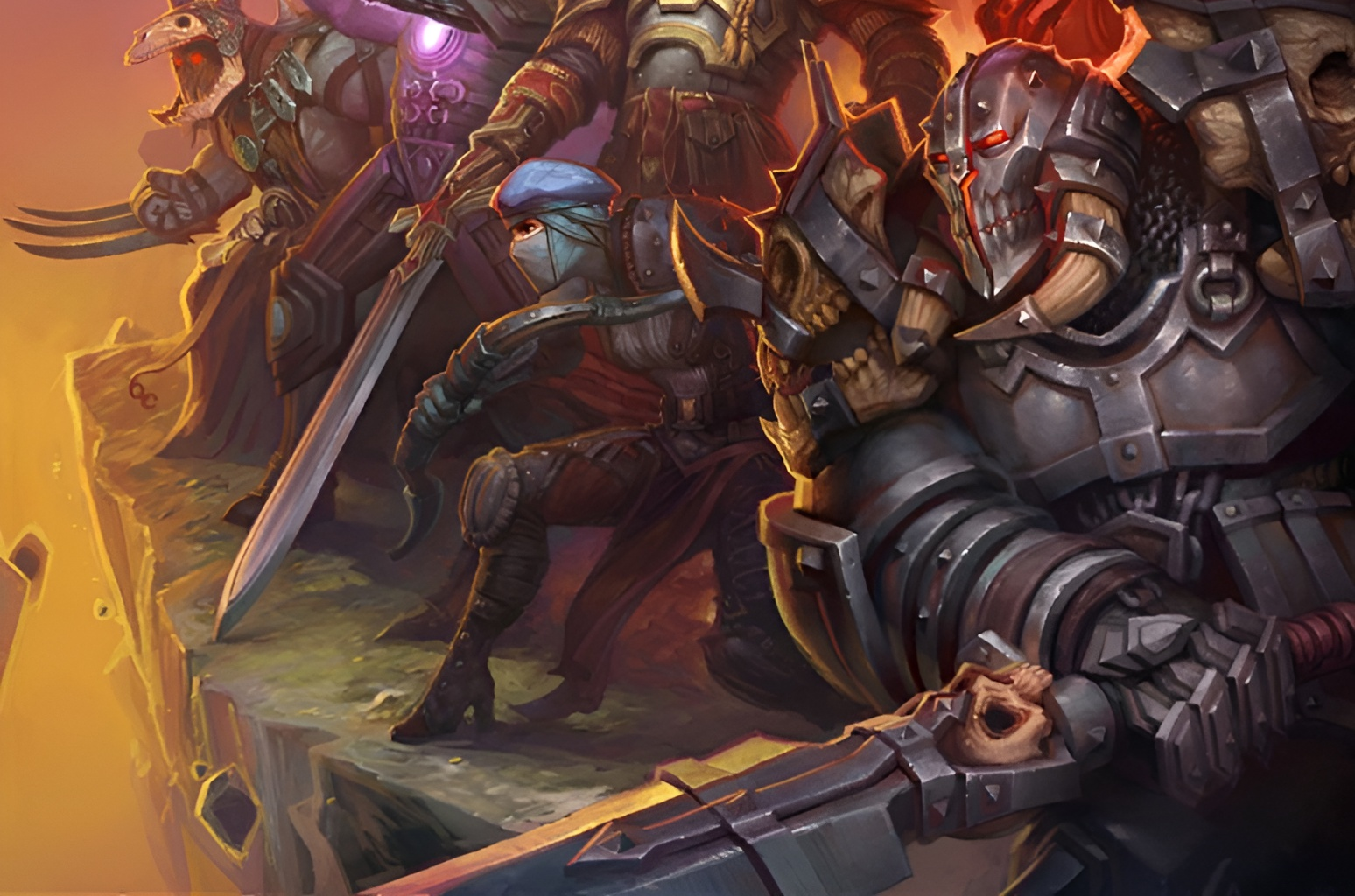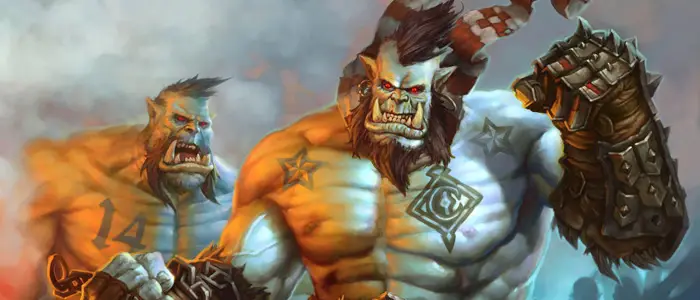
By the beginning of the New Era, orcish tribes had been scattered across various lands. After the Cataclysm, the orcs found themselves in a dire situation — without their own Great Mage, they had no way to defend their territories from Astral consumption. As a result, countless orcs perished, and only those who remained on allods controlled by Great Mages survived. However, these allods were dominated by populations that were largely hostile toward orcs. The once-mighty Horde had been reduced to mere remnants.
The only allod where the orcs could feel at least somewhat at home was Izun, which had survived thanks to the presence of the Great Dragon Silaya. As a magical being, her very existence anchored the allod, preventing it from being consumed by the Astral. Here, several orcish clans endured, though they were constantly warring among themselves. However, Hadagan soon sent a mage to the allod, and Silaya was forced to leave.
Elsewhere, the situation was even more dire — on nearly all other allods, orcs were a racial minority. One such place was the small allod of Grokh, which belonged to the Elves. It was here that an orc named Rodogor, a descendant of Skull of Steppes, was born.
Rodogor understood that the orcs’ downfall was due to their lack of Great Mages. Determined to change this, he sought out the Great Mage of his allod — Claude de Vevre — hoping to learn the secrets of Arcane magic. At first, the elven mage was intrigued by the idea of studying an orc’s potential for higher magic. But when it became clear that no orc could ever become a Great Mage, Claude lost interest and cast Rodogor aside.
Now fully aware that this new world had no place for orcs, Rodogor sought help from Hadagan, as the Kanians would never forgive the orcs for the Great Feast, when the Horde had waged war against Kania.
Before meeting with Nezeb, Rodogor traveled to Izun, where he united the scattered orc tribes and became their High Shaman. Only then did he set out for Igsh, where he secured an audience with Nezeb.
A military alliance was forged — Nezeb promised to give the orcs a Great Mage who could stabilize their allod, but there was a catch: the orcs had to conquer the allod themselves. In return, the orcs were to provide military support to Hadagan in all its campaigns. Though Rodogor accepted the terms, he was most reluctant about one condition — as a guarantee of the orcs’ loyalty, he was required to remain on Igsh. And so, the orcs officially became part of the Hadaganian Empire.
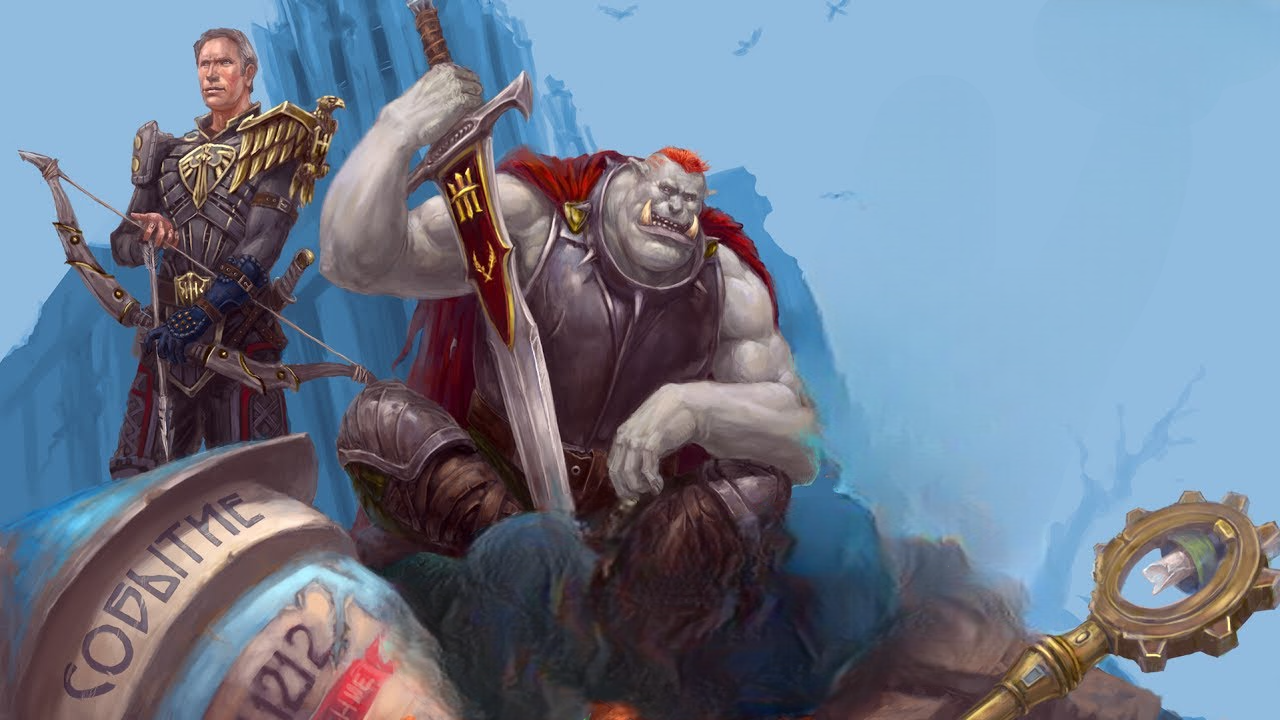
The first allod to fall under orcish rule — under Hadagan’s patronage — was Grokh. Orc warriors, alongside Hadaganian mages, attacked and killed Claude de Vevre. A new Hadaganian Great Mage took control of the allod, and Grokh became the first Orcish Allod.
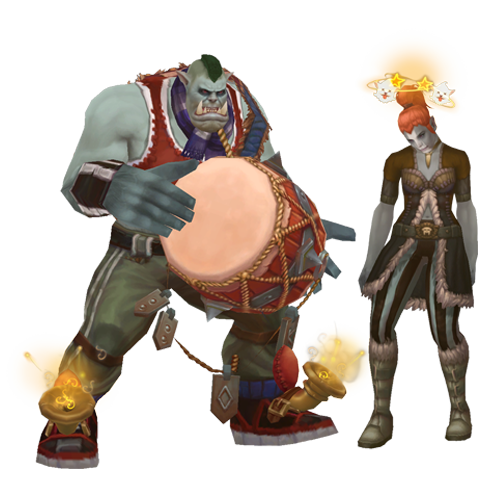
After consolidating this victory, Rodogor and Nezeb planned their next invasion. Once again, the operation would be paid for in orcish blood, and once again, they had no other choice. Their next target was a Kanian allod — Ketch. After two years of war, Ketch fell, and its Kanian Great Mage was replaced by a Hadaganian one.
By this time, Kania had formed a military alliance with Elves and established the League. The orcs and Hadaganians were now forced to fight them on both Ketch and Grokh, as the League launched efforts to reclaim lost territories.
The new High Shaman, Plank, son of Rodogor, proclaimed a radical new doctrine for the orcs:
"The New Great Feast is coming, but there are too few orcs for it."
Under this new policy, the orcs were commanded to breed and multiply, with the goal of increasing their numbers tenfold within forty years. The Empire needed a vast army to hold onto its conquests and claim even more.
Soon, the orc population exploded. There were now enough warriors not only to defend their captured allods but also to launch new invasions. However, as Nezeb himself once remarked,
"The more orcs there are, the more problems they cause."
Without war, orcs withered — they grew restless, turned to raiding and lawlessness. Seeing this, Nezeb had no hesitation in using orc warbands as cannon fodder to defend the Empire’s borders against any threat. The orcs became Hadagan’s disposable warriors.
By the mid-tenth century, numerous orc clans and tribes rebelled, outraged that their blood was paying for the Hadaganians’ prosperity. The alliance with Hadagan began to fracture.
The situation worsened when Nezeb disappeared, and Hadagan itself split in two as factions vied for power. In the chaos, a young mage named Yasker, a hero of Night of the Astral Portal, saw an opportunity. He made a bold gamble — backing the orcs while also forming an alliance with the Arisen. With their support, Yasker seized control of the Empire.
In return, his allies received what they were promised — for the first time, all three races of the Empire were granted equal rights.
Thus, the fragile and uneasy relationship between the Hadaganians and orcs settled into a tense truce — for now…