Orcish spiritual culture
The orcs have a traditional shamanistic faith revering the spirits of the world of Sarnout. Their caste of shamans maintains bonds with spirits as best as they can, and each clan has a lineup of spirits they interact with. However, times are changing, with some clans rejecting their old faith.
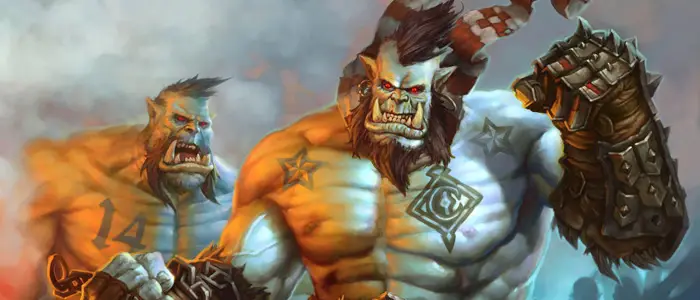
The shamans’ caste is losing their grip on orcish society, and new groups are stepping in to seize power. The orcs are divided and in bloody conflict with each other. A faction known simply as the ‘warriors’ seeks to split away from the old ways and adopt a new philosophy, one more focused on emulating orcish heroes of old, and following the strong warriors of the current age. They break from tradition in other ways as well. For instance, the Bloodthirsty and Bovvers clans have employed goblins in their recent assaults on other orc clans, which any traditional orc views as utterly reprehensible.
The other evolution is the adoption of the Light into traditional views, or breaking away from tradition to revere only the recently emerged force of the Light. This mostly concerns the Righteous clan, who venerate the Triune saints and serve the Empire as proper templars, fully wielding the power of the Light. Most of their members fully reject the old spirits in favour of the Light. Another large group of orcs with changing views are those immigrants who come to live in the Empire’s great cities. This is because they are exposed to different cultures, but mostly the omnipresence of the Triune church and the accessible and visible power it wields and manifests. This causes metropolitan orcs to adopt parts of, or the entirety, of the faith of Light.
On the nature of spirits
Traditional orcish ways remain no less real or important to the world than the newly emerged powers of the Light. Spirits possess great magical powers. Their strong will can influence mortal beings in profound ways. If a spirit is neglected, it can become very dangerous. When pleased, it bestows great power. These entities exist as a fundamental part of the world, yet they remain fundamentally different from mortal creatures. Mortals often ascribe human emotion to them in an attempt to humanise them, but their perception is entirely alien. This alien nature is compounded by the fact that many spirits hide themselves or lack a physical form by default. Categorising them is difficult because they are as diverse as the animal and plant kingdoms. Shapes and types of existence vary greatly. Spirits are more like neighbours with whom orcs coexist than the animals or plants that can be physically perceived and husbanded.
These beings are loosely categorised along two spectrums. This system is never all-encompassing or thorough enough to describe every variety. The entire system relies upon the personal interpretation or cultured perception of each practitioner. Many spirits defy the common traits of their kind and exhibit opposite behaviour. It is impossible to make definitive statements because the presumptions of understanding vary from clan to clan. Even shamans within the same clan may disagree on the nature of a specific entity.
The distinction between black and white spirits provides a general guideline. Black spirits are tellurian creatures of the earth. They represent earthly matters and are the entities closest to mortals in their concerns. They often remain absorbed in their own affairs or slumber within the objects they inhabit. Some see them as chaotic or unpredictable, but this is a matter of perception. A white spirit of weather might decide to bring ill seasons despite all forecasts, while the black spirit of the earth that controls the growth of greens fights that celestial power to protect the land. In this interpretation, the white spirit brings a deserved punishment while the black spirit opposes that decision without seeking any personal profit. White spirits are of the heavens. They represent fundamental forces of the world and appear variously enigmatic. Shamans do their utmost to stay in touch with such beings to ensure they are not roused to anger.
Conduct towards spirits often involves trial and error. If a chanced ritual seems to placate a spirit, the tribe adopts it into their customs. These rituals have developed into a complex field of study over centuries. This tradition relies on signs, symbols, and portents. Shamans utilise a variety of psychedelics and psychostimulants to facilitate communion. They consume mushrooms, fermented spirits like vodka, and various potent roots. The tambourine is the most iconic instrument used, although shamans employ other melodic tools. They often ask other orcs to join in the music to play instruments or sing in commune. Shamans are incredibly resilient and can sing or dance for many hours without tiring.
The spirit ladder rungs go from petty to minor, lesser, moderate, and greater. They culminate in major spirits and the pinnacle of true spirits. The most powerful spirits decide the fate of clans and dictate their ways of life. They hold sway over powerful natural phenomena or the great cycles of nature. Ancestor worship includes those among the ranks of spirit, requiring a vast system of classification. Some clans place ancestors directly among the spirits, while others see them as a separate supernatural force that intermediates for the clan. Some spirits are adopted through conquest or cultural evolution. For instance, Tenses is recognised and revered as a genuine spirit, though orcs acknowledge he is not originally of their kind.
Below the bottom of the rungs are petty existences called sprites. They inhabit the Realm of Nature and live among mortals on the allods. They are above animals in their sentience but petty in their influence. Little folk such as the Domovoi live in houses and are often incorrectly labelled spirits by the commonfolk. These folk are dangerous if angered. Scientists suggest that sprites are elements of the mortal plane, such as animals, plants, stones, or people, infused with spiritic energy. There is fierce argument as to whether this energy emanates from higher spirits or is a native part of the Nature's Realm. Like their spirit kin, they can be bargained with by shamans, and they too will honour a deal signed with blood, and even in these cases the shaman will not risk breaking the contract. The balance is honoured, the blood price paid.
One last important category to bring up is that of object spirits. When correctly formed, either by the spirit themselves or a capable shaman, an object can house a spirit and gain magical qualities. A great example is a shaman's tambourine - a proper shamanic instrument is one possessed by a spirit.
The Orcish veneration of spirits
First and foremost, the orcs do not worship spirits -- they venerate them. The distinction lies in the respect offered to beings greater than themselves. This respect is born of fear or admiration. It differs from the prostration found before the altars of the Triune church. The shamanic caste and their traditional ways are losing their influence over orcish society. A struggle between old customs and new ideologies will decide the future of the nation.
Every member of a tribe participates in the veneration of spirits. The shamans act as the sole intermediaries through their mastery of ritual. Only they possess the traditions required to contact the higher world. The chieftain and his immediate family are the only exception to this rule. They hold the specific duty of maintaining the bond with ancestor spirits. While there are general themes of worship, each clan develops its own customs based on local spirits and unique needs.
For their rituals, they utilise a diverse array of instruments, with the tambourine being the most iconic one, which are often possessed by spirits to grant them magical qualities. These ceremonies also involve the consumption of various psychostimulants and psychedelics like mushrooms or fermented spirits. Consuming these substances thins the border that divides the spiritual world from the mortal world. This allows shamans to see and hear spirits clearly. As the shaman matures, this border thins out more and more. The practitioner exists in a state of being somewhere between two worlds.
The shamanic caste handles a range of essential duties for the tribe. They interpret portents found in the natural world through a complex system of symbols developed over many generations. They look for meaning in the patterns of smoke or the behaviour of animals to decide if a course of action is wise. In times of conflict, the shaman determines if the spirits favour a particular campaign by examining if enemy spirits can be outmanoeuvred. This perspective permits them to handle the sanctification of clan territories and the banishment of malicious forces. They act as psychopomps for the departed. Practitioners serve as healers for the sick and provide counsel to the living. A shaman ensures the spiritual integrity of the tribe's equipment by imbuing weapons and armour with the presence of personal or clan spirits. Beyond these tasks, they act as the story keepers of the clan. They memorise the names of every previous shaman and chieftain, teach the youth about clan's traditions and history. Because of these essential duties, the High Shaman still holds both secular and spiritual authority within the nation.
Spirits are often perceived as essential powers that can be negotiated with or tamed. A clever shaman might trick or even summon these entities. In some cases, spirits are even killed. The boundary between black and white spirits is often thin in these interactions. Some clans are deeply dependent on the beings they venerate. Spirits regulate the cycles of existence. These range from universal transitions to simple daily processes. Life is composed of many such cycles. One example is the cycle of brewing beer. This includes the growth of ingredients, the brewing process, the consumption, and the eventual return of the liquid to the earth.
A cycle cannot be completed properly without the intervention of a spirit. This often requires the shaman to amend the situation. If a batch of beer fails, it does not always indicate the anger of a spirit. It might simply be a result of a brewer's incompetence. However, if such failures occur with unusual frequency, the clan seeks the help of a shaman to appease the supernatural. For cycles that affect multiple tribes, such as the seasons or the transition of life and death, clans carry out rituals together. These events are significant enough to cause a temporary halt to any ongoing wars. A clan living under a powerful spirit must remain pious. The entity might demand blood or live sacrifice as payment for its service. Sometimes these demands exist merely to sate a primal urge or to avoid natural wrath. The shaman honours these pacts as a necessary part of the balance of nature.
Cult of Heroes
Orcish society currently faces a struggle between traditional shamanism and the rising Cult of Heroes. This new movement focuses on the worship of legendary warriors whose deeds have granted them a status similar to the divine. This shift challenges the exclusive role of the shamans as the only link to power. The rivalry between High Shaman Kolovrat and Commodore Sturm of the Imperial Guard represents this tension. Kolovrat advocates for the magical advancement of orcs to ensure their independence from other races. Sturm believes that true power is taken through physical force. This clash influences distant clans where the choice of leader reveals whether a tribe follows the path of sorcery or the path of strength.
The Light and the Retributors
The emergence of the Light has introduced a new element to orcish faith that traces its origin to the moment the spark of the Great Mage Tenses was caught within the pyramid at the heart of Asea-Teph nearly a century ago. Some orcs have fully embraced the Hadaganian doctrine and departed from shamanistic views. Another group has created a fusion of traditional belief and this new power, which ethnologists call the "Cosmic Light". This outcome stems from the orcish tendency to accept new spirits into their fold. It serves as a testimony to their adaptive capabilities for survival. There is ongoing debate about whether this is a natural evolution or the result of clever propaganda spread by the Hadaganian church.
Many orcs interpret the Light as a new Great Spirit. They describe it as radiant and youthful. It is considered powerful and immense. The natural world is still held sacred in this worldview. The sun and the moon along with the cycles of the seasons possess deep spiritual meaning. The land and the sky are also central. They believe the Light awakens and empowers these elements. This view is common among the Righteous clan and the majority urban orcs. They follow a path that honours ancient totems while the radiance of the Light reinforces their strength. Tenses or the whole Triune have been adopted into the ranks of spirits as incarnations of a greater force. Some chieftains present them as adopted battle spirits. They retain foreign aspects from their lives as men. Some orcs see them as a gift from humans. They are expected to uphold orcish honour though the orcs often include less civilised traits in their characters.
The Righteous clan contains a core of fanatics who have rejected their old heritage. Although united in their greater cause, the finer points of reverence differs between inner groups. Most of the Righteous clan for instance, has completely adopted the Triune doctrine and completely rejected their old heritage. This core group of fanatics revere the Triune not as spirits but as proper saints -- the Hadaganian way. But even within the Righteous clan differences occur, which are nevertheless fully accepted by the group as a whole. Compliance with the edicts is much more important to them than a unified belief, even if theirs -- the zealous core’s complete embracing of the Triune - is the purest. After all, the Light shows its ways in many forms.
From this environment the Retributors emerged as a new phenomenon. They fused divine wrath with primal orcish fury. These warriors revere The Triune as warrior-spirits rather than distant church saints. They see them as their ancestors. Ordinarily, a paladin commands powers of the Light, called upon by his deep faith in this benevolent power. For the orcs, it is a matter of pure fury and rage. Their great battle anger, their inner fire -- the Tapas -- allows them to call upon the powers of faith and the Light. The mention of fire is quite literally, the fire of devotion causes these warriors to radiate heat or even ignite, further compounding their already great battle-strength. This unchecked rage is boon and bane however, for anger might come easily to an orc, but it also presents a severe restriction in how they can express their power - they are limited by what wrath and outrage can accomplish. This deep focus on anger does not mean that Retributors do not pray or experience the many other facets of the Light; many of them are deeply devout and have experienced life-changing events in their service.
But what can an orc accomplish through anger? A Retributor can heal their allies just as well as an Commissar. To do so, the Retributor rages against the idea of their comrade falling, or they extend their battle lust to infuse their fellow, allowing the wounded man to carry on. Anger can also come from desperation, sadness or grief; the unwillingness to let go or falter. Sometimes anger is childlessly simple, an infantile tantrum that refuses to give in, and finds the strength to carry on as faith answers. In the end however, these rampaging warriors are limited by a primitive and a trivial emotion.
Anger is not the sole way for them to call upon the Light outside of battle. Through deep emotion and heartfelt prayer, the divine force answers them too. For some, the path of the Retributor is a way to channel their anger into something more productive, to the point of being a path of redemption. Thinking this calling to be solely limited to fury is to overlook the breadth of experience and growth it provides for the newly devout orcs.
As a brief aside, some delusional retributors see their evocations as more than calling the Light, and believe it to be spirit summoning. By all rights, it is extremely unlikely that they have found means to intrude upon the shaman’s territory, and they should be dismissed as fools.
Worship of the average orc
For the average orc of a traditional clan, much of daily life revolves around the local spirits. Their shamanistic beliefs influence much of their decision making and superstition. While they cannot perform the true rituals themselves, they are nevertheless involved through their actions and the spiritually charged objects they carry, whether those actually hold magic or not. To simply dismiss things as placebo is an oversimplification, as the belief in the simple rites and trinkets is a wellspring of strength for any devout orc.
Such an orc will perform warding gestures, call to the spirits with hearty battlecries, perform small invocations and carry all kinds of paraphernalia with them, giving them a sense of confidence and safety, a ward against evil spirits and even physical foes. This can be accomplished through trinkets, amulets or even tattoos. And all of these can be actually imbued with magic by a shaman, at which point the orc himself can call upon the formidable magic invested - often through a battlecry.
An orc places themselves in the spiritual landscape by choosing spirits to which they assign great importance and a striving to emulate recognizable traits. They choose epithets for themselves such as "Cunning is my way of life" or "I am strong and strong-willed as an ox".
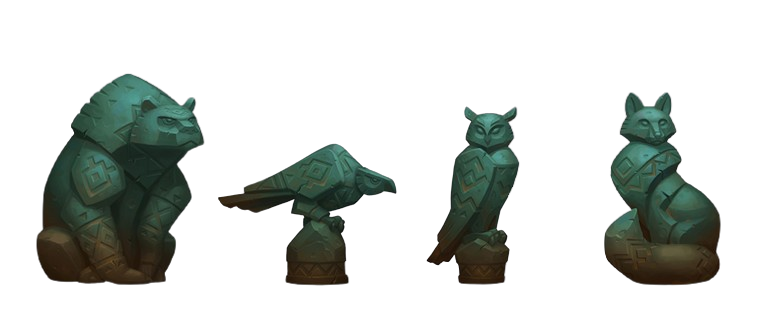
Many will also choose an animal with qualities they admire. The aforementioned strength of the ox, the hardiness of the rhino or the predatory power of a tiger. The key thing is that all such choices are made at the personal level, a deeply individualistic edict.