Pleasure, Beauty, Perfection
Life is beautiful.
Death is the final chord.
Happiness is creation.
The League is an ally.
The Empire is temporary.
The Astral is a mesmerizing.
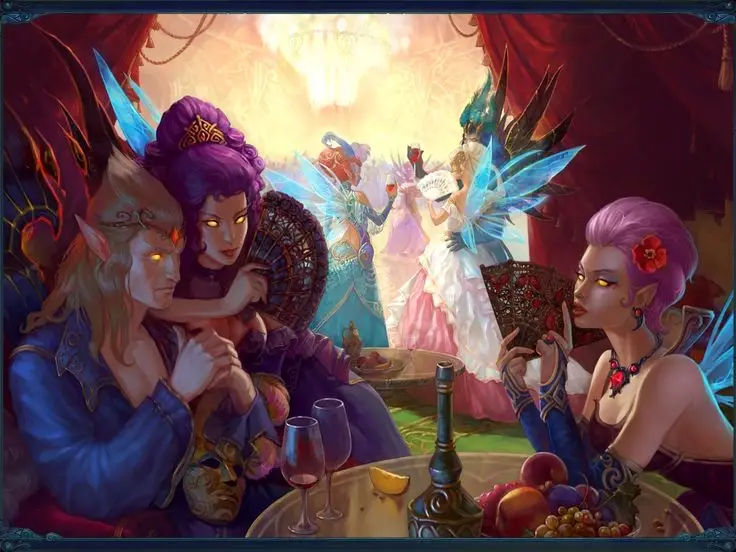
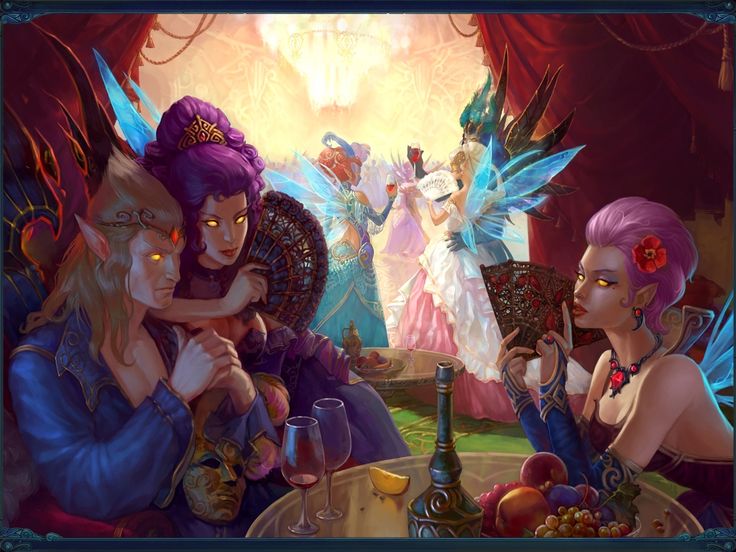
Hedonists, libertines, life-livers, schemers and snobs… Elves are called many things by both enemies and allies alike. Not everyone can understand or accept them, but only orcs – insensitive to the beautiful – fail to marvel at their beauty, grace, and elegance. The ghibberlings admire the elves’ wings with childlike wonder: “Oh, if only we had wings like those, we would fly around the whole world!” The Arisen look upon all elven magical achievements with jealousy, seeing elves as their nemesis in the pursuit of knowledge and the power to reshape the world. For the Kanians, the greatest object of envy is elven art, unmatched by anything else. And there isn’t a single Hadaganian who, at least once in their life while examining smuggled elven goods or hearing rumors of orgies on elven allods, hasn’t cursed the day they were born anything but an elf.
Who, then, are these beautiful golden-eyed winged beings, able to entrance with their song, dazzle with magic, and unsettle minds by their very behavior?
In 2743, one of the elven Great Mages named Nayan, a member of the Conclave, published the Chronicles of the Past, which laid the foundation for the accepted world calendar. Most of the Chronicles concern elven history, making this document the primary source of knowledge about the world’s oldest race. Yet much of elven history is lost, and most past events are reconstructions based on few surviving documents and vague memories. In a sharp and sarcastic preface, Nayan himself admits he cannot vouch for the accuracy of all the information. Unfortunately, there is nothing else to rely on.