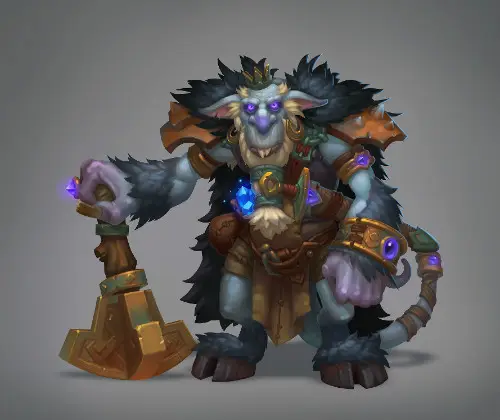
Kobolds live underground in sprawling tunnel-cities called warrens. While they are often dismissed as primitive scavengers, kobolds possess complex, adaptive social structures built on tradition, utility, and collective survival. They construct complex mines, fortresses, and intricate tunnel networks, and sometimes even take over the existing underground settlements.
Their society reflects the realities of life beneath the surface: scarce resources, absence of sunlight, unpredicted environment and dangerous neighbors. To endure, kobolds evolved into a rigid, collective, suspicious and superstitious society.
Across all known warrens, kobolds exhibit a set of recurring societal roles, though titles, responsibilities, and cultural weight vary. These roles appear to stem from deeply rooted kobold instincts, emerging even in newly formed or isolated warrens. It is not common, but some warrens borrow words from the neighbouring surface cultures. Below is the list of recurring roles and their general functions, shared among many warrens. It is not exhaustive - some roles exist only in specific environments (for example, volcanic kobolds have fire-herders, who master lava-magic from youth.)
Rulers: Almost every warren is led by a monarch. Common titles include tzahr, tsar or tzar. Kobolds with sustained contact to surface cultures have adopted titles like king or emperor, though this is uncommon.
Methods of enthroning vary: election, inheritance, prophecy, or brute force—the last being the most common and least stable. Rulers typically govern alone, sometimes advised by a single name-keeper or a small council. Their power is usually absolute. Warrens influenced by surface politics may experiment with councils or guilds, but this is extremely rare.
Failure to protect or feed the warren results in swift replacement.
Name-Keeper is how most of the recorded titles of this role can be vaguely translated from koboldic. These figures serve mainly as keepers of true names and secret names, but they can also fulfill roles of sorcerers, sages, menders, spiritual leaders, advisors, and recorders of Warren history. Some warrens have an Elder Name-Keeper, the oldest or most revered among them.
Necromancers are essential to any kobold community, as beneath the surface, death is considered a step to a better life, where a soul is released from the burden of a body. They preserve the soul totems, keep recipes of cannibal dishes, have their ways with undead and know complex necromantic rituals.
Shadow-Weavers are hereditary sorcerers, whose magic is centered on manipulating shadow. They are rare and highly honored. They know their ways around shadows, and they can speak to the Darkness - one of the main deities of kobold pantheon, which reoccures in every recorded warren.
Scouts explore the unknown and dangerous regions beyond the warren. They may partner with bats or rats, and often serve as the warren’s first contact with caravans - or threats. Scouts also explore the surface. They are often sent to maraude decimated caravans, as well as to set some caravan off course, in an environmental trap or some animal ambush, to later maraude this caravan.
Snare Setters are masters of traps - the main defense line of many warrens. Senior trappers are sometimes called snaremeisters, and it is common for the whole Warren to have 2-3 snaremeisters, who teach the younger generation the art of snare crafting and trapping. Kobolds are reknown trappers.
Geomancers are essential part of every warren. They are the one responsible for building and expanding the warren, for clearing the cave-ins, reading and communing with stones and earth, which are considered holy and full of prodound knowledge in kobold mythology.
Den Mothers raise and discipline young kobolds. Where present, this role is vital to cultural continuity. In other warrens, child-rearing may be communal or assigned to entirely different roles. In some warrens, a high ranking den mothers were recorded (by titles of The Mother, First Mother, and others), who are tasked solely with raising a ruler’s or an elder name-keeper's offsprings.