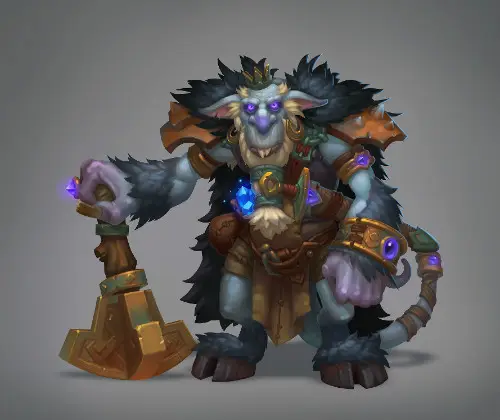
Kobolds are famously elusive. What little is known of their society comes from rare firsthand accounts, archaeology, and a few daring expeditions sanctioned by the Imperial Geographical Society and Historians Guild. Efforts to understand kobold society in a unified way are fraught with obstacles. Despite sharing many common biological traits and behavioural patterns, kobold cultures are highly localized and vary dramatically from one warren to another, with that difference being especially noticeable on an allods-wise scale. Language barriers, conflicting terminology, secretive customs, and sometimes even social order may differ significantly. Even fundamental terms like “ruler,” “scout,” or “necromancer” can carry vastly different meanings from one community to another. Names, roles, and rituals change with the environment, the history of the warren, and even the decisions of a single powerful leader. For for researchers and historians, such a heterogeneity makes the work slow, fragmentary, and full of contradictions, and thus, there is no definitive and reliable study that summarizes the life and culture of kobolds.
The most documented warren, Sahkhashpotakh, was observed in 958 AGC on the Wild Isles archipelago. At its height, it housed 147 individuals, including a myceloid diaspora (17 individuals), Historian's Guild expedition (5 specialists, 4 guards), and a detachment of Imperial researchers (3 specialists, 2 guards).