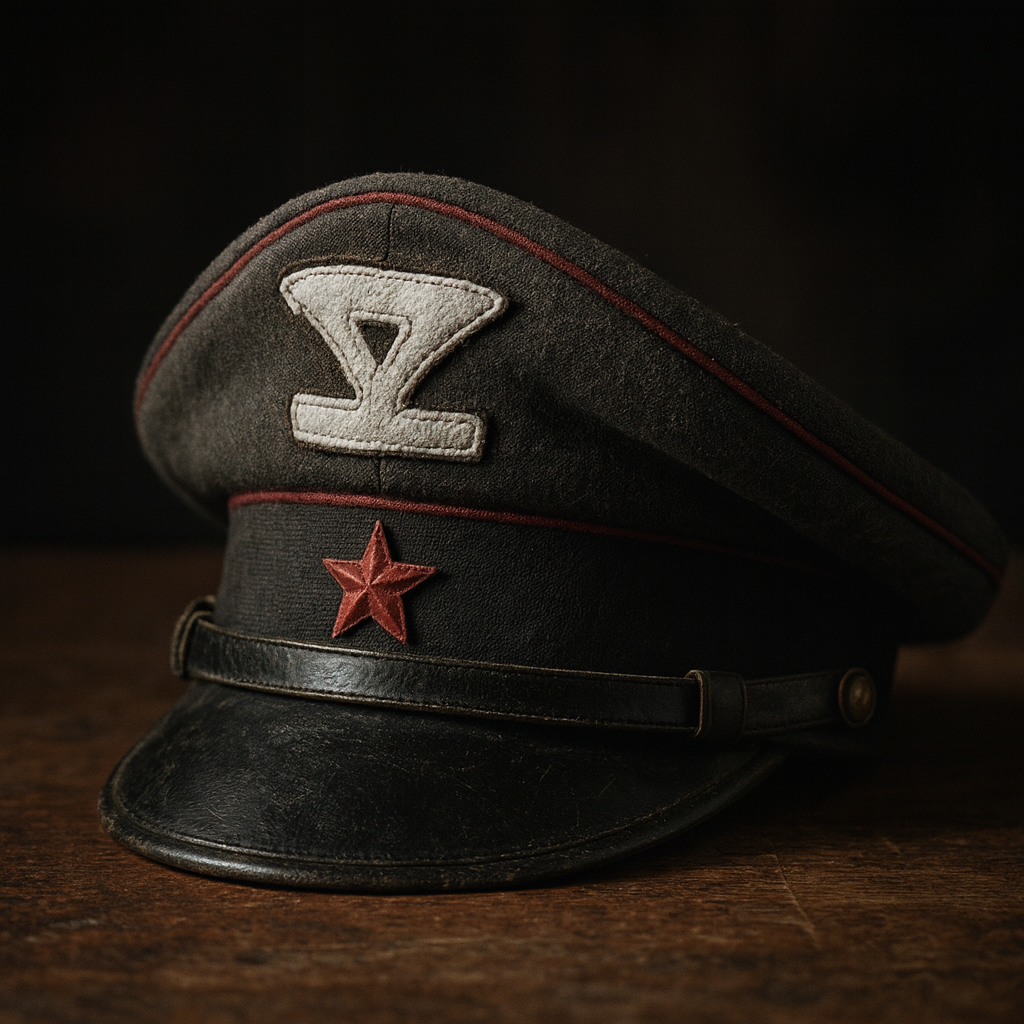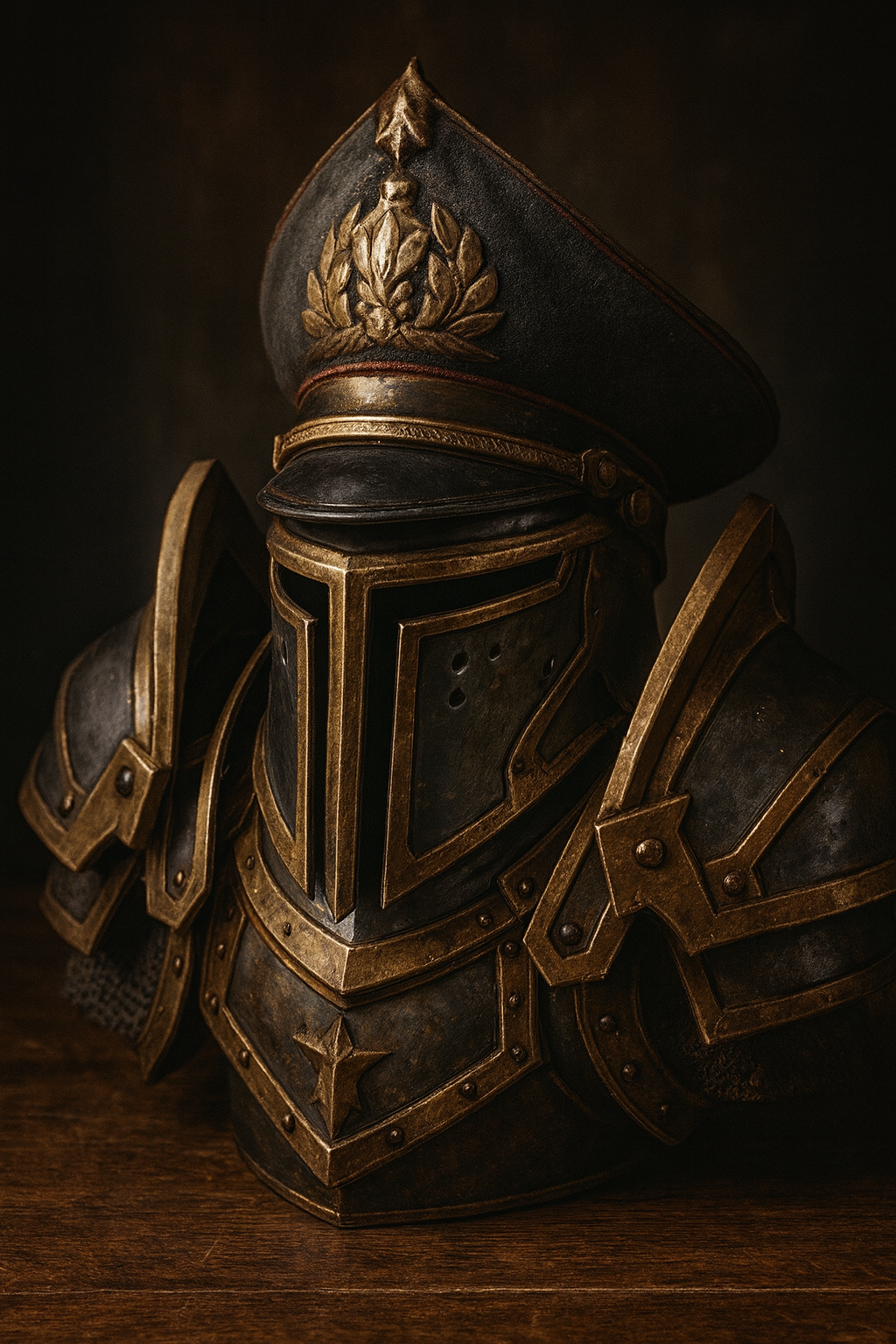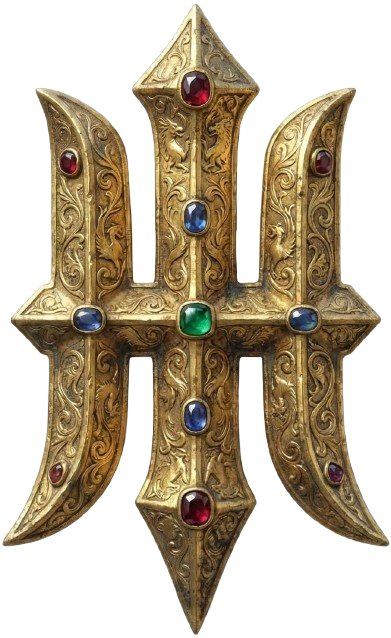
“Let us then not be ashamed to confess the Triune. Be the Trifecta our seal, made with boldness by our fingers on our brow and in everything; over the rations we eat and the water we drink; in our coming in and our going out; before our sleep, when we lie down and when we awake. In putting on our boots, at the communal table, in lighting the lamp, in sitting down, whatever employment occupies us, we mark our bodies with Signum Trium.”
The Triune Church serves as the ideological and spiritual foundation of the Empire. Unlike the League’s Church of Light, which venerates Tenses in isolation, the Triune Church posits that sanctity is derived from the ultimate act of self-sacrifice for the preservation of Sarnout. It teaches that the holiness of Tenses is not unique; rather, the Great Mages Nezeb and Skrakan achieved equal divinity through their deaths during the Great Astral Crusade. Consequently, salvation is viewed as a collective endeavour, inextricably bound to one's service to the Motherland.
Ⅰ. Core dogmas of the Triune Church
The Dogma of Trinity
The foundational schism between the Empire and the League lies in the definition of holiness. The Triune Church rejects the League's assertion that Tenses is the sole Saint. Imperial dogma dictates that sanctity proceeds from the supreme act of self-abnegation for the collective good. While Tenses provided the Gift of Resurrection, the Great Mages Nezeb and Skrakan ensured the existence of a world to return to by sacrificing themselves to seal the Džun Gates. Without the Willpower of Nezeb and the Wisdom of Skrakan, the Mercy of Tenses is a passive, unrealised energy. To deny the sainthood of Nezeb is to deny the spiritual weight of sacrifice, a heresy attributed to the moral cowardice of the Kanian aristocracy.
The Dogma of Active Sanctification
The Triune Church defines proximity to the Light not only by the depth of one's faith, but also by the weight of one's deeds. Mere belief, unsupported by physical exertion, is condemned as "lazy reverence" -- a spiritual stagnation characteristic of the League. The Triune teaches that the shovel, the wrench, and the sword are the true instruments of prayer. A person truly draws closer to the Saints through hard, honest and faithful work.
The Dogma of Virtues
Faith without action is void -- therefore, the moral obligations of any devotee are defined by the virtues of the Saints. Saint Tenses, the Herald, embodies Martyrdom; just as the Saints surrendered their existence, the true devotee must be ever ready to sacrifice for their comrades, the Motherland and the Greater Good. Saint Nezeb, the Shepherd, represents Valor, defined as the unyielding willingness to face the enemies of the Motherland, the Faith, and one's loved ones without hesitation. Finally, Saint Skrakan, the Sage, signifies Righteousness, commanding the faithful to be wise, judicious, and absolutely truthful to their comrades and the Motherland.
The Dogma of Sacred Order
The Church teaches that the Imperial hierarchy is the earthly reflection of the Saints' will. The Great Mage of the Empire serves as the Vicar of the Light on Sarnout, holding the spiritual authority to guide the "flock". Obedience to the State is the ultimate expression of piety, for the State is the sole mechanism capable of uniting Sarnout into a single, harmonious entity. Only through total unification can the eternal wars be ended and universal prosperity achieved.
Ⅱ. Ecclesiastical structure
The hierarchy is divided into three directorates:
Politruks: Responsible for civilian administration, agitation, and parish governance.
Commissariat: Political officers embedded within the Imperial Army to enforce discipline and ideological orthodoxy. Operationally independent of the military chain of command, they answer directly to the General Political Council. As this body is presided over by Elizaveta Rysina, the Commissariat functions de facto as the ecclesiastical wing of the Imperial Committee.
Order of Retributors: A militant order of Orcish templars. They serve as the Empire's shock troops and death squads, mostly assigned on difficult assassination and hunting missions.
Order of Compassion: A non-militant sisterhood established by Decree of Yasker in 972. Dedicated to the provision of medical care and the spread of Triune dogma, the Order staffs resurrection chapels and field hospitals. Composed primarily of Hadaganian and Arisen women, they ensure that the Empire’s promise of aid extends to every citizen, regardless of location.
Tier I Ranks
Jurisdiction: All allods subject to the Empire, army fronts and Imperial fleet.
Direct Superior: The chair of General Political Council (currently Elizaveta Rysina.)
Table of Ranks
Rank | Directorate | Duties |
General Secretary | Politruks | Supreme administration of the Church within the capital Allod (currently Igsh); oversight of regional Secretaries throughout the Empire; performance of extraordinary sanctifications (Imperial fleets, entire allods, army fronts, Great Mage Towers); strategic management of Church industrial holdings and land assets; control of agitation and propaganda campaigns. |
General Commissar | Commissariat | Joint command of brigade or regiment personnel alongside army generals; counseling Army Commodore and Fleet Admiral and Vice-Admiral; Formulation of ideological strategy for the Army and Navy; strategic oversight of the Holy Crusade against the Church of Light; authorisation of high-level purges within the officer corps; enforcement of political loyalty within army and fleet High Command; authority to arrest and prosecute Senior Officers for ideological failings. |
High Executioner | Order of Retributors | Supreme command of the Order; strategic coordination with the High Command and General Political Council; strategic deployment of Chapters; appointment of Executioners. |
Grand Matron | Order of Compassion | Supreme command of the Order of Compassion; control of strategic Myrrh reserves; coordination of responses to magical plagues; oversight of diplomatic and missionary expeditions to neutral territories. |
Tier II Ranks
Jurisdiction: Entire allods and astral hubs, army divisions and fields and flotillas, hospital infrastructures.
Table of Ranks
Rank | Directorate | Duties |
Secretary | Politruks | Administration of Church affairs within a designated allod or astral hub; membership in the General Political Council; chairing the local Ecclesiastical Council; performing grand sanctifications (government buildings, mana-reactors, army divisions and fields, flotillas, artillery batteries, and strategic materiel). |
Colonel Commissar | Commissariat | Joint command of divison or field personnel alongside army colonels and fleet captains; Counseling army generals and fleet counter-admirals; Ideological supervision of army divisions and fields, and astral flotillas; presiding over military tribunals and courts-martial; enforcement of political loyalty within army and fleet officer corps; authority to arrest and prosecute junior officers for ideological failings. |
Executioner | Order of Retributors | Command of a regional Chapter; operational coordination with Army Generals and Fleet Admirals; strategic deployment of Death Squads across a controlled region; Chapter recruitment; appointment of Taskmasters. |
Matron | Order of Compassion | Administration of allod-wide hospital infrastructure; oversight of myrrh distribution and logistics; management of epidemiological containment protocols; training and assignment of Senior Sisters. |
Tier III Ranks
Jurisdiction: Sometimes allods, cities, parishes, battalions, regiments, and hospitals.
Table of Ranks
Rank | Directorate | Duties |
Rector | Politruks | Administration of a specific parish or city, rarely of an entire allod (if there less than three settlements); supervision of Presbyters and Deacons; oversight of local agitation and propaganda campaigns; performing major sanctifications (single astral ship, one army brigate or regiment, artillery batteries, combat vehicles and strategic materiel) |
Major Commissar | Commissariat | Joint command of brigade or regiment personnel alongside the unit commander; Ideological supervision of a Brigade or Regiment; conducting preliminary investigations into ideological treason; training and assignment of Captain Commissars. |
Taskmaster | Order of Retributors | Command of a Death Squad; mentoring of Brothers and Youngbloods. |
Senior Sister | Order of Compassion | Management of a field hospital or city ward; supervision of junior Order cadres; oversight of local medical supply inventory and rationing; coordination of triage protocols during mass casualty events; mentoring of Sisters and Novices. |
Tier IV Ranks
Jurisdiction: Chapels, companies, platoons, or hospital wards.
Table of Ranks
Rank | Directorate | Duties |
Presbyter | Politruks | Administration of a local chapel; conducting daily liturgy and rites; hearing confessions; supervision of Deacons; performing minor sanctifications (individual combat vehicles, artillery pieces, or army companies). |
Captain Commissar Lieutenant Commissar | Commissariat | Joint command of company or platoon personnel alongside military commanders; responsibility for political and moral conditioning, combat training, discipline, logistics, and unit readiness; sanctification of unit equipment and personnel. |
Sister | Order of Compassion | Provision of direct patient care and trauma surgery; administration of resurrection recovery protocols; maintenance of ward hygiene and medical supplies; mentoring of Novices. |
Tier V Ranks
Jurisdiction: Chapels, platoons, squads, or hospital wards.
Table of Ranks
Rank | Directorate | Duties |
Protodeacon | Politruks | Assistance in liturgy; maintenance of parish registries and archives; supervision of Deacons and lay staff. |
Sergeant Commissar Gefreiter Commissar | Commissariat | Joint command of a platoon or squad personnel alongside military commanders; responsibility for political and moral conditioning, combat training, discipline, logistics, and unit readiness; sanctification of unit equipment and personnel. |
Brother | Order of Retributors | Shock trooper; assassinations; executions; castigation. |
Junior Sister | Order of Compassion | General nursing and patient monitoring; surgical assistance; |
Tier VI Ranks
Table of Ranks
Rank | Directorate | Duties |
Deacon | Politruks | Assistance to senior staff; manual labour within the church. |
Commissar Neophyte | Commissariat | Basic ideological and combat training; acting as adjutant to commissars of Lieutenant rank and higher. |
Youngblood | Order of Retributors | Shock trooper; maintenance of orders' wargear; squiring in active combat zones. |
Novitiate | Order of Compassion | Assistance to senior staff; Ward sanitation and laundering; basic first aid; transport of the wounded. |
Ⅲ. Liturgy
Imperial Liturgy is the codified system of rituals, prayers, and ceremonies designed to channel the Light for practical application. Correct execution elicits an immediate, discernible response from the Light, such as visible golden luminescence, iridescent water drops, or a sensation of inner warmth and spiritual exaltation. While the precise metaphysics remain a subject of theological discourse, the General Political Council posits that the collective Will of the faithful acts as a catalyst, and many rites were adapted from the traditions of the old Aro faith to serve the new dogma.
The central act of worship is the Liturgy of the Trinity, a weekly assembly where the faithful reaffirm their allegiance. Through mass, hymnody, collective prayer recitals, and Holy Communion, the congregation is strengthened in faith and ideological purity. The most significant individual ceremony is the Confession. Here, the faithful admit to their sins with repentance and a desire for Absolution. Through the Rite of Absolution, an authorized clergyman imposes a penance, typically in the form of additional labour, service, or indulgence. Upon the completion of this obligation, the sin is formally forgiven, thereby restrengthening the penitent’s connection with the Light.
Of course, the Rite of Return is the standard protocol for resurrection.
Another important application of the Liturgy is anointing and consecrating. Objects, places, and individuals are sanctified to be imbued with the power of the Light.
Prayers also hold power in the daily life of any devotee. There are specific prayers for the preservation of equipment, prayers for the safe return of lost Sparks from Purgatory, graces said before meals to thank the Triune for the bounty, and many other prayers and litanies.
Ⅳ. Sin, judgment, and atonement
The sin is a corruption of the Spark that weakens the connection between an individual and the Light. This metaphysical degradation manifests in tangible ways: the weakening or total rejection of divine magic, increasing of costs and duration for Purgatorial purification, misfortunes and illnesses.
Sin is defined as the antithesis of the Saints' will, derived from the hagiography of the Triune. This definition establishes a critical theological schism: by rejecting the sanctity of Nezeb and Skrakan, the League fails to recognize the moral weight of their Nezeb's and Skrakan's teachings, leaving their adherents spiritually incomplete.
For particularly grave offences against the faith, the Triune Church supplements divine judgment with the stigmatization. This is a magically fixated brand seared onto the sinner’s skin on a visible place. It cannot be removed by conventional means and serves as a beacon of shame, marking the bearer as unreliable and denying them access to standard social privileges.
The Church possesses the authority to guide the restoration of the corrupted Spark. Through the Rite of Absolution, a priest structures the penance required to cleanse the Spark. In accordance with the Dogma of Active Sanctification, forgiveness is obtained through deeds or indulgence. Upon the completion of these duties, the priest formally absolves the penitent, the Stigma fades, and the connection to the Light reinvigorates.
List of sins within Triune Church dogmatics
Sloth
Faintness of Spark
Insubordination
Heresy (That includes any complicity with heretics)
Blasphemy
Treachery
Desecration
Offence to the Imperial Law
Ⅴ. Symbolics
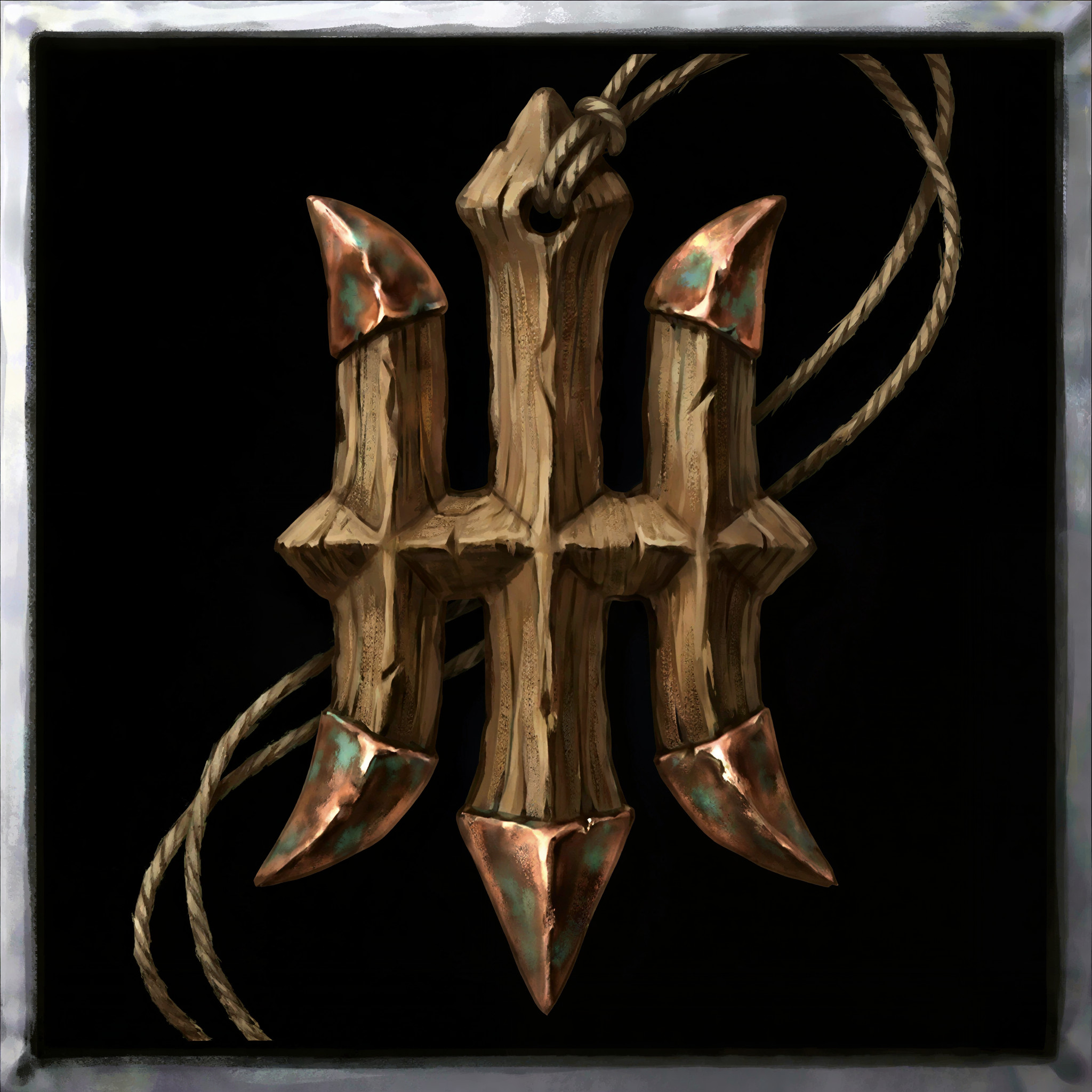
Trifecta
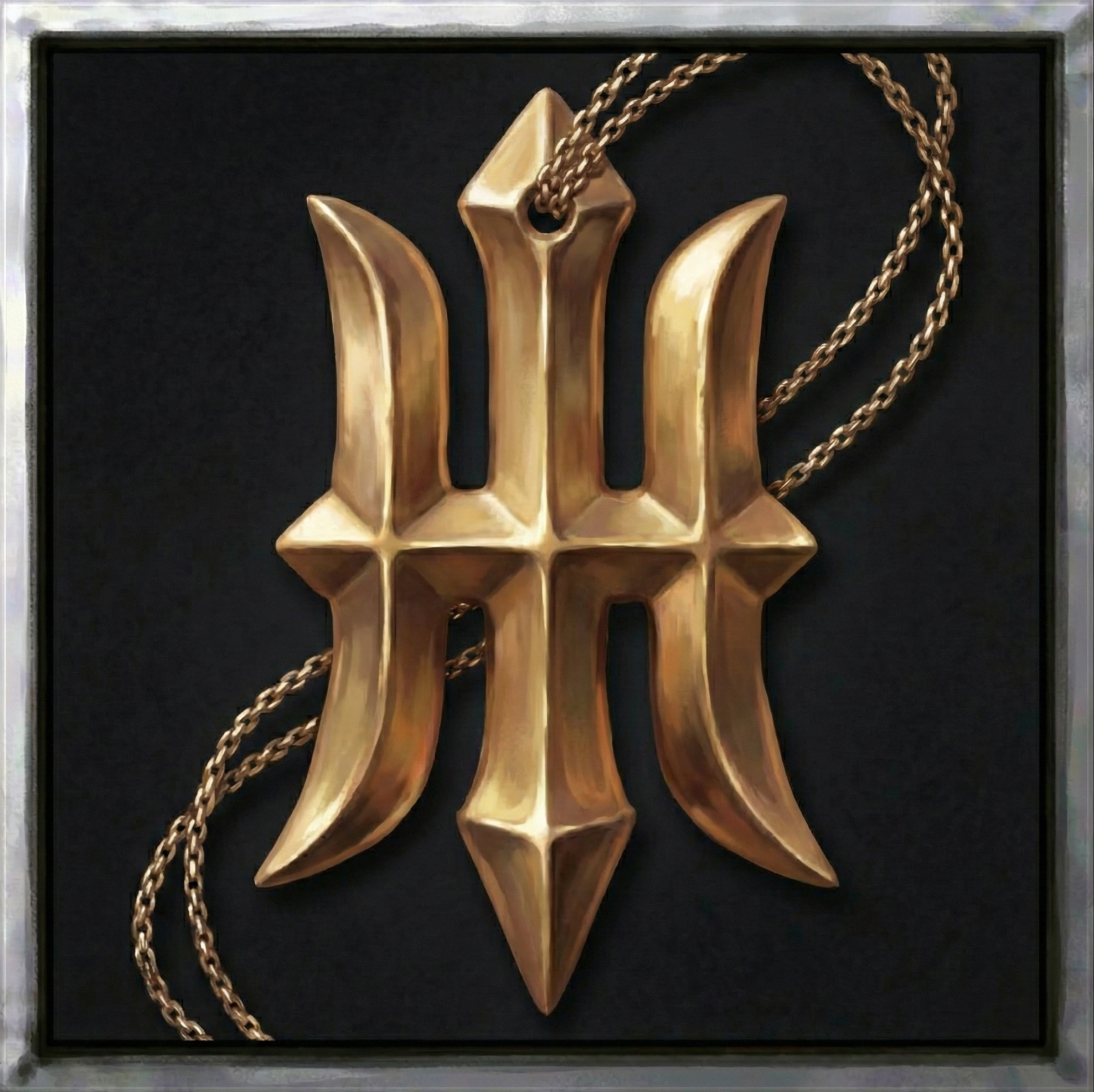
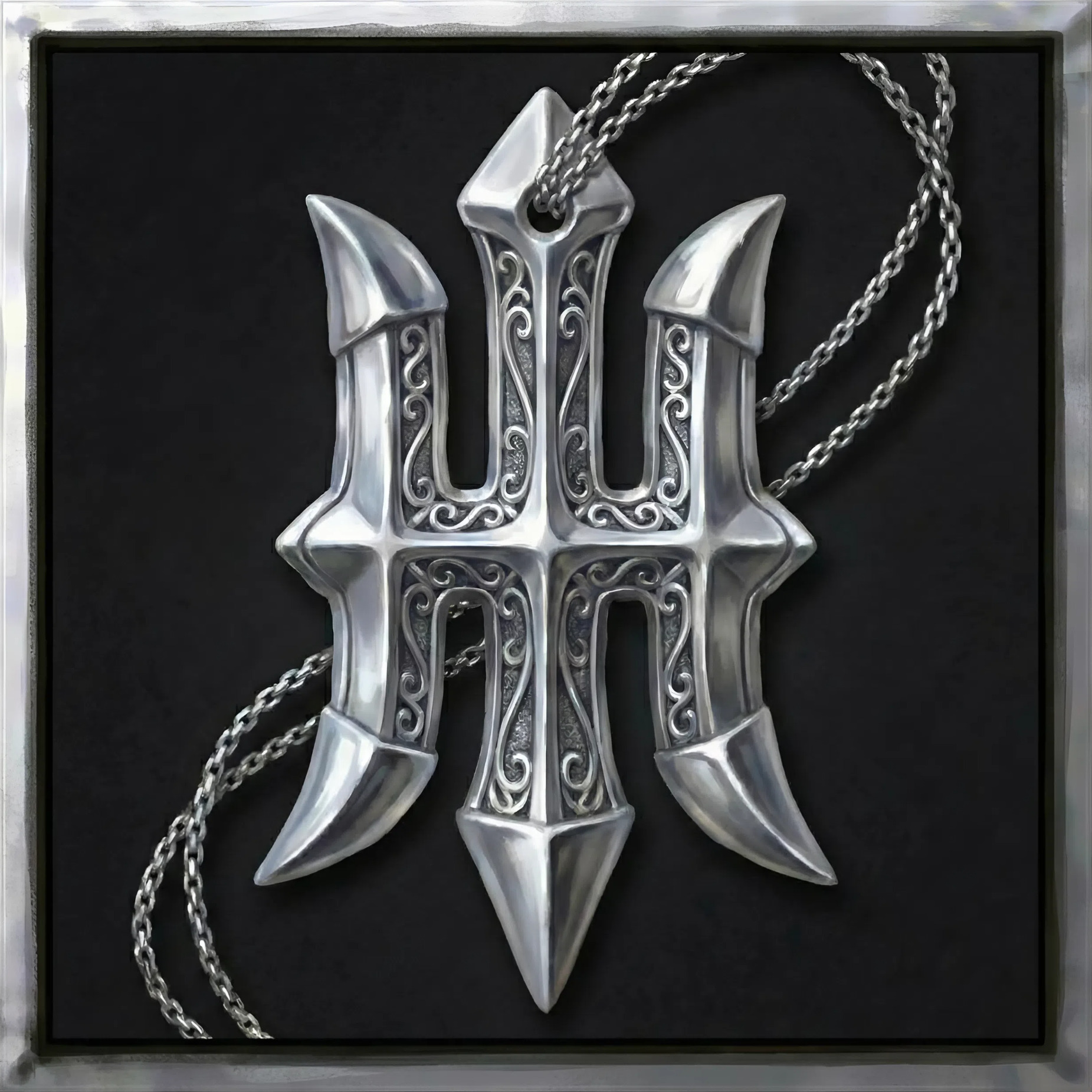
The official heraldry of the Triune Church is the Trifecta. The 'H' represents the Hadaganian Empire, while the three distinct lines signify the unbreakable alliance of the Empire's three constituent nations: the Hadaganians, the Orcs, and the Arisen. The symbol honours the Trinity of Great Martyrs: Tenses, Nezeb, and Skrakan.
Death Wheel
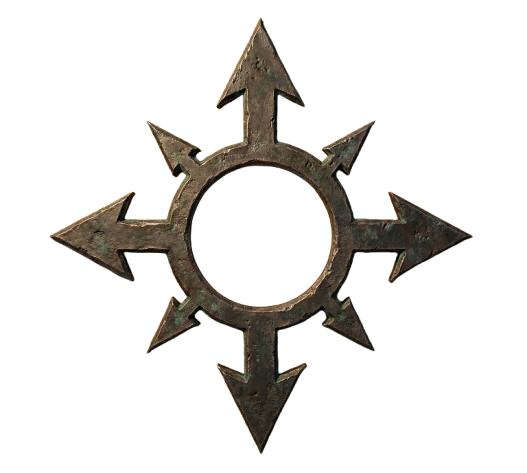
The Order utilizes a distinct emblem known as the Death Wheel. It depicts a solar disc, featuring sharp, irregular rays stylized as arrowheads. The symbol originates from the pre-Light paganism. The central circle represents ancient concepts of oneness, infinity, and cosmic balance, now recontextualized as the Gift of Resurrection. The radiating arrows signify tapas (inner fire) that burns in the heart of every true orc.
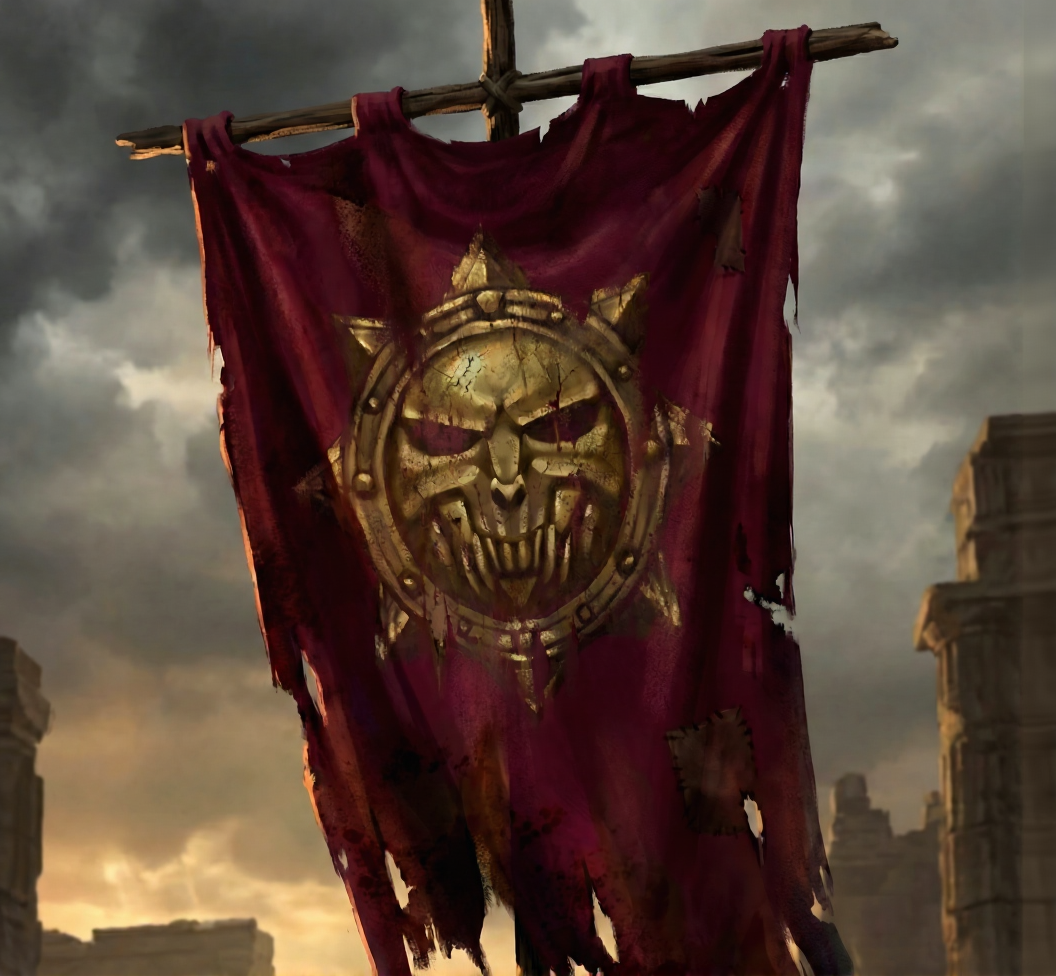
Variants featuring a central grinning skull are designated the Death Sun. In Orcish shamanism, the sun represents an overpowering, inevitable force from which there is no escape.

Ⅵ. Signum Trium
The Sign of the Trinity (Signum Trium) is a ritual gesture by which Triune Church faithful bless themselves, others, or objects. Signum Trium is used throughout Triune Church liturgies, in moments of need or danger, at the beginning and end of prayer, and on numerous other occasions.
The sign is made in two ways: (1) the great sign, made with the three fingers outstretched (symbolic of the Triune), tracing a horizontal line from the left shoulder to the right (The Light), descending from the right shoulder to the elbow (Skrakan), tracing a central vertical line from the forehead to the belt (Tenses), and finally descending from the left shoulder to the elbow (Nezeb); and (2) the lesser sign, that consists of a rapid horizontal motion across the chest followed by a rapid vertical descent from the forehead to the belt.
Ⅶ. Vestments
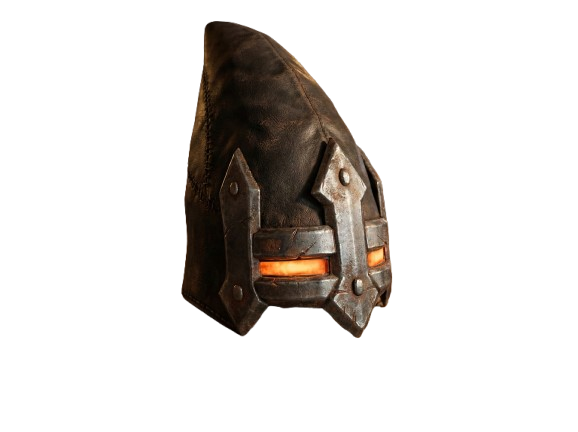
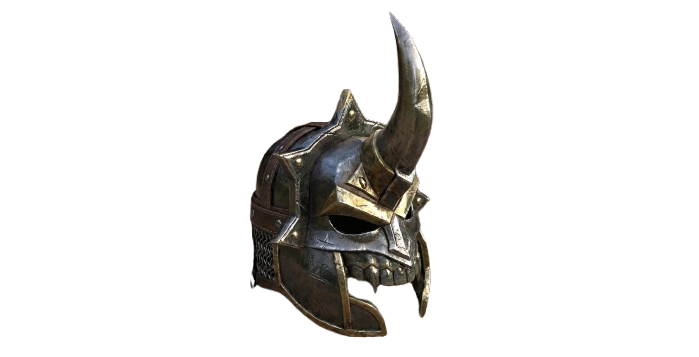
Retributors
Retributors are easily distinguished by the solar and skull symbols, prevailed in their equipment.


Politruks
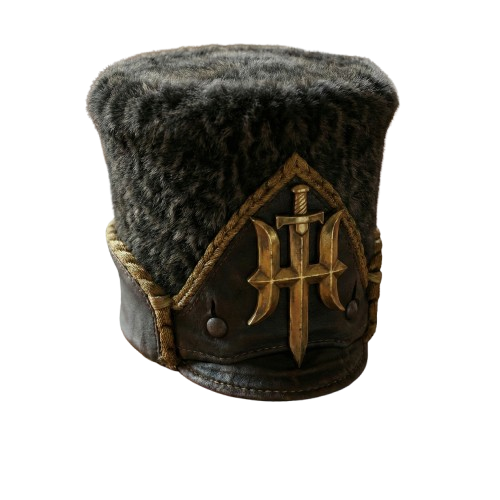
The main distinguishing feature of a politruk, which immediately catches the eye, is their uniform kalpak.
Commissars
Commissars are easily distinguished by the peaked caps.