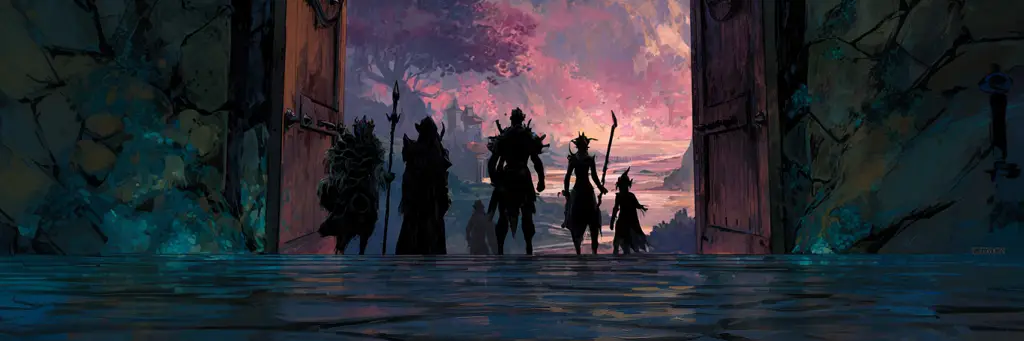
A Brief History
Ask anyone and they will tell you their people were the first to sound the alarm.
They’ll point to old scrolls, faded drawings, woeful ballads, preserved ledgers, retold sermons, or worn carvings above vault doors. Whoever was truly first, those who lived before saw the Scourge coming and prepared. There were skeptics, but they fell silent, or simply fell, when the otherworldly Horrors arrived in earnest.
The Hiding
The five True Elements offered hope: True Earth, True Air, True Water, True Fire, and True Wood.
Combining rare stores of these elements with ritual magic and engineering now mostly lost to time, many settlements carved underground vaults behind layers of deep stone, thought to be the safest refuge. Others raised shimmering domes of sealed air to cover whole cities. A few hid beneath the waves in pressure-tight halls, retreated to volcanic peaks ringed by heat and ash, or sheltered within the living walls of sacred groves.
The Scourge
Horrors ravaged the world while people hid. Vault doors shut and stayed shut. Magical communication between settlements was judged too risky. Whole seasons passed with no word from the next valley, then whole generations. Each shelter learned to live without news from beyond its walls.
In many places even the most elaborate defenses were not enough. Some Horrors learned the shapes of locks and seals. Others did not break barriers, they bent minds. They made promises of safety. They showed visions that looked like home. They wore the voices of loved ones on the other side of the door. A few fed on what defenses provided. They drank from wards that were poorly tended. They hunted by names and stories that people spoke too freely in the dark.
Inside the vaults, survival became a set of strict habits. People limited what was said and when it was said. They marked seasons by ritual rather than by stars they could not see. They kept ledgers that recorded shares and work in careful hands. They taught children which tales were safe to tell and which were never to be told aloud. Communities rose or fell on self sufficiency. There was no travel or trade between vaults, only the hard work of making it to the next day.
The communities that endured often changed to fit the enemy they faced. Two examples among many:
Bellwatch
Once called Quarryside, this settlement faced a Horror that fed on nightmares. As other defenses failed, they denied it dreams. Families used thorn pallets, wake-teas, and bell shifts to avoid deep sleep. Generations later, the people of Bellwatch resist dream magic and are known for vigilance, but many struggle with frayed nerves and waking visions.
Sunrise Commons
Once called Greenmeadow, this town stood against a Horror that fed on greed. They outlawed coin and private ownership, which in time extended even to ownership of ideas. Goods move by gift, barter, or recorded service on public slates. Mutual aid is strong, but authorship and personal identity often blur, which can complicate decision-making and accountability.
The Return
After nearly five centuries, the power that let the Horrors cross so easily into this realm ebbed. Most withdrew, but not all. As vaults reopened, survivors stepped into a land of altered forests, haunted ruins, and broken roads. Old powers from before sent envoys to regain influence, and some of the earliest openers tried to turn their head start into lasting advantage. Local councils and faiths began stitching the map back together, even as twisted wilds and lingering Horrors threatened the newly reopened communities.