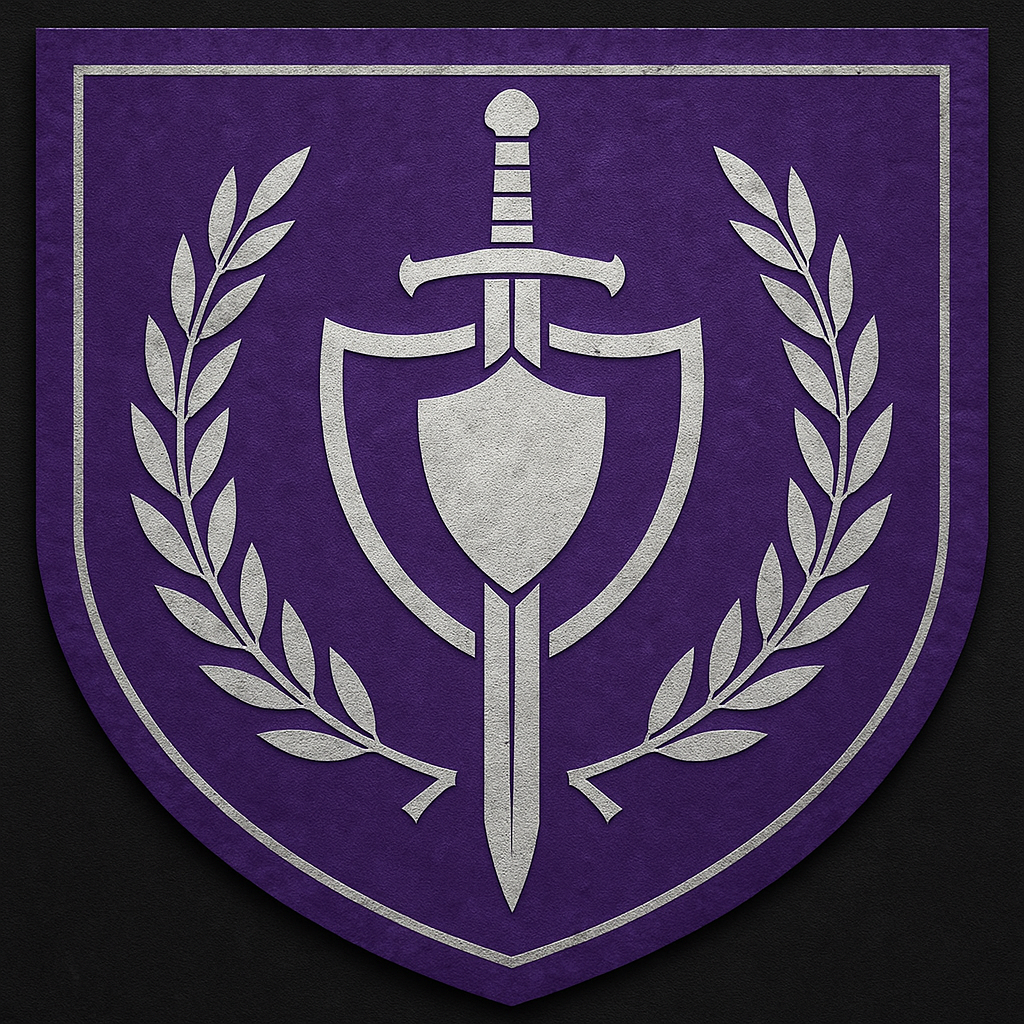
✦ The Order of Champions ✦
Origins
Born from the ashes of loss and redemption, the Order of Champions was founded by Caius Thelas and his battle-brother Azapar. The two warriors, tempered by tragedy and bound by unshakable loyalty, swore to carry forward the ideals of compassion, protection, and resilience. What began as a small company of like-minded mercenaries grew into a formidable organization respected across Azeroth.
Unlike most sellswords, the Order did not fight for gold or glory. Instead, they sought out the forgotten, the broken, and the endangered—villages with no coin to pay soldiers, refugees fleeing invasion, or people crushed beneath threats too great for them to face alone. Caius, carrying the echo of Xeddie’s memory, instilled in the Order a creed: strength is measured not by who you can command, but by who you can protect.
Philosophy & Mission
Aid the Helpless: The Order responds to those who have no means of defense or wealth, offering protection without expectation of reward.
Balance Between Factions: Though many members hail from both Horde and Alliance, the Order remains neutral, answering calls from either side when the survival of Azeroth itself is at stake.
Mercy and Wrath: The Order holds to Caius’s philosophy—kindness is their strength, but when pressed, their wrath is the hammer that breaks oppression.
Caius & Azapar’s Leadership
Caius Thelas: Served as the Order’s heart. His compassion tempered the steel of his warriors, and his words often reminded them why they fought. He never allowed them to forget that they were more than blades for hire—they were shields for the defenseless. His presence inspired loyalty not through fear, but through respect and trust.
Azapar: Served as the Order’s unyielding pillar. Where Caius offered hope, Azapar offered discipline. He ensured the Order never faltered in its duty, honing them into a sharp and efficient force. If Caius was the light that drew others in, Azapar was the stone that grounded them.
Together, they balanced one another—mercy and strength, fire and steel.
Role in Azeroth’s Conflicts
The Order of Champions became known across the Eastern Kingdoms and Kalimdor, not as kingslayers or conquerors, but as the ones who stood where no one else would. Their banners were seen at the Broken Shore, in the defense of Darkshore, and even alongside both factions in assaults against Old God incursions.
Wherever the Horde and Alliance found common cause—however briefly—the Order stood at their side. Even when factional pride tried to push them away, neither side could deny the value of their presence. They became a reminder of what Azeroth could be if its people chose unity over division.
Legacy
Years turned to decades, and under Caius and Azapar’s leadership, the Order endured. Though wars raged on and leaders rose and fell, the Order of Champions remained unbroken. Their creed outlived kings and warchiefs, whispered from one generation of mercenaries to the next:
“We fight for those who cannot. We stand where others will not. We are champions, not for coin or crown, but for the world itself.”
And though Caius bore his scars to the end of his days, they were no longer marks of grief alone—they were proof of the battles survived, the lives saved, and the purpose reclaimed.
📜 Chronicle Entry: The Order of Champions
Founding (Year 32 After the Dark Portal)
The Order of Champions was founded in the wake of the Burning Legion’s third invasion of Azeroth. Caius Thelas, a half-elf scarred by personal tragedy, and his battle-brother Azapar, a veteran hardened by countless wars, forged the Order from survivors, outcasts, and warriors disillusioned by endless factional strife.
Unlike most mercenary companies, the Order refused coin as its guiding principle. Instead, its creed was compassion: to fight for those who could not defend themselves, regardless of race, creed, or allegiance.
Early Years: Wars Without Borders
Campaigns in Lordaeron (Year 33–35 ADP): The Order began by aiding small settlements caught between Forsaken forces and Scarlet remnants. Their neutrality was tested, but their willingness to aid both Horde and Alliance-aligned peoples earned them respect.
Ashenvale Defense (Year 36 ADP): At the behest of kaldorei rangers, the Order defended villages against orcish incursions. Though accused of “picking sides,” Caius insisted the Order stood only with the defenseless.
Unity Amid Division (Year 40–41 ADP)
The Fourth War placed the Order in peril. While Horde and Alliance tore each other apart, the Order worked quietly to smuggle refugees across factional lines. Both sides distrusted them, but neither could deny their results.
During the siege of Darkshore, Azapar led a contingent of Champions who evacuated kaldorei civilians under the very shadow of Teldrassil’s burning. It was one of the Order’s darkest hours, but also their most defining—proof that they would stand where others faltered.
Against the Old Gods (Year 42–43 ADP)
When the Old God N’Zoth rose, the Order fought alongside both factions in the defense of Ny’alotha. Champions of the Order held key positions on the battlefield, shoring up faltering lines when factional unity threatened to break. Their banners became synonymous with defiance, their presence a steady reminder of Azeroth’s shared fate.
The Shadowlands Crisis (Year 44–46 ADP)
Though not sanctioned by either Horde or Alliance, the Order aided in holding Azeroth’s borders while champions of the factions ventured into the Shadowlands. Caius and Azapar refused to let the world be left defenseless. In doing so, the Order prevented marauding Scourge remnants from devastating border towns.
It was during this time that Caius’s philosophy fully crystallized: “We are not a sword raised for kings or warchiefs. We are the shield raised for those who cannot raise one themselves.”
The Silver Banner (Year 47 ADP and Beyond)
In the years that followed, the Order became an enduring institution. They carried a banner of silver and violet—colors chosen to represent compassion tempered by wrath. Their camps became sanctuaries for the poor, the displaced, and the broken.
Though Caius and Azapar led for decades, the Order was never bound to one leader. Its legacy was a living creed, carried on by new generations of Champions. To this day, whispers of their deeds linger in taverns and war-camps across Azeroth: stories of mercenaries who asked for no coin, only the chance to stand between darkness and the innocent.
Legacy
The Order of Champions endures not as a faction, nor a kingdom, but as a living reminder of what Azeroth might be if its people laid aside banners of war. Caius Thelas and Azapar became legends not because of the wars they fought, but because of the lives they saved.
Their creed still echoes:
“We fight for those who cannot. We stand where others will not. We are Champions.”