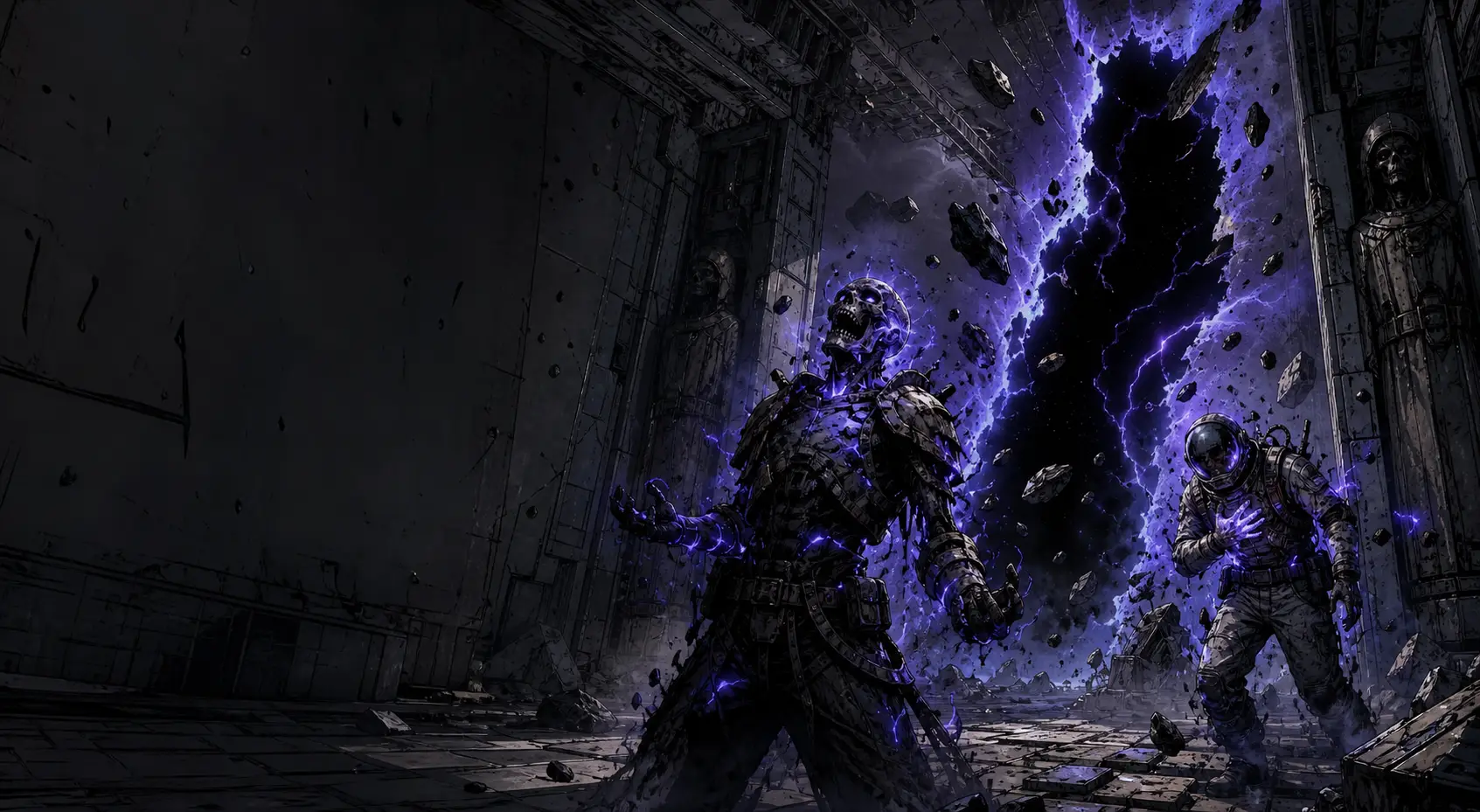
The Hunger Behind the Stars
“Void” is not just empty space—it is the tendency of things to come apart and stay that way. It’s the cold that creeps into an unheated hull, the silence left when a station goes dark, and the flavor in certain rituals and weapons that doesn’t feel like ordinary death so much as erasure.
Undead legions, certain Rift cults, and some Chronologist black programs all use void as a fuel source: a kind of anti‑vitality that keeps bones walking, ghosts whispering, and cursed engines turning. To most people, void is something you feel on the back of your teeth in a vacuum leak or in the quiet between heartbeat and flatline—a reminder that the universe’s default state is not “alive” and you’re living on borrowed principle.
Implications
Rituals, bargains, and pacts
Void energy appears in necromantic rites, long‑term pacts with death‑aligned entities, and Chronologist punishments that “thin” someone’s presence in the timeline. In play, void traits on rituals help define which souls and bodies are affected.
Resource ecosystems for undead
Communities of undead or void‑bound beings need sources of void healing just as living communities need clinics and food; void shrines, cursed reactors, or Rift‑burnt regions become their equivalent of hospitals and farms.
Environmental storytelling
Areas under heavy void influence—colorless corridors, cryo‑cold derelicts, zones where sound dies quickly—can be mechanically represented with void traits and environmental damage, signaling to players that they’ve crossed into a place where life is actively unwelcome.
Societal Impact
Void energy is at the heart of some of Starfall’s deepest divides. To necro‑engineers, undead legions, and certain devotion cults, void is a renewable resource: an engine that can keep soldiers marching and cursed constructs running for centuries. To Chronologists, Accord regulators, and most living populations, it is an existential contaminant—proof that the galaxy’s natural equilibrium is not on their side.
This drives real policy. Stations might ban void‑trait magic inside their life‑support rings, herd void‑healing populations into segregated sectors, or weaponize pockets of void terrain as last‑ditch defenses. Rumors of tools that can flip someone from vitality to void (or back) are enough to start wars, because that power decides who gets healed by which side’s hospitals and whose bodies are silently dissolved by “friendly” environments.