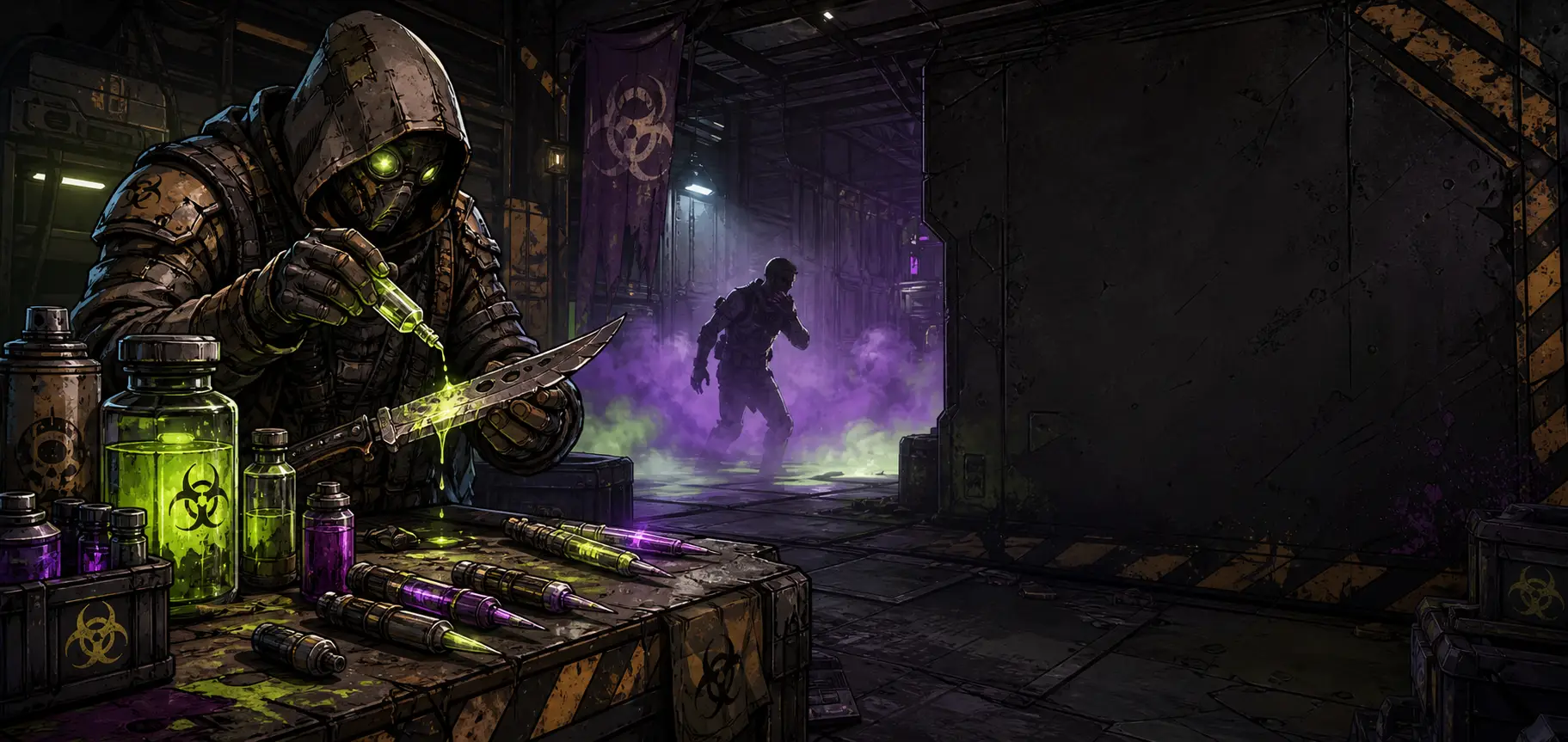
Toxins, Nanoplague, and Rift Venom
A clean death is a luxury. Poisons are the slow, quiet killers that ride under the main plot—the nanites in the air scrubbers that never quite stop replicating, the fungal spores that grow in your lungs between jumps, the venom grafted into a syndicate assassin’s teeth, the Rift‑tainted mist that tastes like copper and memory.
Every tech, plant, and beast that evolved or was engineered after the Riftstorm learned the same lesson: if you can stick something inside a body and let time do the killing, you don’t have to win the first fight. The poison trait is the rules tag for that philosophy—anything that twists blood, nerve, or mana over rounds, minutes, or days instead of just putting a hole in someone and calling it done.
Implications
Assassination, but also leverage
Poisons make it possible to threaten slow death instead of immediate violence: a contact toxin on a guild seal, nanoplague hidden in a medbay, poisoned Dei packs that lose their safety day by day.
Environmental storytelling
The presence of specific poisons—radiation poisoning, fungal spores, tailored battlefield toxins—signals what kind of environment the PCs are in and what factions operate there. A swamp with bog rot, an orbital with arsenic-based coolants, a Rift burg fogged with hallucinogenic inhalants all tell their own story.
Crafting, smuggling, and black markets
Poisons are big business: alchemists brew toxins, smugglers move them past scanners, and medics sell antidotes or anti-poison implants. Downtime rules for crafting and Treat Affliction make poison trade and cure missions mechanically meaningful.
Social Impact
Poisons in Starfall are as much infrastructure as they are weapons. Warlords and corporations lace minefields and corridors with inhaled deterrents, devoting budget to both toxins and protective gear. Factions like the Ebon Syndicate maintain poison labs for quiet enforcement and countermeasures, while Viridian enclaves grow symbiotic microbiomes that make them immune to many standard poisons but dangerously toxic to outsiders.
Because poisons often work as afflictions over time, they dovetail with Starfall’s survival economy. A crew that can’t afford full treatment might limp along at stage 1 or 2, clocking every Yom against how long until the affliction’s maximum duration runs out—or until they hit the final stage and never see another sunrise. That makes poison both a tactical tool and a campaign-level pressure: a way to turn “we got hit once” into “we have three days to fix this or start writing goodbyes.”
Stuff