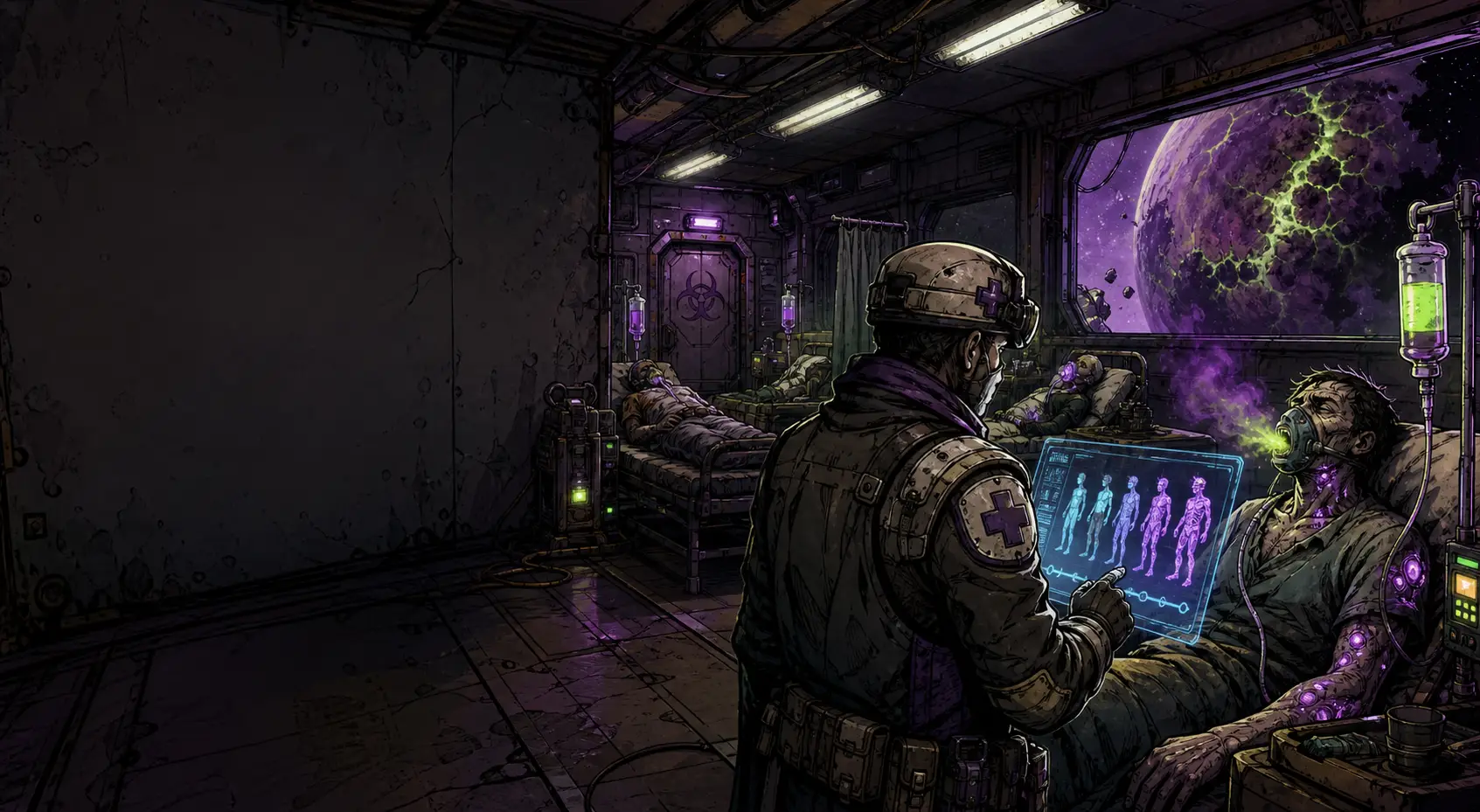
When the Galaxy Gets Inside You
Bullets and hull breaches are honest ways to die in the Starfall Galaxy. Diseases are quieter—weeks of coughing up Rift-shadow, slow organ shutdown from poorly shielded reactors, skin blooming with fungus that remembers old cosmic wars. They slip in through bad air recyclers, contaminated Dei packs, half-cleaned scavenger wounds, or one too many hours unmasked in a market whose traders swore the vapors were “perfectly safe.”
Every region has its signature plagues: Inner Sphere megacities rife with chrono-resistant superbugs; Outer Sphere warzones trading strains of trench fever and gene‑hacked pox; Frontier worlds where something in the soil wants you to become part of it. To most spacers, disease is just another meter on the survival clock—a slow affliction that rides in the background while you’re already fighting to see the next Yom.
Implications
Long-term tension and logistics
Diseases shine as slow-burn threats that pressure downtime: a navigator’s Rift-lung, a mechanic’s radiation sickness, or an NPC ally’s wasting fever can push the group toward medical quests, time-sensitive travel, or resource trade.
Environmental storytelling
Affliction stat blocks like bog rot or tuberculosis double as environmental clues—telling you about swamp conditions, poor ventilation, or heavily industrialized zones just from what they inflict and how they spread.
Medicine and expertise spotlight
Actions like Treat Disease elevate skilled medics, bio‑engineers, and guild doctors, turning downtime into meaningful play: they can shorten disease duration, lower stages faster, and keep a fragile crew going in biohazard-laden campaigns.
Social Impact
Plagues have drawn lines on the galactic map as surely as wars and Riftstorms. Quarantine moons circle crowded Inner Sphere hubs; whole refugee fleets carry the reputation of “walking outbreaks” whether or not it’s still true. Outer Sphere factions weaponize designer diseases against rivals, knowing that even a curable affliction can topple logistics if it hits the right crew at the wrong time.
Economies, too, warp around disease. Chronologists and med-guilds sell guaranteed “clean time” in disease-free zones, priced per Yom. Black markets move unlicensed antivirals, counterfeit vaccines, and questionable nanocures. Viridian enclaves cultivate symbiotic microbiomes that make them immune to common station plagues but dangerous to outsiders. Mechanically, the disease trait helps explain why these social structures exist: infections last days to weeks, and without proper care, they quietly grind populations down.
Stuff