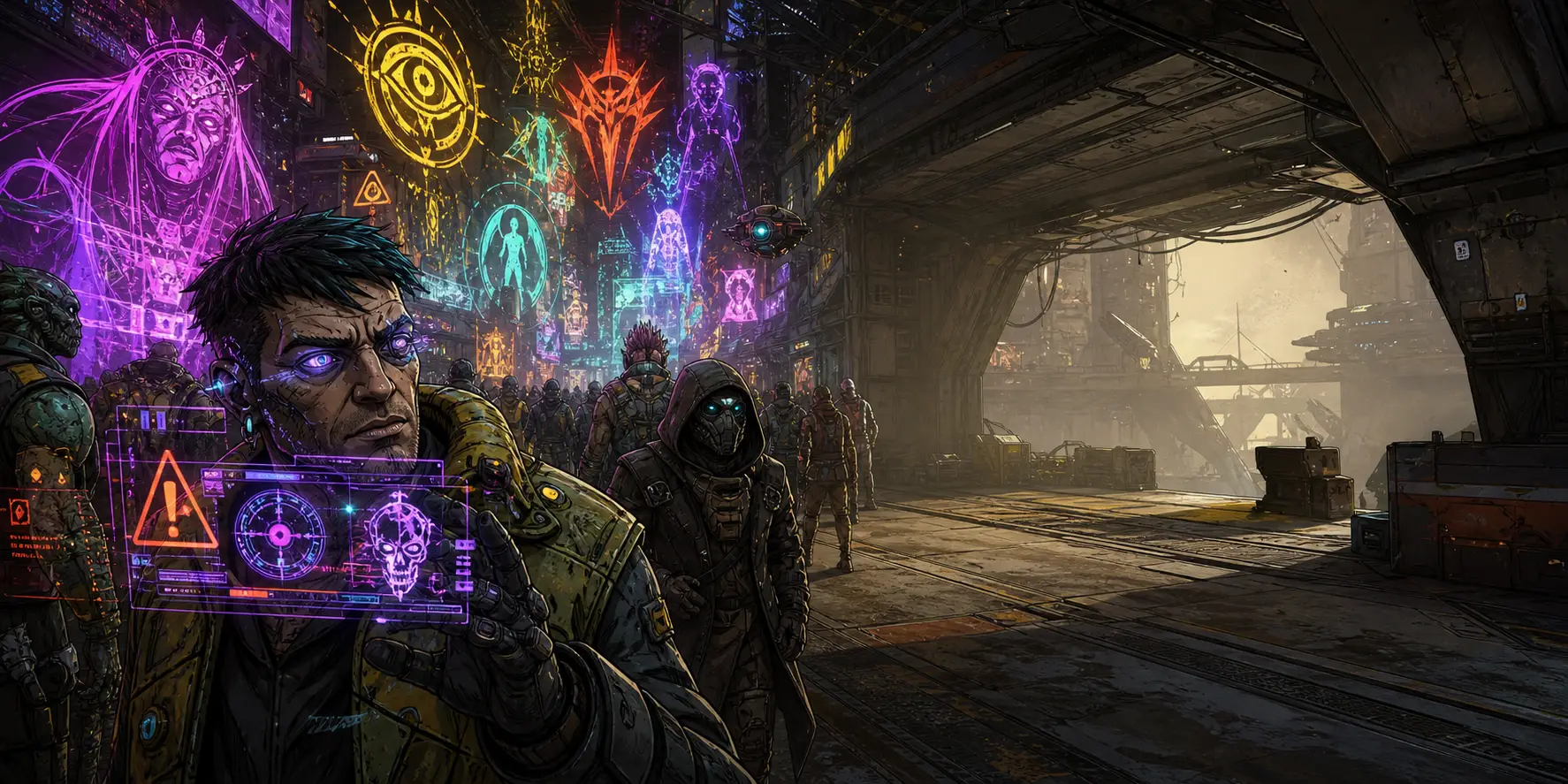
Light, Screens, and Lies
Sight is both the most trusted and the most easily abused sense. Stations drown in flickering holos, warning glyphs, faction logos, devotion murals, and shifting ad fog. Rift-gate auroras stain the sky with colors no one had names for before the Cataclysm. Every corridor has its own language of light: green for life support stable, amber for “don’t ask questions,” crimson for “run.”
Everyone knows better than to believe everything their eyes feed them, but everyone does anyway. Visual cues are how you spot pirates on scopes, read guild clearance sigils, recognize a Chronologist’s badge, or see the hairline crack in a viewport that means “get out now.” Visual-tagged effects in the rules are the ones that weaponize this dependence on sight—terrifying displays, glaring illusions, blinding flashes, and subtle glamours that rely on your eyes making the wrong call.
Implications
Tracking and detection
Enhanced smell (via scent, olfactory stimulators, or bioengineered noses) aids in tracking quarry, detecting leaks, noticing contamination, or identifying fresh vs. stale environments. In Starfall, that might mean sniffing out gas leaks, spoiled Dei packs, or Rift-taint in a bio-lab.
Communication and social influence
Pheromone-coding, personalized perfumes, and breath-based charms influence reactions, mark safehouses, or carry “silent” messages in places where speech is risky. A negotiator whose breath smells of honey and comfort might gain bonuses to Making an Impression—as long as the target can smell it.
Navigation and environmental reading
Distinct smells can mark zones where life support is failing, where certain flora or fauna dominate, or where heavy industrial pollutants sludge the air. Explorers and salvagers learn to read those cues as quickly as they read signage.
Social Impact
The dominance of vision in Starfall tech has cultural consequences. Populations who can’t rely on sight—due to Rift mutations, environmental damage, or cultural adaptations to darkness—often develop very different approaches to security, art, and worship. Meanwhile, societies that saturate their environments with visual noise (Inner Sphere ecumenopolises, Concord performance-war zones) turn visual literacy into a survival skill: knowing which lights matter and which are just advertising can literally save your life.
Arms races emerge around visual deception and protection. Corporations and guilds invest in ever more bombastic displays, stealth coatings, and anti-illusion programs; resistance groups and outer-sphere nomads counter with visual filters, blind-fighting training, and an emphasis on non-visual senses for navigation and command. The Visual trait in rules captures these conflicts in miniature—showing which effects rely on eyes, and therefore which can be bypassed by those who have learned to fight without them.
Stuff