When Your Stomach Turns on You
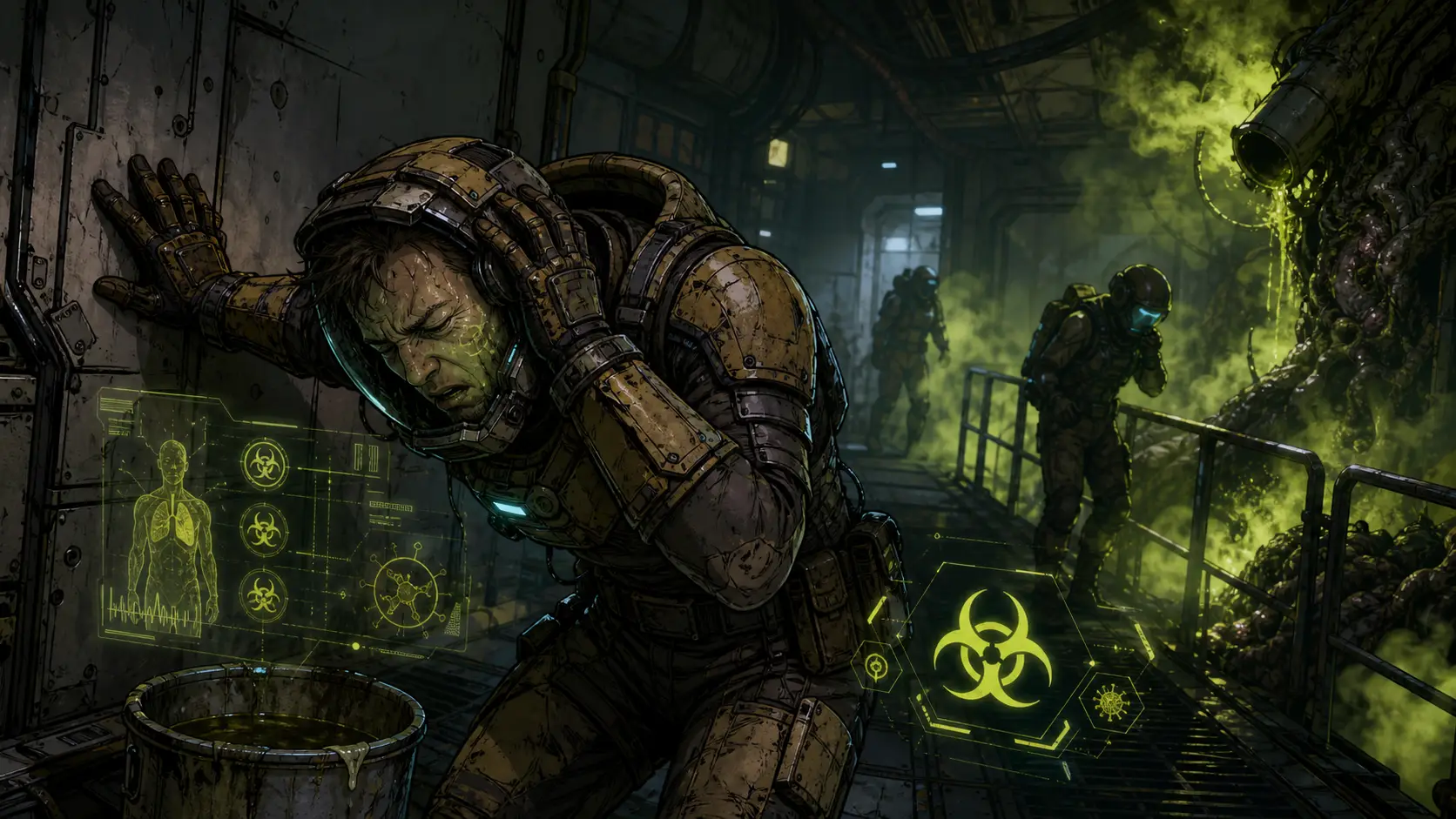
In the Starfall Galaxy, Sickened is what happens when your body decides it has had enough of the void.
It’s the metallic taste in your mouth from breathing recycled air laced with unknown spores. It’s Rift‑sickness after a bad jump—vision swaying, inner ear screaming, each heartbeat pounding behind your eyes. It’s radiation nausea, neural feedback from a misaligned exocortex, or the stench of some Outer Sphere horror rotting in low gravity until your guts want to climb out of your throat.
Spacers know the signs: the crew member who suddenly moves carefully, jaw clenched, keeping one hand near a rail or a bucket. The sharpshooter who misses an easy shot because the corridor seems to lurch sideways. The mech operator who has to rip off their helmet mid‑combat to vomit, losing precious seconds and risking contamination of their own suit.
When you’re sickened in Starfall, every action is harder—and swallowing anything, even life‑saving medicine, is a battle of will against your own stomach.
Implications
Potion Lockout:
Because sickened prevents voluntary ingestion, it can temporarily shut off potion‑based healing, antiplague dosing, and certain alchemical buffs at exactly the moment you want them.
Exploration Hazards:
Traversing biohazard zones, rummaging through plague‑ridden wrecks, or operating in foul atmospheres can accumulate sickened values, making every subsequent check on the expedition worse.
Social & Downtime Scenes:
A character negotiating while nauseated will mechanically suffer on social checks; sickened 2 diplomats or interrogators might misread cues or lose composure at key moments.
Medical Drama:
Does the medtech prioritize stopping persistent damage, curing disease, or reducing someone’s sickened so they can finally drink the cure? The mechanics support that triage tension.
Societal Impact
Ship & Station Hygiene:
Serious outfits invest heavily in air filtration, food‑prep standards, and spoilage detection; sickened crews are less effective in every respect and more vulnerable to nastier follow‑up afflictions.
Protective Gear & Drugs:
Antiplagues, atmos‑filters, and hazard masks are prized; so are drugs or rituals that provide bonuses vs. disease, nausea, and sickened effects or suppress them temporarily.
Quarantine Protocols:
Outbreaks that leave populations sickened (and unable to comfortably ingest nutrients) can spiral into famine or unrest, leading to strict quarantine zones and armed enforcement.
Tactical Doctrine:
Units familiar with nauseating enemies or environments drill around spacing and positioning; no one wants the entire squad clustered in a stench aura and vomiting instead of fighting.