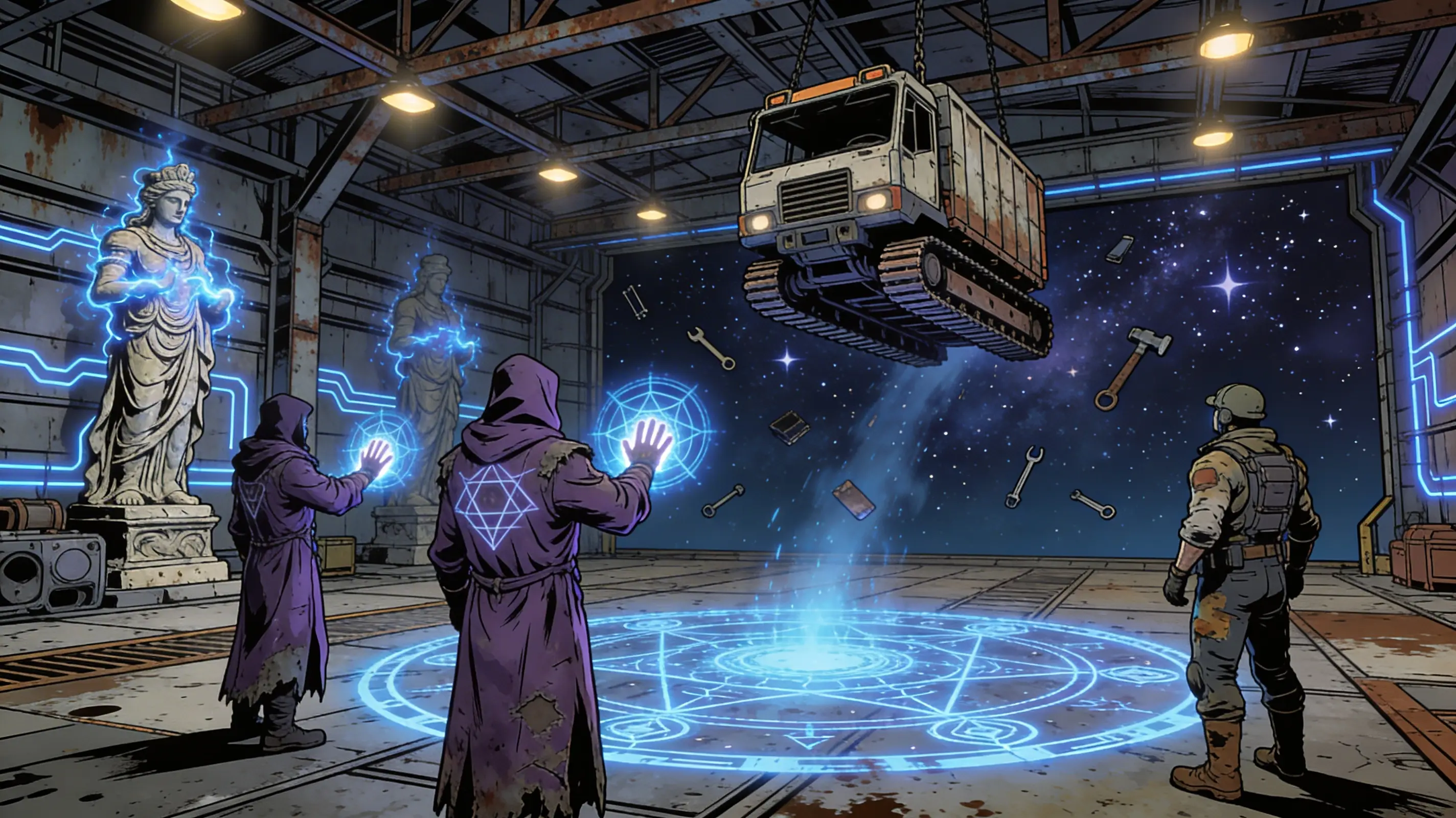
Animate Object
Ritual 2
Uncommon; Blue; Transmutation
Source Player Core pg. 382 Winter 2025
You perform a complex day-long working to turn a single unattended object into an animated object creature, with its level and cost determined by the standard Creature Creation Rituals table.
Tradition Arcane, Divine, Occult
Cast 1 day
Cost Rare alchemical oils and arcane reagents equal to the creature’s value as per the Creature Creation Rituals table .
Secondary Casters 1+ (most circles use a small team of engineers, chanters, and safety officers)
Primary Check Usually Arcana (Starfall engineers and technomancers) or Occult (Rift-focused circles); some devotions substitute Religion when animation is framed as a blessing.
Secondary Checks Arcana, Crafting, Occultism, or Religion, depending on how you’re justifying the ritual and what the GM allows.
Target 1 unattended, non-creature object within the ritual space, typically no larger or more complex than what the Creature Creation table and GM permit (a broom becomes an animated broom, a statue an animated statue, a loader a walking lifter rig).
Critical Success – The object becomes an animated object of the chosen type and allowed level, and you may designate it as your minion if it’s at least several levels lower than you (per Creature Creation rules).
It obeys your commands as a construct servant—perfect for Blue Mana “systems thinking” captains and Chronologists who want predictable, rules-bound helpers.
Success – The object animates successfully but with less control.
It’s typically friendly and will follow a single, clear directive (guard this door, patrol this corridor, sort these crates) rather than ongoing tactical orders, behaving like a pre-programmed drone rather than a live subordinate.
Failure – The ritual fizzles or produces a stuttering, unstable animation that soon collapses; you waste time and materials, and in Starfall GMs often add a cosmetic glitch (brief movement, a half‑formed voice, or a Rift-static afterimage) as a warning of how close you came.
Critical Failure – The object animates hostile or uncontrolled.
It might fixate on a misinterpreted directive (“eliminate all intruders” where everyone is an intruder), become a roaming hazard, or imprint on a different “controller” (an onlooker, a nearby AI, or even a Metronome anomaly), becoming a problem in its own right.