(ta-la-SA)
The unending conquests of Talasa prove three things—all want it, none can have it, and it has the best panbread this world has ever seen.
-Palan, The Three Hundred Fifty-Seven Sieges of Talasa
Summary
Type: Oligarchy
Ruler: Multiple
Population:
Worship:
Founded:
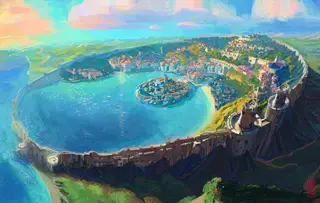
Talasa is the gem of the Si’unya Sea. It’s the heart of the Kessany, a center of trade and innovation. Connected to both the sea and the Talasa Nexus, it’s one of the easiest places to travel to—and the hardest to capture.
Appearance
There are four main districts within the city.
Portside. This is the cluster of high-end buildings near the docks, including the homes of the richest citizens and the headquarters of the various departments.
Red Field. Hordes of merchants, both reputable and not, swarm around the gate to the nexus, hoping to swoop in and strike a deal with the people coming in to sell and trade. Many of the people who live in this area are just looking to make a quick profit, selling food, supplies, wagons, and anything else to the caravans that come in through the nexus.
Middle City. This is where the bulk of the city’s citizens live, with the buildings closest to Portside being the nicest. This area is full of stately homes and shops.
The Graple. The colloquial term for the washed-up vagabonds and poor who live outside the walls of Middle City.
Buildings are made of lumber and stone, and most are whitewashed. Shrines and small temples appear on almost every street corner, as more and more gods enter the knowledge of the Talasahra. The largest buildings are the governmental headquarters, where the Directors live. The Temple of Okanpil resides near the edge of Portside.
Though the Talasahra are proud not to have a king like other nations, their government is just as strong. The departments control almost every aspect of the city.
Government
Talasa is an oligarchy, ruled by five different municipal officials. The Directors of Trade, War, Agriculture, and the Seer make decisions for the city. Theoretically, they represent the prevailing interests of the people.
The Director of Trade, Gabel Manti, oversees the large amounts of goods coming and going in the city. The department collects 15% of all imported goods, “for the continual maintenance of the city.” Manti and her workers can be seen everywhere around Talasa, and especially around the two ports, checking, notating, and calculating their little hearts out. They operate the command economy and control every aspect of production and commerce.
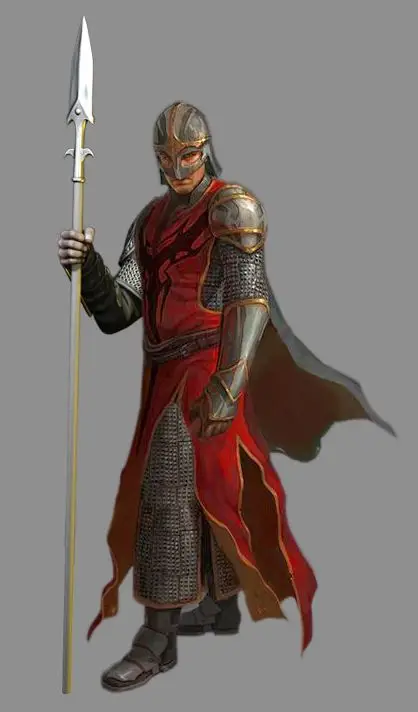
Pfep Kalaha, the Director of War, oversees the massive logistical nightmare of managing a standing army. His funding comes from taxes and goes to equip, feed, and pacify the hundreds of soldiers that guard the city’s ports. The soldiers have iron breastplates, helmets, spears, and shields. It also fields a sizable navy, both of trade and war vessels.
The Director of Food oversees the planting, harvesting, and storing of food for the citizens. They tell the farmers what to do and experiment with better methods of transportation. They collect a tax from the crops harvested and fish caught to fund their endeavors.
The Seer deals with everything else. He manages the religious affairs, looking after the temples and shrines. He also regularly passes down “divine revelations” and relays instructions to the three directors on actions to take.
The directors are chosen by the Seer, who supposedly gets a vision about who to choose. And the current Seer chooses the next Seer.
Culture
Citizenship
Citizenship in Talasa is universally coveted and sparingly given. Being a citizen gives you prestige and importance, as well as guaranteed protection from the military. Citizens may live in Middle City and are obligated to serve in the military when called upon. They may also be a Director or a member of one of the departments. There are rare exceptions, but for the most part, one can only obtain citizenship through marriage or birth.
Those who are not citizens live in the Graple and are considered the scum of the earth, even though some portions of it are moderately comfortable.
In between citizenship and the Graple are women, who are permitted a sort of half-citizenship. They are not bound to the same duties as the men, but are allowed to work some upper-class jobs. Traditionally, women spend their younger years raising children, and then go into accounting, record-keeping, or some other math-related job.
Tolerance
The Talasahra enjoy many novelties, one of these being the variety of people who pass through. They generally think the way to truth is by collecting all available facts, and enjoy discussing new ideas and theories from afar. Any Talasahra worth his salt loves a good controversy, and enjoys long and pointless debates with his friends. Though they may not agree with it, they’ll respectfully hear any idea or story you tell. Though they’ll probably laugh about those daft outsiders as soon as you turn your back.
Factions
There are numerous political and religious factions within Talasa that are all vying for control in various ways. The following are some of them.
The
History
Talasa was founded in around 1100 BC, about ten years after the discovery of the special properties of bvatin. Over the next roughly 1,200 years, it has been attacked more times than anyone can remember (though the famed historian Palan claims to have definitely counted it as 357, no one has bothered to verify his work, and that was 30 years ago. There have been a few more since then)
According to legend, it has been captured several times as rival factions warred for control of the hub. But when the current ruler fortified the city in 850 BC, it became nearly impossible to capture. The locals pride themselves on having never been under the authority of another king for hundreds of years. Whether that’s true or not is a matter of debate.