(luh-BEET)
Quote
At A Glance
Type: Democracy
Ruler: Chancellor Atteo
Capital: Marleth
Population: 700,000
Worship: Animism, Christianity
Founded: 90 AD
Economy: Self-sufficient communities
Imports:
Exports: Bvatin
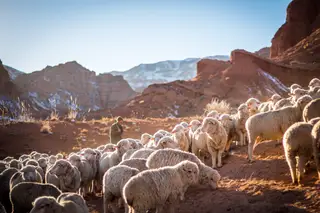
Lebeit (also called the Republic of Lebeit) is the eastern region of the Pfiyuyu, mostly made up of rocky scrubland and mesas.
Government
Lebeit is a republic where the head of every yemah (see below) votes on not only their leaders, but also every law, policy, and governmental action. This has only been the case for about ninety years, however, ever since the country won its independence from the fragments of the Pfelinisan Empire.
Each city, while under the authority of the Chancellor (the ruler of the entire country), has much authority of its own. Each family head gathers in the town’s governmental building and votes on city ordinances. There they will also vote on city leaders and law runners who carry information from the cities to Marleth. These runners will carry proposed laws to the capitol, carry proposed laws back to their homes, and then bring vote results back to the capitol to be collected.
Every three years, each family head must travel to Marleth for a grand time of feasting, voting on laws, and the election of a chancellor. Through a complex process that can often last two or more weeks, they choose nominees and go through a series of votes to choose the chancellor.
Voting
Every two years, the head of each yemah (usually the oldest male) travels to the nearest city to vote on different legislative measures. When voting, the advocates of certain positions will stand in certain places across an open room. It might be the political candidate, or the man who proposed a law, etc., but everyone who votes for a measure will stand with that person in the room along with all their other voters.
As the Lebeitians are generally passionate people, these votes can easily turn into vicious debates between the different gathering groups. In the early days of the newborn country, fights would often break out between the voters, sometimes turning fatal. But as the military and law enforcement has strengthened, this has greatly diminished. Though yelling matches are still regular.
Tyranny
Currently, the biggest worry for the average citizen is keeping the government in check. During its short history, a handful of chancellors and city rulers have made their run at supreme rule, though they’ve always been beaten down. Some cynical people say it’s only a matter of time until someone rigs the system and makes everything collapse. And they’re probably right.
Military
Each yemah head, and every able male under his authority, has a duty to serve in the army when necessary. The chancellor will call upon the country’s reserve as needed, while a small amount is kept as a standing army for border patrol, guarding, etc. These are on a rotation of a few years so none are away from home for long.
Culture
The coastal region of Lebeit is where the majority of its residents live, with the rest living in small communities scattered across the Miryuler. Animals are a large part of their culture, with elk serving as the means of transportation, and sheep and cattle raising being major occupations and sources of food. Agriculture is also vital to their survival.
Food
Rainfall agriculture is the primary source of food, making up over half of the typical diet. Wheat, barley, and flax are especially important. They also grow some fruits such as figs, grapes, and maybe other stuff. Pastoralism is the other big piece, though it isn’t as important as agriculture. It makes up slightly less than a quarter of their diet.
Debates
Voting and governmental choice are also a major part of their culture. Every self-respecting and eligible Lebeitian is highly involved in the government and prizes personal choice above all else. Those who meet a Lebeitian in a foreign land are often exasperated with their endless and energetic debates and insistence on considering every available option. Of course, they’ll also want to vote on all those options, which spawns yet another lengthy debate.
Tolerance
The culture is moderately tolerant, allowing people to do their own thing, but the culture is also very proud and distinct and—especially in the hinterlands, where other Pfiyuyun powers have not influenced much—each community has social norms that are rigorously enforced.
The Yemah
The culture is very much family-oriented, with extended family units comprised of parents, children, uncles, aunts, cousins, grandparents, etc. all living in one yemah. The family founders will continue to tack on more rooms as needed until there’s no more space, then part of the family will split away and start their own yemah, slowly forming a village. While some outsiders have moved into the coastal cities, most rural residents can recite from memory exactly how they are related to any one of their neighbors. This is so much the case that the Lebeitian word for “cousin” has become colloquially synonymous with the word “neighbor.”
Marriage
Due to this situation, marrying anyone at least as distant as a first cousin is accepted and normal. Marrying siblings is taboo but occasionally necessary; anyone else who is somewhat similar to your age is okay.
Literacy and Education
For the most part, only the well-off in cities are literate. The nation, while on the rise, has nothing like an education system, and schools are few. Most education happens when families teach their children the family trade. However, the very first higher learning institution—Lelapos' School of Enlightenment—has recently opened and is drawing attention.
Religion
Many people worship the land’s ancient religion, one possibly derived from its original inhabitants that Arik drove out. It’s one of spirits and superstition, meshed together with the Pfelinísan pantheon of gods. The religion is sort of a mess, and there is no real set-in-stone belief system.
However, within the last twenty years, a religion known only as “the Way” has been revolutionizing the culture of Lebeit. When a stranger from a far land arrived about fifty years ago with strange news, the culture initially rejected it. But within the last decade or two it’s been sweeping through the nation and has many people worried about what consequences it might entail.
Classes
The highest class is the yemah heads—essentially the only full citizens of the country. They are seen as even more important than the government. They’re also the people the government officials really don’t want to upset.
The lowest class are those remnants of Pfelinísa, the minority ethnicity who remained after the collapse of their empire, some attempting to rule little sections of the country. They’re among the richest of the people and are often treated like trash and not respected.
Women, and anyone who is not involved with leading a family, are all but servants in traditional Lebeitian culture.
Economy
As with the political system, each community is primarily self-governing and self-sufficient, with each yemah tending to specialize in a certain area and trade with other families to sustain themselves. Rare products and luxuries, however, must be imported.
Overall, Lebeit is a poor country, with only coastal cities boasting anything that could be called luxurious. But it is on the rise, thanks to the recently-uncovered bvatin mine in the Griga Mountains.
Architecture
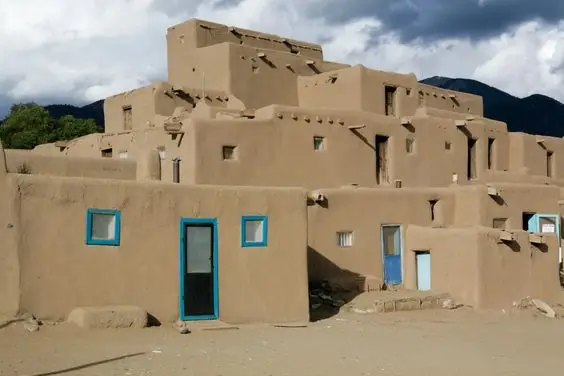
Most houses in Lebeit are called yemahs, a word referring to a large dwelling where an extended family lives. These are made of adobe bricks and, in the cities, painted bright colors. The ground floor rooms are often used for storage and have no ground floor door. Instead, they have ladders on the front, where you can climb to the living spaces and then down into the storerooms.
Flora and Fauna
The following are some animals one might see in Lebeit. Here are some more. https://www.artstation.com/artwork/g2QELP
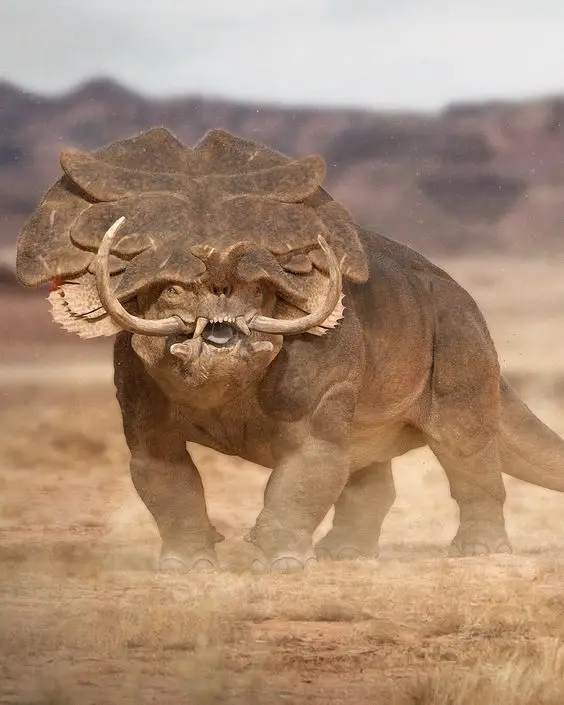
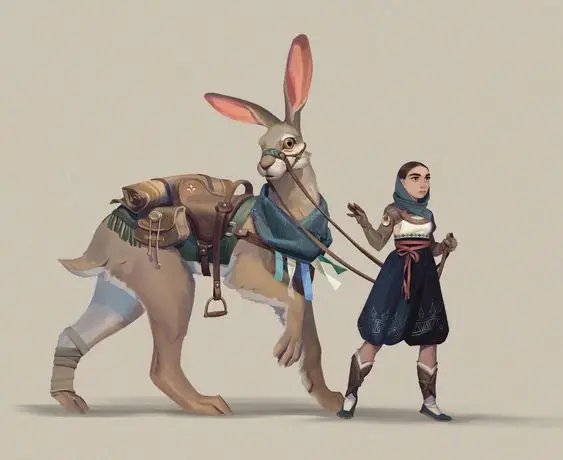
Used as a pack animal and mount, though useless in battle as they are easily started and almost impossible to train.
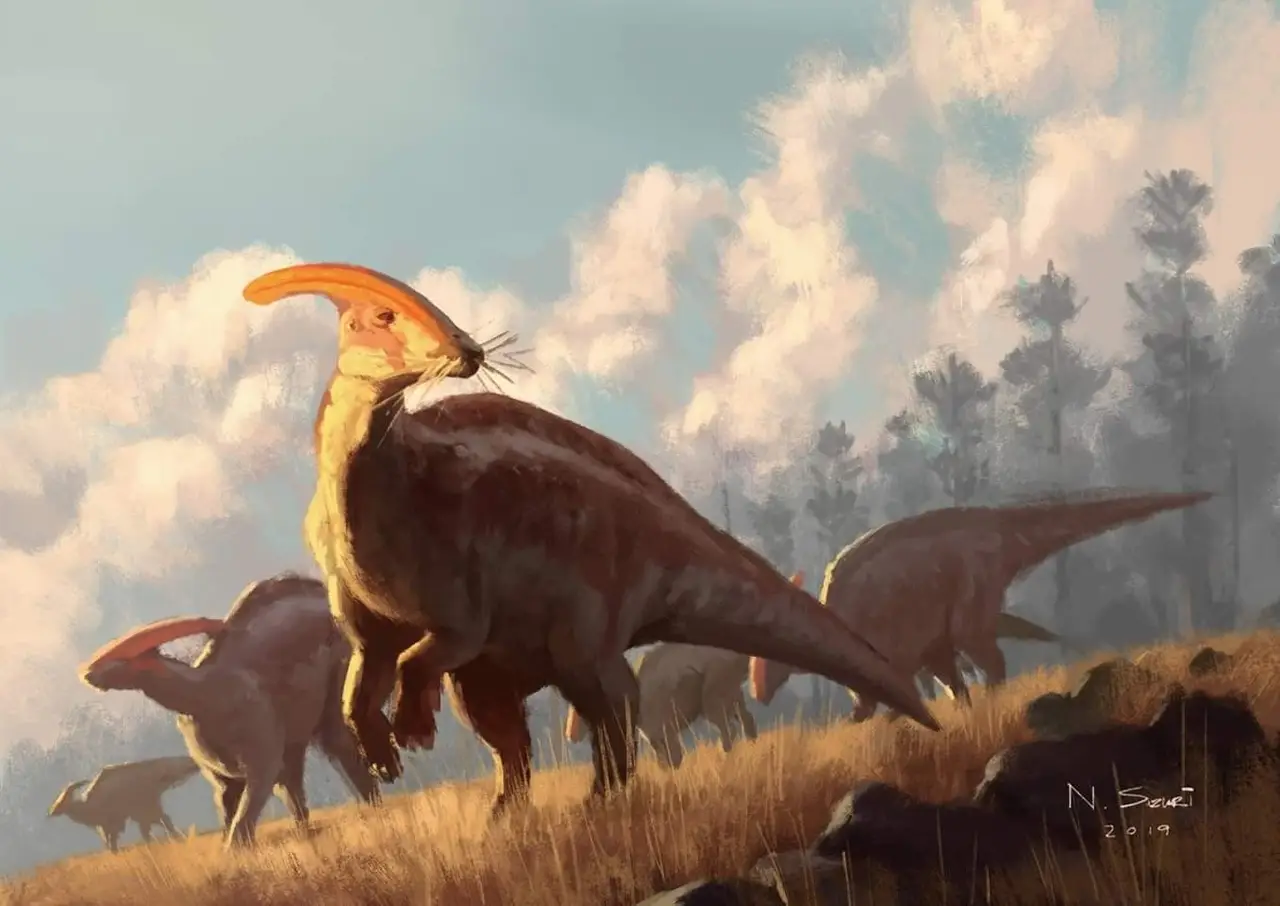
This good boi is one of two animals in Lebeit who will not try to kill you.
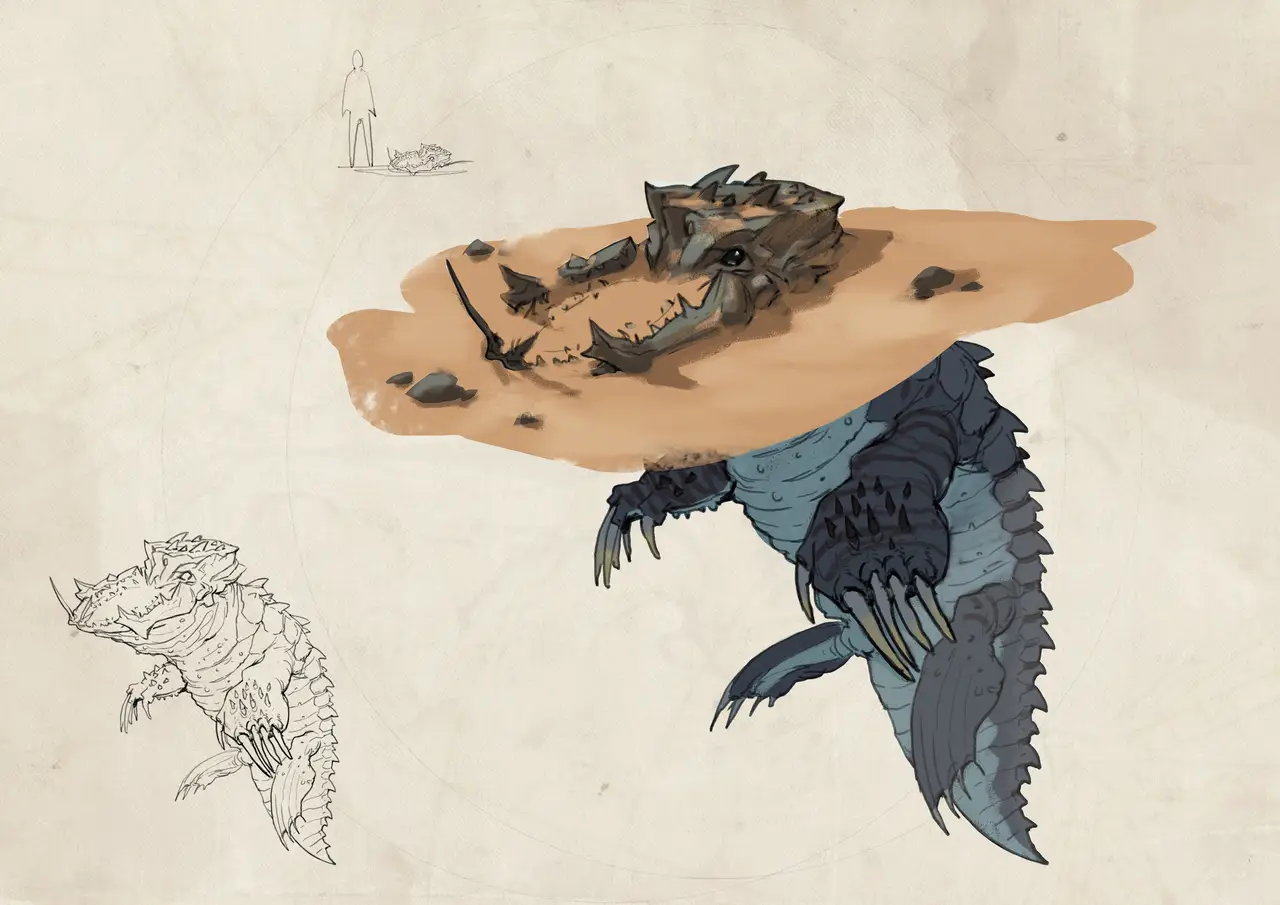
History
According to The Passage of Arik, one of the oldest books in Miyat, Arik the Longfooted first explored this region in the ancient days and mapped much of it. He also singlehandedly conquered the tribes that already lived there—or so the book says. Very little information about these tribes still exists.
The nation was conquered by Pfelinísa during the height of its rule at around 132 BC. They were a client state for a century before the tumble and fall of the empire, and after its collapse, it organized itself into a democracy. The country has seen success with this system, but even after only 90 years, several would-be tyrants have arisen, trying to rig the system. Some are worried that Chancellor Atteo may also be looking to centralize power, though his rule is only recent and the prophets of doom have not yet been proven right or wrong.