


Table of Contents

Races
Dwarf
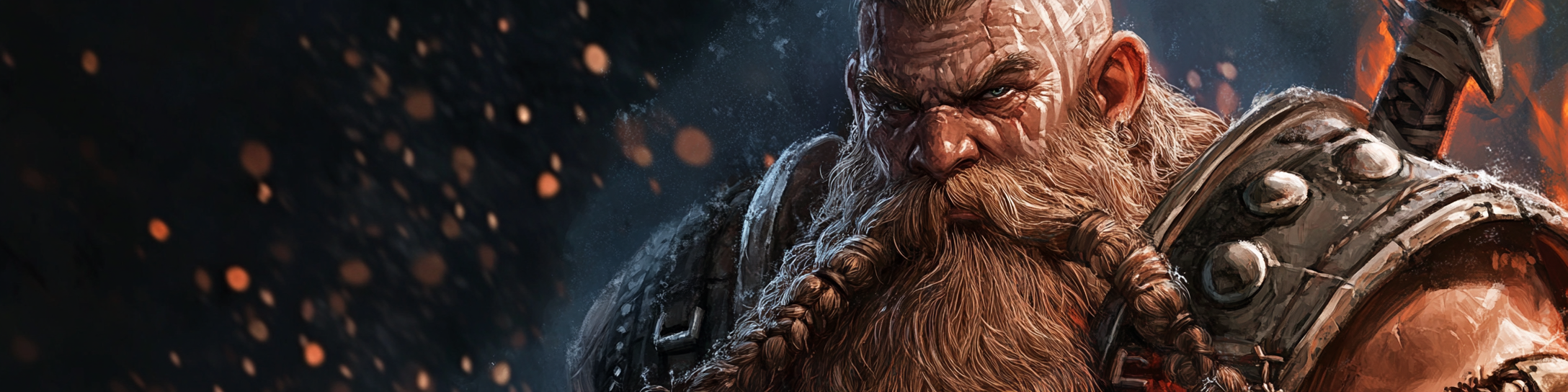
Bold and hardy, dwarves are known as skilled warriors, miners, and workers of stone and metal. Though they stand well under 5 feet tall, dwarves are so broad and compact that they can weigh as much as a human standing nearly two feet taller. Their courage and endurance are also easily a match for any of the larger folk.
Dwarven skin ranges from deep brown to a paler hue tinged with red, but the most common shades are light brown or deep tan, like certain tones of earth. Their hair, worn long but in simple styles, is usually black, gray, or brown, though paler dwarves often have red hair. Male dwarves value their beards highly and groom them carefully.
Your dwarf character has an assortment of inborn abilities, part and parcel of dwarven nature.
Ability Score Increase. Your Constitution score increases by 2.
Age. Dwarves mature at the same rate as humans, but they’re considered young until they reach the age of 50. On average, they live about 350 years.
Size. Dwarves stand between 4 and 5 feet tall and average about 150 pounds. Your size is Medium.
Speed. Your base walking speed is 25 feet. Your speed is not reduced by wearing heavy armor.
Darkvision. Accustomed to life underground, you have superior vision in dark and dim conditions. You can see in dim light within 60 feet of you as if it were bright light, and in darkness as if it were dim light. You can’t discern color in darkness, only shades of gray.
Dwarven Resilience. You have advantage on saving throws against poison, and you have resistance against poison damage (explained in “Combat”).
Dwarven Combat Training. You have proficiency with the battleaxe, handaxe, light hammer, and warhammer.
Tool Proficiency. You gain proficiency with the artisan’s tools of your choice: smith’s tools, brewer’s supplies, or mason’s tools.
Stonecunning. Whenever you make an Intelligence (History) check related to the origin of stonework, you are considered proficient in the History skill and add double your proficiency bonus to the check, instead of your normal proficiency bonus.
Languages. You can speak, read, and write Common and Dwarvish. Dwarvish is full of hard consonants and guttural sounds, and those characteristics spill over into whatever other language a dwarf might speak.

Sub-Races
Four main sub-races of dwarves populate the worlds of D&D: Hill Dwarves, Mountain Dwarves, Duergar, and Mark of Warding. Choose one of these sub-races when creating your character.
Hill Dwarf
Ability Score Increase. Your Wisdom score increases by 1.
Dwarven Toughness. Your hit point maximum increases by 1, and it increases by 1 every time you gain a level.
Mountain Dwarf
Ability Score Increase. Your Strength score increases by 2.
Dwarven Armor Training. You have proficiency with Light and Medium Armor.
Duergar
Ability Score Increase. Your Strength score increases by 1.
Superior Darkvision. You can see in dim light within 120 feet of you as if it were bright light, and in darkness as if it were dim light. You can't discern color in darkness, only shades of gray.
Duergar Resilience. You have advantage on saving throws against illusions and against being charmed or paralyzed.
Duergar Magic. When you reach 3rd level, you can cast the Enlarge/Reduce spell on yourself once with this trait, using only the spell's enlarge option. When you reach 5th level, you can cast the Invisibility spell on yourself once with this trait. You don't need material components for either spell, and you can't cast them while you're in direct sunlight, although sunlight has no effect on them once cast. You regain the ability to cast these spells with this trait when you finish a long rest. Intelligence is your spellcasting ability for these spells.
Sunlight Sensitivity. You have disadvantage on Attack rolls and Wisdom (Perception) checks that rely on sight when you, the target of your attack, or whatever you are trying to perceive is in direct sunlight.
Mark of Warding
Ability Score Increase. Your Intelligence score increases by 1.
Warder's Intuition. When you make an Intelligence (Investigation) check or an ability check using thieves' tools, you can roll a d4 and add the number rolled to the ability check.
Elf
Elves are a magical people of otherworldly grace, living in the world but not entirely part of it. They live in places of ethereal beauty, in the midst of ancient forests or in silvery spires glittering with faerie light, where soft music drifts through the air and gentle fragrances waft on the breeze. Elves love nature and magic, art and artistry, music and poetry, and the good things of the world.
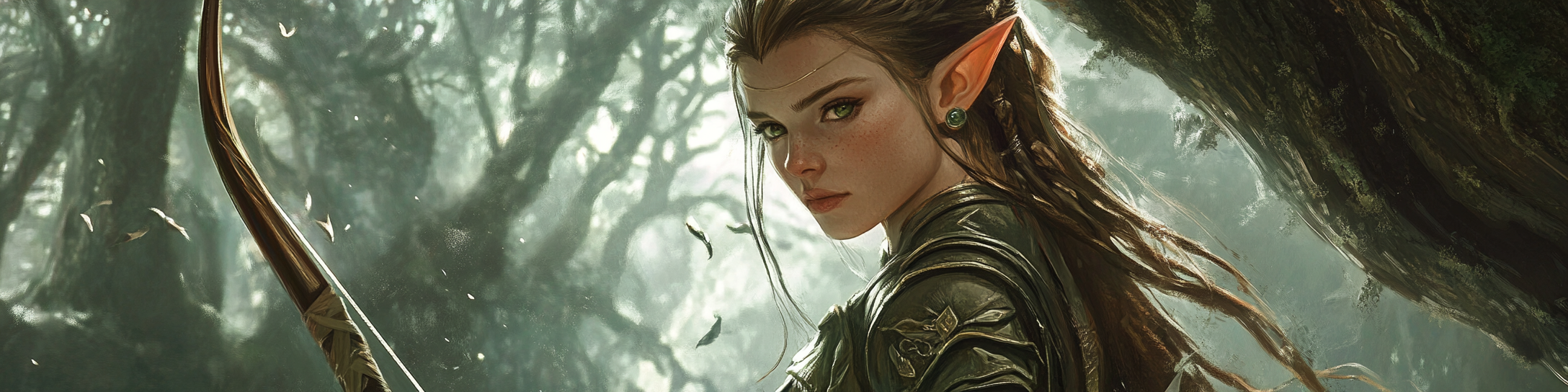
With their unearthly grace and fine features, elves appear hauntingly beautiful to humans and members of many other races. They are slightly shorter than humans on average, ranging from well under 5 feet tall to just over 6 feet. They are more slender than humans, weighing only 100 to 145 pounds. Males and females are about the same height, and males are only marginally heavier than females.
Elves’ coloration encompasses the normal human range and also includes skin in shades of copper, bronze, and almost bluish-white, hair of green or blue, and eyes like pools of liquid gold or silver. Elves have no facial and little body hair. They favor elegant clothing in bright colors, and they enjoy simple yet lovely jewelry.
Elves can live well over 700 years, giving them a broad perspective on events that might trouble the shorter-lived races more deeply. They are more often amused than excited, and more likely to be curious than greedy. They tend to remain aloof and unfazed by petty happenstance. When pursuing a goal, however, whether adventuring on a mission or learning a new skill or art, elves can be focused and relentless. They are slow to make friends and enemies, and even slower to forget them. They reply to petty insults with disdain and to serious insults with vengeance.
Like the branches of a young tree, elves are flexible in the face of danger. They trust in diplomacy and compromise to resolve differences before they escalate to violence. They have been known to retreat from intrusions into their woodland homes, confident that they can simply wait the invaders out. But when the need arises, elves reveal a stern martial side, demonstrating skill with sword, bow, and strategy.
Your elf character has a variety of natural abilities, the result of thousands of years of elven refinement.
Ability Score Increase. Your Dexterity score increases by 2.
Age. Although elves reach physical maturity at about the same age as humans, the elven understanding of adulthood goes beyond physical growth to encompass worldly experience. An elf typically claims adulthood and an adult name around the age of 100 and can live to be 750 years old.
Alignment. Elves love freedom, variety, and self-expression, so they lean strongly toward the gentler aspects of chaos. They value and protect others’ freedom as well as their own, and they are more often good than not.
Size. Elves range from under 5 to over 6 feet tall and have slender builds. Your size is Medium.
Speed. Your base walking speed is 30 feet.
Darkvision. Accustomed to twilit forests and the night sky, you have superior vision in dark and dim conditions. You can see in dim light within 60 feet of you as if it were bright light, and in darkness as if it were dim light. You can’t discern color in darkness, only shades of gray.
Keen Senses. You have proficiency in the Perception skill.
Fey Ancestry. You have advantage on saving throws against being charmed, and magic can’t put you to sleep.
Trance. Elves don’t need to sleep. Instead, they meditate deeply, remaining semiconscious, for 4 hours a day. (The Common word for such meditation is “trance.”) While meditating, you can dream after a fashion; such dreams are actually mental exercises that have become reflexive through years of practice. After resting in this way, you gain the same benefit that a human does from 8 hours of sleep.
Languages. You can speak, read, and write Common and Elvish. Elvish is fluid, with subtle intonations and intricate grammar. Elven literature is rich and varied, and their songs and poems are famous among other races. Many bards learn their language so they can add Elvish ballads to their repertoires.
Sub-Races
Four main sub-races of Elves populate the worlds of D&D: Drow, High Elf, Wood Elf, and Eladrin. Choose one of these sub-races when creating your character.
Drow
Ability Score Increase. Your Charisma score increases by 1.
Size. Your height is 4'5" with a modifier of +2d6. Your weight is 75 lbs. with a modifier of +(height roll) x 1d6.
Superior Darkvision. Accustomed to life underground, you have superior vision in dark and dim conditions. You can see in dim light within 120 feet of you as if it were bright light, and in darkness as if it were dim light. You can't discern color in darkness, only shades of gray.
Sunlight Sensitivity. You have disadvantage on attack rolls and Perception checks that rely on sight when you, the target of your attack, or whatever you are trying to perceive is in direct sunlight.
Drow Magic. You know the Dancing Lights cantrip. When you reach 3rd level, you can cast the Faerie Fire spell once per day; you must finish a long rest in order to cast the spell again using this trait. When you reach 5th level, you can also cast the Darkness spell once per day; you must finish a long rest in order to cast the spell again using this trait. Charisma is your spellcasting ability for these spells.
Drow Weapon Training. You have proficiency with rapiers, shortswords, and hand crossbows.
High Elf
Ability Score Increase. Your Intelligence score increases by 1.
Elf Weapon Training. You have proficiency with the longsword, shortsword, shortbow, and longbow.
Cantrip. You know one cantrip of your choice from the wizard spell list. Intelligence is your spellcasting ability for it.
Extra Language. You can speak, read, and write one extra language of your choice.
Wood Elf
Ability Score Increase. Your Wisdom score increases by 1.
Elf Weapon Training. You have proficiency with the longsword, shortsword, shortbow, and longbow.
Fleet of Foot. Your base walking speed increases to 35 feet.
Mask of the Wild. You can attempt to hide even when you are only lightly obscured by foliage, heavy rain, falling snow, mist, and other natural phenomena.
Eladrin
Ability Score Increase. Your Charisma score increases by 1.
Size. Your height is 4'6" with a modifier of +2d12. Your weight is 90 lbs. with a modifier of +(height roll) x 1d4.
Fey Step. Choose your Eladrin's season: autumn, winter, spring, or summer. When finishing a long rest, any Eladrin can change their season. As a bonus action, you can magically teleport up to 30 feet to an unoccupied space you can see. Once you use this trait, you can't do so again until you finish a short or long rest.
When you reach 3rd level, your Fey Step gains an additional effect based on your season; if the effect requires a saving throw, the DC equals 8 + your proficiency bonus + your Charisma modifier:Spring: When you use your Fey Step, you can touch one willing creature within 5 feet of you. That creature then teleports instead of you, appearing in an unoccupied space of your choice that you can see within 30 feet of you.
Summer: Immediately after you use your Fey Step, each creature of your choice that you can see within 5 feet of you takes fire damage equal to your Charisma modifier (minimum of 1 damage).
Autumn: Immediately after you use your Fey Step, up to two creatures of your choice that you can see within 10 feet of you must succeed on a Wisdom saving throw or be charmed by you for 1 minute, or until you or your companions deal any damage to it.
Winter: When you use your Fey Step, one creature of your choice that you can see within 5 feet of you before you teleport must succeed on a Wisdom saving throw or be frightened of you until the end of your next turn.
Shadar-Kai
Ability Score Increase. Your Constitution score increases by 1.
Size. Your height is 4'8" with a modifier of +2d8. Your weight is 90 lbs. with a modifier of +(height roll) x 1d4.
Necrotic Resistance. You have resistance to necrotic damage.
Blessing of the Raven Queen. As a bonus action, you can magically teleport up to 30 feet to an unoccupied space you can see. Once you use this trait, you can't do so again until you finish a long rest. Starting at 3rd level, you also gain resistance to all damage when you teleport using this trait. The resistance lasts until the start of your next turn. During that time, you appear ghostly and translucent.

Halfling
The comforts of home are the goals of most halflings’ lives: a place to settle in peace and quiet, far from marauding monsters and clashing armies; a blazing fire and a generous meal; fine drink and fine conversation. Though some halflings live out their days in remote agricultural communities, others form nomadic bands that travel constantly, lured by the open road and the wide horizon to discover the wonders of new lands and peoples. But even these wanderers love peace, food, hearth, and home, though home might be a wagon jostling along a dirt road or a raft floating downriver.
The diminutive halflings survive in a world full of larger creatures by avoiding notice or, barring that, avoiding offense. Standing about 3 feet tall, they appear relatively harmless and so have managed to survive for centuries in the shadow of empires and on the edges of wars and political strife. They are inclined to be stout, weighing between 40 and 45 pounds.
Halflings’ skin ranges from tan to pale with a ruddy cast, and their hair is usually brown or sandy brown and wavy. They have brown or hazel eyes. Halfling men often sport long sideburns, but beards are rare among them and mustaches even more so. They like to wear simple, comfortable, and practical clothes, favoring bright colors.
Halfling practicality extends beyond their clothing. They’re concerned with basic needs and simple pleasures and have little use for ostentation. Even the wealthiest of halflings keep their treasures locked in a cellar rather than on display for all to see. They have a knack for finding the most straightforward solution to a problem, and have little patience for dithering.
Your halfling character has a number of traits in common with all other halflings.
Ability Score Increase. Your Dexterity score increases by 2.
Age. A halfling reaches adulthood at the age of 20 and generally lives into the middle of his or her second century.
Alignment. Most halflings are lawful good. As a rule, they are good-hearted and kind, hate to see others in pain, and have no tolerance for oppression. They are also very orderly and traditional, leaning heavily on the support of their community and the comfort of their old ways.
Size. Halflings average about 3 feet tall and weigh about 40 pounds. Your size is Small.
Speed. Your base walking speed is 25 feet.
Lucky. When you roll a 1 on the d20 for an attack roll, ability check, or saving throw, you can reroll the die and must use the new roll.
Brave. You have advantage on saving throws against being frightened.
Halfling Nimbleness. You can move through the space of any creature that is of a size larger than yours.
Languages. You can speak, read, and write Common and Halfling. The Halfling language isn’t secret, but halflings are loath to share it with others. They write very little, so they don’t have a rich body of literature. Their oral tradition, however, is very strong. Almost all halflings speak Common to converse with the people in whose lands they dwell or through which they are traveling.
Sub-Races
Two main sub-races of Halflings populate the worlds of D&D: Lightfoot and Stout. Choose one of these sub-races when creating your character.
Lightfoot
Ability Score Increase. Your Charisma score increases by 1.
Naturally Stealthy. You can attempt to hide even when you are obscured only by a creature that is at least one size larger than you.
Stout
Ability Score Increase. Your Constitution score increases by 1.
Stout Resilience. You have advantage on saving throws against poison, and you have resistance against poison damage.
Half-Elf
Walking in two worlds but truly belonging to neither, half-elves combine what some say are the best qualities of their elf and human parents: human curiosity, inventiveness, and ambition tempered by the refined senses, love of nature, and artistic tastes of the elves. Some half-elves live among humans, set apart by their emotional and physical differences, watching friends and loved ones age while time barely touches them. Others live with the elves, growing restless as they reach adulthood in the timeless elven realms, while their peers continue to live as children. Many half-elves, unable to fit into either society, choose lives of solitary wandering or join with other misfits and outcasts in the adventuring life.
To humans, half-elves look like elves, and to elves, they look human. In height, they’re on par with both parents, though they’re neither as slender as elves nor as broad as humans. They range from under 5 feet to about 6 feet tall, and from 100 to 180 pounds, with men only slightly taller and heavier than women. Half-elf men do have facial hair, and sometimes grow beards to mask their elven ancestry. Half-elven coloration and features lie somewhere between their human and elf parents, and thus show a variety even more pronounced than that found among either race. They tend to have the eyes of their elven parents.
Half-elves have no lands of their own, though they are welcome in human cities and somewhat less welcome in elven forests. In large cities in regions where elves and humans interact often, half-elves are sometimes numerous enough to form small communities of their own. They enjoy the company of other half-elves, the only people who truly understand what it is to live between these two worlds.
In most parts of the world, though, half-elves are uncommon enough that one might live for years without meeting another. Some half-elves prefer to avoid company altogether, wandering the wilds as trappers, foresters, hunters, or adventurers and visiting civilization only rarely. Like elves, they are driven by the wanderlust that comes of their longevity. Others, in contrast, throw themselves into the thick of society, putting their charisma and social skills to great use in diplomatic roles or as swindlers.
Your half-elf character has some qualities in common with elves and some that are unique to half-elves.
Ability Score Increase. Your Charisma score increases by 2, and two other ability scores of your choice increase by 1.
Age. A halfling reaches adulthood at the age of 20 and generally lives into the middle of his or her second century.
Alignment. Most halflings are lawful good. As a rule, they are good-hearted and kind, hate to see others in pain, and have no tolerance for oppression. They are also very orderly and traditional, leaning heavily on the support of their community and the comfort of their old ways.
Size. Halflings average about 3 feet tall and weigh about 40 pounds. Your size is Small.
Speed. Your base walking speed is 25 feet.
Lucky. When you roll a 1 on the d20 for an attack roll, ability check, or saving throw, you can reroll the die and must use the new roll.
Brave. You have advantage on saving throws against being frightened.
Halfling Nimbleness. You can move through the space of any creature that is of a size larger than yours.
Languages. You can speak, read, and write Common and Halfling. The Halfling language isn’t secret, but halflings are loath to share it with others. They write very little, so they don’t have a rich body of literature. Their oral tradition, however, is very strong. Almost all halflings speak Common to converse with the people in whose lands they dwell or through which they are traveling.
Sub-Races
Two main sub-races of Halflings populate the worlds of D&D: Lightfoot and Stout. Choose one of these sub-races when creating your character.
Languages
Your race indicates the languages your character can speak by default, and your background might give you access to one or more additional languages of your choice. Note these languages on your character sheet.
Choose your languages from the Standard Languages table, or choose one that is common in your campaign. With your GM’s permission, you can instead choose a language from the Exotic Languages table or a secret language, such as thieves’ cant or the tongue of druids.
Some of these languages are actually families of languages with many dialects. For example, the Primordial language includes the Auran, Aquan, Ignan, and Terran dialects, one for each of the four elemental planes. Creatures that speak different dialects of the same language can communicate with one another.
Standard Languages | ||
Language | Typical Speakers | Script |
|---|---|---|
Common | Humans | Common |
Dwarvish | Dwarves | Dwarvish |
Elvish | Elves | Elvish |
Giant | Ogres, giants | Dwarvish |
Gnomish | Gnomes | Dwarvish |
Goblin | Goblinoids | Dwarvish |
Halfling | Halflings | Common |
Orc | Orcs | Dwarvish |
Exotic Languages | ||
Language | Typical Speakers | Script |
|---|---|---|
Abyssal | Demons | Infernal |
Celestial | Celestials | Celestial |
Draconic | Dragons, dragonborn | Draconic |
Deep Speech | Aboleths, chairs | — |
Infernal | Devils | Infernal |
Primordial | Elementals | Dwarvish |
Sylvan | Fey creatures | Elvish |
Undercommon | Underworld traders | Elvish |