The Last War
Period: 894–996 YK
"Everyone who fought in it called it the Last War, meaning they intended it to be the last one. Everyone who studies it calls it the Last War, meaning the most recent one. Both usages are correct. They cannot both remain correct." — Korranberg political analyst
A hundred years of continental war, five shattered dynasties, and one dead nation — and still no one can agree on what it was all for.
When King Jarot ir'Wynarn died on 12 Therendor 894 YK, his eldest daughter Mishann, governor of Cyre, held the legal right of succession under the customs of Galifar. Three of her four siblings refused her claim. Thalin of Thrane and Kaius of Karrnath conspired against her almost immediately — Khorvairian scholars generally agree that Kaius backed Thalin's claim chiefly because it was the only path by which Kaius himself might eventually reach the throne. Wroann of Breland declared her own independent claim to rule. Only Wrogar of Aundair stood with his sister. What began as a dynastic dispute over the succession of a thousand-year-old kingdom became a war that lasted for over a century, touched every corner of the continent, and reshaped every border, institution, and alliance on Khorvaire.
The Last War did not end because someone won it. It ended because something worse happened: on 20 Olarune 994 YK, the nation of Cyre was consumed in a magical cataclysm now called the Mourning, and the sheer terror of that event drove the surviving nations to the negotiating table. The Treaty of Thronehold, signed on 11 Aryth 996 YK, formally ended hostilities. Although people call it the "Last War" — some hopefully, others bitterly — most believe it is only a matter of time before fighting begins again. The mystery of the Mourning is the only thing holding the warmongers at bay. If someone proves it cannot happen again, or if its power could be harnessed as a weapon, the fragile peace will shatter.
"The war was supposed to determine which Wynarn heir would rule a united kingdom. Instead it produced twelve nations, one wasteland, and no Wynarns ruling anything larger than a province. This is the kind of outcome that makes historians drink." — Morgrave lecturer, modern political history
How the War Was Fought
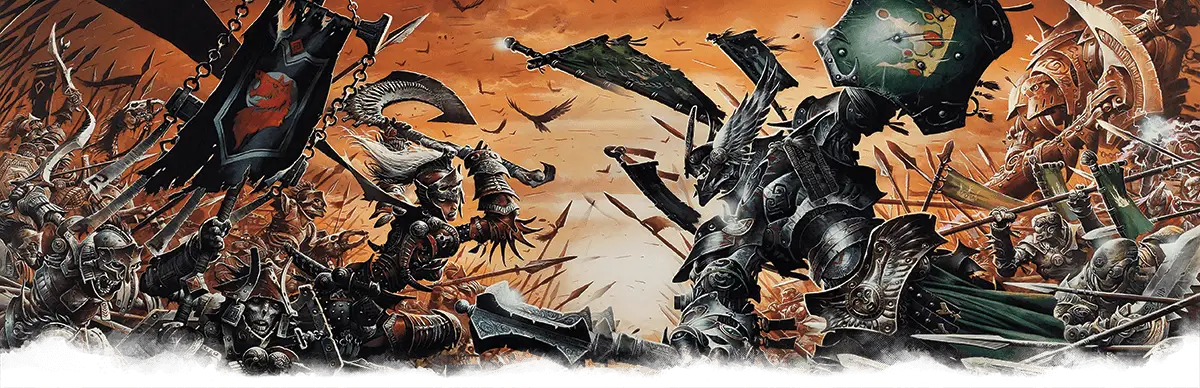
The Last War was not a single, continuous conflict but a sprawling century of campaigns, truces, betrayals, and innovations, with long years of grinding stalemate punctuated by devastating offensives. Alliances shifted constantly — nations that fought side by side in one decade were at each other's throats in the next — and the character of the fighting changed dramatically as new weapons and methods emerged over the course of a hundred years.
In its early decades, the war would have been broadly recognizable to soldiers of the old Galifar kingdom: infantry on open ground, cavalry charges, siege warfare against walled cities. But magic was always a factor, and it grew steadily more important as the war dragged on. Each nation developed its own doctrines and specialties. Aundair fielded the greatest concentration of trained wizards of any nation, reflecting the long arcane traditions of the Arcane Congress and the floating towers of Arcanix. Breland leaned on industrial capacity and innovation, producing floating fortresses and engines of war alongside its superior numbers of medium-armored infantry. Karrnath, a martial society to its core, embraced necromancy under Kaius I and animated hordes of undead soldiers — a decision that earned it the lasting enmity of Thrane and the condemnation of much of Khorvaire. Thrane's armies were girded by the faith and zeal of the Church of the Silver Flame, its archers legendary and its templars fearsome. And Cyre — the wealthiest of the Five Nations, seat of House Cannith and House Phiarlan, second only to Aundair in arcane sophistication — brought creativity and innovation to the battlefield, its soldiers widely known as the "Greencloaks" for their distinctive uniform cloaks.
The instruments of war evolved alongside these doctrines. Massive magical siege staffs — staffs fashioned from entire tree trunks, capable of holding enormous arcane charges and projecting destructive force at great range — filled the role that artillery serves in other conflicts. Arcane sappers laid fields of blast disks and glyphs of warding to deny territory to the enemy, much as minefields do in mundane warfare. Elite military spellcasters called wandslingers became an increasingly common presence on the battlefield, wielding wands and rods as sidearms alongside traditional swords and bows. Semi-sentient warforged titans — enormous constructs the size of buildings — could scatter entire squads of infantry, filling a role something like that of a siege engine and a battering ram combined. Aerial cavalry mounted on magebred beasts struck deep behind enemy lines. Alchemical fire rained from the sky. The borders between nations still bear the scars: forests and farmlands scorched by fire and magic, ruined cities yet to be reclaimed, and shattered villages that shelter nothing now but brigands and restless ghosts.
In the final decades of the war, House Cannith's greatest and most consequential innovation arrived: the warforged. The first warforged titans were deployed in Cyre in 959 YK, enormous and devastating but blunt instruments. House Cannith perfected the modern warforged — smaller, sentient, living constructs of wood, metal, and alchemical fiber — in 965 YK. These were not mindless automata. They were aware, thinking beings, created for a war that, by the time they achieved full consciousness, was already grinding toward its end. The Treaty of Thronehold freed them, but left them to find purpose in a world that had built them to fight and then abruptly stopped fighting.
And in the war's last decade, House Lyrandar brought the first elemental airships into service in 990 YK — vessels powered by bound elementals that could cross the continent in days. Like the warforged, the airship arrived too late to decide the war's outcome, but both inventions transformed the world that came after it.
"The early years looked like what our grandparents would have recognised — cavalry, siege, infantry on open ground. By the end, we were fielding undead soldiers, dropping alchemical fire from aerial cavalry, and sending constructs that didn't need to eat or sleep against positions warded against conventional assault. The war didn't just change the map. It changed what war means." — Brelish military historian, Rekkenmark guest lecture
Nations Born in War
Before the Last War, Galifar claimed dominion over the whole of Khorvaire. By the time the Treaty of Thronehold was signed, the map bore almost no resemblance to the one King Jarot had ruled, and more than half a dozen new nations had clawed their way into existence.
Some of these were formalities more than revolutions. Galifar had never exercised real authority over the Lhazaar Principalities — that loose confederacy of pirate lords and sea barons had always governed itself in practice — and the gnome nation of Zilargo had long operated with effective independence behind a veneer of fealty, formally aligning with Breland in 962 YK. The Demon Wastes Galifar held in name only, and no one much cared to contest the point.
Others were born in violence and opportunism, wresting territory from nations already bled white by decades of fighting. In 914 YK, the dwarven clans of the Ironroot Mountains threw off Karrnathi rule and declared independence in the first Iron Council, establishing the Mror Holds — a particular humiliation for Karrnath, which had long depended on dwarven taxation and the mineral wealth of the mountains. In 928 YK, Ven ir'Kesslan led settlers from across the Five Nations to found Q'barra on the far eastern frontier, seeking to build something new far from the fighting. In 958 YK, the farmers of western Aundair joined with the druids of the Towering Woods and declared independence as the Eldeen Reaches under the protection of the Wardens of the Wood and the guidance of Oalian, the Great Druid. Most Aundairians still consider this an unforgivable act of treason committed at a moment of national weakness.
The goblinoid and elven secessions were sharper still. In 956 YK, Tairnadal mercenaries — originally hired by Cyre — turned on their employers, annexing eastern Cyre and declaring the sovereignty of the elf nation of Valenar. The Tairnadal invoked a claim to the land far older than any human kingdom, dating back to when their ancestors fought the giants of Xen'drik and first walked Khorvaire's shores. In 969 YK, the hobgoblin mercenary leader Lhesh Haruuc Sharaat'kor led a devastating rebellion that seized southern Cyre and established Darguun. House Deneith had been brokering goblinoid mercenaries from the region since 878 YK; when those mercenaries turned, the betrayal was all the more bitter for the houses and nations that had armed them. And in 987 YK, after the Daughters of Sora Kell — a trio of ancient hags — arrived at the Great Crag with an army of trolls, ogres, and gnolls, King Boranel of Breland pulled settlers east of the Graywall Mountains and sealed off the western frontier. The Daughters declared the sovereignty of Droaam.
The Treaty of Thronehold officially recognised twelve sovereign nations: Aundair, Breland, Thrane, Karrnath, the Talenta Plains, Zilargo, Q'barra, the Lhazaar Principalities, the Mror Holds, the Eldeen Reaches, Darguun, and Valenar. Droaam was not recognised — Breland led the opposition — and remains a source of tension to this day.
The Dragonmarked Houses
The dragonmarked houses remained officially neutral throughout the Last War and profited enormously from the continent's suffering. Their services — healing, transportation, communication, manufacturing, banking, mercenary brokerage — were indispensable to every combatant, and the houses sold to all sides at equal rates. War drives innovation, and the houses innovated relentlessly. House Cannith developed many of the war's most devastating weapons, culminating in the warforged. House Lyrandar perfected its elemental airships in the war's final decade. Persistent rumours speak of monsters or magebred supersoldiers developed by House Vadalis, and of biological weapons in the hands of House Jorasco — rumours that both houses deny with practiced firmness.
The war also reshaped the houses themselves. In 972 YK, a bitter feud within House Phiarlan — the ancient elven house of entertainers, spies, and shadow-workers — erupted into the event known as the Shadow Schism. The Thuranni line broke away and established House Thuranni as a rival house of shadow, taking with it much of Phiarlan's presence in eastern Khorvaire. Phiarlan continues to dominate west of the Mournland; Thuranni operates in the east. Relations between the two are polite, professional, and quietly murderous. In 988 YK, House Tharashk began brokering the services of monstrous mercenaries from Droaam, giving the unrecognised nation an economic foothold across Khorvaire and establishing a pipeline of ogres, gnolls, and other creatures into the labour markets and battlefields of the Five Nations.
The houses emerged from the war stronger than ever. Before the conflict, the united Kingdom of Galifar had imposed significant restrictions on the houses through the Korth Edicts — barring them from owning land, holding noble titles, or maintaining standing armies (with an exception for House Deneith's mercenary forces). Those edicts formally remain in effect. But with the kingdom shattered into a dozen squabbling successor states, no single monarch can afford to alienate any dragonmarked house, and many within the houses feel the edicts have become relics of a dead kingdom. What will happen if a house decides to openly defy them — or if two houses go to war with each other — is one of the defining unanswered questions of the post-war era.
"The houses are neutral. This means they sell healing to both the army that burned your village and the army defending it, and they charge the same rate to each. Neutrality is a very profitable position when everyone is desperate." — Cyran refugee, Sharn
The Mourning
On 20 Olarune 994 YK, Cyre was destroyed in a single day.
Some survivors say the dead-grey mist began in Metrol, flowing from the royal palaces of Vermishard. Others swear it started in the Cannith stronghold of Making. No one knows for certain. What is known is that a wall of thick, grey mist rolled across the entire nation with terrifying speed. Everything inside it died, was twisted beyond recognition, or was frozen in the moment of its destruction. Over a million people perished. The mist slowed as it spread, and some along the borderlands had time to flee — Cyran soldiers holding sections of the Brelish front watched the mist stop mere feet from their camps — but the vast interior of the nation was simply annihilated. Thousands did survive within the borders, though most have no clear memory of what happened, and there is no explanation for why they were spared. The superstitious call them cursed.
The Mournland remains: a wasteland surrounded by a wall of dead-grey mist that rises thousands of feet into the sky and forms a canopy hiding the ruined nation even from above. Inside, the land rejects natural law. The ground has fused into jagged glass in places; in others, it has become iridescent sludge. Trees have turned to crystalline onyx. Flowers buzz eerily in the wind. The dead do not decay. Soldiers continue to fight battles that ended years ago, their corpses refusing to fall. Living spells — war magic that has taken sentient physical form — wander the wastes, searching for victims. The Mournland has not expanded. It has not receded. It simply persists, a wound across the heart of Khorvaire that will not heal.
No one has claimed responsibility. No one has provided an explanation. The people of Khorvaire have theories — that the Mourning was caused by a century of unbridled war magic, that it was a Cannith experiment gone catastrophically wrong, that it was the release of an ancient fiend bound since the dawn of time — but none have been proven. Every nation wants to unravel the mystery, because a nation that could control the power of the Mourning would be unstoppable, and a nation that could prove it was a one-time event would no longer need to fear reigniting the war.
"The Mourning did not end the war. Fear of the Mourning ended the war. There is a meaningful difference. Fear fades." — Aundairian diplomat, private correspondence
The Treaty of Thronehold
Shock and terror brought the surviving nations to the negotiating table. The Treaty of Thronehold, signed on 11 Aryth 996 YK on the island fortress that had once served as the seat of Galifar's united government, formally ended the Last War.
The treaty's key provisions recognised twelve sovereign nations, redrawing the map of Khorvaire along lines that largely reflected the military realities on the ground at the time of the ceasefire. It ordered House Cannith to destroy all creation forges — the eldritch machines used to produce warforged — and it granted the surviving warforged the legal rights of sentient beings, freeing them from indenture. Droaam was denied recognition, a decision driven primarily by Breland.
The treaty settled borders, but it did not settle grievances. Every dispute that drove a hundred years of fighting survived the signing. The nations remain locked in a cold war, each seeking advantages and making preparations for a conflict that most believe lies ahead.
DECREE OF THE SOVEREIGN NATIONS, by the authority vested in the assembled signatories upon the isle of Thronehold, this eleventh day of Aryth in the year 996 since the Founding of the Kingdom: — Let it be known that the war which has consumed our peoples is hereby ended; that the borders herein described are recognised as lawful and sovereign; that the creation of new warforged is forbidden and existing warforged are granted the freedoms and obligations of sentient peoples; and that any nation which violates these terms forfeits the protections of this accord. — Witnessed and sealed by the representatives of Aundair, Breland, Karrnath, Thrane, and the recognised nations of Khorvaire.
The Scars of War
It has been less than four years since the Mourning and less than two years since the Treaty of Thronehold. The Last War spanned the continent and lasted for over a century. Most people want to move on, but the scars of a hundred years of conflict cannot be erased by a single document.
Thaliost. The ancient city of Thaliost was once part of Aundair — one of its oldest and most storied cities, with deep ties to Aundairian history and identity. Thrane seized it during the Last War, and the Treaty of Thronehold ratified the occupation. Thrane placed an Aundairian-born archbishop, Solgar Dariznu, in charge of the city, and Thaliost has since become a haven for Aundairian followers of the Silver Flame. But a great many of its citizens still consider themselves Aundairian, and suppression of dissent under Dariznu has been brutal. Prominent Aundairian voices are putting intense pressure on Queen Aurala to retake the city. The situation is a constant source of violence, resentment, and diplomatic crisis.
Cyre and the refugees. Cyrans maintain that they alone were in the right — the war began when the other nations refused to acknowledge their queen's lawful succession. Now Cyre is destroyed, its eastern and southern territories already carved away by Valenar and Darguun before the Mourning ever struck. Cyran refugees live in every major city on the continent, tens of thousands of them dependent on the charity of their former enemies. Breland opened its borders and Prince Oargev ir'Wynarn serves as de facto leader of the refugee community in the area called New Cyre — though for all its grand name, New Cyre is little more than a vast refugee camp. Many across the Five Nations believe Cyre deserves no mercy, and that its refugees should be treated as enemy combatants rather than offered compassion.
Karrnath and Thrane. The enmity between these two nations runs far deeper than the Last War. When Thalin of Thrane died in 914 YK, the Church of the Silver Flame assumed direct control of the nation, establishing a theocracy that regards Karrnath's embrace of necromancy as a moral abomination. Karrns counter that the Thranes are arrogant zealots who abandoned the traditions of Galifar the moment they handed temporal power to their church. King Kaius III has forsworn the creation of new undead soldiers, but the treaty has done nothing to ease the hostility. The devastated city of Shadukar — once called the Jewel of the Sound — still lies in ruins on the Thrane coast, haunted by ghosts and undead left behind after the Karrnathi retreat, a grim monument to the hatred between the two nations.
Aundair and the Eldeen Reaches. The secession of the Reaches in 958 YK remains an open wound for Aundair. Many Aundairians believe Queen Aurala should reclaim the territory, whether through diplomacy or force. The Reachers maintain that their independence was precipitated by the neglect and corruption of Aundairian nobles who left the western frontier undefended.
Breland and Droaam. Droaam remains unrecognised. Monstrous raiders from beyond the Graywall Mountains have plagued Breland for centuries, and the emergence of a unified monstrous nation under the Daughters of Sora Kell has done nothing to calm Brelish anxieties. Some believe King Boranel should take dramatic action. Others note that House Tharashk's brokering of Droaamish mercenaries has given the nation economic leverage that military force alone could not provide.
Although the nations are afraid to return to all-out war, any of these feuds could escalate. The cold war simmers, and every intelligence service on the continent is working to ensure that when fighting resumes, their side will hold the advantage.
"The Treaty of Thronehold did not resolve the war. It froze it. Every grievance that drove a hundred years of fighting is still there. The borders are different. The anger is not." — Brelish border warden
Why It Matters
The Last War is not ancient history. It has been a bare two years since the treaty, four years since the Mourning. Every adult in the Five Nations lived through the war. Every family lost someone. Every institution — the Arcane Congress, the King's Citadel, Rekkenmark Academy, the churches, the guilds, the houses — was shaped by it.
A century of bitter war has divided the people of the Five Nations, but they remain bound by a common inheritance: the laws, customs, language, and culture of Galifar. Many look back on the united kingdom as a golden age and would willingly go to war again for a chance to reclaim it. Members of the longer-lived races — elves, dwarves, gnomes — trained and served at institutions that once belonged to the whole kingdom, regardless of the nation they serve today. A dwarf who studied at Rekkenmark Academy before the war might now find herself facing former classmates across a disputed border.
The warforged struggle to find their place in a world at peace — beings built for a purpose that no longer exists, freed by a treaty they had no voice in signing. The dragonmarked houses are more powerful than any single nation and constrained by laws no one can enforce. The Mourning remains unexplained. And the thing that everyone in Khorvaire quietly understands but rarely says aloud is this: the Last War did not end because someone won. It ended because something worse happened. If the fear of that something ever fades, the war will begin again.
"My students ask me when the Last War ended. I tell them: I will let them know." — Arcanix instructor, contemporary history
Timeline of the Last War
Year | Event |
|---|---|
894 YK | King Jarot dies. Thalin, Kaius, and Wroann reject Mishann's succession. Wrogar backs his sister. The Last War begins. |
896 YK | Kaius I of Karrnath embraces the Blood of Vol as state religion. The Order of the Emerald Claw is established. |
910 YK | Kaius II ascends to the throne after the mysterious death of Kaius I. |
914 YK | The Mror Holds declares independence in the first Iron Council. Thalin of Thrane dies; the Church of the Silver Flame assumes control of Thrane. |
918 YK | Unknown saboteurs destroy the Glass Tower of Sharn. |
928 YK | Ven ir'Kesslan leads settlers to found Q'barra. |
956 YK | Tairnadal mercenaries annex eastern Cyre and declare the sovereignty of Valenar. |
958 YK | The Eldeen Reaches declares independence under the Wardens of the Wood and Great Druid Oalian. |
959 YK | The first warforged titans are deployed in Cyre. |
961 YK | Boranel ir'Wynarn becomes King of Breland. |
962 YK | Zilargo formally aligns with Breland. |
965 YK | House Cannith perfects the modern warforged. |
969 YK | Lhesh Haruuc leads the hobgoblin rebellion. Darguun is established. |
972 YK | The Shadow Schism: House Thuranni splits from House Phiarlan. |
976 YK | Regent Moranna condemns the Blood of Vol and restores the Sovereign Host in Karrnath. The Order of the Emerald Claw refuses to disarm and goes underground. |
980 YK | Queen Aurala's reign over Aundair begins. |
986 YK | The Daughters of Sora Kell arrive at the Great Crag with an army of trolls, ogres, and gnolls. |
987 YK | King Boranel seals off the land west of the Graywalls. The Daughters declare the sovereignty of Droaam. |
988 YK | House Tharashk begins brokering Droaamish mercenaries. Daask establishes a presence in Sharn. |
990 YK | The first elemental airships enter service for House Lyrandar. |
991 YK | Kaius III begins his rule of Karrnath. |
993 YK | Jaela Daran, age six, assumes the power of the Keeper of the Silver Flame. |
994 YK | 20 Olarune: Cyre is destroyed. The Mournland is created. |
996 YK | 11 Aryth: The Treaty of Thronehold officially ends the Last War. Twelve nations recognised. Creation forges ordered destroyed. Warforged granted rights of sentient beings. |