Sharn — Events & Festivals
"Walk through Oldkeep wearing brown and red, and you'll be invited to raise a glass to the Griffon. If you're dressed in white and gold, the colors of the Hippogriff, you'd best be prepared to defend yourself. If you're new to Sharn, you might think our city's gone mad. And in some ways it has, but it's a madness that reaches its peak every summer with the Race of Eight Winds." — The Sharn Inquisitive
There is always a celebration happening or about to happen in Sharn — a parade in a single district, a holy day observed across the continent, or a festival unique to the City of Towers. As one of the largest cities on Khorvaire, Sharn hosts some of the grandest spectacles anywhere: tourists travel from across Breland for Olladra's Feast, Cyran survivors gather from the diaspora for the Day of Mourning, and the Race of Eight Winds draws gamblers from nations that were at war with each other two years ago. Each deity of the Sovereign Host has at least one holy day, and many of these have become secular traditions that shape the civic calendar — government appointments fall on Boldrei's Feast, graduations on Aureon's Crown, and the city's appetite for competition reaches its yearly peak on Brightblade. What follows are the events most likely to matter to adventurers passing through or living in the City of Towers.
The Race of Eight Winds
23 Lharvion — annual
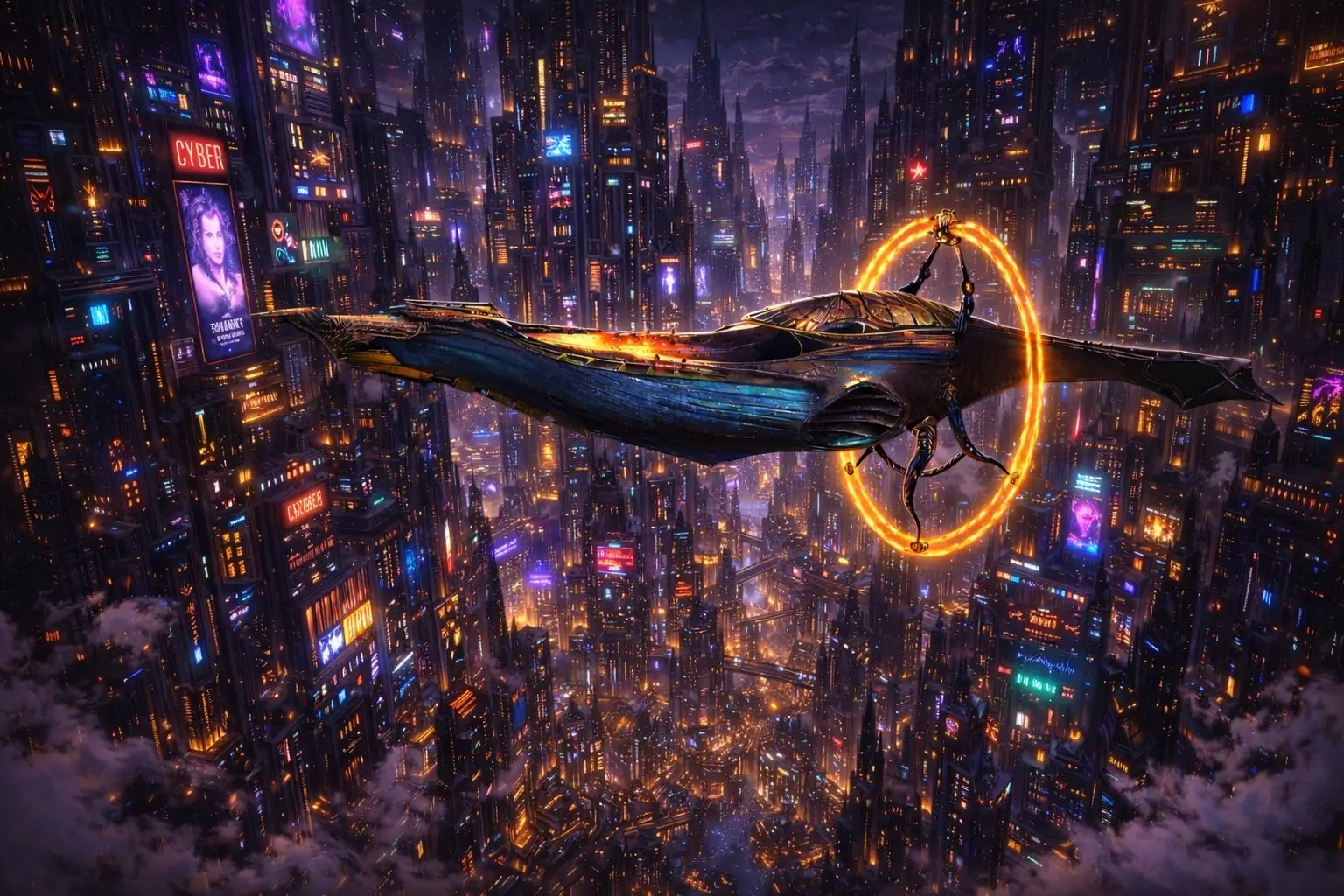
The Race of Eight Winds is Sharn's most visible celebration of speed, daring, and vertical spectacle — an aerial competition that winds through the towers, bridges, and open sky of Dura Quarter, drawing spectators, tourists, and gamblers from across Khorvaire.
According to the commonly accepted (if somewhat unlikely) legend, King Galifar II was fascinated by the use of aerial cavalry and used Sharn as a proving ground to test the merits of different flying beasts, granting land and gold to exceptional riders. Over the centuries, this evolved into the modern race: eight competitors, each mounted on a different flying creature, racing a course that weaves around and through the spires of the city. Riders may not use spells, psionic powers, dragonmarks, magic devices, or alchemical items — anyone who breaks these rules is immediately disqualified and, by tradition, probably torn apart by an angry mob. The only weapon a rider may carry is a light sporting crossbow, and the mounts may use their natural weapons freely, which is what makes the Griffon such a feared competitor even though it has never won.
Dura is divided into eight regions for the race, each represented by a different creature, and the residents take their loyalties with absolute seriousness. The beasts of Upper Dura — the Pegasus (white and silver, representing Highwater, the reigning champion) and the Hippogriff (white and gold, tied to Overlook and Daggerwatch) — are generally the fastest. Middle Dura fields the Eagle (brown and gold, Broken Arch and Stormhold), the Owl (brown and gray, Rattlestone and the Bazaar), and the Hawk (tan and brown, Tumbledown and Underlook). The beasts of Lower Dura are more infamous than reliable: the Griffon (brown and red, Precarious and Oldkeep) has never won but always brings down an opponent, the Glidewing (green and gray, Gate of Gold and the Stores) is rumored to be funded by the Boromar Clan, and the Gargoyle (black and gray, Malleon's Gate) is the current fan favorite — a stone-faced fellow named Carralag who rides on his own wings.
The winner receives a purse of 500 gp and a grant of land elsewhere in Breland, donated by one of Sharn's noble families. In the weeks before the race, Callestan and Hareth's Folly become a hotbed of arguments and brawls over whose beast will prevail, and wearing the wrong colors in the wrong district is an excellent way to start a fight.
The ir'Tain Gala
First Far of each month — recurring
Held at Tain Manor in Skyway, the ir'Tain Gala is the defining social event of Sharn's elite — a monthly gathering of Brelish nobility, dragonmarked heirs, foreign dignitaries, and wealthy gentry hosted by Lady Celyria ir'Tain. The guest list defines the social order of the city: those families who hold permanent invitations — the Sixty — are the de facto royalty of Sharn. When Celyria's predecessor Lady Shala built the manor, she told the architects to make the banquet hall large enough to seat sixty families and their servants. The original Sixty were simply those who received standing invitations to the first Gala; the name stuck, and the list has remained broadly stable since, though invitations can be revoked to make room for a more deserving — or more dangerous — candidate. Last year, Celyria expelled the ir'Moros family and gave their seat to Saidan Boromar, a move that sent shockwaves through the upper wards.
Celyria does her best to invite a few unusual celebrities to each Gala — artists, poets, celebrated inquisitives, and sometimes adventurers. Guests who catch her notice receive generous gifts and a temporary boost in social standing: for the next month, doors open, invitations arrive, and the attitude of the Sixty toward the celebrity improves measurably. An adventurer known to be a friend of Lady ir'Tain will find that many powerful people suddenly want to talk to them.
What happens at the Gala rarely stays public, but the discussions held there — over wine, between dances, in quiet corners of the balcony — shape alliances, redirect fortunes, and ripple through the city for months.
Crystalfall
9 Olarune — annual
Crystalfall commemorates the most devastating act of sabotage in Sharn's wartime history. On 9 Olarune 918 YK, a team of Aundairian abjurers destroyed the enchantments supporting the Glass Tower, one of the city's oldest floating citadels. The tower broke apart as it fell. Most of the structure landed in the Dagger River, but its spires struck the district then known as Godsgate in Lower Dura, shattering buildings and killing hundreds. Untended corpses bred infection and disease. The city council declined to invest in restoring a lower-ward district, and Godsgate was abandoned — it is known today as Fallen, and its ruins remain as they were a century ago.
On the anniversary, crafters across the city carve towers and spires from ice — some intricate works of art, others crude and hurried — and hurl them into the Dagger River, creating something beautiful and watching it be destroyed. The largest and most prestigious gathering of sculptors takes place at Sunset Park in Ocean View, Upper Tavick's Landing, where city councilors judge the works and award a purse of 150 gp to the winner. The observance is strongest in the lower and middle wards touched by the disaster, where names of the dead are spoken aloud and offerings are left in the streets. Upper-ward commemorations tend to be brief, symbolic, and carefully managed.
The Day of Mourning
20 Olarune — annual
Nothing in a century of war prepared Khorvaire for what happened on 20 Olarune 994 YK — the day when the nation of Cyre was destroyed, leaving the Mournland in its wake. The cause remains a mystery. On this date, Cyran survivors gather to remember their lost kingdom. Some tell stories of the dead and teach the history of the nation to the young. Others perform traditional Cyran songs and dances, ensuring that their culture is not forgotten. Still others remember only the war, cursing the nations that refused to accept Mishann's claim to the throne of Galifar.
In Sharn, where the overcrowded district of High Walls holds one of the largest concentrations of Cyran refugees in Khorvaire, the Day of Mourning is intense, personal, and increasingly volatile. Thus far, the holiday has been marked by a brief upturn in violence — not organized, but sharp, the kind that comes from grief that has curdled into rage with nowhere to go.
Sun's Blessing
15 Therendor — annual
The festival of Dol Arrah, Sovereign of Honor and Light, is a day of peace — a time when enemies are urged to set aside their differences and seek reconciliation. This tradition held throughout the Last War, when most armies observed a ceasefire on Sun's Blessing; in 916 YK, however, the armies of Thrane broke the truce and attacked the Brelish city of Starilaskur, and many Brelish still curse Thrane on this day.
In Sharn, a grand celebration takes place at the Pavilion of the Host in Sovereign Towers. Sun's Blessing is one of the safest days to wander the city, and a time when rivals often try to resolve their conflicts peacefully — though followers of the Mockery and the Shadow have been known to go out of their way to cause suffering as an affront to the sun goddess.
Aureon's Crown
26 Dravago — annual
The festival of Aureon celebrates knowledge and the passing of wisdom from elders to the young. Throughout the day, priests of Aureon gather at the Great Hall of Aureon in the University District of Upper Menthis, delivering sermons and lectures on topics from history to philosophy to the nature of the gods. Aureon's Crown is the traditional time for students to graduate or advance — this holds even at the monastic schools of the Silver Flame — and Morgrave University schedules its commencement ceremonies accordingly. Like many Sovereign Host holidays, it has become thoroughly secular; no particular religious devotion is required to participate.
Brightblade
12 Nymm — annual
The holy day of Dol Dorn, Sovereign of Strength and Steel, fills Sharn's temple districts with prizefights, wrestling matches, archery contests, and jousts throughout the day, culminating in a grand contest of champions at the Cornerstone arena in Middle Tavick's Landing. The champions receive generous prizes, and a fortune can be made betting on the contests. On occasion, more spectacular conflicts have been staged — full-scale battles on the training grounds of Daggerwatch, free-for-all melees with hundreds of contestants, and similar spectacles that blur the line between sport and warfare.
The Hunt
4 Barrakas — annual
On the 4th of Barrakas, the priests of Balinor arrange for a dangerous beast to be transported into Sharn and released into the Depths. The City Watch cordons off a section of the undercity, and anyone who wishes to participate may enter by making a donation of 5 gp; hunters receive the blessing of Balinor and descend into the ruins to track their quarry. Whoever returns with the beast's head wins a prize of 500 gp, fame throughout the city, and the blessing of the Sovereign of Horn and Hunt. The quarry varies from year to year — sometimes multiple creatures are released, and the victor is whoever gathers the most kills. The other hunters, it should be noted, are not prohibited from interfering with one another, and in many years they prove a greater threat than the beast itself.
Notice posted in taverns across Middle Dura, late Barrakas, 997 YK:
THE HUNT IS ON. 4 Barrakas. 5 gold entry. The beast enters the Depths at dawn. Bring your own weapons. Bring your own nerve. The priests of Balinor will bless you at the gate. Last year's quarry was a displacer beast. Twelve hunters entered. Eight came back. One came back with the head. 500 gold to the victor. Fame for a lifetime. The other hunters are not your allies.
Fathen's Fall
25 Barrakas — annual
Fathen's Fall honors the memory of a priest of the Silver Flame who exposed scores of lycanthropes in Sharn during the Silver Crusade over 150 years ago. On 25 Barrakas, a pack of wererats tore Fathen limb from limb on the streets of North Market. The faithful gather at the Shrine of Fathen the Martyr in North Market (Lower Northedge) to hear a sermon from the priest of High Hope; followers traditionally donate one silver piece in memory of the crusade.
The holiday is a source of significant tension with Sharn's shifter community. While some shifters actively participated in the Silver Crusade and are comfortable with the observance, others view it as a celebration of a purge that targeted their kin. Tensions run high within the shifter neighborhoods and between shifters and the faithful of the Silver Flame on this day.
Boldrei's Feast
9 Rhaan — annual
Boldrei's Feast is a celebration of community — a time to strengthen ties, settle disputes, and feast together. House Ghallanda and local merchants donate goods and services for a grand feast at the Pavilion of the Host, and the wealthiest members of each district throw extravagant parties, competing with one another for social standing through generosity and spectacle. Boldrei's Feast is also the traditional day for elections and government appointments, as Boldrei oversees the forces that hold a community together. All major political appointments in Sharn occur on 9 Rhaan.
The Ascension
1 Sypheros — annual
The Church of the Silver Flame commemorates the sacrifice of Tira Miron, who gave her life to serve as the Voice of the Silver Flame. Over the course of the day, followers attend blessing ceremonies at the Cathedral of the Cleansing Flame in Sovereign Towers and at all of the city's Silver Flame temples. The faithful are encouraged to find ways to contribute to their communities on Ascension Day.
Wildnight
18–19 Sypheros — annual
Wildnight is observed across Khorvaire, but nowhere does it burn as brightly — or as dangerously — as in Sharn. The Fury, Sovereign of Passion and Madness, is said to reach the height of her power during Sypheros, and when the sun sets on Wildnight, emotions run high and impulse control runs low. The shy and superstitious stay indoors. Everyone else pours into the streets for raucous revelry that lasts from the Cogs to the highest towers of Central Plateau, well past dawn. Beneath the surface, it is a dangerous time: riots, brawls, and crimes of passion spike under the cover of sanctioned chaos. What is done on Wildnight is often excused, rarely forgotten, and sometimes weaponized in the days that follow.
Thronehold
11 Aryth — annual (new observance)
The signing of the Treaty of Thronehold on 11 Aryth 996 YK formally ended the Last War. This is a new holiday — 998 YK marks only the second time it has been celebrated — and the Lord Mayor of Sharn has promised a truly extravagant festival. Tourists and celebrants from across Khorvaire are expected to attend. Whether Thronehold will become a genuine tradition or merely a political performance remains to be seen; the treaty is barely dry, and for many, the war is not really over.
Long Shadows
26–28 Vult — annual
Three nights at the darkest end of the year belong to the Shadow, the sinister lord of the Dark Six. According to tradition, these are the nights when dark magic is at its strongest, when foul creatures rise from hiding, and when those who use magic for corruption or malice are at their most powerful. Most people stay indoors, huddle by fires, and wait for dawn. In Sharn, the primary worshippers of the Shadow are the monsters of Droaam, though human wizards and sorcerers also mark these nights — it is said that certain arcane experiments, including the construction of eldritch machines, can only be performed during Long Shadows.
The Lady's Day
Date varies — annual
"You'll hear warning bells toll tomorrow morning. You'll see packs of people with their faces hidden by plague masks or strips of cloth. Jorasco healers will roam the streets offering free examinations and blessings. If you're new to Sharn, have no fear!" — A Jorasco broadsheet
The Lady's Day commemorates the destruction of old Sharn during the War of the Mark — the day when Halas Tarkanan and the Lady of the Plague unleashed their aberrant marks and reduced the city to rubble, plague, and fire. Warning bells toll at dawn. Citizens don plague masks or strips of cloth. House Jorasco healers roam the streets offering free examinations and blessings. The observance is both a memorial and a rehearsal: Sharn remembers the tragedy that once befell it, and prepares — at least symbolically — for the possibility that it could happen again.