Het Lichtorden, commonly known as The Orden, is an autonomous monastic-mercantile state situated in the Yabanca sector. It originated in 915 AGC as a civilising mission sent by the League to the outer peripheries of Subastralis. Following an eighty-year period of isolation caused by the Pilgrim's Belt astral storm, the mission was forced to integrate with local Free Merchants. The two forces eventually merged, forming a new independent, powerful organisation and establishing sovereign territories. The state is governed by the Council of Masters, a small administrative body comprising the most prominent clerics, generals and merchants. Its system of governance bears a strong resemblance to that of Kania and the Free Merchants.
History
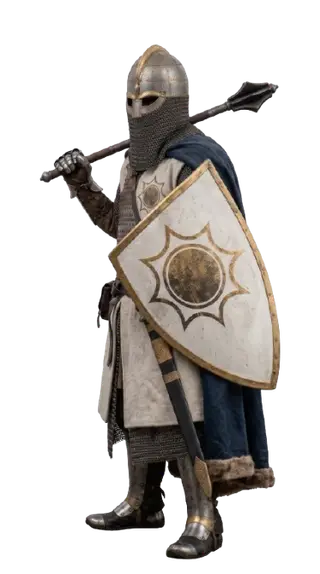
In 915 AGC, following the Night of Astral Portals and the initial emergence of the Power of Light, the League's Council of Namestniks sent an expeditionary fleet to the outer reaches of Subastralis. The fleet carried priests of the Light and vityaz warriors tasked with colonising an uncharted sector and raising churches under Novograd's authority. In 922 AGC, while the ships were still travelling, the Pilgrim's Belt broke out, engulfing a third of the flotilla in the most devastating storm ever recorded. At the time, astrologers aboard the remaining vessels predicted the storm would disperse within a year, but were gravely mistaken. It continued to expand across regular transit routes, leaving open only a few narrow corridors to a nearby archipelago of Free Merchant allods. Standard League vessels could never survive such a tempest, and within months the Mission was effectively blockaded.
Communication across the storm and for many IADs around it was impossible, cutting off all contact with Kania. Specialised blockade runners operated in the area, yet their captains charged exorbitant fees for unguaranteed results, which the ill-funded expedition could scarcely afford (they wasn't ready for such circumstances and were short of coin). The Mission spent its available treasury attempting to hire these vessels to deliver a message to Kania, though none reached their destination. The League Council dispatched two relief ships from Kvatokh, but both were lost to the storm, leading the council to declare the Mission lost.
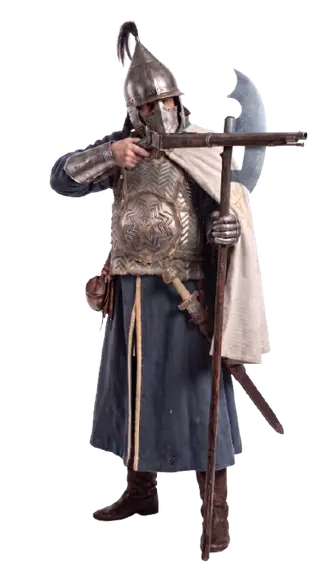
Faced with dwindling food reserves and exhausted funds, the expedition commanders came to the negotiating table with the neighbouring Free Merchants. The trading houses appointed senior Free Merchants as representatives, with Ullirech Kniproode leading the commission. The resulting agreement, proposed by Kniproode, required the Free Merchants to provide supplies for the Mission in exchange for seats on the Mission council. This agreement quickly grew into a powerful alliance, with Kniproode as its main driving force, expanding rapidly across the Yabanca sector, establishing colonies and subduing neighbouring allods.
In the eighty years of the Pilgrim’s Belt, as one generation of officers gave way to the next, the expedition's original purpose was gradually forgotten. Eventually word spread, and rumours of a major power rising beyond the Frontier reached the higher echelons of the League. Once the storm ended, if the rumours proved true, conflict would be inevitable -- the Council of Namestniks concluded.
The Pilgrim's Belt dispersed in 1004 AGC, by which time the Orden had become a formidable independent state, controlling the entire sector and pushing into the peripheries. When League vessels arrived expecting to reassert authority over a colonial settlement, the Orden declared sovereignty and schism. In 1006 AGC, Novograd sent an armada to enforce submission, but the brief war ended in victory for the Orden. The far reach to the Orden and persistent military pressure from the Hadaganian Empire forced the League to withdraw its fleet, abandoning the conflict with the Orden.
Faith and structure
Faith doctrine
Het Lichtorden follows a distinct theological doctrine (called the Truth of Light) separate from the Orthodox Church of Light in Kania and the Triune Church in the Empire:
Any power of the Light, including Resurrection, is granted directly by the omnipresent and omnipotent Light.
Divine grace cannot emanate from mortal flesh.
The Great Mage Tenses and other holy martyrs, such as Nezeb or Skrakan, are earthly servants who may be revered no more then as exemplars of faith.
There is a finite amount of divine grace in the world, and it cannot be replenished once corrupted.
The True End will come once no Light remains, whereupon all creation will cease to exist.
The Light must therefore be protected at all costs.
The body of each Sarnout mortal is a sacred vessel of the Light and must never be corrupted.
The Anima and the Astral represent the anti-Light and are gravely forbidden.
Thus, the Paganism is an act of blasphemy and is gravely forbidden.
Thus, the mana-shaping channelled through mortal flesh corrupts the Light and is gravely forbidden.
The peoples of Sarnout must unite through open commerce and cultural exchange to protect the Light.
Organisation
Daily affairs are regulated by three governing councils: the Ecclesiastical Council, the Military Council, and the Merchants' Guild. Territorial governance within Het Lichtorden is organised into commanderies, governed by Commandants. Reporting directly to each Commandant are the Landmasters, with one assigned to each district of an allod-commandery.