Azraqan
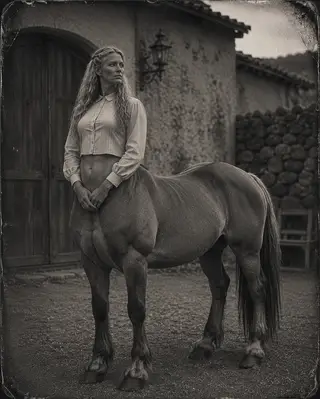
The Azraqan are a sapient centaur species native to Veyrath, distinguished by a human-like upper body seamlessly joined to a full equine lower body. An individual member of the species is known as an Azraq, while Azraqi serves as the adjectival form and is also used to describe their cultures, languages, traditions, and material works.
Among the peoples of Veyrath, the Azraqan occupy a unique place. They are neither humans mounted upon horses nor magical hybrids created through sorcery or divine intervention. They are a naturally evolved, naturally breeding people with their own biology, history, languages, social structures, and civilizations. Their appearance often causes outsiders to draw simplistic comparisons, but such comparisons rarely survive close examination.
Azraqan are most strongly associated with open landscapes: grasslands, uplands, broad river valleys, dry basins, and rolling plains where speed, endurance, and mobility provide decisive advantages. Entire cultures have risen around their ability to travel vast distances, maintain far-reaching kinship networks, and exploit territories too large or too sparsely populated for most sedentary peoples to control effectively.
Terminology
Azraqan refers to the species as a whole and may also be used collectively when speaking of Azraqi peoples.
Azraq refers to a single individual.
Azraqi refers to anything belonging to or associated with them, including their cultures, languages, customs, architecture, and traditions.
Among neighboring human societies, imprecise terms such as centaur, horsefolk, horse-men, or four-legged people remain common. Most Azraqan tolerate such language from foreigners unfamiliar with their culture. However, among peoples who regularly interact with them, careless terminology is often viewed as a sign of ignorance. Deliberately reducing an Azraq to a mere combination of human and horse is generally considered insulting.
Physical Description
Azraqan possess a human-like head, neck, shoulders, arms, chest, and upper abdomen joined smoothly to the forequarters of a powerful equine body. They have human facial features, human ears, human hair, and fully dexterous human hands. Their equine portions are covered in short coats of hair over resilient mammalian skin, displaying a wide range of colors and patterns comparable to those found among horses: bay, chestnut, black, dun, grey, roan, and countless regional variations.
The transition between the human and equine portions is entirely natural and anatomically integrated. There is no abrupt seam. The lower human torso gradually broadens and merges into the withers and forebarrel, with skin texture and coloration transitioning naturally into the denser hide and coat of the equine body.
Adult Azraqan are substantially larger and heavier than humans. Their equine bodies are heavily muscled through the shoulders, barrel, hindquarters, and legs, while their human torsos are broad and robust. Their upper bodies are adapted for prolonged physical labor, weapon use, craftsmanship, and carrying loads while standing or moving. Even ordinary daily activities require considerable strength and balance due to the absence of furniture and postures commonly used by humans.
Although outsiders often focus on their size, experienced observers frequently note their remarkable grace. Azraqan move with an efficiency born of necessity. Their bodies are optimized for endurance rather than bursts of speed alone, allowing them to travel distances that would exhaust most other peoples.
Sexual dimorphism is pronounced, particularly among mature females. Outside of nursing periods, Azraqi females are generally comparable in build to males of similar lineage. During lactation, however, their bodies undergo dramatic physiological changes. Large fat reserves accumulate throughout the body, especially around the chest, abdomen, and hindquarters, supporting prolonged milk production. Nursing females often become visibly heavier than males and may carry substantial additional body mass for years at a time.
Internal Anatomy
Azraqan anatomy is a unified biological system rather than a simple combination of human and horse anatomy.
The human-like upper torso contains secondary respiratory and digestive structures that support speech, breathing, and initial food processing. These include secondary lungs and a pre-stomach that allows food to be consumed and partially processed before entering the primary digestive tract.
The equine body houses the major organs responsible for sustaining life. The primary heart, major lungs, digestive system, reproductive organs, and gestational structures are all located within the equine portion. These organs are proportionally larger than those of humans and are adapted to support the immense metabolic demands of an Azraq's body.
Despite their equine appearance, Azraqan are not grazing animals. They cannot survive by feeding on grass alone and possess digestive systems fundamentally different from those of true horses. They are omnivores whose diets consist primarily of cooked foods, cultivated grains, legumes, vegetables, fruits, dairy products, and meat. Grain-based foods form the foundation of most Azraqi cuisines because they provide the dense caloric intake necessary to sustain such large bodies.
One of the most distinctive aspects of Azraqi physiology is their extraordinary capacity for milk production. Unlike humans, Azraqan evolved in social environments where the survival of foals could not always be guaranteed by the health of a single mother. As a result, nursing females produce milk in quantities far exceeding the needs of their own offspring. This surplus serves as a biological safeguard against famine, maternal illness, orphaning, and seasonal scarcity. Lactating females accumulate extensive fat reserves specifically to sustain milk production even when food becomes limited.
Their anatomy grants extraordinary endurance and resilience, but it also creates unique vulnerabilities. Injuries to the human torso may impair breathing, speech, feeding, or manual dexterity. Injuries to the equine body threaten mobility, digestion, pregnancy, and survival itself. Consequently, Azraqi medicine treats the body as a single integrated organism. Physicians and healers are trained to understand how injuries in one region affect the entire system.
Reproduction and Development
Azraqan reproduce as mammals. Their reproductive organs are located entirely within the equine portion of the body.
Females experience a yearly breeding season shortly after the beginning of the new local year, though exact timing varies according to climate, nutrition, health, and regional lineage. This season shapes much of Azraqi social life, economics, ritual practice, and migration patterns.
Azraqi mating customs are highly seasonal. During the breeding period, males may mate with numerous females, while females may likewise mate with multiple males. Long-term exclusive pair bonds are uncommon. Instead, reproduction is viewed as a communal concern tied to the prosperity and continuity of the wider kin group.
Although mating may involve multiple partners, each pregnancy ultimately has a single biological father. Azraqan generally maintain detailed genealogical records and oral traditions, making questions of ancestry and lineage important despite the absence of permanent mating bonds.
Gestation lasts approximately ten months and occurs entirely within the equine abdomen. Pregnancy places immense physical demands upon the mother. As the fetus develops, the lower abdomen expands dramatically, producing a deep, heavy swelling beneath the barrel. During late pregnancy, movement becomes increasingly difficult. Some females require assistance standing, turning, or traveling, particularly when carrying twins or when already advanced in age.
Most births produce a single foal, though twins occasionally occur. Newborn Azraqan are highly developed compared to human infants. Within a short time after birth they can lift their heads, focus their eyes, and stand with assistance. Their equine bodies mature rapidly during infancy, while their human upper bodies require many years to develop coordination, speech, judgment, and fine motor skills.
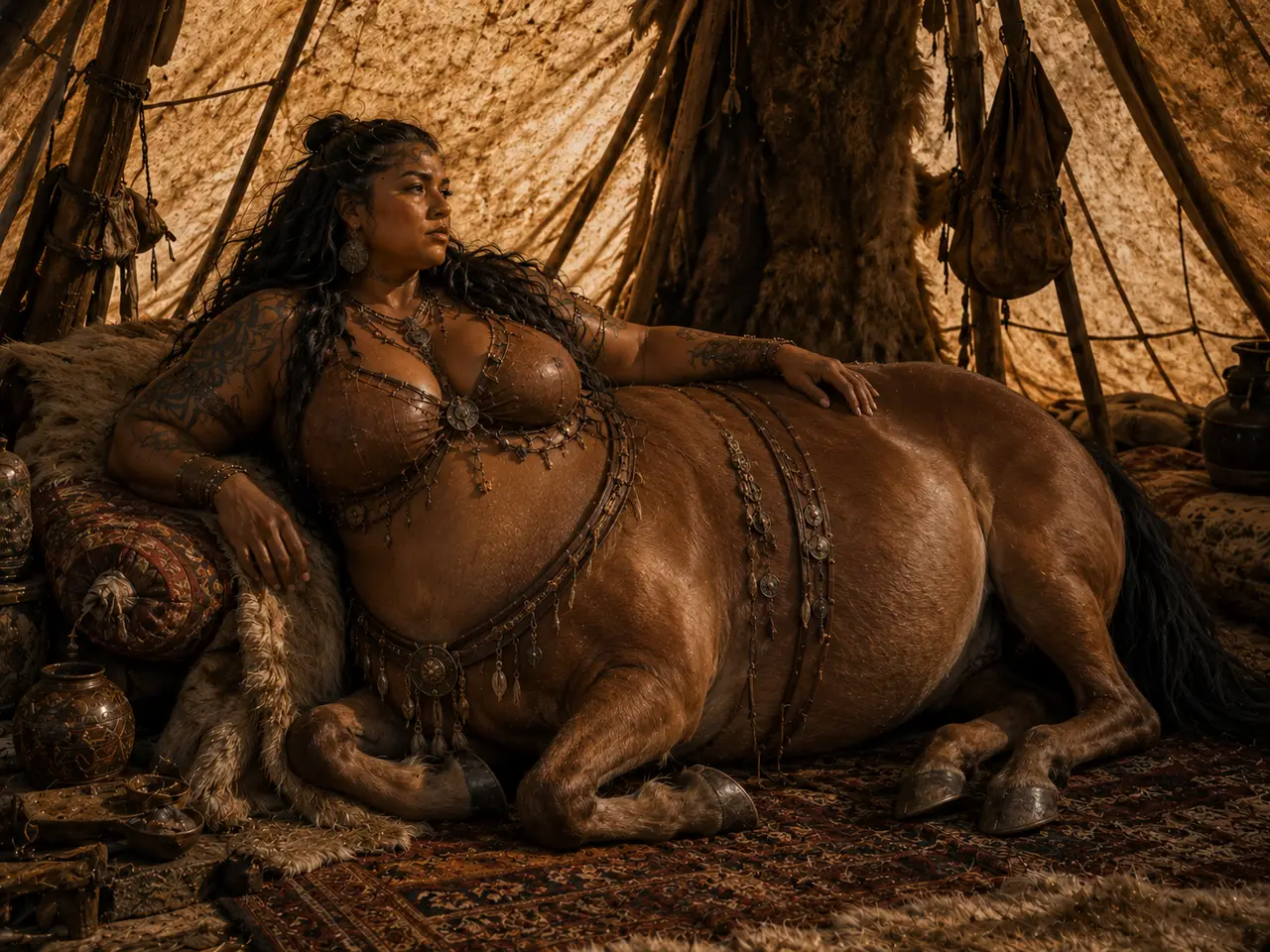
Nursing occurs through the human chest. Mothers typically recline or lower their hindquarters to allow access to the infant. This arrangement has profoundly influenced Azraqi architecture, domestic customs, furniture design, and childcare practices. Entire household layouts are often organized around the needs of nursing mothers and growing foals.
Azraqi milk is famous throughout many regions of Veyrath. Fresh milk is widely believed to possess restorative properties that aid healing, recovery from illness, and healthy development. Whether these beliefs are entirely accurate remains debated, but its reputation alone has made it a valuable commodity.
Unlike humans, Azraqi milk production operates on a powerful supply-driven cycle. Nursing stimulates production, but expressing milk for household use or trade stimulates even greater production. A healthy nursing female can therefore produce astonishing quantities of milk, often far beyond what a single foal requires. In many regions, households deliberately collect excess milk daily, both to prevent discomfort and to generate valuable trade goods.
The physical consequences of this adaptation are dramatic. During peak lactation, Azraqi females develop breasts vastly larger than those of humans. Mature nursing females commonly possess breasts weighing many pounds each, while exceptionally productive individuals may carry masses exceeding a dozen pounds per breast. Such weight alters posture, affects balance, and significantly hinders rapid movement. Specialized support garments, harnesses, wraps, and slings are therefore common features of Azraqi clothing.
Because foals typically nurse for approximately 2 Cycles (about 2.9 Veyrathian years) and females are often bred annually, many adult females spend much of their lives either pregnant, nursing, or both simultaneously. The resulting cycle of gestation, lactation, and fat accumulation has shaped entire social institutions. Dedicated breeding villages, maternal compounds, and nursing settlements are common throughout Azraqi lands. These communities concentrate resources, childcare, medical expertise, and dairy production in locations optimized for the needs of mothers and foals.
The burden of reproduction has also produced a distinctive life pattern among young females. Many deliberately postpone breeding for as long as social circumstances permit. During these years they travel, hunt, trade, fight, explore, study, pursue political ambitions, or join military and caravan organizations. Among many peoples, a young female's years before first breeding are regarded as a period of unusual freedom and personal development.
Once a female enters the reproductive cycle, her lifestyle often changes dramatically. Repeated pregnancies and prolonged lactation encourage the accumulation of substantial fat reserves. Long-distance travel becomes more difficult, and many females gradually shift toward roles centered on household management, agriculture, childcare, dairy production, religion, governance, or local commerce.
In extreme cases, highly productive nursing females may become so massive that independent movement is severely restricted. Such individuals can struggle to rise without assistance and may spend extended periods reclining within specially designed maternal halls. Household attendants—often younger females, relatives, foster daughters, or specialized caregivers—assist with hygiene, feeding, childcare, and daily tasks. Far from being viewed as helpless invalids, these women are often regarded as embodiments of abundance, continuity, and communal prosperity.
Because fresh milk spoils quickly, most trade focuses on preserved dairy products. Cheese, cultured milk, butter, medicinal preparations, and especially clarified ghee are exported across great distances.
Unlike many human societies, Azraqan attach little stigma to adult consumption of breast milk. Nursing females often share milk with mates, close relatives, household members, or trusted companions. Such practices are associated with intimacy, trust, mutual care, and household solidarity rather than sexuality. Human visitors frequently find these customs surprising, while Azraqan often struggle to understand human discomfort regarding them.
Young Azraqan reach physical maturity at approximately 16 Cycles (about 23.4 Veyrathian years) of age. Most live into their sixties, though lifespan varies considerably depending on warfare, disease, childbirth complications, accidents, and access to resources.
Hybrids
Rare human-Azraqan hybrids are biologically possible, though such offspring are infertile.
These hybrids are typically bipedal, possessing human-like upper bodies combined with digitigrade or horse-like lower limbs. Their appearance varies considerably, but they are generally recognizable as neither fully human nor fully Azraq.
The common term mule is widely regarded as a slur.
Attitudes toward hybrids vary dramatically. Some Azraqi communities accept them fully as kin, particularly when raised within established households. Others regard them as unfortunate outsiders caught between worlds. Human societies often prove even less accepting, especially where inheritance, citizenship, social rank, or religious doctrine emphasize strict biological categories.
As a result, hybrids frequently develop identities shaped by multiple cultures while belonging fully to none.
Habitat and Range
Azraqan are best adapted to open terrain. Grasslands, steppes, broad river valleys, dry uplands, and lightly wooded savannas provide ideal conditions for movement, agriculture, herding, and communication.
Dense forests, marshlands, mountain interiors, and tightly packed urban environments present significant challenges. Their size limits maneuverability in confined spaces, while steep terrain and dense vegetation reduce many of their natural advantages.
Azraqi settlements reflect these realities. Camps and villages are organized around broad movement corridors, open communal spaces, and structures large enough to accommodate their bodies comfortably. Mobile groups favor hide tents, felt structures, reed shelters, and portable frameworks. Settled populations construct long halls, courtyard complexes, and broad communal buildings with packed-earth floors and wide entrances.
Water access is among the most important strategic concerns in Azraqi life. Their large bodies require substantial food and water, while their livestock, dependents, and agricultural activities place additional demands upon the landscape. Wells, springs, rivers, grazing rights, and farmland frequently become sources of diplomacy, migration, alliance-building, feuds, and warfare.
Society
Azraqi society is traditionally organized around extended kin groups, herd-lines, oath-bands, seasonal gatherings, and regional confederations.
Political structures vary enormously. Some communities consist of small mobile clans numbering only a few dozen individuals. Others belong to vast federations capable of coordinating thousands of Azraqan across immense territories.
Kinship forms the foundation of social life, but Azraqi concepts of kinship extend far beyond blood relations. They distinguish between blood kin, tent kin, milk kin, oath kin, battle kin, foster kin, and adopted kin. Each category carries specific obligations and expectations.
Milk kinship occupies a particularly important place in many cultures. Because nursing females often produce enough milk to feed multiple foals, children may be raised on the milk of several women. Shared nursing creates enduring social bonds that can carry legal, familial, and ritual significance throughout life.
Adoption is common and socially respected. Orphans, war captives, abandoned children, and outsiders may all be incorporated into households and lineages. Given the demands of raising young Azraqan and caring for pregnant and nursing females, communal cooperation is not merely a cultural preference—it is a practical necessity.
Status is earned through contribution rather than wealth alone. Warriors may achieve great prestige, but so may midwives, farmers, breeders, healers, negotiators, weather-readers, historians, singers of lineage, and keepers of water rights.
Elders occupy particularly important roles. Their memories preserve routes, treaties, genealogies, harvest records, grazing agreements, and ancient grievances. In societies where oral tradition remains powerful, memory itself becomes a form of authority.
Gender and Family
Azraqi gender roles emerge primarily from biological realities rather than rigid ideological systems.
Females bear the burdens of pregnancy and nursing in bodies designed for constant movement. Consequently, maternal health is treated as a matter of communal importance. A pregnant or nursing female represents not only herself but the future strength of her household and lineage.
The distinction between pre-breeding and breeding adulthood is often more socially significant than simple age. Young females who have not yet entered the reproductive cycle frequently enjoy levels of mobility and independence comparable to males. They travel widely, participate in warfare, join caravans, hunt, study, and pursue personal ambitions. Many regard these years as precious because they may never again possess the same freedom of movement.
Once a female begins bearing foals, the demands of pregnancy, nursing, and milk production often tie her more closely to settled communities. This does not necessarily diminish her status. In many societies, mature mothers wield considerable economic and political influence through control of households, dairy production, kinship networks, and lineage continuity.
Males often assume dangerous long-range responsibilities during periods when many females are pregnant or nursing. These duties may include scouting, raiding, caravan escort, diplomacy, hunting, and military service.
However, this division is neither universal nor absolute. Older females, childless females, unmarried females, and females outside reproductive periods frequently occupy positions of considerable authority. Many societies are led by elder women whose experience, lineage knowledge, and political influence outweigh purely martial prestige.
Family structures are broad and communal. Children are raised by networks of parents, relatives, foster kin, and household members. Biological parenthood matters, but responsibility for a child's welfare extends far beyond the immediate parents.
Because mating bonds are seasonal rather than permanent, households are generally organized around kinship groups rather than exclusive couples. Romantic attachment certainly exists, and some partnerships endure for tens of Cycles, but lifelong monogamy is neither expected nor idealized.
Material Culture
Azraqi material culture emphasizes durability, mobility, practicality, and repairability.
Leather, hide, felt, wool, horn, bone, wood, bronze, iron, and woven fibers form the basis of most traditional crafts. Clothing must accommodate the unique shape of the Azraqi body, resulting in garments that combine harnesses, belts, wraps, draped fabrics, and decorative straps.
Among females, specialized garments designed to support the chest are ubiquitous. Nursing harnesses, reinforced wraps, padded slings, and elaborate support structures range from simple practical devices to highly decorated symbols of status and fertility.
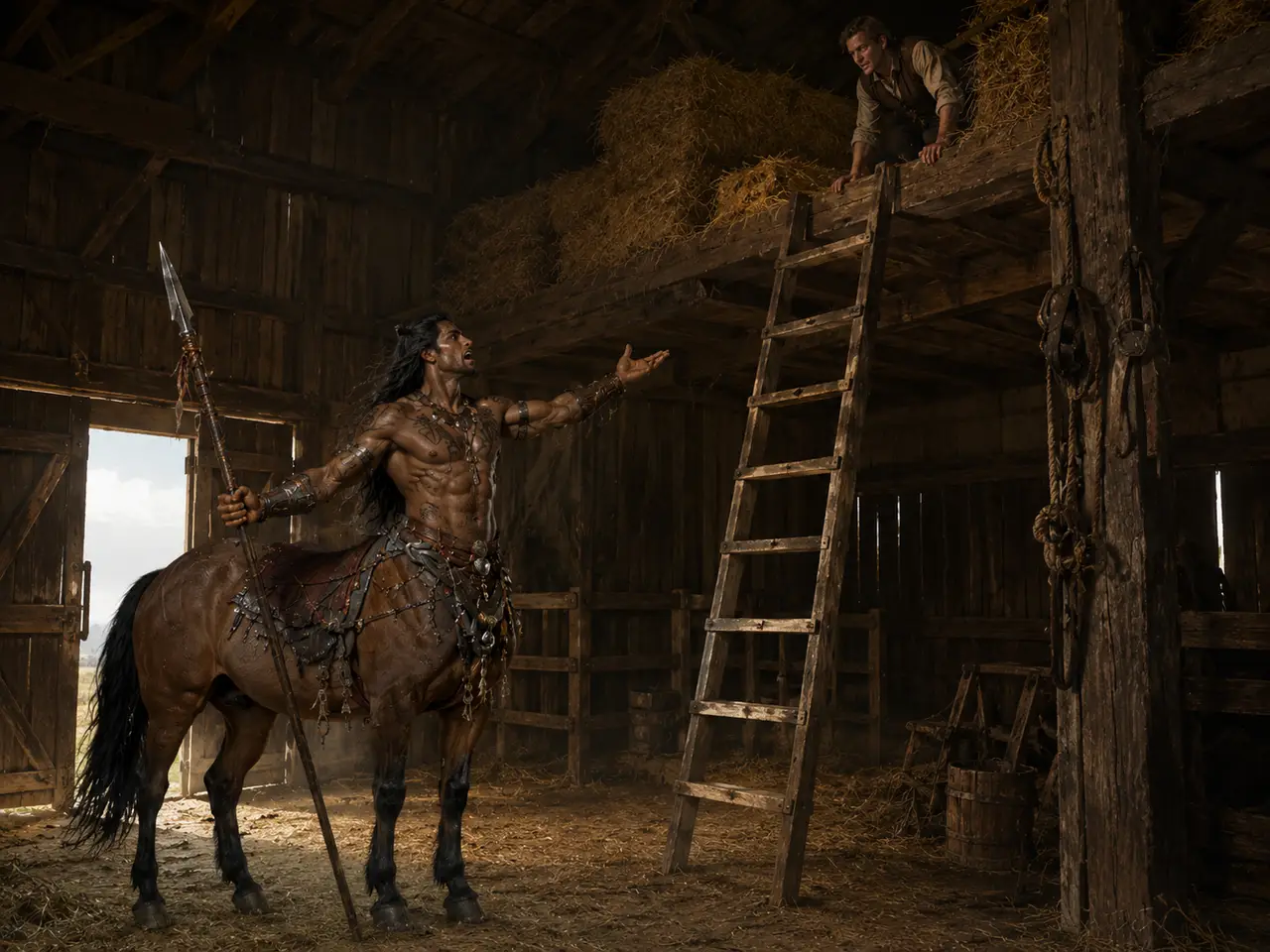
Furniture differs significantly from human designs. Chairs, narrow beds, ladders, and cramped rooms are uncommon. Instead, Azraqan favor broad resting platforms, layered rugs, furs, cushions, and open interiors that allow comfortable movement.
Storage systems are similarly adapted. Tools are often suspended from walls or tent frames, while baskets, chests, and low containers remain accessible from standing or reclining positions.
Adornment carries deep social significance. Jewelry, tattoos, painted markings, hair ornaments, and carved decorations communicate lineage, achievements, fertility, mourning status, marital affiliations, military accomplishments, and oath obligations.
Warfare
Azraqan are among the most formidable warriors of the open plains.
Their speed, endurance, mass, and reach make them exceptionally effective skirmishers and shock troops. Spears are their iconic weapons, serving roles comparable to both infantry polearms and cavalry lances. Bows, javelins, axes, heavy knives, and long-handled weapons are also common.
Unlike cavalry, Azraqan require no mounts. This grants them tremendous independence but also means they personally endure dangers that mounted warriors often transfer to their horses. Armor must protect both human and equine portions without restricting movement or causing dangerous overheating. As a result, heavy armor remains relatively rare.
Because many mature females spend long periods pregnant or nursing, military traditions often draw heavily from males and younger pre-breeding females. Nevertheless, Azraqi history contains numerous examples of renowned female warriors, commanders, and champions, particularly among women who delayed breeding or never entered the reproductive cycle.
Although Azraqan are not riders, humans and similarly sized peoples can physically ride upon an Azraq's back. Such acts are extraordinarily uncommon and carry immense symbolic weight. Allowing another person to ride is generally interpreted as an expression of profound trust, kinship, affection, or oath-bound loyalty. Casual requests are considered deeply offensive.
Azraqi warfare emphasizes mobility, maneuver, harassment, encirclement, feigned retreats, rapid concentration of force, and exploitation of terrain. Open country favors them. Dense forests, steep mountains, marshes, narrow streets, and fortified urban environments do not.
Experienced enemies attempt to negate Azraqi advantages through obstacles, trenches, stakes, mud, confined spaces, and terrain that restricts movement.
Economy
Azraqi economies are diverse but generally revolve around a combination of agriculture, livestock husbandry, trade, transportation, and territorial control.
Contrary to popular misconception, Azraqan do not feed themselves by grazing. The grasslands they control support livestock rather than the Azraqan themselves. Herd animals provide meat, milk, wool, hides, labor, and trade goods.
Agriculture plays a central role in many Azraqi societies. Their caloric requirements are immense, and even a modest Azraqi settlement requires large quantities of grain, legumes, vegetables, fruit, and preserved food. Where terrain and rainfall permit, Azraqan maintain broad fields of wheat, barley, millet, sorghum, pulses, gourds, root crops, and oil plants. In drier regions they rely heavily on irrigation, seasonal floodplains, cisterns, wells, and carefully managed river terraces.
Because of their size, Azraqan are powerful agricultural laborers. They can plow, haul, thresh, transport, and carry loads that would require teams of humans or draft animals. However, their strength is balanced by equally significant demands. An Azraq consumes far more than a human and requires infrastructure scaled to their body. Azraqi agriculture therefore tends to be highly organized, communal, and territorially conscious.
Livestock husbandry remains one of the pillars of Azraqi life. Sheep, goats, cattle, hardy pack animals, and regionally adapted herd beasts provide food, fiber, hides, horn, bone, traction, and wealth. Horses are kept in some regions, especially for trade with humans, but they do not occupy the same cultural role they hold in many human societies. Azraqan do not need riding animals, though they may value horses as draft stock, pack animals, prestige goods, or diplomatic gifts.
Dairy production is especially important. Azraqi households produce cheese, butter, fermented milk, curds, dried milk solids, and clarified ghee. Ghee is one of the most widely traded Azraqi goods because it travels well, stores for long periods, and retains value across cultural boundaries. In regions where Azraqi milk is prized for medicinal, ritual, or nutritional reasons, preserved dairy products can become luxury commodities.
Female lactation forms a distinct part of the economy in many settled and semi-settled communities. Since nursing females often produce milk far beyond the needs of their own foals, households collect and process excess milk into food, medicine, ritual substances, and trade goods. This is not treated as marginal or shameful work. In many Azraqi societies, dairy production is central to household prosperity, and mature nursing females may control substantial economic resources through the management of milk, preserved dairy, maternal labor, and dependent workers.
Maternal settlements often function as economic centers. These places gather pregnant females, nursing mothers, foals, midwives, healers, dairy workers, cooks, guards, attendants, and traders into specialized communities. Such settlements require reliable food supplies and protection, but they can generate enormous quantities of dairy products, textiles, hides, prepared foods, and skilled domestic labor. Outsiders sometimes mistake these settlements for places of confinement. In reality, many are wealthy, politically influential, and central to the continuation of Azraqi society.
Trade is another major component of Azraqi economies. Their speed and endurance make them exceptional long-distance couriers, messengers, scouts, guides, and caravan guards. In open country, an Azraqi escort can cover ground quickly, detect danger early, and respond to threats with force. Human merchants often pay heavily for safe passage through territories controlled by Azraqi clans or confederations.
Azraqan also control routes. This may be more important than any single product they produce. A clan that holds wells, river crossings, grazing lands, mountain approaches, or stretches of open road can extract tolls, offer protection, deny passage to enemies, and shape regional commerce. Their political power is often tied less to walled cities than to movement itself: who may travel, where they may camp, which herds may graze, and whose caravans may cross safely.
Craft production varies by region. Mobile peoples emphasize leatherwork, hide preparation, felt, wool textiles, bone carving, horn tools, portable metalwork, tack, harnessing, weapon repair, and storage vessels. Settled Azraqan produce heavier goods: wagons, plows, large looms, pottery, metal tools, armor fittings, architectural timbers, dairy presses, and irrigation equipment.
Azraqi crafts are usually robust rather than delicate. Tools, garments, weapons, and household goods are built to survive heavy use, travel, weather, dust, and repeated repair. Ornamentation is common, but even decorated goods tend to retain practical function. An Azraqi belt may be beautiful, but it must also hold weight. A chest may be carved, but it must survive transport. A support harness may show fertility status or household rank, but it must first do its work.
Coinage is used in trade with humans and settled states, but internal Azraqi wealth is often measured through livestock, grain reserves, dairy stores, water rights, lineage obligations, craft goods, and dependents. A rich household is one with food security, healthy mothers, many foals, reliable allies, productive animals, trusted routes, and obligations owed by others.
Religion and Cosmology
Azraqi religious traditions vary widely, but most are strongly tied to land, sky, ancestry, birth, movement, and memory. The open horizon is often treated as sacred, representing freedom, fate, danger, and possibility. Water sources, birthing grounds, graves, old camps, battlefields, and seasonal routes may all possess ritual importance.
Ancestor reverence is common. Lineage songs preserve births, deaths, migrations, victories, betrayals, marriages, oaths, and old grievances across generations. Among many peoples, memory is not simply historical knowledge. It is a moral duty. To forget a lineage obligation, a treaty, or an injury done to kin is to weaken the living bond between past and present.
Birth and lactation carry particular religious significance. A pregnant female represents continuity, vulnerability, and abundance. A nursing female represents the household’s ability to sustain life beyond the limits of the individual mother. Milk may be used in blessings, oaths, funerary rites, healing practices, adoption ceremonies, and rituals of reconciliation.
Many Azraqi peoples maintain sacred specialists associated with birth, lineage, weather, water, and death. Midwives often possess religious authority as well as medical skill. Weather-readers and route-keepers may be consulted before migrations, military campaigns, and major trade expeditions. Singers of lineage preserve the names and obligations that bind clans together.
Azraqi cosmologies frequently divide the world into paths, enclosures, and thresholds. Roads, horizons, river crossings, tent doors, birth passages, and treaty grounds all hold symbolic weight. A person's life is often described as a route taken among kin, obligations, dangers, and remembered places.
Relations with Other Peoples
Azraqan relations with other peoples depend heavily on geography, history, and economic need.
Settled farmers often view them with suspicion, especially where Azraqi livestock threaten crops or where old raids remain within living memory. Frontier communities, however, may rely on Azraqan for trade, protection, scouting, livestock exchange, and knowledge of open country. The same clan feared by one village as raiders may be welcomed by another as indispensable allies.
Human states often struggle to categorize Azraqan politically. They are too mobile for ordinary taxation, too large for many urban spaces, too militarily useful to ignore, and too independent to absorb easily. Diplomatic relations frequently revolve around grazing rights, water access, caravan passage, border raids, hostages, marriage disputes, trade privileges, and recognition of clan authority.
Azraqan often regard humans as numerous, clever, fragile, and dangerously attached to fixed places. They respect human metalwork, writing, ships, fortifications, and dense agriculture, but many find human cities cramped, foul, and physically degrading. Narrow streets, low ceilings, stairs, small rooms, and crowded markets can make even wealthy human settlements feel hostile to Azraqi bodies.
Relations with elves, dwarves, and other intelligent peoples vary by region. Azraqan often value long-lived peoples as keepers of memory and skilled craftspeople, but they may distrust societies that claim land through ancient written title rather than active use, kinship, or seasonal occupation. Disputes over what it means to possess land are among the most persistent causes of conflict.
Human fascination with Azraqi bodies is a recurring source of tension. Foreigners often reduce them to curiosities, monsters, symbols of fertility, or instruments of war. Azraqan usually resent such treatment. Among civilized neighbors, etiquette requires addressing an Azraq as a person first, not as a spectacle.
Architecture and Settlement Design
Azraqi architecture is shaped by scale, movement, posture, and reproduction, but also by the practical limitations of Azraqi bodies. Unlike humans, Azraqan cannot safely climb ladders or work from elevated scaffolding. As a result, they rarely construct buildings taller than they can comfortably maintain themselves. An Azraq can rear onto their hind legs to roughly double their standing height, and this effectively defines the upper limit of most Azraqi construction.
Doorways are wide and interiors are open, but ceilings are generally lower than outsiders expect. They are high enough to permit comfortable movement without forcing adults to duck or risk striking their foreheads, yet low enough that beams, roofing, smoke vents, and structural supports remain accessible for inspection and repair. Floors are usually packed earth, stone, reed matting, rugs, or layered hides rather than raised platforms and elevated galleries. Ramps are preferred over stairs. Corridors, when they exist, must be broad enough for an adult Azraq to turn without scraping walls or furnishings.
Mobile groups favor large hide, felt, or woven-fiber tents supported by sturdy poles and low central frames. These tents include smoke openings, hanging storage, partitioned sleeping areas, low workspaces, and broad resting zones. Wealthier tents may be richly decorated with dyed panels, embroidered liners, carved supports, hanging ornaments, and painted lineage signs, but even elaborate tents remain within easy reach of those who erect and maintain them.
Settled communities commonly build turf-roofed stone homes, long halls, maternal compounds, storage structures, and communal kitchens. Many buildings are partially dug into the earth, reducing the amount of wall that must be constructed while providing insulation against heat, cold, and wind. Thick stone walls support roofs of timber, sod, and packed earth. Because every part of the structure must remain accessible without ladders, Azraqi settlements tend to spread outward rather than upward.
The distinction between domestic, agricultural, and social architecture is often less rigid than in human towns. A household may include sleeping spaces, dairy processing areas, storage, foal care zones, work stations, and guest areas under one broad roof or around a shared sunken court. Buildings are designed to be maintained continuously by their occupants rather than requiring specialized workers operating at dangerous heights.
Maternal architecture is especially distinctive. Birthing halls and nursing compounds are designed for reclining mothers, assisting attendants, foals, healers, and stored food. Floors are soft but cleanable. Supports are placed where a heavy pregnant or nursing female can brace herself. Water, bedding, cloth, warmed stones, medicines, and milk vessels are kept within easy reach.
Human visitors often misread Azraqi interiors as sparse. In reality, objects are arranged according to different bodily assumptions. Azraqan require room to stand, turn, lie down, rise, nurse, work, and gather without injury. Empty space is not wasted space. It is functional architecture. Likewise, what humans perceive as unusually low roofs are often deliberate choices, reflecting a culture that builds only what it can readily access, inspect, and repair.
Law and Custom
Azraqi law is usually customary, though settled confederations may maintain written codes, treaty stones, carved records, or archives held by lineage singers and legal specialists.
The core of Azraqi law concerns kinship, water, pasture, movement, compensation, guest-right, oath obligations, and bodily injury. Because Azraqan are large, mobile, and capable of great violence, internal peace depends upon strong norms of restraint.
Stealing water, violating guest-right, abandoning a foal, injuring a pregnant female, attacking a nursing mother, poisoning livestock, or breaking a sworn route treaty are among the most serious offenses in many societies. Such acts threaten more than an individual. They endanger the survival of households and the stability of the wider people.
Compensation payments are common. These may include livestock, grain, preserved dairy, craft goods, labor obligations, fosterage agreements, marriage rights, water access, or military service. Blood feuds exist, but well-governed societies work hard to contain them through mediation, oath exchange, and compensation before violence spreads.
Exile is one of the harshest punishments. A lone Azraq without kin, pasture rights, recognized obligations, or camp protection is vulnerable despite great physical strength. Exile strips a person of the networks that make survival possible.
Common Misconceptions
Many outsiders assume Azraqan are simply humans attached to horses. This is false. Their anatomy, development, reproduction, diet, posture, and social life are distinct.
Another common misconception is that Azraqan graze. They do not. Grasslands support their livestock, not their own direct nutrition.
Foreign artists often depict Azraqan with horse ears, human navels, crude seams between the torso and equine body, or horse bodies that are too small to support the upper body. These errors are considered marks of ignorance.
Azraqan are also often described as natural cavalry. This is imprecise. Their battlefield role may resemble cavalry in open terrain, but they are not mounted troops. They cannot dismount from danger, and injuries to the equine body are injuries to the person.
Some outsiders assume Azraqi females are confined or politically powerless because mature mothers may spend long periods pregnant, nursing, or physically limited. This misunderstands Azraqi society. In many communities, mature mothers control food production, dairy wealth, kinship networks, household labor, adoption, ritual authority, and local governance.
Another common misconception is that Azraqi settlements consist of towering halls scaled to their size. In reality, Azraqi architecture tends to be low, broad, and practical. Their buildings are designed around what their inhabitants can physically construct and maintain without ladders or scaffolding, resulting in structures that are often lower and more earthbound than comparable human buildings.
Role in Veyrath
The Azraqan occupy a distinctive place among Veyrath's intelligent peoples. They are physically imposing, geographically influential, and culturally ancient. Wherever open land dominates, they complicate the ambitions of sedentary states.
To their allies, they are guardians of roads, keepers of routes, providers of dairy and livestock, fierce companions, and unmatched travelers of the plains. To their enemies, they are raiders, oath-bound avengers, territorial rivals, and proof that open country cannot be ruled by walls alone.
Their presence reshapes everything around them: roads, trade, warfare, architecture, diplomacy, agriculture, and ideas of family. Any civilization that borders Azraqi lands must eventually learn to negotiate with bodies, customs, and political assumptions unlike its own.