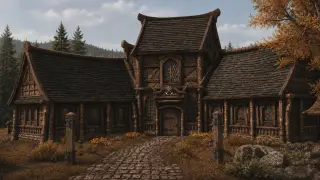
Carpenter's Guildhall & Yard description
Main Hall
The main hall is a showpiece of the Carpenter’s Guild. Stained-glass windows cast colored light across an intricate inlaid floor made from many shades of wood.
At the center of the room, an old tree rises through the floor and up toward the second-floor gallery, serving as the hall’s central beam. A carved sign hangs from its trunk:
Measure Twice, Cut Once
Two sweeping staircases climb to the gallery above. Doors open to the east and west wings, while an ornate door stands to the north.
The hall is built without visible nails. Everything is fitted with pegs, joints, pressure, and masterful joinery.
The inlaid floor contains common oak, pine, ash, walnut, yew, and darker strips of rare marshwood.
DC 12 Intelligence (Nature or Carpenter’s Tools): Identify the common woods.
DC 15 Intelligence (Nature or Carpenter’s Tools): Notice rare woods worked into the border pattern, including black marshwood, silver birch from the Silverstand, and red duskwood from the Dreadwood.
DC 18 Intelligence (Investigation or Carpenter’s Tools): Realize the floor is a map-like design showing rivers, forests, and old timber routes around Saltmarsh.
The doors are unlocked during guild hours.
During the day, there is a good chance Jilar, a guild clerk, or one of the guild artisans is present.
Anyone causing trouble here is quickly noticed. Guild workers from nearby rooms arrive within moments.
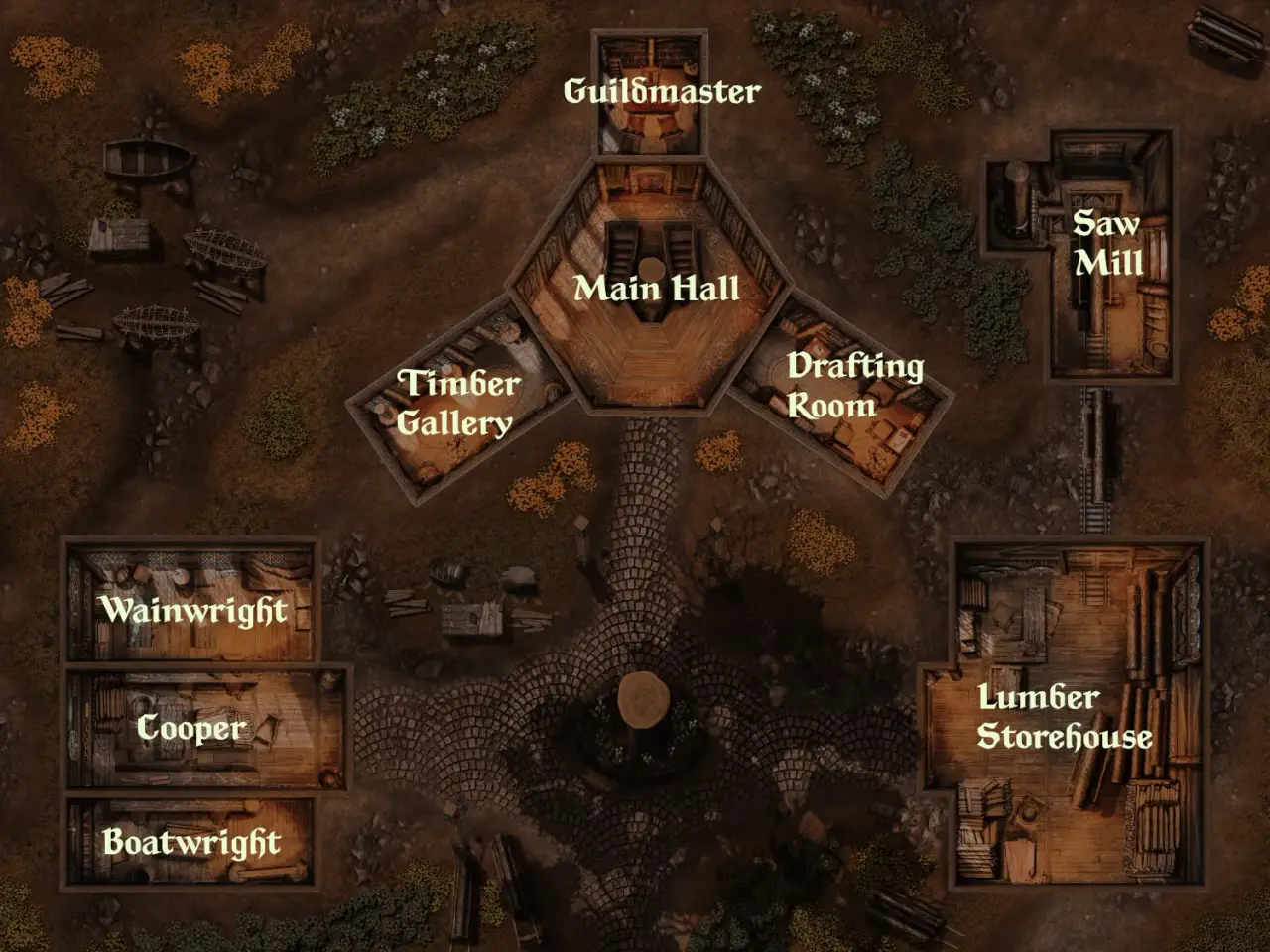
Guildmaster
This small office is neatly kept and finely appointed. A heavy desk of dark, old wood stands before a wall of bookshelves, its surface set with papers, small tools, ink, and carved samples.
The room feels private, quiet, and controlled less a place of comfort than a place where decisions are made.
This is Jilar Kanklesten’s private office.
The desk is crafted from old black oak taken from the Dreadwood. It is heavy, expensive, and beautifully joined.
The bookshelves contain works on carpentry, joinery, shipbuilding, rare woods, guild law, forest lore, and regional timber.
One well-worn book is of special interest: Old Roots and Walking Woods.
The book discusses treants, ancient groves, and the last known living treant in the region: Wander Root, said to dwell in the courtyard at Burle.
DC 13 Intelligence (Investigation): Notice the book has been read many times and recently handled.
DC 15 Intelligence (Nature or History): Understand that Wander Root is not treated as legend in this book, but as a living being.
The door is locked unless Jilar is present or expecting visitors.
During guild hours, there is a 50% chance Jilar is here.
Private conversations with Jilar usually take place here.
If discussing rare woods, old forests, or special commissions, Jilar may lead the characters to the Timber Gallery to show them the wood samples.
Timber Gallery
The quiet gallery smells of wax, old wood, and polished oil. Stained-glass windows cast colored light over six display tables, each holding a carefully preserved sample of regional timber.
Small plaques name the woods and where they were found. Along the walls are fine axes, planes, chisels, and measuring tools.
Each display table holds a regional wood sample:
Drowned Forest Cypress
Dunwater Tamarack
Hool Marsh Mangrove
Dreadwood Black Oak
Silverstand Silver Oak
Kingfisher Willow
These are examples of important woods found around Saltmarsh and the surrounding wilds.
DC 12 Intelligence (Nature or Carpenter’s Tools): Identify which woods are common, useful, or difficult to work.
DC 15 Intelligence (Nature or Carpenter’s Tools): Know one practical use for each wood, such as boats, barrels, bows, shields, furniture, or charms.
DC 15 Intelligence (History): Recall a local tale tied to one of the regions.
The tools on display are fine-quality carpenter’s tools, axes, adzes, chisels, planes, and measuring cords.
Jilar considers this room part museum, part shrine, and part salesroom. She notices if anyone touches the displays without permission.
Saw Mill
The saw mill is loud with the steady bite of iron teeth through timber. Sawdust hangs in the air and gathers in drifts along the floor.
A heavy log rests on a rail bed, slowly drawn toward the great saw. Above, the tall windmill turns, driving the mechanism with a deep wooden groan and the clatter of gears.
During the day, the mill is busy and constantly cutting timber.
Tork Bale is usually here, hauling logs, guiding the saw, stacking planks, or wheeling cut lumber to the Lumber Storehouse.
If Tork is not here, he is most likely in the Lumber Storehouse or yard, still hard at work.
The mill is dangerous. Loose clothing, careless hands, or fighting near the saw can become a serious hazard.
DC 12 Intelligence (Investigation or Carpenter’s Tools): Understand how the rail bed feeds logs into the saw.
DC 15 Intelligence (Investigation, Carpenter’s Tools, or Tinker’s Tools): Notice the mill has two power sources.
The saw is powered by both the windmill above and a hidden tidal waterwheel below the mill.
A large gear rises from a shaft beneath the floor, allowing the tide to help drive the saw when the wind is weak.
Tork is responsible for keeping the mechanism running. He is proud of the dual-power design and gladly explains it to anyone who shows real interest.
Drafting Room
Three drafting tables stand along the walls, each set with rulers, compasses, ink, parchment, and half-finished plans. Stools sit beside the desks, with small chests tucked neatly beneath them.
Shelves hold rolled schematics, ledgers, and books on carpentry, joinery, boatbuilding, and wagon work. The room is quiet compared to the yard outside, broken only by the scratch of quill on parchment.
There is a chance that Elric Vann or Mava Quillcut are drafting something.
During guild hours, one guild member is usually here drafting plans or copying measurements.
The desks hold plans for houses, docks, fishing boats, wagons, barrels, mine supports, and guild commissions.
The books cover carpentry, drafting, joinery, timber selection, barrel-making, boat ribs, cart frames, and artisan techniques.
The chests contain drafting tools, parchment, ink, wax seals, measuring cords, templates, and neatly sorted reference notes.
DC 12 Intelligence (Investigation): Notice several active contracts, including dock repairs, wagon orders, and timber supports for the dwarven mine.
DC 15 Intelligence (Carpenter’s Tools or relevant background): Understand the technical plans and identify the guild’s current major projects.
DC 17 Intelligence (Investigation or Carpenter’s Tools): Find a slim, book hidden among ordinary drafting texts. The title reads "Clever Joinery and Hidden Voids"
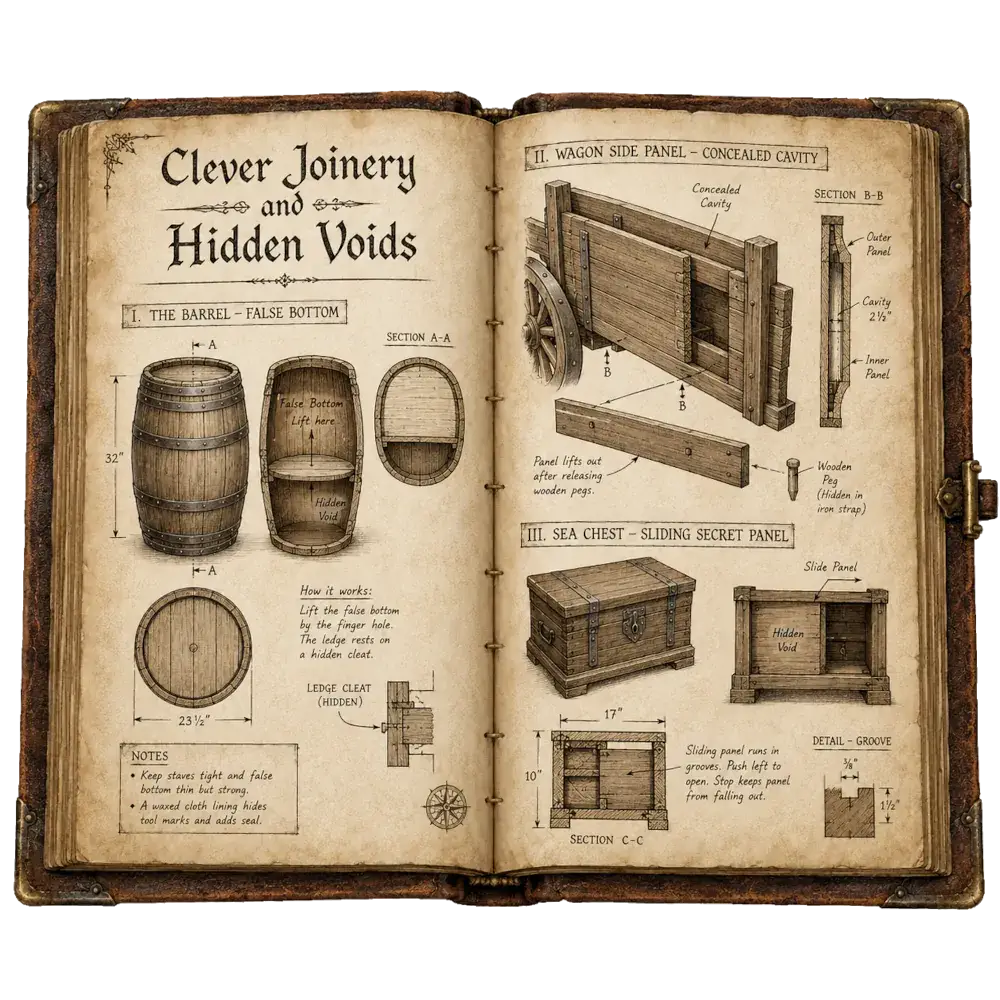
The hidden book details methods for building secret compartments in barrels, wagons, sea chests, and small boats.
A character with carpentry, shipwright, smuggling, or criminal experience may deduce the designs could be used for concealed cargo.
Possessing the book would strongly suggest guild knowledge of smuggling techniques, but not necessarily prove Jilar’s direct involvement.
Lumber Storage
This large storehouse is clean, dry, and carefully ordered. Logs are stacked along one wall, while cut lumber of many lengths and widths is sorted into neat piles.
In one corner, a small work area holds measuring cords, chalk, ledgers, and simple tools. The smell of fresh-cut wood is strong here, but nothing feels careless or forgotten.
This is Tork Bale’s domain.
When Tork is not running the saw mill, he is usually here sorting lumber, checking inventory, or hauling planks.
The room contains logs, beams, planks, dock timbers, mine supports, wagon stock, barrel staves, and boat lumber.
Tork keeps a careful inventory and takes pride in the storehouse being orderly.
DC 12 Intelligence (Investigation): Notice the lumber is sorted by type, size, dryness, and intended use.
DC 15 Intelligence (Nature or Carpenter’s Tools): Identify a few uncommon woods among the stock.
DC 15 Wisdom (Perception): Notice any recently moved stack, hidden bundle, or unusual dark-stained timber.
Tork is happy to discuss the mill, the storehouse, and how timber is cut, dried, and stored.
If asked about the mill, he may proudly explain the windmill and tidal waterwheel mechanism.
Wainwright
This long workshop is lit by tall stained-glass windows. Wagon wheels hang along the far wall, while saws, clamps, planes, and measuring tools rest across heavy workbenches.
The room smells of cut wood, iron fittings, and old varnish. It is clearly built for wagons, carts, wheels, and other large carpentry projects.
This room is overseen by Harben Tallowbarrel.
Harben is here 25% of the time during guild hours. Otherwise, he is usually in the Cooper’s Room next door.
The shop is primarily used for wainwright work: wagon wheels, cart frames, axles, spokes, handcarts, and mine carts.
It also serves as the guild’s general large-project workshop.
Larger carpentry projects may be worked on here, including crates, beams, dock frames, shields, strongboxes, and large chests.
Mava Quillcut sometimes uses this room when her finer work requires more space.
DC 12 Intelligence (Investigation or Carpenter’s Tools): Identify recent work orders: wagon repairs, mine carts, dock frames, or handcarts.
DC 15 Intelligence (Carpenter’s Tools): Notice one project is of unusually fine quality, likely Mava’s work.
A few tools are shared guild tools and marked with small carved symbols of the Carpenter’s Guild.
Cooper
This workshop smells of oak, pitch, salt, and old ale. Barrel staves are stacked along the walls, iron hoops hang from pegs, and several half-finished casks sit ready for binding.
The room is clearly built for cooper’s work: barrels, tubs, crates, and storage containers of every size.
This is the guild’s main cooper’s shop.
Harben Tallowbarrel is here 75% of the time during guild hours.
There is a 25% chance that Marshoal, owner of the Boundless Barrel stall in the Green Market , is here helping Harben.
Marshoal sometimes assists with large orders and sells guild-made barrels through the Green Market.
Most barrels here are for fish, salt, ale, grain, storage, and trade goods.
DC 12 Intelligence (Investigation or Carpenter’s Tools): Identify the normal cooper’s work and current orders.
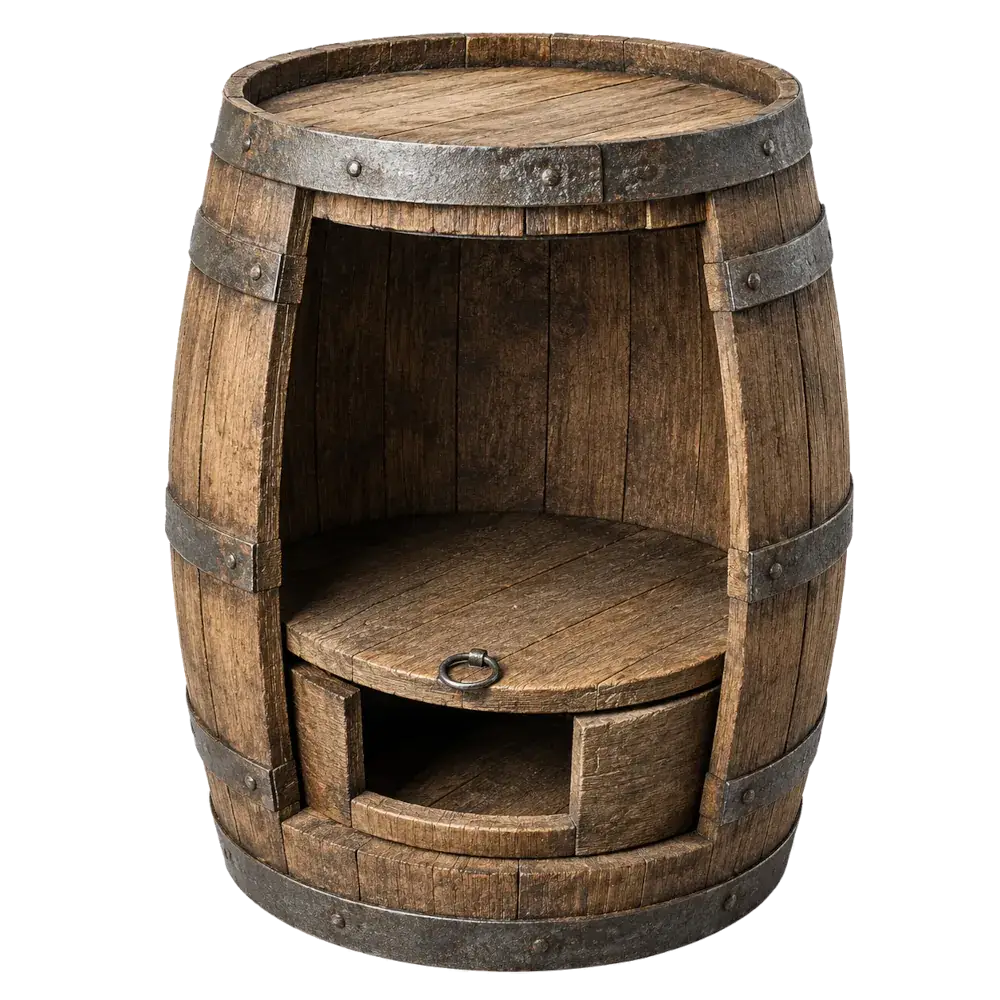
DC 15 Intelligence (Investigation or Carpenter’s Tools): Notice a few barrels have unusual false bottoms or reinforced seams.
DC 17 Intelligence (Investigation, Carpenter’s Tools, or Criminal Background): Realize these barrels are designed to hide cargo beneath fish or salt.
Smuggling Connection
Harben and Marshoal are both on Gellan Primewater’s payroll.
They help make barrels with false bottoms used in smuggling. They know the broad method: contraband is hidden beneath fish, salt, or other goods and moved through ordinary trade.
They know some details about the Fishmonger’s Plant and how smuggled cargo is concealed in barrels, but they do not know the full operation. They are loyal to Primewater, afraid of retaliation, and very difficult to pressure into talking.
Boatwright
This narrow workshop smells of salt, shavings, and steamed wood. Oars, spars, belaying pins, and shaped boat pegs are stacked along the shelves, while specialty tools hang within easy reach.
Long planks and curved pieces of timber rest against the walls, ready to be carved, planed, bent, and fitted into small boats or dockside repairs.
This room is used for boatwright work: oars, spars, ribs, pegs, belaying pins, skiff parts, and small boat fittings.
Elric Vann is here 50% of the time during guild hours.
If Elric is not here, he is usually outside in the yard working on a rowboat, skiff, or small sailboat frame.
DC 12 Intelligence (Investigation or Carpenter’s Tools): Identify recent repairs to oars, skiff ribs, and dock fittings.
DC 15 Intelligence (Carpenter’s Tools or Water Vehicles): Notice which pieces are meant for fishing boats, river skiffs, or coastal craft.
A careful search may reveal a loose sketch of a hidden compartment built into a small boat, though it is not obvious without shipwright or smuggling knowledge.