
Biographical Details
Ancestry/Heritage: Samsaran
Background: Undertaker
Class: Animist
Birthday: Blossombloom 12
Age: 24
References
Residence
Employment
Undertaker / Healer
Memberships:
Family
Minase Haru (father), Minase Akemi (mother)
Allies
Su-Min Yeo (mentor)
Character Arc:
Protection / Enlightenment
"In time, the sea gives itself back to the sky."
"All waters leave, and all waters return. No drop is lost beneath the sun."
"A straight river is a short river, a winding river is a remembered one."
"The river forgets the stone, but remembers the journey around it. A stone held too tightly becomes a dam."
About
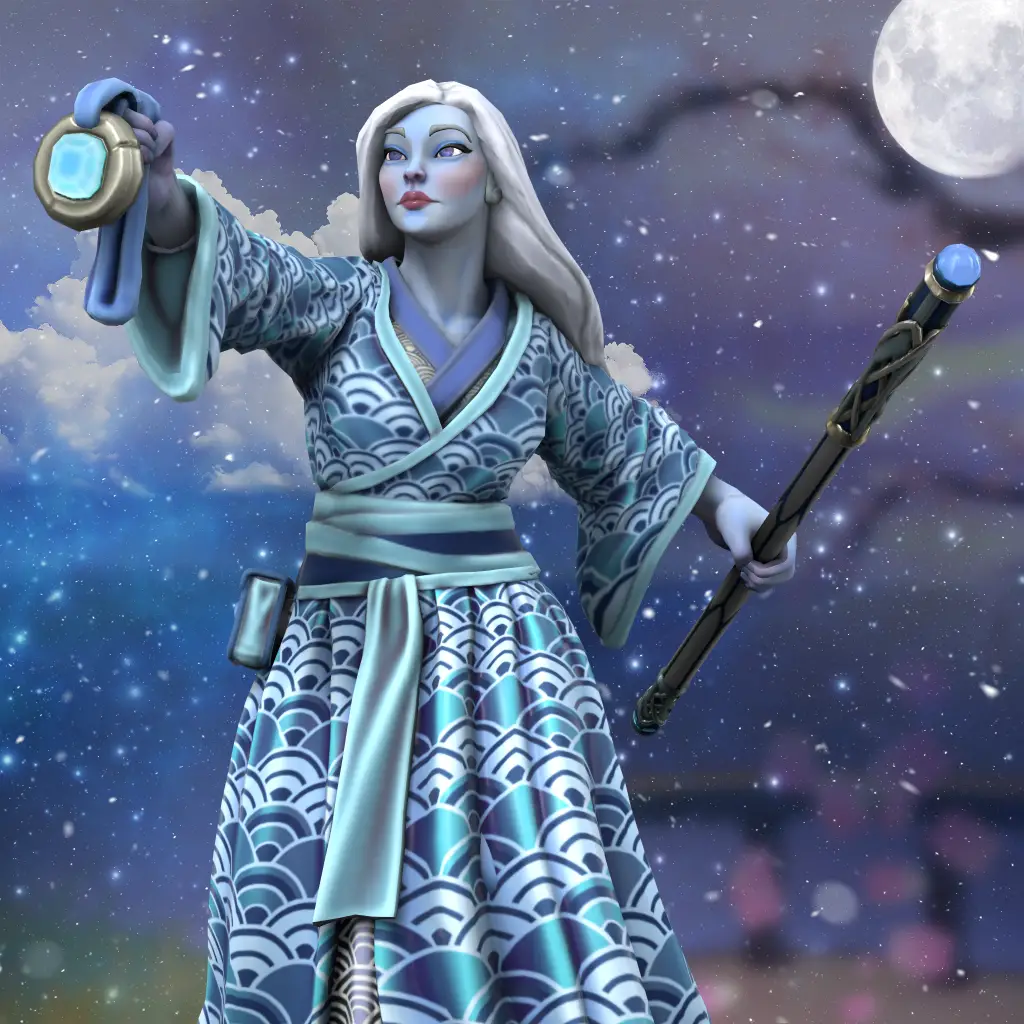
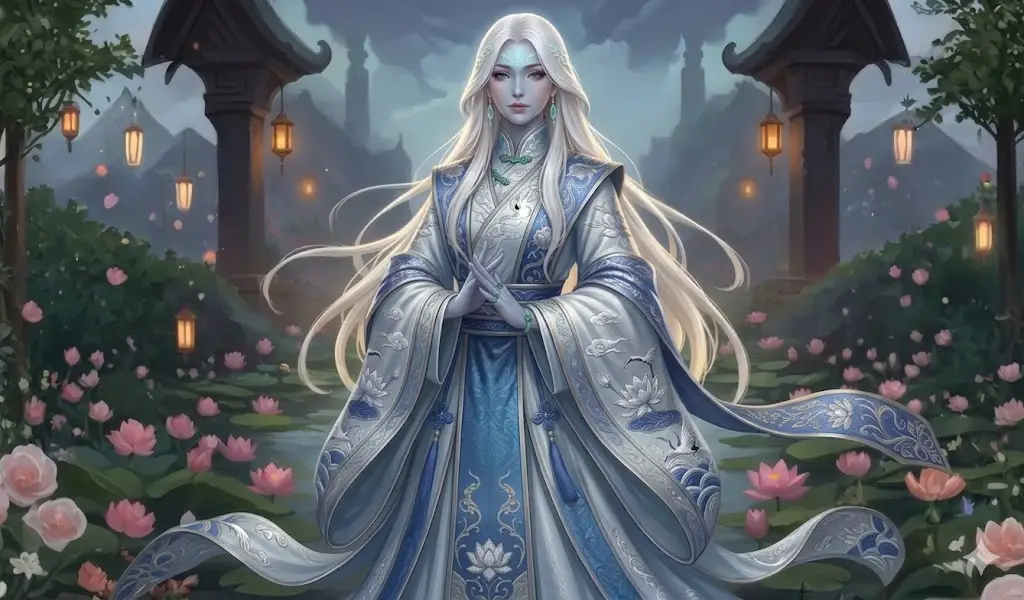
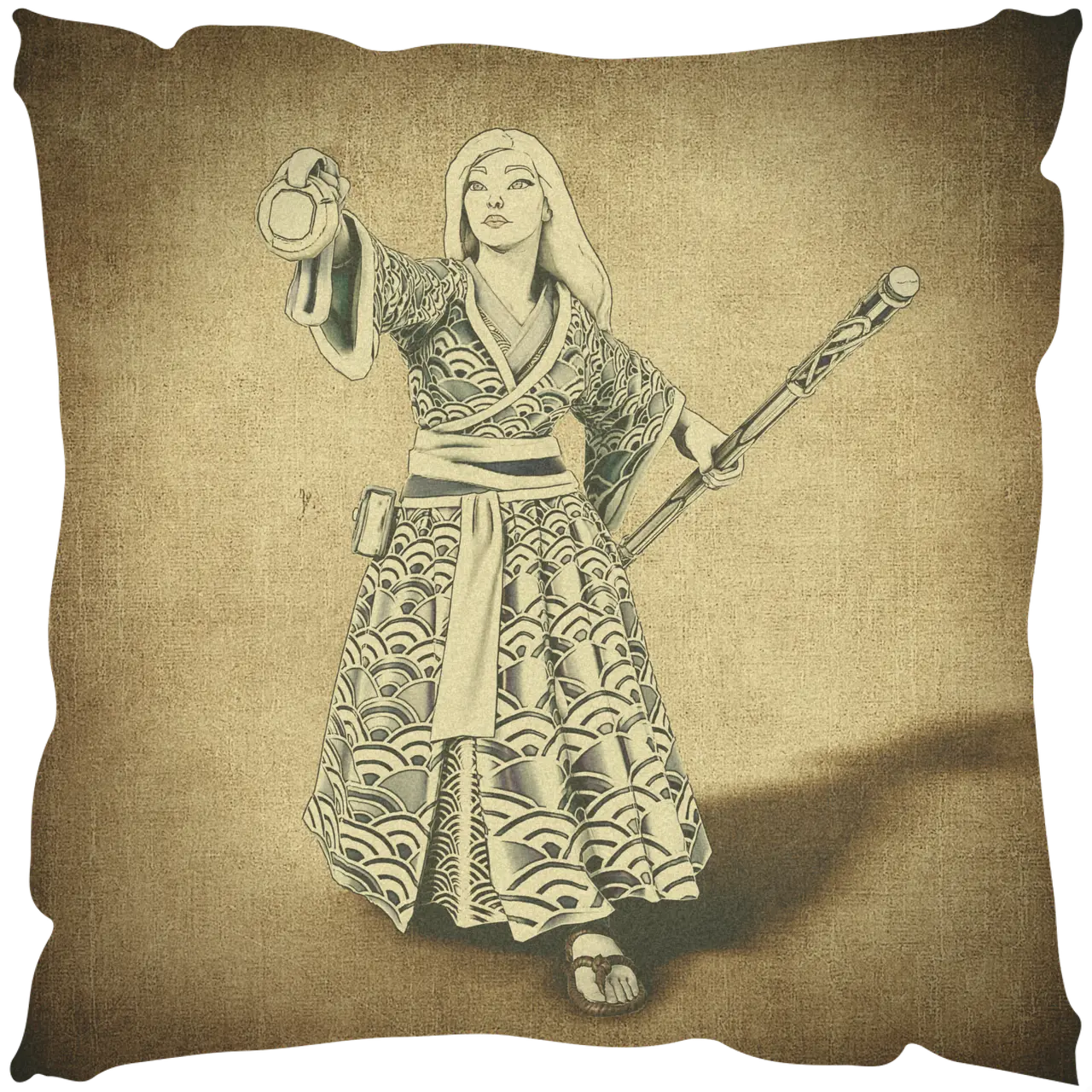
Sayaka Yasuragi is Yanagihama's young undertaker, a quiet woman who has spent most of her life helping the town's dead find their way onward and helping the living learn to let go. Though only twenty-four, she has long been trusted with funerary rites, cremations, and the difficult task of sitting beside those who are grieving.
A follower of Aishin, the Veiled Shepherd, and a student of The Path of Returning Waters, Sayaka views life and death as parts of the same current. She is patient, gentle, and thoughtful, more likely to listen than speak, but possesses a quiet conviction beneath her calm demeanor.
She was raised by loving parents who taught her to appreciate the fleeting nature of things: her father, Minase Haru, a laborer who taught patience and trust in the proper season of all things, and her mother, Minase Akemi, a dye-maker who taught that change is not loss. Much of her understanding of the Path came later from Yeo Su-Min, the elf herbalist who tends the Quiet Garden cemetery. Under Yeo's guidance, Sayaka learned that grief, like water, must be allowed to flow, and that gentleness is often what allows difficult things to pass.
Those who know her would describe her as kind, dependable, and perhaps a little strange. She has a habit of speaking in river metaphors, collecting flowers from the Quiet Garden, and treating spirits with the same courtesy she offers the living. She believes that nothing is truly lost, only changed, and that every ending is part of another beginning.
Backstory
Sayaka’s story begins in a town that learned, long ago, to fear that which does not move.
The people of Yanagihama practice cremation not out of ritual purity, but out of necessity. Others may say the earth is kind, but it is also patient in a way that becomes dangerous. It keeps what it is given. It waits. And in waiting, it allows things to forget how to leave.
From an early age, Sayaka was quiet in a way that did not feel like shyness. It felt like listening to something others could not hear. She would stand near water for too long. She would watch rain without moving.
The stillness began with her birth. A small, blue child being born to human parents usually meant the rain had stilled before it had the chance to become a river. The midwives handed Sayaka to her mother, Akemi, with grim faces, expecting the woman to pray over her stillborn child. Instead, Akemi laughed and brought the bundle close to her face - nose to nose with the infant. The midwives looked up to see the child slowly blinking, and reaching her tiny hand out to grab a tuft of her mother's hair.
They called the elders, worried that this child may be an ill omen. They spoke in whispered tones about the possibility of Sayaka being a Samsaran - one who remembers their past rivers. The elders assured Akemi that Sayaka would be a healthy child, that she was quietly blessed by the cycle. But they warned she may have trouble getting her current to flow because of the stillness she carried from her past rivers.
Her parents never knew what to do with that stillness. But given the elder's assurance, they did not fear it.
In a town that primarily burned its dead, there was always work to be done: preparation, prayer, collection, watching the smoke rise and ensuring nothing was left behind that could become still. Most young children were kept away from it until they were older. Sayaka drifted toward it.
At first she carried water for washing the body. Before she was five, she learned the timing of rites. Soon she learned how to speak the words without trembling. The elders noticed that when she stood near the pyre, the air felt less heavy, as if something in her presence discouraged lingering.
The townsfolk who had scoffed at the idea of her being a Samsaran started to change the way they spoke about her. They said she had a “clean current.”
Before she was seven, people who followed The Path of Returning Waters began to seek her out, treating her like a living scripture. They would ask her to sit with the dying, hoping that her words and presence would sooth frightened souls because she had made the journey and returned.
Akemi started to worry that sitting with the dying would have the opposite effect, and increase the stillness that was in her. She was doubly worried when Sayaka began spending time at The Quiet Garden with the town's herbalist, an elf named Yeo Su-Min.
The old cemetery was not abandoned, but rather well kept thanks to Yeo. Nonetheless, many felt unease around it because it was a place of old customs and untrustworthy earth. It pre-dated most of the towns residents, except a few of the elders, Tachibana Jiro, and some of the longer-lived races such as the elf that tended the site. Yeo was the only one who knew all the names of those buried there by heart. She trimmed overgrowth with reverence as she tended the herb gardens there, and spoke those long forgotten names aloud with respect as she did so.
Sayaka went because she was curious. She stayed because for the first time she felt something in her that had no name, but that she somehow recognized.
Yeo treated her as familiar, in a way that she could not fully place. Under her guidance, Sayaka learned to view the Path not as comfort, but as structure. Not hope, but pattern. Not belief, but truth.
As they spent time together, Yeo taught her Wu-Zen script. Slowly, without urgency, writing characters into damp soil and letting them fade so she would understand that deep meaning does not require permanence. She corrected Sayaka gently when she treated the words like tools.
Yeo never told her she was anything other than what she was. “You have been many rivers, but the sky has always formed the same clouds.”
Sayaka did not understand at first, she was only about eight when Yeo said it, but she would never forget.
And quietly, without announcement, Sayaka became the town’s undertaker at the age of twelve. The townsfolk began to say that when Sayaka handled the dead, the weight of grief in a household eased faster. That smoke from cremation seemed to rise higher, and rivers flowed into the sea without resistance.
She was young for it, too young by most standards, but the town measured responsibility differently than by age. What mattered was not how long someone had lived, but how well they navigated the river.
She did it well, and she did it gently; spoke the right words at the right time. She knew how to stand near suffering without letting it slow into something that became still.
Not because she was detached, but because she knew something absolute: that gentleness is what allows things to pass.
And though she never made a spectacle of her understanding, many in the town came to rely on it. When deaths occurred, Sayaka ensured they were handled cleanly, respectfully, without lingering weight. When grief threatened to settle too deeply, she helped it move again.
In a place where stillness could become dangerous if left unattended, that was revered as something close to sacred.
Ideology
"Rain became river.
River became sea.
Sea became sky.
Sky became rain.
Therefore nothing was lost."
Sayaka knows this.
She remembers it...
Not as a lesson written in a book, nor as a story passed from elder to child - but as a truth carried somewhere deeper than memory. She has felt the weight of armor that belonged to another life. She has held the patience of another pair of hands. She has known the warmth of another hearth, the grief of another name, the quiet endings of rivers that knew they were not permanent.
"The river does not fear the sea, for it knows the rain will come."
Her rivers once carried a soldier. A teacher. A wanderer. A fool.
Each flowed its course. Each touched different shores. Each believed, for a time, that it was the whole of itself. But all returned to the sea. All became droplets among countless others, rising and falling together beneath the endless sky.
Her old rivers are not lost, but neither are they entirely hers. They are currents beneath the current - quiet influences that guide her, but never define her.
She does not seek to reclaim them, nor does she fear the day when this river too reaches the sea.
The river’s purpose is not to be a river. It is to reach the sea, to rise as rain, to fall again upon the world; to become what it was always becoming.
For the journey is not toward an ending, but toward another beginning.
And every beginning is the return of what was.
"The river is not a river forever, but a shape the water briefly chooses."
She appreciates all things because she knows all things are temporary. Each moment exists only once - every stone it passes, every shore it follows, every reflection it carries.
Their fleeting nature does not make them lesser.
It makes them sacred.
The sky remembers all of her rivers, but it does not hold any of them for long. It does not keep the clouds in place, it carries the water only long enough for it to fall again. So too must the river learn to release. A river may forget its shape, its name, or its path, but the water remains.
Sayaka has lived enough lives to know that even the greatest things are brief and will be forgotten: a friendship, a promise, a home, a name spoken by someone who loves you. They are not diminished by ending or forgetting. They are made precious because, for a little while, the world allowed them to exist.
For the river that clings to what it carries is only still.
And still water cannot flow to the sea.
"The sky lifts the water, not because the river has earned it, but because it is water.
The sea opens to the water, not because the water was clear, but because it arrived."
The sky does not ask what has passed into the sea, nor does the sea reject the river because it arrived carrying silt from its journey. The cycle accepts all things the river carried, and allows the water to release those things when it rises again as rain.
The water that carried petals and ash.
The water that carried seeds and stones.
The water that carried mud and lanterns.
All are welcomed back.
For even if this river forgets the Path, the water remembers.
And water always returns.
External Resources
Gallery


1d4
1d6
1d8
1d10
1d20
1d100
No backlinks