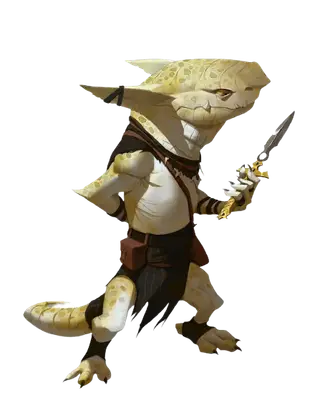
Every kobold knows that their slight frame belies true, mighty draconic power. They are ingenious crafters and devoted allies within their warrens, but those who trespass into their territory find them to be inspired skirmishers, especially when they have the backing of a draconic sorcerer or true dragon overlord. However, these reptilian opportunists prove happy to cooperate with other humanoids when it’s to their benefit, combining caution and cunning to make their fortunes in the wider world.
If you want a character with oversized confidence, deadly cunning, and the ancient power of dragons flowing through their veins, you should play a kobold.
You might…
Analyze your surroundings, always looking for ambushes, advantageous terrain, and escape routes.
Naturally observe, adopt, and respect group dynamics, whether as leader, subordinate, or equal.
Others probably…
Assume that you are cowardly and won’t stick around in the face of danger.
Appreciate your ingenuity and resourcefulness, especially when it comes to building defenses.
Physical description
Kobolds are short (about 3 feet tall) reptilian humanoids with slender bodies and long tails. They often boast distant draconic ancestry, and every kobold displays one or more draconic features, such as stout horns, razor-sharp teeth, or—more rarely—vestigial wings or draconic breath. They mature quickly, reaching adulthood by about 12 years and living to about 60.
The color of a kobold’s scales can vary widely. Most often, they mimic the hues of chromatic or metallic dragons, with a mix of slightly darker or lighter scales that create a mottled appearance. The scales of newly hatched kobolds often reflect the community’s draconic exemplar, whether that’s the dragon they currently serve or the dragon type from which they’re descended.
Society
Throughout history Kobolds have had an ingrained cautiousness that keeps them alive. They're secretive or subservient around powerful creatures to avoid becoming victims. This meekness fades once kobolds secure either a formidable patron (like a dragon) or a potent source of supernatural power (like an artifact or sorcerous leader). They often achieve an unshakable fervor and loyalty to their new cause or leader. However, kobolds are infamous for sensing a proverbial sinking ship, and once their source of power fails or seems doomed, their morale breaks swiftly.
In more recent eras, most Kobolds have come to fall under reign of The Great Wyrm, a ferocious dragon in the southern desert. Those who do not follow her are rare and in hiding, if they haevn't been hunted down yet.
A young kobold’s given name is rarely more than a syllable or two. However, as they age, achieve status, and accomplish great deeds, kobolds add more syllables to their names, imitating a common draconic practice. Kobolds rarely have surnames except in an effort to better fit into a community, in which case they typically adopt the surname of an inspiring figure in that group.
Example names: Azrnak, Enga, Jekkajak, Kib, Zgaz.
Beliefs
All but the most iconoclastic kobolds have a natural respect for hierarchies and rules, and so kobolds are rarely chaotic. Kobold adventurers tend to be lawful neutral or neutral, relying on their ancestral social strategies for survival.
They worship The Great Wyrm like a goddess, though she is not one.
Popular Edicts
Strive for great power.
Strength in numbers.
Execute those not loyal to The Great Wyrm.
Popular Anathema
Reject your draconic ancestry.
Disrespect the authority.
Stats
Legacy.