Background
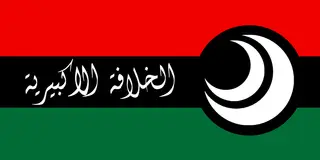
The Ekbir Caliphate is one of the youngest recognized states in Map of Veyrath.
It occupies 2,994,797 square kilometres along Mediath’s western coast. Its northern frontier follows the former internal boundary of the Asharan Sultanate. The Karsenic Mountains dominate the south and southeast. The Ambrathi Wilds lie beyond its southwestern marches, while the Median Wastes begin beyond the mountain passes farther east.
For most of the post-imperial period, the region formed the western provinces of the Asharan Sultanate. Its ports, farms, mining valleys, and caravan roads supplied Shahvazir with grain, metals, soldiers, timber, and customs revenue.
The Third Arvessan War of Succession changed that relationship.
The war lasted from 1247 to 1273 AB. Ekbir was not one of the belligerents, but the conflict devastated trade across Mediath. Refugees entered western Ashara in large numbers. Shipping became dangerous. Prices rose. Provincial tax receipts collapsed. Asharan troops and funds were redirected toward the Throatlands, coastal defence, and protection of the royal heartland.
The government in Shahvazir retained the legal ability to rule its western provinces but gradually lost the practical ability to feed, police, and administer them.
Local governors responded with emergency levies, requisitions, forced labour, and arbitrary seizure of grain. Merchant houses hoarded supplies. Garrisons went unpaid. Refugee camps became permanent towns.
The uprising that produced Ekbir began as an effort to provide food, law, and local security. It only later became a religious movement.
Summary
Modern Ekbir is a revolutionary state that has survived long enough to begin becoming an institution.
Its founders rejected the extravagance, hereditary hierarchy, and negotiated unevenness of the Asharan Sultanate. They argued that government was a moral trust rather than dynastic property. The ruler was obligated to uphold justice, provide relief, maintain water, and answer before divine law.
The Caliphate remains shaped by its origins. Charitable foundations operate hospitals and schools. Grain reserves are politically important. Provincial governors face regular audits. Religious jurists can publicly challenge government decrees.
This does not make Ekbir egalitarian or free from corruption. Revolutionary veterans control much of the army and administration. Religious institutions possess enormous property. Political dissent can be labelled sedition or moral corruption. The current Caliph has ruled since the state’s founding and has allowed members of his own family to accumulate influence.
Ekbir is greener than Ashara. Its southern river valleys, mountain slopes, and coastal plains support dense agriculture, forests, orchards, and substantial permanent settlement. The northern districts are drier and retain stronger pastoral traditions.
Its economy is recovering quickly. Its institutions remain young. Its border with Ashara remains armed.