Art & Culture of Karrnath
"In Karrnath, even the ale has discipline. The Nightwood doesn't brew anything that gives up easily." — overheard at a Ghallanda tavern in Korth
Winter and What Comes After
On the darkest nights of Long Shadows — 26 through 28 Vult, when the Mabaran manifest zones in the eastern duchies strengthen and the line between the living and the dead thins to a whisper — Karrnathi families draw their curtains, bolt their doors, and sit together by the fire. The wealthy light every lamp in the house. The poor burn whatever they can find. In communities near Atur or the Nightwood, the night is genuinely dangerous: shadows move with purpose, and the undead patrols that defend the borders become harder to distinguish from the things they are defending against. In the rest of the country, the danger is more atmospheric than literal, but the tradition holds. You stay inside. You stay warm. You stay together. And in the morning, you go back to work, because in Karrnath, the morning always comes, and there is always work to do.
This is the rhythm that shapes Karrnathi culture — the cold that defines half the year, the discipline that defines all of it, and the specific kind of beauty that emerges from people who have spent a century at war and a millennium before that preparing for one. Karrnath does not produce art that is joyful or spontaneous or clever in the way that Aundair's art is clever. It produces art that endures. The stone of Korth's obelisks, the precision of a Rekkenmark dress uniform, the aching formality of a Sovereign funeral procession, the voice of a viol player alone in a farmhouse performing a song whose melody is older than the nation — these are the things Karrnath makes, and they are made the way Karrnath makes everything: seriously, carefully, and built to last through the worst weather the world can produce.
The nation is in transition, and the transition is visible in the culture. The old world — the Blood of Vol as state religion, undead legions marching to the front, skull pauldrons on every officer's uniform — is formally over. The new world has not yet taken shape. Conqueror, the chess-like war strategy game beloved across the nation, has never been more popular — a game that lets you fight campaigns without casualties, which is either a sign of recovery or a sign that the Karrns cannot stop thinking about war even when they are relaxing. Speculative fiction is a growing literary form, blending the known with the unknown in novels that imagine futures the nation has not yet decided whether to pursue. And the question of what Karrnathi culture is becoming — whether it can shed the war's weight without losing the discipline that carried it through — is the question that hangs over every concert hall, every gallery, and every fire-lit conversation in every farmhouse from Korth to the Bitter Sea.
The Shapers of Atur
Khorvaire's finest sculptors, painters, architects, potters, and costumers trained in Karrnath. This is not well known outside the arts world, because Karrnath does not advertise it the way Aundair advertises its wizards or Zilargo its scholars, but it is true.
The institutional center is the True Shapers Enclave in Atur — which, for the entire duration of the Kingdom of Galifar, was House Phiarlan's Demesne of Shape. When the Shadow Schism split the house, House Thuranni claimed the enclave and maintained the tradition. The Thuranni-trained style is elven illusionism applied to visual art: depicting events with excruciating attention to exact detail — the supernatural creatures present, the quality of light falling across armor and stone and blood, the specific expression on a dying soldier's face. The work is not beautiful in the way an Aundairian illusion is beautiful. It is true in a way that makes beauty feel like a secondary concern, and looking at a Thuranni-trained battle painting for too long produces the unsettling sensation that the painting is looking back.
During the Blood of Vol's eighty years as state religion, a parallel tradition emerged: blood art — devotional work using crimson tones and, in some cases, actual blood and bone. The imagery is feverish, visceral, and deeply uncomfortable for viewers who do not share the faith. Blood art has retreated from public life since Moranna's denunciation, but it has not disappeared. Atur's galleries still exhibit it. Private collectors still commission it. And the tension between the Thuranni realism that Karrnath exports to the world and the blood art that Karrnath keeps mostly to itself mirrors the larger tension in the nation's soul — the public face of discipline and the private reckoning with what the war demanded.
Built to Stand
Karrnathi architecture follows two visible lineages. The pre-war neoclassical style — plain facades, ornamental columns, the deliberate echo of Karrn the Conqueror's era — still dominates government and religious buildings. Since Kaius I, royal preference has pushed toward honest brick construction with large windows, squared on three sides with a rounded top, taking advantage of advances in metallurgy and glass. The emphasis on function shaping form makes it easy to distinguish a school from a temple from a factory at a glance, which is the point — in Karrnath, a building should not pretend to be something it is not.
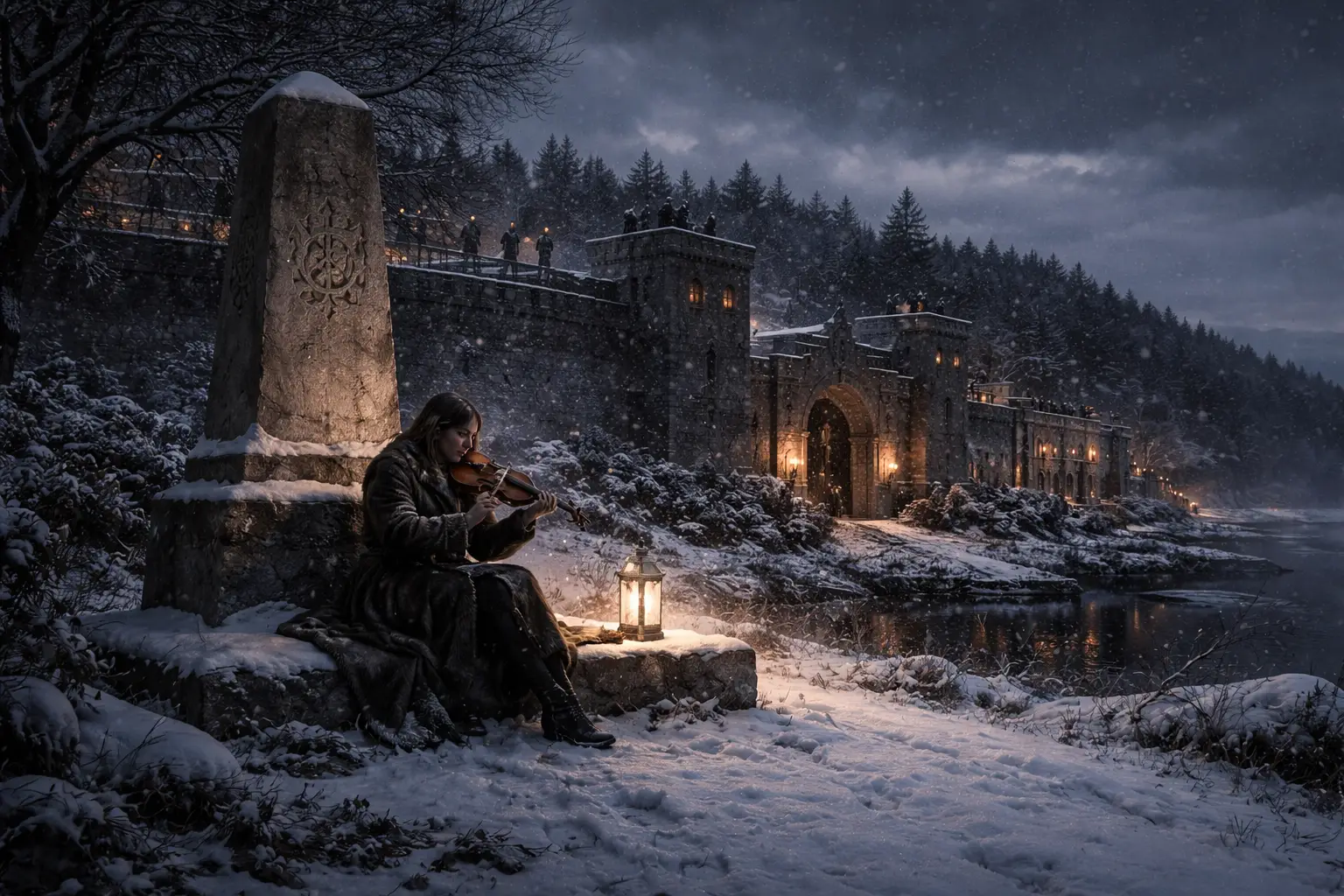
Monoliths, obelisks, and severe stonework give the streets of Korth and Karrlakton the feeling of memorial grounds. Walking through the capital is walking through a museum that the city never decided to stop building. Military marches through the streets bolster the spirits of the Karrns and intimidate foreign diplomats, and the two effects are considered equally valuable. Sturdy walls surround every community — not because every village expects a siege, but because the walls were built during a war that lasted longer than the walls' builders lived, and nobody has seen a reason to take them down.
"The Karrns do not build monuments to their victories. They build monuments to their endurance, which is a different thing and a good deal more honest." — Aundairian architectural critic, in a review of Korth's memorial quarter
The Viol and the Stage
Outside the cities, Karrnathi music belongs to the viol.
The instrument is ubiquitous in rural communities — unaccompanied or sparsely arranged, serving work pacing, mourning, and communal observance alike. The repertoire is largely oral, passed within families and villages rather than through conservatories, and the best viol players are local legends whose names carry weight within a county the way a general's name carries weight in the capital. The songs are fast, technically demanding, and emotionally direct in a way that Aundairian composers would call unsophisticated and that Karrnathi farmers would call honest. A viol melody played at a Long Shadows gathering — one instrument, one voice, the wind outside — is as close to the heart of Karrnathi culture as anything the nation produces.
In the cities, the performing arts are more formal and considerably more expensive. Korth is the home of Karrnathi opera — productions mythological in subject, demanding strict vocal discipline and symbolic costuming, telling epic stories of the Sovereigns with a seriousness that borders on liturgy. During the Last War, traveling opera companies brought Korth productions to soldiers near the front, and this exposure expanded the audience far beyond the capital — rural communities subsequently established their own local productions, rough-hewn versions of the originals that have developed into a folk tradition of their own.
Karrlakton offers a complementary tradition: ballet, patronized by House Deneith's leadership, characteristically invoking fey subjects. The dangers of the Merchant of Misthaven, the adventures of Lady Perilous — these are stories that Aundair tells through illusion and Karrnath tells through athletic precision and controlled movement. The Order of the Broken Blade, a martial arts monastery attached to the Dol Dorn stadium in Karrlakton, has influenced the ballet's movement vocabulary — the dancers' athleticism carries a martial precision that Deneith's Blademaster officers recognize and appreciate. The two traditions now cross-pollinate freely.
A recent commercial innovation has merged performing arts with House Ghallanda's catering expertise: all-day bundles of two performances alongside lunch and dinner service, particularly popular with Karrnath's emerging middle class. The combination of opera, ballet, and a decent meal represents something genuinely new in Karrnathi cultural life — leisure as pleasure rather than duty — and the fact that it is thriving suggests that the postwar transition may be further along than the nation's grim exterior would suggest.
"A Karrn doesn't go to the opera to have fun. A Karrn goes to the opera to feel something precisely, and then to go home and not discuss it." — Brelish cultural attaché, in a private letter
The Calendar of Endurance
Karrnathi festivals follow the Sovereign Host calendar on a sixteen-day cycle, with each of the nine Sovereigns and six Dark Six receiving a dedicated day and the sixteenth reserved for the pantheon as a whole. But the Karrns approach the sacred year differently than their neighbors. Where other nations avoid the Dark Six days and proactively reject their influence, many Karrns use them to consciously engage with the vices each deity represents — not to indulge but to temper, treating the dark holidays as an opportunity for behavioral discipline. This is the most Karrnathi possible approach to a god of betrayal: study the impulse, understand it, master it, and file the knowledge away for later use.
Sovereign New Year (1 Therendor) opens the calendar with a full congregation — the only day when the entire community is expected to gather for offerings to every member of the Host, asking collective blessing for the year ahead.
Frostbreak (3 Therendor) celebrates the end of winter's worst with markets and new trades. Rural Karrns showcase goods made while sheltering indoors during the long months; urban Karrns honor Kol Korran's trickster nature with pranks and games — the closest the nation comes to lightheartedness.
Fortunetide (7 Therendor) is a gift-giving holiday dedicated to Olladra. Karrns generally disfavor gambling and the lady of fortune receives less individual veneration than any other Sovereign, but sharing in good fortune is something they understand. Presents are typically purchased at the Frostbreak markets earlier in the week. In northern Karrnath, superstitions about which omens predict an early spring or an extended winter are taken with considerable seriousness.
Sun's Blessing (15 Therendor) is a day of reconciliation in honor of Dol Arrah, and the Karrns take it genuinely seriously — gifts exchanged between those who had conflict over the past year, practiced with the same discipline they bring to everything else.
Aureon's Crown (26 Dravago) is the traditional day for graduation and coronation. When Kaius III was crowned, Rekkenmark pushed its graduation back a day so students could attend in Korth and cram the lightning rail to return.
Brightblade (12 Nymm) is arguably the most consequential festival. Dedicated to Dol Dorn, the day brings tournaments across every martial discipline in every community in the country. A youth's performance on Brightblade directly influences the quality of their posting during mandatory military service — a strong showing in Karrlakton can mean the difference between a garrison posting in Korth and two years at Fort Bones. Every family with a child approaching service age takes Brightblade seriously, and the tournaments draw crowds that rival anything the opera houses produce. The Dol Dorn stadium in Karrlakton hosts competitions every sixteen days, with organized crime running gambling operations through the temple under the discreet management of high priest Theda Dorn.
The Hunt (1 Barrakas) sends rural communities into competitive hunts for the most impressive game, while urban Karrns throw animal-themed parties and pretend the two traditions are equivalent. Neither side is fooled.
Boldrei's Feast (9 Rhaan) has been deliberately emphasized by the crown since the war's end — the wealthy throw parties for their communities, and the message is clear: this is what peace looks like.
Wildnight (18 Sypheros) is a party dedicated to the Fury. The level and tone of revelry varies from town to town, but it has always been a countercultural event popular more with the young and the disaffected than with temple regulars — the one night of the year when Karrnathi discipline officially loosens, and the one night the elders pretend not to notice.
Ripeseed (11 Aryth) is a harvest festival dedicated to Arawai — an opportunity for communities to give thanks for the bounty that will keep them from famine. Some communities make offerings to the Devourer on the following day to keep the worst of the winter storms at bay.
Heartforge (11 Zarantyr), dedicated to Onatar, brings communities to the smithy for a dawn-to-dusk crafting competition — creations judged and tested the following day, with the winner earning bragging rights that last until next year's fire.
And Long Shadows (26–28 Vult) remains what it has always been: three nights when the darkness is real, the dead are restless, and the people of Karrnath do what the people of Karrnath have always done — stay close to the light, stay close to each other, and wait for morning.
The Three Faces and the Wild Faith
The Sovereign Host is Karrnath's dominant faith, but Karrnathi Vassals worship the nine with a distinctive emphasis. The Nulakeshi creed — the mainstream Karrnathi variant — holds that Aureon and Dol Dorn are joint heads of the pantheon, law and martial strength bound in divine partnership. Their children are Dol Arrah and the Mockery (recognized more openly in Karrnath as Dol Azur than in other nations). Onatar is wed to Boldrei, the forge-fire and the hearth-fire as one. Olladra is the least individually venerated — gambling and fortune-seeking are culturally disfavored, and the Karrns pray to Dol Dorn when taking risks rather than to the lady of luck. The main exception is among the halflings of southern Karrnath, whose affinity for the goddess has preserved her classical depiction as a halfling woman.
Along the Karrnwood's border, unique spiritual practices prevail. The Three Faces of the Wild — venerating a balance between Arawai, Balinor, and the Devourer — is a common variant that interweaves with fey veneration. These communities see a dryad not merely as representative of the Forest Queen but as an aspect of Arawai herself. Some emphasize generosity and hospitality when incorporating fey traditions; others emphasize the tricks and rituals necessary to keep fey compliant. The Karrnwood is a true wilderness — too large and too frigid to be tamed — and the communities along its edge have developed a faith that acknowledges what the settled Vassals of Korth prefer to ignore: that the wild is not subordinate to civilization, and that the Devourer is as real as the Sovereign who feeds you.
The Three Faces of War is an ancient mystery cult dedicated to Dol Arrah, Dol Dorn, and Dol Azur, claiming to have originated with Karrn the Conqueror himself. Initiates receive three rings: gold for Dol Arrah (honor), steel for Dol Dorn (strength), and leather for Dol Azur (necessity). The cult teaches that war comes in many forms, and that the wisdom to know which ring to wear — when to show honor, when to show strength, and when to do whatever is required — is the deepest martial virtue. The Three Faces spread throughout Galifar via Rekkenmark, as generations of officers from all nations joined during their training. Most followers consider themselves ordinary Vassals. Outsiders who notice them at all tend toward conspiracy theories that the cultists find more amusing than threatening.
What You Wear, What You Carry
Karrnathi fashion reflects cold climate and military culture in equal measure. Rural Karrns favor thick woolen clothing — sheep's wool throughout the country, mammoth fiber from the Mamont Tundra in the north, where the Tuskul goliaths and other nomadic peoples tend herds of woolly mammoths across a permafrost landscape that has been home to separate human and goliath cultures for thousands of years. Mammoth wool triggered a continent-wide craze in the 860s when King Jarot's lightning rail surveys brought attention to the north; supply could not keep up, leading to violence against the tundra peoples and a proliferation of charlatans selling fake mammoth wool. The craze passed. The damage did not.
Urban Karrns emulate military dress uniforms: sharp lines, dark fabrics, metal accents. Every Karrn values a solid cloak. The Code of Kaius restricts civilian weapon access — the well-to-do may wear decorative armor and carry peace-bound blades, but only those with governmental positions are exempt.
The cultural reckoning with the Blood of Vol era is visible in the wardrobe. During the war, ivory accessories from Lyodnica — skull pauldrons being the most recognizable — were fashionable adornments on military uniforms. Over the last two decades, a sustained push to reclaim a "Galifaran" style — more understated silhouettes, less ostentatious materials — represents a deliberate aesthetic distancing from the necromantic era. The officer who still wears a skull pin on his collar and the officer who has replaced it with a simple Dol Dorn sigil are making different statements about the same history, and both know it.
Karrn smiths take pride in individual pieces. Elite Karrnathi armor and weapons are as renowned as the finest clothing from Cyre or the arcane accessories of Aundair — functional, beautiful in the restrained way that Karrnath considers beautiful, and built to outlast the person wearing them.
At the Table
Casseroles, soups, stews, sausages, cheeses, dark breads, and strong ales — practical, sustaining food designed for the months when storms come in off the Bitter Sea and the nights outlast the days. Nightwood Ale is the nation's most recognizable export — thick, dark, and complex, its flavor shaped by the Mabaran manifest zones where its ingredients grow. The meat and dairy sectors have expanded since the resumption of international trade — magebred cattle producing unusual milks, Ghallanda preservation magic enabling continental distribution of Karrnathi cured meats and aged cheeses — and wartime rationing that remains nominally in effect under the Code has not meaningfully suppressed the food culture in the capital.
The Ghallanda-catered opera and ballet bundles have made restaurant culture an increasingly visible feature of urban leisure — a development that would have been unthinkable during the war, when excess of any kind was frowned upon and rationing was a point of patriotic pride. That Karrns now spend an afternoon eating, drinking, and watching ballet is not a small cultural shift. It is the sound of a nation exhaling for the first time in a century and trying to decide whether it likes the feeling.
The northern coast, despite its thin population, captures an outsized share of the Karrnathi imagination — brave captains forging their way through unforgiving waters, towns enduring eight months of snow each year, life dependent on the sea's summer bounty then hibernating through the rest. The coastal diet — salt fish, preserved berries, dense grain porridge, and whatever the boats bring in — is as far from the Korth opera-goer's braised beef as Karrnath gets, and the northerners are proud of the distance.
"In Fairhaven, they applaud the performer. In Sharn, they applaud the spectacle. In Korth, they applaud the endurance — the singer who held the note through the difficult passage, the dancer who landed the turn that everyone knew could break an ankle, the composer who wrote something that will still be performed when the people who commissioned it are dust. Karrns do not applaud what is impressive. They applaud what lasts." — Kessler d'Sivis, touring cultural correspondent