Economy & Industry of Karrnath
Built to Last Through Blizzards
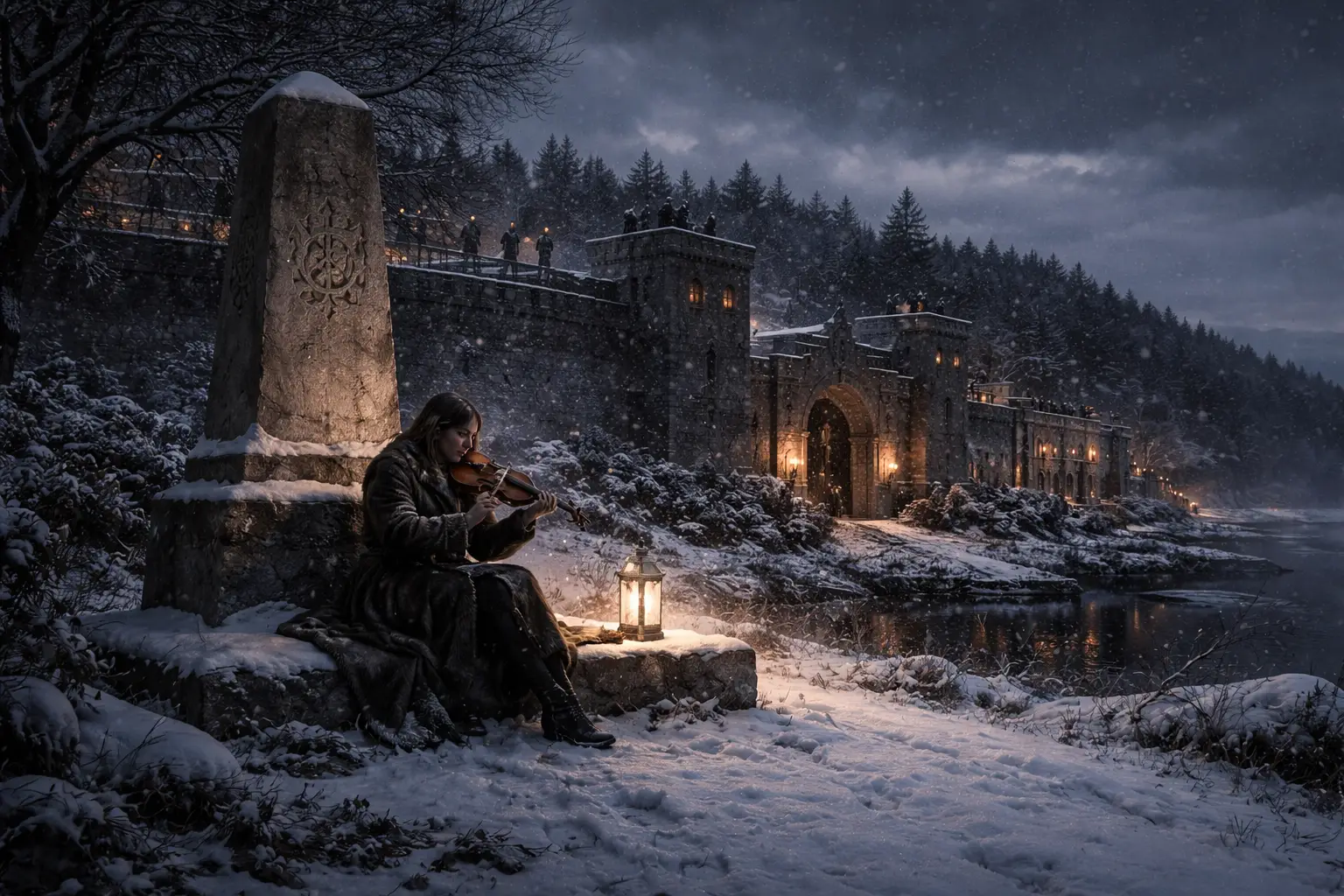
Of the four surviving Five Nations, Karrnath is the least industrialized — and the least concerned about it. Where Breland builds factories and Aundair builds colleges, Karrnath builds forges, mills, and silos, and expects them to work through the storms that besiege the nation every winter. The economy runs primarily on the extraction of resources owned by the nobility — logging, mining, and agriculture form the backbone — with paper, glass, breweries, and livestock providing the diversification that has kept the nation solvent through a century of war and the lean years that followed.
Karrnath's hallmarks are ale, dairy, glass, livestock, lumber, paper, and textiles — the products of a cold, forested nation with rich soil, vast timber stands, and a workforce that has spent mandatory military service learning the logistics of keeping a supply chain operational under combat conditions. The economy is not sophisticated in the way that Zilargo's alchemical industry is sophisticated or the way Breland's manufacturing base is sophisticated. It is durable. It produces things that work in weather that would shut down a Sharn foundry for a week. And it has been doing this, without interruption, through invasions, plagues, famines, religious upheavals, and the loss of half its former territory, for a very long time.
Wartime rationing under the Code of Kaius remains nominally in effect. The populace accepts ongoing austerity as the price of readiness, and excess of any kind is culturally disapproved — a trait that suppresses consumption but also suppresses investment, since warlords and counts who hoard resources rather than deploy them face little social censure for doing so.
MARKET REPORT — Sivis trade correspondent, Korth, Nymm 998 YK
Karrnathi iron and steel: stable, strong demand from Cannith fabricators. Paper (Karrlakton mills): stable, labor shortages noted. Glass (Cyre River workshops): limited supply, premium pricing, international demand increasing. Nightwood Ale: steady export volume, Deneith-guarded shipments on schedule. Dairy and cured meats: expanding, Ghallanda preservation contracts in effect. Lumber: constrained by Rekkenwood fey interference.
General assessment: the economy functions. It does not thrive. The Code's rationing provisions suppress domestic demand, and the warlords' resource hoarding reduces the velocity of internal trade. Karrnath produces enough to sustain itself and export modestly. Whether "enough" is sufficient for the postwar era is a question the crown has not yet answered.
Agriculture and the Famine Question
Karrnath's climate should favor agriculture — much of the interior has soil capable of supporting substantial food production — yet the nation suffered repeated famines during the Last War that remain the most politically sensitive economic subject in the country.
The crown's official explanation blames sabotage by agents of the Emerald Claw, who allegedly held the food supply hostage to force compliance with their hidden master's agenda. Historians note that the truth is more complicated. Warlord hoarding amplified whatever disruptions occurred — counts and dukes stockpiling grain against their own future rather than distributing it to the army — and the famine of 996 YK, a full two years after the war's end, was caused by an early winter and governmental mismanagement, with no evidence of external sabotage at all.
One critical factor is now well understood: Blood of Vol ritual practices had developed methods for living alongside the Mabaran manifest zones that blanket southern Karrnath, harnessing their necrotic energy rather than suffering its hostility to living things. When Vassal-aligned military commanders displaced Seeker practitioners from these manifest zone communities early in the war, the equilibrium broke — and the resulting surge of Mabaran influence poisoned the soil, blighted the crops, and produced the very famines that drove Kaius I into the bargain that brought the Blood of Vol to power in the first place. The irony has not been lost on scholars. The Seeker rituals that the Vassals despised were the thing keeping the food growing, and suppressing them created the crisis that made the Seekers indispensable.
Those agricultural practices — the infamous Odakyr Rites applied to farming rather than necromancy — are now maintained regardless of their faith origins. In the counties near Atur and the Nightwood, Seeker farmers tend Mabaran-touched fields using rituals that any Vassal priest would condemn, producing crops that feed the communities that condemn them. It is a rare case in which necromantic knowledge has become a straightforward agricultural necessity, and neither the crown nor the Sovereign Host has found a way to object to something that keeps people alive.
The resumption of international trade has been a genuine bright spot. Magebred cattle — introduced less than a decade before the war — produce unusual milk varieties, including, through imported Xen'drik cocoa, cows that naturally yield chocolate milk. The resulting cheese production is still in its infancy but expanding rapidly. Karrnathi cured meats and aged cheeses now move across Khorvaire through resumed trade networks, preserved by magic developed in partnership with House Ghallanda.
"The cheese is excellent. The ale will kill you. The bread is better than it has any right to be. And if you ask a Karrn about the famine, the conversation ends. Some economics are personal." — Mror trade liaison, in a letter from Korth
The Forests and the Fey
Karrnath's vast forests provide the nation's most visible resource — timber for construction, fuel, paper, and export. The Karrnwood, the Rekkenwood, and the Nightwood blanket more than half the Duchy of Korth alone, and logging operations in the Karrnwood and its surrounding forests have supplied the nation's construction and paper industries for centuries.
The Rekkenwood presents a different problem. The forest is home to fey — dryads, pixies, and stranger things tied to Thelanian manifest zones — who have resisted logging operations with escalating hostility. Karrnathi soldiers now use magic circles to protect themselves while working, and the Forest Queen (as the local fey power is known) has responded by deploying magically enhanced beasts against the logging teams. The conflict is low-grade but persistent, and it constrains Karrnath's timber output at exactly the moment when postwar construction demands more of it.
The Nightwood is worse. The massive forest bordering Korth has deep ties to Mabar, and its interior produces monsters that periodically threaten the surrounding communities. Criminals and fugitives who flee into the Nightwood discover that its dangers are deadlier than any Karrnathi executioner. Logging the Nightwood is not attempted. What the Nightwood produces is Nightwood Ale — brewed from plants that survive growing in Mabaran zones, their flavor shaped by the complicated influence of necrotic energy into something thick, dark, and robust. International shipments are guarded by Deneith mercenaries under longstanding agreements with the Karrlakton breweries. The ale is Karrnath's most recognizable export beverage, and its reputation is earned.
ADVERTISEMENT — Nightwood Brewing Consortium, posted in Common at Ghallanda establishments across Khorvaire
NIGHTWOOD ALE. Brewed in darkness. Best enjoyed by firelight. The thick body and complex character are the product of ingredients that grow nowhere else in Khorvaire — in soil that other brewers would not touch, under conditions that other brewers would not survive. Ask for it by name. Guarded in transit by House Deneith, because some things are worth protecting.
Industry and Craft
Karrnath is not an industrial power in the Brelish sense — there is no equivalent of the Cogs, no city-scale manufacturing apparatus, no assembly-line production of standardized goods. What Karrnath produces, it produces through skilled individual craft backed by magical infrastructure, and the quality of the output is as high as anything on the continent.
The forges of Korth produce some of the finest arms and armor in Khorvaire. Each piece is crafted with individual pride — elite Karrnathi weapons and armor are as renowned as the finest clothing from Cyre or the arcane accessories of Aundair. Khorvaire's continent-wide absence of coal means all serious metalworking depends on magical enchantments and bound elementals, which cements House Cannith's role in any forge operation. Karrnathi smiths work within this constraint and take it as a point of pride that their individual craft exceeds what Brelish mass production achieves in volume.
Karrlakton hosts the nation's largest single industrial plant — a foundry along the Cyre River that was originally a temple to Onatar before being purchased by the industrialist Loyal Daison a decade ago. During the war, it received raw materials by lightning rail, turned them into arms and armor, and shipped them back by rail and river. Today the furnaces produce civilian construction materials under conditions that would appall a Brelish labor reformer — brutal hours, hazardous conditions, and a workforce trapped by the economic manipulation the Code of Kaius makes possible. Most of the workers are Cyran survivors rather than Karrnathi citizens, which is why Duchess Olivier has thus far declined to intervene. The foundry is the sharpest example of a pattern emerging across Karrnath's industrializing economy: the Code's authoritarian framework, designed for wartime, is proving equally useful for suppressing the labor rights that peacetime workers might otherwise demand.
Paper and glass round out the industrial base. The paper mills along the Cyre River in Karrlakton boomed during the ninth century and survived the war intact, but the Mournland's proximity — the dead-grey mists visible from the southern border — has unnerved enough workers that labor shortages are becoming a structural problem. Some workers are using the shortage as leverage to push back against hazardous conditions, the first stirrings of labor organization in a nation whose legal framework does not acknowledge the concept. Glass production from the Cyre River beaches is entirely handmade, with magewrights using magic to achieve colors and shapes beyond mundane technique. Karrnathi glass is particularly prized in the Eldeen Reaches — one of the more unexpected trade relationships to emerge from the postwar economy.
The mines of the Ashen Spires and Icetop Mountains produce a range of metals — iron, silver, and onyx from Atur's Ashen Spires, base metals and gemstones from the Icetops — though no single deposit approaches Mror scale. Atur's onyx mines are particularly significant: onyx fuels necromantic rituals, and the conjunction of rich deposits with the city's Mabaran manifest zone has made Atur the continent's premier center for necromantic materials, a position that the suppression of the Blood of Vol has not diminished.
Trade and Transit
Karrnath's trade flows through lightning rail, river freight, and a growing airship network. Internally, rail connects Korth to Atur, Karrlakton, Rekkenmark, and Vedykar. International routes run through Thaliost and Flamekeep. Korth's airship docking tower, completed in 993 YK and located near the Tower of the Twelve, handles domestic service to the major duchies and international flights connecting through Thaliost and Flamekeep. The long flights to Krona Peak and Taer Valaestas are rarer, stopping in Atur and Karrlakton respectively to ensure the bound elemental is fresh for the journey. Every dragonmarked baron except Kwanti d'Orien — who has obvious reasons to prefer the rail — has adopted the airship as preferred transport.
The Mournland has fundamentally disrupted westward trade by destroying the lightning rail lines that once connected eastern and western Khorvaire. The permanent loss of the White Arch Bridge has left Rekkenmark accessible only by airship, lightning rail from Korth, or the long water route from Flamekeep. Karrnath is not geographically isolated, but it is less connected to the continental economy than it was before the war — a constraint that amplifies the nation's existing tendency toward economic self-sufficiency and that the warlords cite as evidence that Karrnath cannot afford to depend on trade with nations it may one day need to fight again.
The Eldeen Reaches became a critical food supplier during the war, and the relationship has evolved into a genuine postwar partnership — the Reaches export food to Karrnath and import Karrnathi glass and finished goods. Relations with the Mror Holds have shifted from tribute extraction to reluctant commerce, natural economic partners whose nine centuries of colonial history make every negotiation heavier than the goods being traded.
The Dragonmarked Presence
The Tower of the Twelve is headquartered in Korth — the airborne research institute founded after the War of the Mark, housing arcane laboratories, libraries, and the meeting rooms where the houses resolve their differences. Its presence makes Korth a hub for dragonmarked activity across eastern Khorvaire, and adventurers seeking an Heir of Siberys from any of the major houses have reasonable odds of finding one in the capital.
Cannith East, under Zorlan d'Cannith, is the most consequential house operation in the nation. Zorlan arrived with the first warforged in 966 YK and has been pushing Karrnath toward industrialization ever since — building the Vulyar conductor stone facility, expanding arcane manufacturing in Korth, and conducting research that the other Cannith branches prefer not to know about. Zorlan is a sincere adherent of the Blood of Vol — a faith he adopted genuinely during the war — which places him in an increasingly complicated position as the crown suppresses the Seekers. Cannith East is simultaneously the engine of Karrnath's industrial modernization and the house branch most deeply entangled with the nation's necromantic heritage.
House Deneith is headquartered at Sentinel Tower in Karrlakton — the fortress that has been the house's seat since Karrn the Conqueror gave it to them three thousand years ago. The Blademarks Guild recruits heavily from Karrnath's veteran population, and mandatory military service ensures a steady supply of trained candidates. House Jorasco maintains its presence in Vedykar. Houses Kundarak, Lyrandar, Medani, Orien, and Thuranni all maintain significant enclaves in Korth, and Thuranni's deep embedding in Karrnathi cultural and covert life makes it the most politically entangled house in the nation.
The Undead Economy
One aspect of the Karrnathi economy that outsiders find difficult to discuss and Karrns find difficult to avoid: in communities that still practice the Blood of Vol, undead labor is an economic reality. Skeletons and zombies serve as guards, laborers, and agricultural workers — mindless property under the Code of Kaius, maintained by Seeker practitioners and put to the tasks that no one else wants to do. In Atur, where the faith is strongest, undead labor is as routine as a Cannith construct working a Brelish assembly line. Outside Atur, it is considerably more controversial, and the tension between communities that use the dead and communities that consider the practice an abomination maps precisely onto the faith divide that the crown has been trying to manage for twenty years.
The interred legions in Atur's catacombs represent a different kind of economic asset — or liability, depending on perspective. Tens of thousands of Karrnathi undead soldiers, maintained at significant ongoing cost, producing nothing, consuming resources, and waiting for orders. They are the nation's most powerful military reserve and its most expensive line item, and whether the cost of maintaining them is an investment or a waste depends entirely on whether one believes the next war is coming.
"The dead don't eat. The dead don't sleep. The dead don't ask for wages. In Atur, this makes them ideal workers. In Korth, this makes them the subject of the most uncomfortable economic debate in the nation. The numbers are clear: a skeleton costs less than a laborer. The question is what you lose when you stop counting the cost in coin." — anonymous, from a broadsheet circulated in Vedykar, 997 YK