
Rift-Slagged Shock Drone
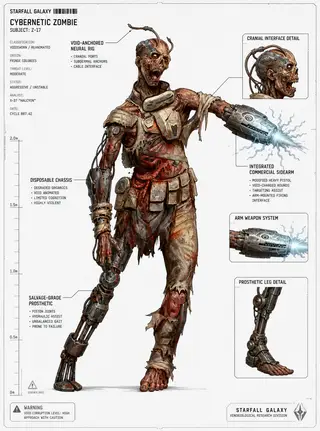
Cybernetic zombies are what happens when a salvage guild decides it would rather have a reusable, obedient shooter than a pensioned veteran. You take a corpse, rip out what’s left of its nervous system, wrap it in bargain‑bin actuators and a void‑aligned control rig, then teach it two things: “walk toward the target” and “pull the trigger until you explode.”
In Rift-adjacent warzones, these things shamble down corridors in matched pairs, their integrated pistols stuttering in near‑perfect sync while status LEDs flicker amber through dried blood. Guild logos are often spray‑painted directly on the chassis, like someone tagging a trash bin instead of a soldier.
Most crews treat them as moving minefields: step too close when they’re about to go down and you’re eating a faceful of capacitor shrapnel and cooked plating. The only ones who claim them as “kin” are the most radical corpsefolk, who point to the cheap, shoddy workmanship and say: “This is what they’d do to all of us if they could get away with it.”
Implications
Disposable Hazard Probes
Need to test whether a corridor is electrified, mined, or crawling with void motes? Kick a cybernetic zombie down it and watch what happens on your drone’s feeds. If it walks through fine, the living follow; if it suddenly detonates, mark that lane as closed.
Dockyard and Riot Control Implements
Some security outfits justify using them as “non-living suppression assets”: march a few into a riot line, let them soak the thrown debris, and if things get ugly, one controlled takedown creates an instant shock-and-awe perimeter.
“Training Targets” for Military Sims
Warlords and guild militias sometimes use captured cybernetic zombies in live-fire drills on remote moons. They move, shoot, and explode like true battlefield hazards, letting squads practice breach-and-clear tactics under real stress without officially “endangering citizens.”
Social Impact
The existence of cybernetic zombies pushes the line between weapon and person into a meat-and-metal blur. Labor leagues see them as a warning: “If your guild can replace you with a corpse and a battery, why wouldn’t they?”
Religions and death cults argue over whether these husks still contain souls; necromancers insisting yes (more leverage), void-priests insisting no (more excuse to automate slaughter).
On the black market, “zombie kits” circulate as unregistered cybernetic packages: plug into any fresh-enough body and you’ve got yourself a cheap sentry that doesn’t ask questions. Rift pirates use them to guard stashes, and slum lords post them at stairwells as living “keep out” signs.
The cybernetic zombie is a cheap, brutal answer to the question “How little humanity can you put into a gun platform and still call it a soldier?”, perfectly embodying the setting’s tension between survival, exploitation, and the economics of the dead.
Condition #