
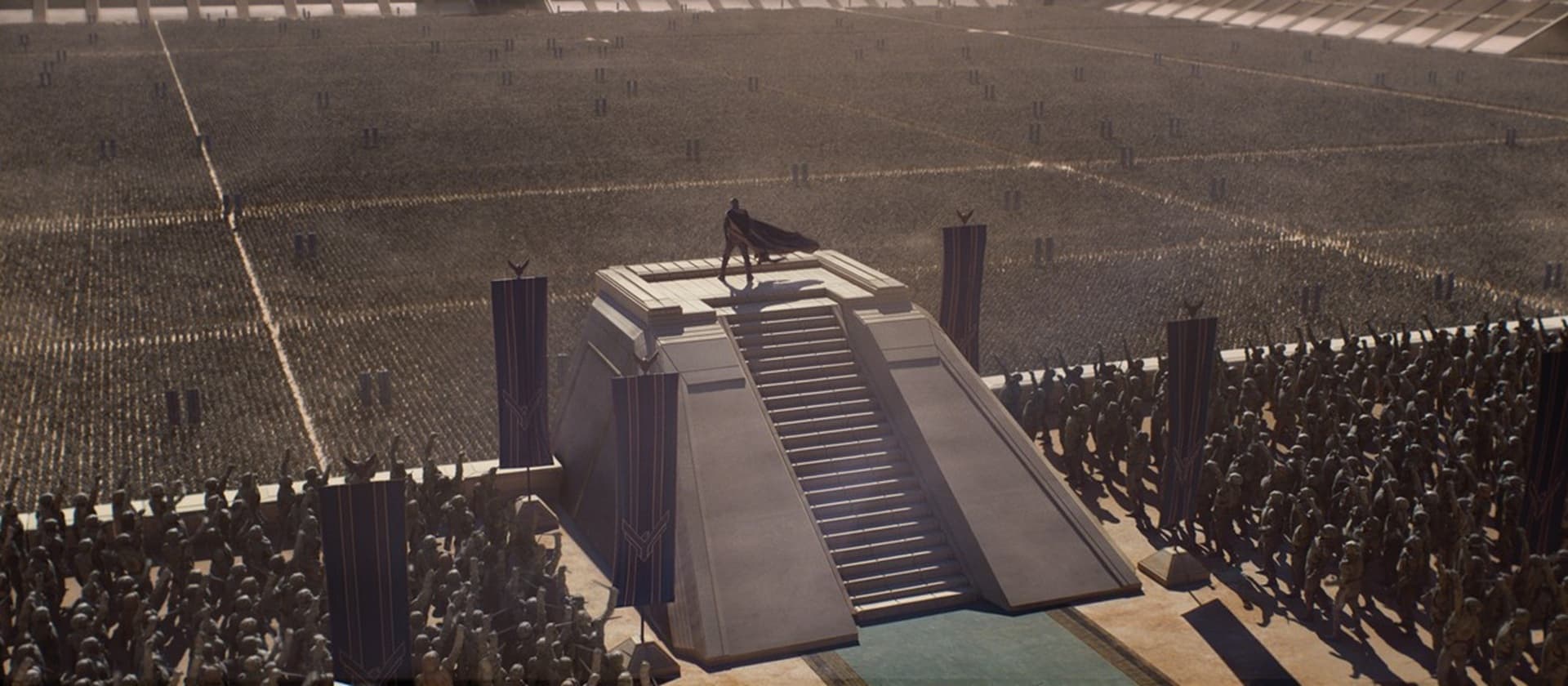
I’ve been reading Frank Herbert’s Dune and Dune Messiah in preparation for the arrival of Dune: Part Three, the final entry in Denis Villeneuve’s adaptation of the influential science fiction series that’s hitting cinemas next month.
The Dune series crams a lot of big ideas into its pages - religious zealotry; intergalactic colonialism; capitalism; and environmentalism, to name a few. These ideas are examined and communicated through meticulously created science fiction worldbuilding, that successfully constructs a universe that revolves around the control of certain powerful resources. One of these resources is the Spice Melange, a substance that drives the Empire’s entire economy (enabling FTL travel, unlocking incredible abilities, and hooking its users with an intense addiction).

The other crucial resource in the world of Dune is information: blackmail material; loyalties; profit numbers; hideout locations; and more. The main characters of Dune all desperately seek the information that will help them to either maintain their current power, or otherwise elevate them to a higher position in the status quo. Paul’s incredible precognitive abilities give him the information he needs to make the right decisions, and ultimately allows him to install himself as ruler of the Empire. The entire plot of Dune Messiah revolves around a scheme to overthrow Paul conducted by a cabal of his various enemies teaming up against him.
All of this secrecy, double-crossing, and backstabbing is a big reason to enjoy reading the Dune series - especially Dune Messiah. Dune uses intrigue to not only keep readers hooked on what’s going to happen next, but to also communicate a core theme: that the masses are the forgotten collateral damage. The Fremen’s culture and way of life is destroyed by Paul’s weaponised Jihad; children are taken from their homes and families to be trained by the Bene Gesserit; the murders of sex workers and servants are covered up by the Harkonnens. The ambitions of the wealthy and powerful come at the cost of the innocent lives trapped in these systems.

How can you integrate intrigue into your world and TTRPG campaigns? What purpose can intrigue serve and how does it function within your world’s political; economic; and cultural systems? To answer these questions, you need to consider why people engage in intrigue in the first place. In the world of Dune, intrigue is a tool primarily used by people to maintain or acquire additional wealth and power, wherein information remains an essential resource.
Another example is the Orlesian Court in the Dragon Age franchise - wherein aristocrats engage in something called The Game. The Game governs much of the upper class in Orlais, with the major Houses expected to maintain a healthy network of spies and assassins to secure their place in the Orlesian Court. Even Orlesian rulers can be decided via The Game.

Perhaps there are nations in your world that exist under an authoritative rule that forces citizens to use intrigue to discuss certain forbidden topics. There could even be an underground organization using intrigue to rebel against this authoritarian rule. Or maybe intrigue is a fundamental part of culture in your world, wherein people keep and exchange secrets as a form of currency or an indication of connection and trust.
Integrating intrigue into a TTRPG campaign requires that you have methods of collecting, organizing, storing, and sharing information. You can do all of these things using LegendKeeper - with the Secret function enabling you to keep certain pieces of information hidden from your players, and the chat tool allowing you to share certain pages with specific folks. Most of all, you’ll want to encourage your players to engage in a bit of lying, secrecy, and persuasion - and roleplay the full intrigue experience.