They say a wolf is defined by the blood of his kin. I say he is defined by the wolves who stand beside him. My kin are the ones who answered the howl.
Let them judge the path I walked in private. My hunt was for the pack's survival, not for the approval of upholding tradition.
Associated Concepts: | |||||
|---|---|---|---|---|---|
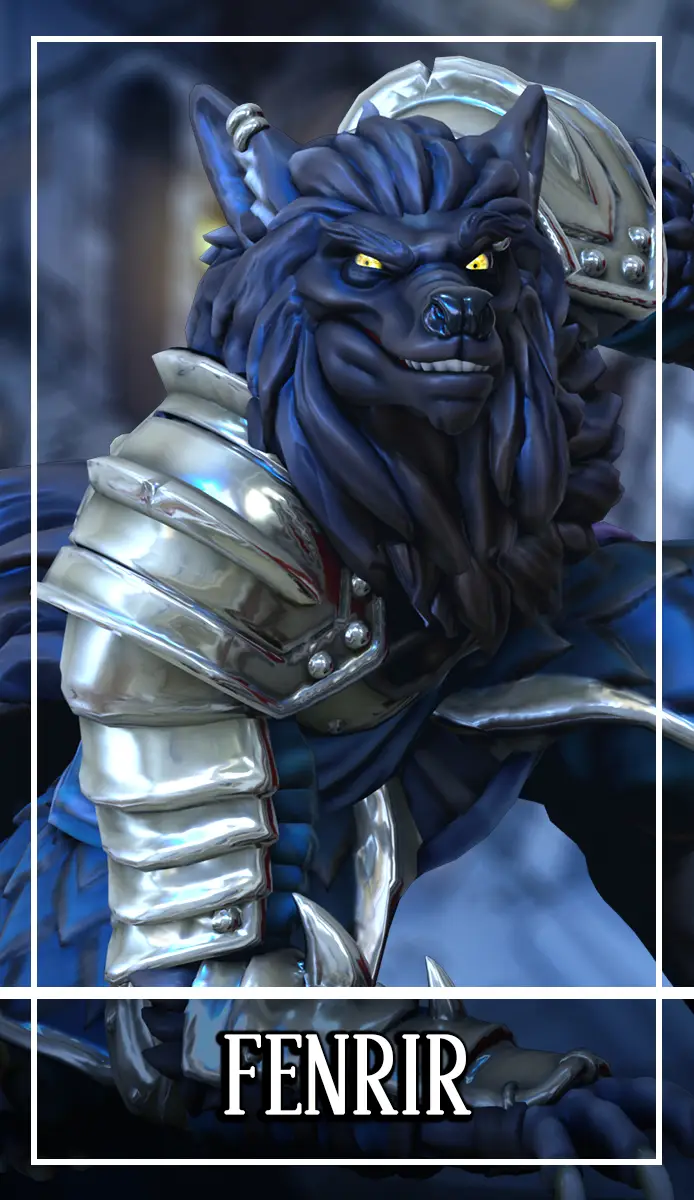
Before he was an Idol, he was Fenrir Ironfur, a lone wolffolk from the east who rose from the chaos of the Era of Beasts. In a time when Ignisar was fractured and even wolf packs turned against one another, he saw a greater threat emerging from the rifts near the ruins of Ebeltoft: The ancient cave Wyrms that originated from The Depths.
Fenrir’s call to end the infighting and defend the surface rallied the scattered packs, and from the reclaimed Castle Ebeltoft, he established a new sanctuary for all wolffolk. This act made him a living embodiment of The Knight, a guardian standing against the encroaching darkness. His campaigns against the burrowing horrors were legendary, earning him and his pack the famed title of The Wrymslayers. He established a new order by reclaiming Castle Ebeltoft and declaring in wolven sanctuary. When the Void Echoes later emerged as a new existential threat, Fenrir adapted, forging his warriors into an elite force known as the Voidbreakers, dedicated to hunting Void Echoes wherever it surfaced.
However, Fenrir’s leadership was a constant struggle against the deeply ingrained traditions of his wolven people. He faced the persistent ire of the wolven elders and a tense rivalry with his more traditional younger half-brother, Garmr, who would later become known as Garmr Fenrisblut. While Fenrir was open-minded to recruiting non-wolffolk into the Voidbreakers, he ultimately had to relent to Garmr and other wolven elders’ demands to keep the force exclusively wolffolk, a compromise made to maintain order and appease the conservative views many wolffolk held.
This conflict extended to his personal life. Fenrir openly defied the customs championed by his brother’s line, particularly the sacred betrothal known as The Promise. It was whispered around campfires that his heart swayed different, and he cared little for siring pups. This quiet rebellion marked him as a figure of The Star, one who forges their own fate against the rigid path of expectation.
Garmr, though disapproving of Fenrir’s nature, covered up these "activities" to protect their wolven' standing and Fenrir’s authority. As Fenrir grew older, the pressure from the elders mounted. Fearing his influence would wane without a direct heir, they pushed him to sire. It is said that Fenrir, burdened by this expectation, returned to being a lone wolf once more, disappearing for a year.
He returned with two pups, Sköll and Hati, whom he claimed as his own. Their strong physical resemblance to him was enough for the packs to accept them, but Fenrir never spoke of their mother, causing further resentment among the elders as he aged.
After Fenrir’s death, Garmr and the other elders worked to adapt his legacy into a cleaner, more traditional image, erasing the complexities of his personal life and reframing him as a champion of the very traditions he privately resisted. Though the Wolffolk do not worship Idols, they revere Fenrir Wrymslayer as a symbol of unity, endurance, and the unwavering strength of the pack he forged.