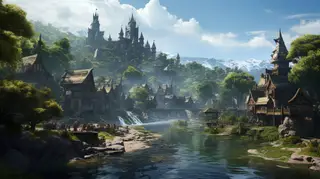
Howlstead, the largest settlement of the Wolffolk, acts as the oldest in all of Sevenfold. Built upon the ruins of Ebeltoft. The capital of Arnewynd that fell after the Therianthropic Convergence.
Howlstead, the city of the Wolffolk, was proudly established upon the old remains of Ebeltoft, once the largest human settlement before the Therianthropic Convergence.
Situated in the heart of Sevenfold, just north of the Whispering Mountains, the region is known for its cold winds and the haunting howls that drift across the night. It’s said the city earned its name from those very cries—wolfsong echoing through the ruins long before a home was made of them.
Howlstead stands as a symbol of enduring customs and a firm commitment to the ways of old. The Wolffolk find comfort in the familiar, upholding traditions as they resist the winds of change blowing in from the outside world.

In 248 A.T.C, Howlstead is currently closed off to the public. After the Moonhowl Incident, they adopted policies to restrict access, ensuring that only trusted and approved individuals are allowed within the region’s boundaries. This policy, though restrictive, is seen as a necessary step to safeguard Howlstead’s citizens after the devastating losses they suffered.
History of Fenrir and Howlstead's Establishment
After the Convergence, the balance of the entire continent was violently disrupted. Great rifts opened surrounding the ruins of Ebeltoft, and with them came the cave wyrms—ancient, burrowing horrors from far below the earth. As the old order collapsed, human settlements like Ebeltoft were left in ruin, and the newly awakened Therans struggled. The years that followed are remembered by the young as a black page in history—when pack turned against pack, and no clear path forward could be seen.
It was during this turmoil that Castle Ebeltoft was reclaimed. A lone Wolffolk from the east of the Iron Mountains—one of the first awakened—rose above the fray.
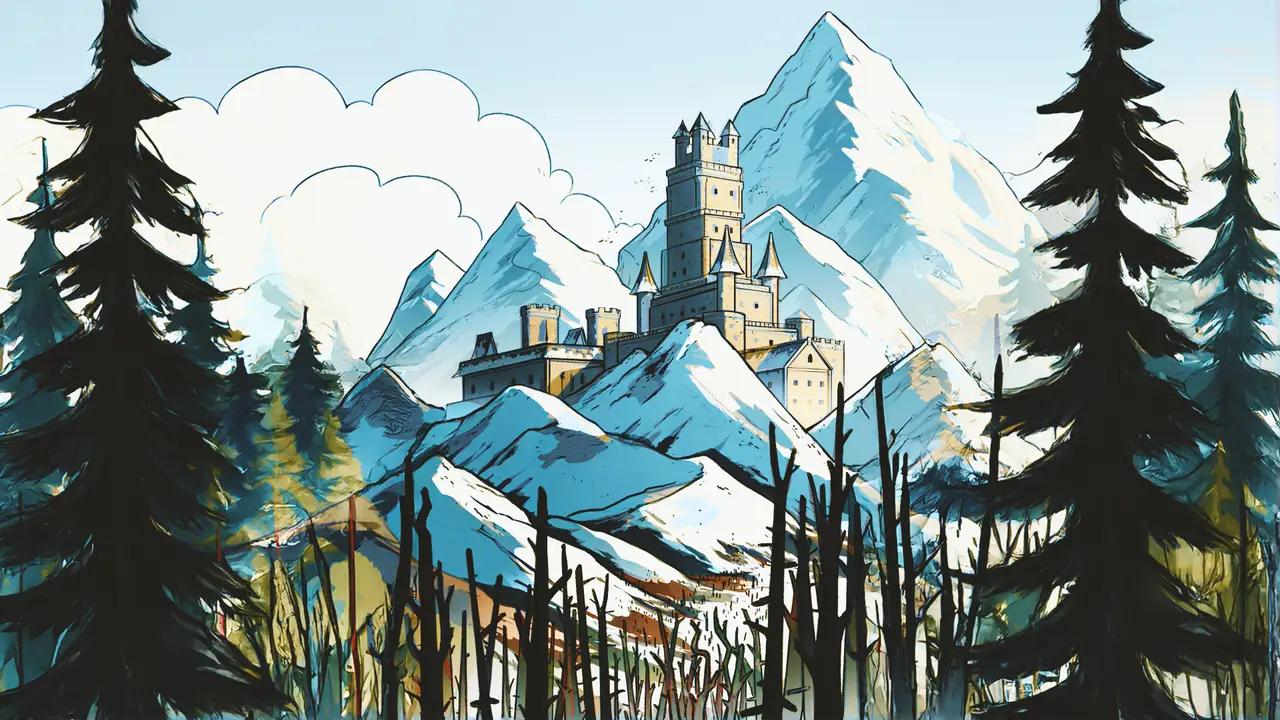
He called himself Fenrir, and his call to end infighting and protect the surface from the wyrms rallied the scattered packs. He declared the castle a safe haven, a place where blood feuds and clan rivalries had no place. From its stone halls, they began to fight back.
Fenrir’s campaigns against the wyrms earned him the name The Wyrmslayer, and his leadership and establishing loyalty marked the first steps toward a new order. The entrances to the Depths were sealed or guarded once more. Around the castle, smaller settlements began to rise—clans setting roots around their newfound sanctuary. In time, these grew into what is now known as Howlstead. And Fenrir's name, legendary exploits, and status as the first leader of the Voidbreakers slowly turned him into an idol.
Fenrir Wrymslayer's Defiance
In recent times, the ancient castle still stands at the center, held by the House of Grey, But not all tales of Fenrir are told with dignity—some are shared with knowing smirks and raised brows, especially around the campfires.
It’s said that Fenrir, though a mighty leader and fearsome warrior, cared little for legacy in the traditional sense. His heart, according to rumor and record alike, leaned more toward the company of males. Despite this, his notable Ironfur bloodline endured—through one or two quiet arrangements never spoken of aloud. Some even say that his descendants inherited more than just his sharp instincts, iron will, and attunement for the Breath.
A certain preference seems to echo through his line to this day.
In contrast, the Fenrisblut line descends from Fenrir’s younger brother, Garmr, whose descendants claim a more traditional existence. The two lines, while separate, remain tied by history and temperament—like twin stars orbiting a long-dead sun.
Wolven Culture: Conservative & Traditional
Respect for Elders runs deep in Howlstead, which includes the Pouchfoots. When they see elder Pouchfoots, they bow to show their respect. It is a tradition that highlights their reverence for those who have seen many moons and gathered much wisdom.
While visiting fox- and deerfolk have tried to bring modern or arcane advancements to Howlstead, the elders—and especially the Fenrisbluts—firmly push back on these ideas. They prefer the cobbled paths and familiar structures that have stood for centuries, believing that the old ways are the true path. Many Wolffolk in Howlstead are craftsmen, miners, or warriors.
Wolven Tradition: The Promise
The Fenrisblut bloodline, descended from Fenrir’s brother, rose to prominence in the years following Howlstead’s founding. While Fenrir's legacy carried the weight of heroism and unity, it was the Fenrisbluts who pushed for the preservation of "the old ways." Among their most enduring contributions was the establishment of a custom now simply known as The Promise.
The Promise is considered a sacred bond—part tradition, part expectation. It marks a male and female Wolffolk as promised to one another, a pact seen not just as a personal vow but as a communal responsibility. Such a betrothal isn’t romantic in nature so much as it is a duty—to raise strong young, and to continue the heritage of the Wolffolk.
To break a Promise is to break more than a vow—it’s seen as turning one’s back on the pack itself. Those who reject their Promise walk a dangerous line. Whispers follow them—of selfishness, of imbalance, of walking against the pack. In a society where loyalty is the marrow of identity, breaking from the pack can carry the ultimate consequence: exile.
Exile isn’t announced loudly. It’s a quiet vanishing until nothing remains but silence and cold shoulders. To be cast out is to be cut off from your pack, your kin, your place in the great rhythm of Wolffolk life.
While not all Wolffolk settlements hold to The Promise with the same iron grip, the Fenrisbluts have long stood as its guardians. Some say it’s their way of reclaiming Fenrir’s legacy, of “correcting” the parts of his nature spoken of only in whispers. Others see it as control dressed in tradition.
Still, not every Wolffolk bends the knee. Quiet rebellions smolder like embers beneath the surface. Unpromised lovers, secret lives, and howls carried only to the moon...
Worship
Worshipping idols is not the way of the Wolffolk, but respect is another matter entirely. They believe that the strength and value of the pack should be celebrated, rather than focusing solely on the achievements of a few. For the Wolffolk, it’s the bonds and traditions that truly matter, and idols are viewed as guiding lights rather than objects of worship.
Yapping Keep
Also within the walls of Castle Ebeltoft, The Yapping Keep serves as the heart of young Wolffolk teachings. The name Yapping Keep is derived from the constant, eager chatter and yapping of young wolves, learning to talk.
Here, the older wolffolk teach the young pups to read, write, and learn the ways of their kind. But it’s not just knowledge of the written word that is imparted—it’s the very skills of survival. Pups are taught to hunt, track, and read the lands from a young age, preparing them to become both warriors and protectors of the pack, regardless of their future profession.