The Matter of Lothen
Each knight of Lothen holds the Knight Gods foremost among all gods and they were the first to devote all of their faith to this group of gods and espouse their particular ideals. This piety has over time given rise to the chivalric code of honor and conduct known as the Matter of Lothen or simply the Knight’s Code.
This code is a formal system of personal morality and social conscience. It defines the moral stance and social conduct of a knight as regards his personal virtue, his warrior ethos, and his courtly manners. The Code is both a complex and nuanced philosophy of life and a set of simple rules that define virtue.
Rare is the knight who can embody all the ideals of the Matter of Lothen, who can uphold his faith without fail and fulfill his duties to king, country, family, and mankind without favoring one over the rest. The Matter of Lothen describes a man on par with the Gods themselves—an ideal that cannot, in reality, be achieved. It is a goal every knight must strive toward, a journey that lasts a lifetime without ever reaching the end.
The Matter of Lothen is a crucible that forges a knight as a paragon of moral and warrior virtues and instills in him the perseverance to adhere to the paths of honor, the fortitude to resist temptation, and the temperance that affords him a balanced outlook on life. The perfect knight is not the one who fulfills the entirety of the Code, but the one who embodies its ideals to such a degree as to serve as an example of virtue and inspire others.
A knight is expected to master every aspect of the Code as he grows, always aiming toward total mastery of the Matter of Lothen. Most never attain this goal—which makes it all the more desirable and valuable. Yet the Knight Gods understand human limitations and respect both weakness and strength. Thus a knight is not expected to be perfect from the moment he takes his vows. Instead, he adopts one of the three Paths of Honor, masters it, then adopts a second, and finally the third. To walk a Path is to honor one of the Knight Gods above the others temporarily; the ultimate aim is to honor all three equally and completely.
The Three Paths of Honor
The Path of Arkallis
Personal Virtue – Justice
Fairness and integrity allow a man to be just. His judgment must be tempered with empathy and rooted in facts and logic, never bias or emotion.Warrior Ethos – Might
A man must be strong in body and mind, able to endure hardship and pain. Cultivating might and eliminating weakness are his priority when called to defend his people in war.Courtly Decorum – Balance
A man avoids excess in all public actions—how he treats lessers, equals, betters, and women alike. Every word and deed is measured; he follows convention, custom, and decency.
The Path of Justar
Personal Virtue – Knighthood
The Knight Triumvirate sets the example for mortal men. Let their actions be your guide and their declarations your litanies. Faith is the pillar in every adversity; willingness to sacrifice for the common good is the highest calling.Warrior Ethos – Life
A warrior defends the weak and champions those in need, as the Knight Gods do for Vitallia. He protects all life and tempers aggression with respect. He takes life only when no other way remains—mercy is his highest virtue.Courtly Decorum – Light
The worthy man is a beacon of virtue. He raises a family, teaches his children well, speaks and presents himself impeccably, and sets an example that betters the lives of others.
The Path of Solisis
Personal Virtue – Victory
A man’s worth is judged by triumph. Effort alone is not enough; only the achievement of excellence has meaning. A man must strive to be the best in life and war—anything less is failure.Warrior Ethos – War
War is eternal; a man is always a warrior, always vigilant. Revel in war, for it is the forge of human potential. Embrace your martial nature and thrive upon the battlefield.Courtly Decorum – Sun
A worthy man is more than mortal—he is a paragon, an idol that inspires greatness. He does not sit silent when destiny is debated; he steps forward, meets every challenge, and becomes the shining center around which his people revolve.
Lothen & The World
Lothen’s citizens consider themselves the most privileged people in Vitallia. They take fierce pride in their nation, their king, and the Whiteshield dynasty. They see themselves as guardians of vitallian civilization and culture and the rightful lords of the Forklands.
Lothenian Characteristics
Every Lothenian knows at least something of the Matter of Lothen and the three Paths of Honor; many try (or pretend) to follow one.
Every Lothenian is familiar with the Whiteshield dynasty and the great noble houses. Most know the famous tales of the royal line; the learned can recite every king since the founding and the lineages of local nobility.
Every summer, every Lothenian attends at least one joust. The deeds, names, and scandals of last year’s champions are tavern talk for the rest of the year. A lord who fails to host a joust risks lasting discontent.
Horses are bred everywhere; most citizens can judge age, health, breed, and true value at a glance.
Cavalier romances are beloved by noble and common women alike. Few homes lack well-thumbed copies, traded and gifted through the long winters.
Lothenians are famously tolerant and curious about foreigners and their customs—provided the visitors respect local law.
Attitudes Toward Other Races
Humans
The dominant race; humans from the Forklands, Trident, and Southern Freelands blend in easily and are warmly welcomed.
Sirakrat
Rare and viewed with suspicion due to tales of blood magic. A well-mannered Sirakrat is tolerated and sometimes respected for their sacrifices against Nedel’s legacy.
Fay
Rare but charming. Their childlike nature is forgiven more readily than in others; Lothenians go out of their way to interact with them.
Medai
Known, respected, and considered worldly. Caravans are welcomed everywhere; many Medai have integrated smoothly.
Brutgor
Reactions range from wary to hostile (especially in the west). A peaceful, law-abiding Brutgor is tolerated; any aggression meets swift, united resistance.
Gargoyles
Spectacular curiosities. They draw crowds and invitations from nobles and scholars alike but can never pass unnoticed.
Dwarves
Common and valued as craftsmen, builders, miners, and traders. Native Lothenian dwarf families exist and are treated as proud as human citizens. (Spellcasters quietly disdain dwarves, sometimes even native ones.)
Serenians
Treated as long-lost cousins—warmly welcomed if friendly, quickly shunned if strange or hostile.
Elves
Seen as living icons of beauty and grace. They receive admiration (and romantic advances), invitations to perform, fashion trends in their wake, and favorable bargains—unless a jealous rival intervenes.
Sarcanta
Viewed with deep unease as unnatural descendants of dragons. They are watched constantly and must work hard for even bare tolerance. Most Sarcanta show little interest in integration, which does not help their reception.
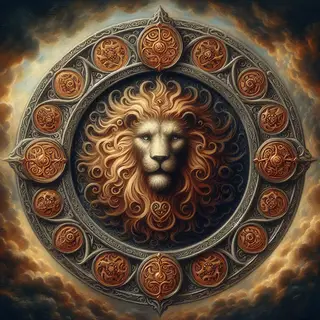
Teyn
Most powerful kingdom of the Forklands, home of Vheod Whiteshield and the Gods of the Final Light.