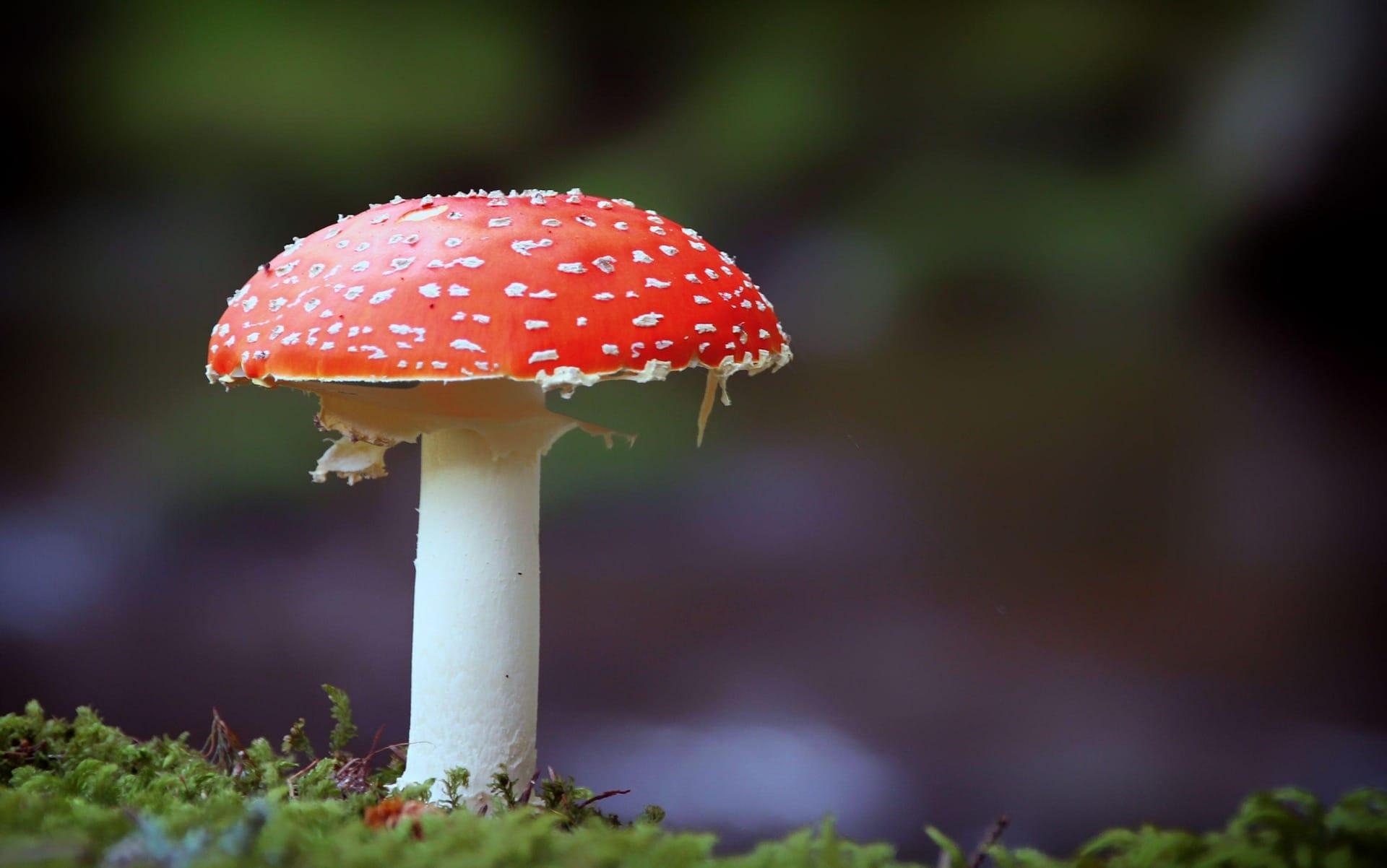
The more you learn about fungi, the more it feels like unearthing tales of Old Gods, Titans or fey. The largest land organism in the world is a fungus, the fastest-accelerating organism is a fungus. There are fungi that drill through rocks, that cure infection, that break DNA, that eat nuclear fallout and survive in outer space. How can one group of organisms break every rule we thought we understood about the natural world?
As such, mushrooms, regardless of how benign and inconsequential they might seem to us in day-to-day life, are actually some of the weirdest and wildest beings in the natural world. In this article, we’re going to explain what they are, why they’re awesome and - most importantly to Legend Keeper users - how they can serve as some unexpected worldbuilding inspiration for your next great RPG campaign.
What are fungi?
Humans know remarkably little about fungi. Scientists estimate that out of the 5 million species of fungi, we’ve only identified about 1%. This is largely because fungi are difficult to study: Some live inside plants and animals, others in the waters of Antarctica, or in a nuclear reactor.
By scientific and language standards, mushrooms can be technically classified as both a fruit and a vegetable, but crucially not a plant despite their roots. The fungi kingdom is separate from that of plants, and are actually closer to that of animals because both fungi and animals are heterotrophs, meaning they can’t make their own food and must digest food outside themselves.

Why are fungi so cool?
They’re able to neutralize and harness radioactivity
Fungi are able to survive in some of the world’s most hostile environments. For example, in 1986, a reactor at the Chernobyl nuclear power plant exploded. The reactor core fire lasted eight days and sprayed airborne radioactive contaminants throughout the USSR and Europe. Imagine how strange it must have been to investigate the site of this horrible disaster, supposedly so toxic that nothing could survive in close proximity for long, and to find that the soil around it had turned black from fungal growth?
The melanin and other chemical processes the mushrooms were undergoing seemed to be enabling these fungi to convert energy from ionizing radiation into usable chemical energy. They were using the super dangerous radiation the same way plants use sunlight! This is still considered a hypothetical process because we haven't proven it, but we’ve got a lot of evidence for it and also a really cool name: radiosynthesis.
What’s more is that fungi don’t just locate and eat radiation, they also shield their surroundings from it! By enveloping the radioactive materials, they can keep the radiation from leaching into the ground. This means that we could potentially use these melanin fungi to clean up nuclear contamination, or protect people from dangerous radiation.
They can be super poisonous and have narcotic effects
Though only about 3% of all mushrooms are actually poisonous, those that are poisonous can have some really gnarly effects. For example, ingesting muscarine causes SLUDGE symptoms, a handy acronym that means: Salivation (spit), Lacrimation (cry), Urination (pee), Defecation (poop), Gastrointestinal Distress (tummy cramps), and Emesis (barf). Another example is the Tippler’s Bane mushroom, or Coprine, which isn’t poisonous on its own, but if you eat it then consume alcohol, your body won’t be able to process the booze properly. In about 5-10 minutes, you’ll experience Coprinus syndrome, which is essentially alcohol poisoning.
Due to this, mushrooms have garnered a reputation for being bringers of sickness and death, despite the aforementioned small percentage of them actually being dangerous to consume. But if you’re scarfing down raw mushrooms you’ve found in your backyard, you’re probably going to have a bad time. The other main edible characteristic that fungi are known for is their narcotic effects, with there being a long history of various human cultures - from the Stone Age to the Aztecs - consuming them to get high: whether for religious purposes or just for the hell of it.

They can decompose anything from plastic to petroleum
Without decay, the earth would be a graveyard. And it likely was.
There’s a scientific hypothesis about a period of time - in the Paleozoic era - when the earth was covered with layers of dead trees that could not rot. They grew, died, fell, and then just laid there in a gentle repose, indefinitely. Trees are not related to each other but they all share an ingredient: lignin. Lignin is a strong organic polymer that is super resistant to degradation. For a time, none of the decomposers would return the trees to the soil. But never bet against fungi, because eventually they figured out how to break down lignin and, thus, could decompose trees.
Some fungi are very picky about what they eat but some are more open minded. Oyster mushrooms are so adventurous in their dietary preferences that they can decompose plastic, completely disassembling it at a molecular level so that the resulting mushroom contains no plastic at all and is edible to humans. They also happily break down TNT, petroleum, and PAHs. mThere is even a growing field of mycormediation that is investigating how fungi can be used to decontaminate the environment.
They can form symbiotic relationships
Plants have a neat trick: they make their own food. Chemically, they are able to use sunlight as an energy source and produce sugar. However, plants still need a more balanced diet. They need phosphorus, nitrogen, and other minerals.
Fungi are great at breaking stuff down, including minerals but they’re not great at producing carbohydrates. Plants can produce extra sugar and pass it onto fungi that are connected to their roots, allowing the fungi to grow and reproduce. In return for this carb-fest, fungi assist plants in nutrient uptake, providing those valuable minerals, and enhance their ability to absorb water from the soil. More than 90% of all land plant species engage in symbiotic relationships with fungi.
This kind of relationship is called mycorrhizal. Which is kind of fascinating, because it means humans cannot cultivate them. There’s a reason the most common mushrooms in grocery stores are all the same species: agaricus bisporus. That little friend is a decomposer and will happily grow on a mix of sawdust and poop. But truffles? Better train yourself a pig.

In a forest, the plants grow close together and have these fungal partners underground. Those fungi are able to connect, creating a common mycorrhizal network (CMN). When a plant is stressed it can release specific chemical compounds into the soil. The mycorrhizal fungi then transmit these chemical signals through their network to neighboring plants. Upon receiving these signals, neighboring plants can activate defense mechanisms or adjust their growth patterns to respond - yet another incredible way fungi and other plants can communicate with each other and work together.
They can form parasitic relationships
Ophiocordyceps unilateralis, or Cordyceps Fungus, got really famous quickly with the popularity of The Last of Us.
But let’s get a couple things straight:
- Cordyceps can’t parasitize humans (or even mammals),
- They’re even freakier than their fictional counterparts.
Cordyceps work by releasing little spores that float along and to find an ant, casually penetrating its exoskeleton to gain access to its bloodstream. Then, like a college kid floating down a lazy river with a beer and a dream, it cruises around the body until it finds some friends and together, they grow into hyphae - little fungal strands - that worm through the muscles. And that’s where things get really messed up. We used to think they took over the brain like toxoplasmosis does, but more recent research indicates that they don’t: they pilot the ant like a mech. The fungi cuts the ant's limbs off from its brain and takes the reins.
Most parasites have an interest in not killing their host, but many mushrooms are happy to burn that bridge. Many parasitic mushrooms are also saprobic, meaning that they will parasitize a plant while it’s alive, eventually killing it, and then eat it when it’s dead. One example is the Honey Mushroom, which is the largest living organism on land.
They’ve been the focus of all sorts of human folklore
Considering their fascinating and strange nature, it’s unsurprising that fungi have been the focus of human folklore from across history. One example are fairy rings, or perfect circles of mushrooms that pop up overnight in forest and fields. In France, legend goes that these ronds de sorcières ("witches' circles") are caused by witch’s dancing in circles to summon demons (or even the Devil) on their sabbats. Austria has stories of rings appearing where dragons rest and the Dutch blamed them on the devil churning milk. In Wales, the cylch y Tylwyth Teg are green circular patches of land, where you might spot Tylwyth Teg (fairies) dancing in circles under the moonlight. If you enter the ring, you might well dance until the end of your days.

Another example can be found in Slavic mythology, which has a divine forest guardian called Leshy – and he’s also known as “the one who guides off course” because of how he loves to trick people into losing their way in the woods. One of his favourite strategies is to turn into a friendly forager you could come across who tells you about an incredible mushroom patch deeper in the woods.
How can Fungi serve as RPG campaign inspiration?
Now that you’ve learnt more about fungi and what they’re capable of in the real world, it’s time to imagine their potential in the fictional world. Here are just some of the ways that mushrooms could serve as worldbuilding inspiration for a tabletop roleplaying game campaign.
As an entire interactable species/culture
As previously mentioned, real fungi have been difficult to classify thanks to their inherently strange nature, which makes them ideal for use in a fantastical or science fiction context - they’re already weird enough in real life, so why not push them to the next level? For example, Dungeons & Dragons has its own species of fungus humanoids called Myconids - who also recently made an appearance in the video game Baldur’s Gate III - who aren’t universally evil but certainly have something unnerving about them. These mushroom characters are able to communicate with each other telepathically thanks to their mycoid network, which is obviously inspired by the real mycorrhizal network mushrooms establish with trees. Consider ways in which fungal creatures can use their unique abilities in your own campaign, like an entire sentient species who use their mycorrhizal abilities to telepathically interact with anything they’re able to connect to: whether that’s each other, other sentient beings or even miles upon miles of living creatures - whether for bad or for good.
As a unique enemy encounter
Your campaign’s mushroom creatures/characters could represent a singular threat to your fictional world and player characters. For instance, the various Souls-like video games by FromSoftware have featured several mushroom-esque enemies, such as the Mushroom Parent enemies in Dark Souls or the Celestial Emissary boss in Bloodborne. These antagonists fit incredibly well into their respective worlds because of their arcane designs and movements, which consequently reflect core themes from both games, as well as their general vibes. Maybe your players encounter a formidable mushroom-style enemy in their adventures, whose strangeness matches their environment and potentially reveals more about the campaign’s world.

As the next great threat
Alternatively, the fungi in your next tabletop RPG campaign could be part of a larger, grander threat looming over your fictional world. We’ve already mentioned the Cordyceps Fungus in The Last of Us series, but a similar fungal-based apocalypse also appears in the sci-fi novel/film The Girl with All the Gifts. Perhaps your fantastical fungus is a vast army of mushroom monsters who use their abilities to decompose everything they touch. These monsters could be commanded by a leader who has grown tired of keeping to the shadows and feeding on whatever waste they can find. Maybe the only way to stop them is to form a cooperative relationship with them, wherein the player characters find something the mushroom leader wants in exchange for a peaceful co-existence.
As friendly characters
You could even make your fungal creations a force for good. Consider the various Toads from the Super Mario universe, whose adorable designs and benevolent personalities prove that not all mushroom characters need to be terrifying. How about a haven filled with toadstool sprites who utilize their abilities to neutralize toxic elements like radioactivity for good, helping to heal the forest around them from the waste leaking out from a nearby industrial complex? You could even give your players the option to play as a mushroom character, who can employ their poisonous magic against any enemies their party faces in their pursuit of heroism.
These are just some examples of how real-life mushrooms and their incredible characteristics could be featured within your tabletop campaigns: think about the kind of ideas you could imagine! For more RPG inspiration, feel free to browse the myriad of other articles you can find in our various newsletters and on the Legend Keeper blog.