
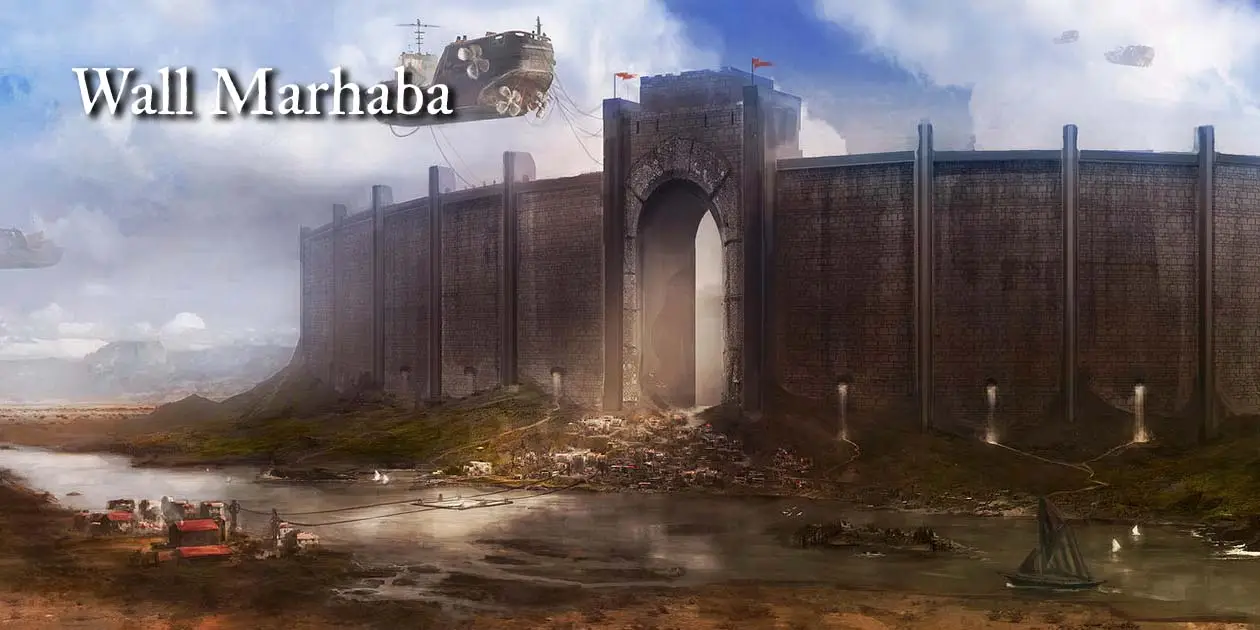
Shining in the middle of the Edeni Expanse is the jewel of Eqos, Jamre (जामरे). It is the largest city on Abmarah, and quite possibly the most populated one too—only comparable with Sombus in the east. It serves as the capital of the Kwadenhi within the Calamity Covenant, and is a bustling metropolis that covers a gigantic area visible even from Voidspace. The city has three colossal ancient concentric walls that protect it. Wall Marhaba, Wall Uzima, and Wall Imani are each 120 feet high and 40 feet thick becoming the largest man-made structure in this part of the world, if they are man-made at all. The scale of the city makes it more akin to a small country in its own right.
The walls are considered to be one of the eight wonders of the world and many myths surround their construction as their origin seems to predate written records. Some say that gods built it, while the traditional tribes of Jamre claim that their ancestral spirits created the walls to protect themselves from outsiders. There are vast swathes of land inside the walls, with at least a day of travel needed to reach each of the inner walls. The population density only increases the deeper into Jamre you go, with the outer district being mostly farmland and rural communities and the inner district being a dense urban mess.
Thanks to its walls, river, and independent spirit, Jamre has never been truly conquered by outside forces. It resisted every single invader save for Sol Sultana who flew over the walls on top of a red dragon. The size of the city can support entire urban campaigns within its walls. With the great walls and its own self-sustaining economy within them, Jamre has stood tall against all attempts to besiege it. With a population of over a million people, it is a melting pot of different cultures and traditions all coexisting in relative harmony. It does have its tensions and political turmoil within its own walls, as it is inspired by multiple different african cultures that co-exist here. The city is famous for its vibrant trade, which has made it a hub for merchants and traders from all over the world. Its casinos are renowned for their opulence and extravagance, drawing in tourists from far and wide. Despite the urban density and afrofuturistic aesthetics, Jamre still holds on tightly to its roots and native culture. The city is home to many tribal clans and houses, each with their unique ancestral veneration practices, and all living in harmony with nature and each other. The people of Jamre have a deep respect for the natural world, and this is reflected in the way they beautify their city with gardens and plant life in direct contrast to the desert cities nearby. Music, dance, and storytelling are central to the culture of Jamre. The city has a rich tradition of arts and music fills the crowded streets. The people of Jamre love to dance, and there is always a celebration or festival happening somewhere in the city. Storytelling and family is also an essential part of the culture of Jamre, with tales of heroes, magic, and adventure passed down from generation to generation.
While Jamre is influenced by many different major factions such as the Calamity Covenant and the Swarna Guild, it has three major political families that run the city in the modern day:
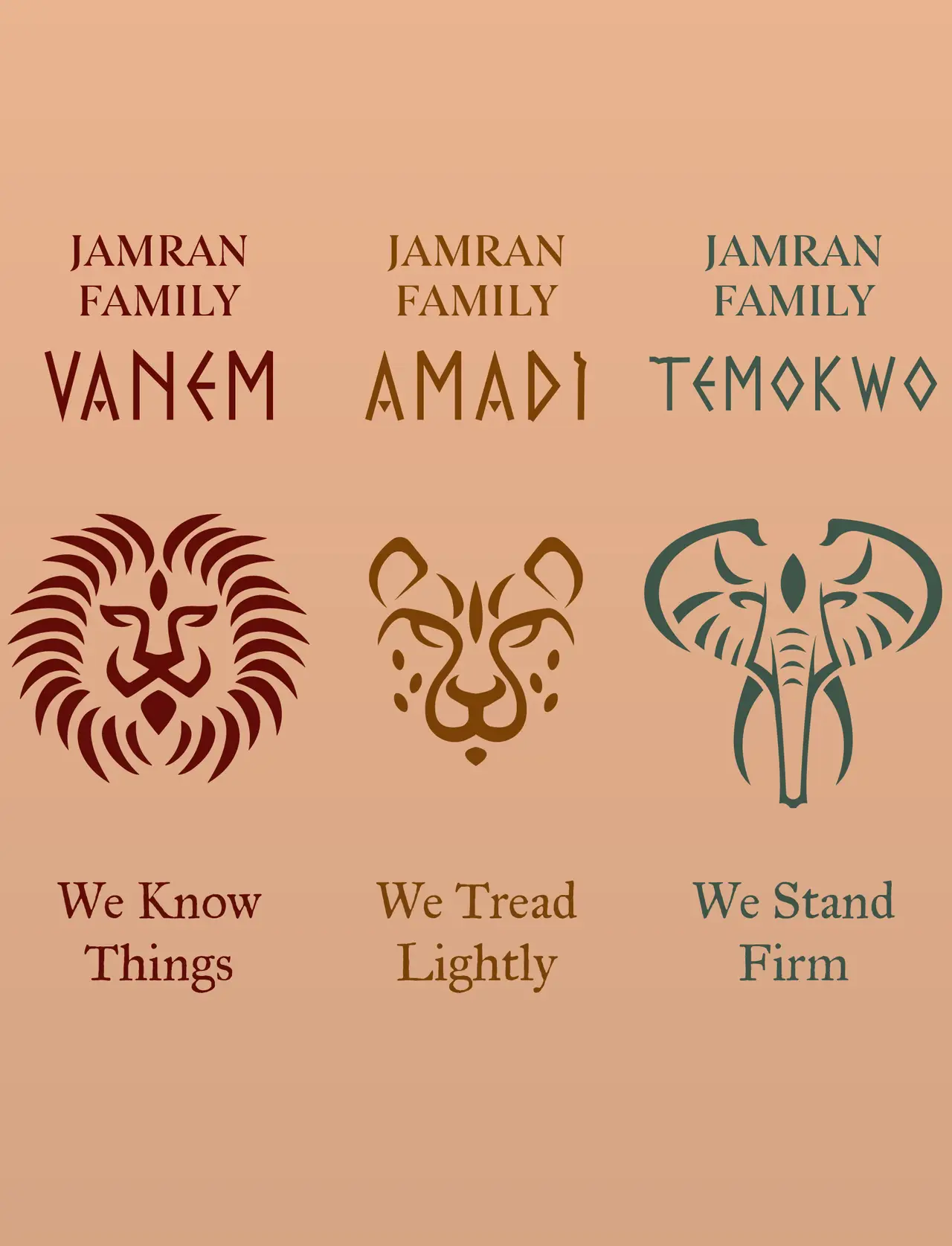
The Vanem Family. Worshiping the lion spirits, the Vanem Family is essentially the ruling royalty of Jamre. Seeing themselves as the leaders of the tribes, they have a sense of duty and responsibility to uphold the ancient customs and values in the city. Known for their patronage of the arts, they support many of the city's best musicians, dancers, and artists. The family has forged many alliances with foreign powers through the many centuries of Jamre being an independent city state, such as House Zaaba of Kasaaq or even the Lunar colonizers. The family represents the traditional 'mage', and is currently led by Inkosikazi Adeaa Vanem-Zaaba.
The Amadi Family. Worshiping the cheetah spirits, the Amadi Family is a Bilari clan that has deep roots within the city of Jamre. They run a lot of the casinos and large businesses within the city, and are known for their prowess in trade and commerce across the continent. Forging alliances and good diplomatic relations with other Jamran families and factions beyond, the Amadi family is careful with their words and actions and prefer to achieve their goals behind the scenes with indirect methods. The family represents the traditional 'rogue', and is currently led by Lord Mau Amadi.
The Temokwo Family. Worshiping the elephant spirits, the Haanari Temokwo Family represents the strength, wisdom, and memory of the city. They are known for their military prowess, and have historically had the largest army in Jamre, much of which is still loyal to them under the Covenant. Despite having the larger military force amidst tense relations with the ruling Vanem Family, they recognize that a direct power struggle would be bloody and destabilize the ancient city leading to chaos and conflict. Honor-bound to maintain peace, the Temokwo family protects Jamre’s legacy and funds many builder’s guilds within it. The family represents the traditional “fighter”, and is currently led by Lord Eze Temokwo.
Jamre is nearly 25,000 square miles across making it larger than some countries. There are countless neighborhoods within the three walls, all fed by the Enni River which cuts through the walls. Some areas of the city include:
(Art credit: Ubisoft)
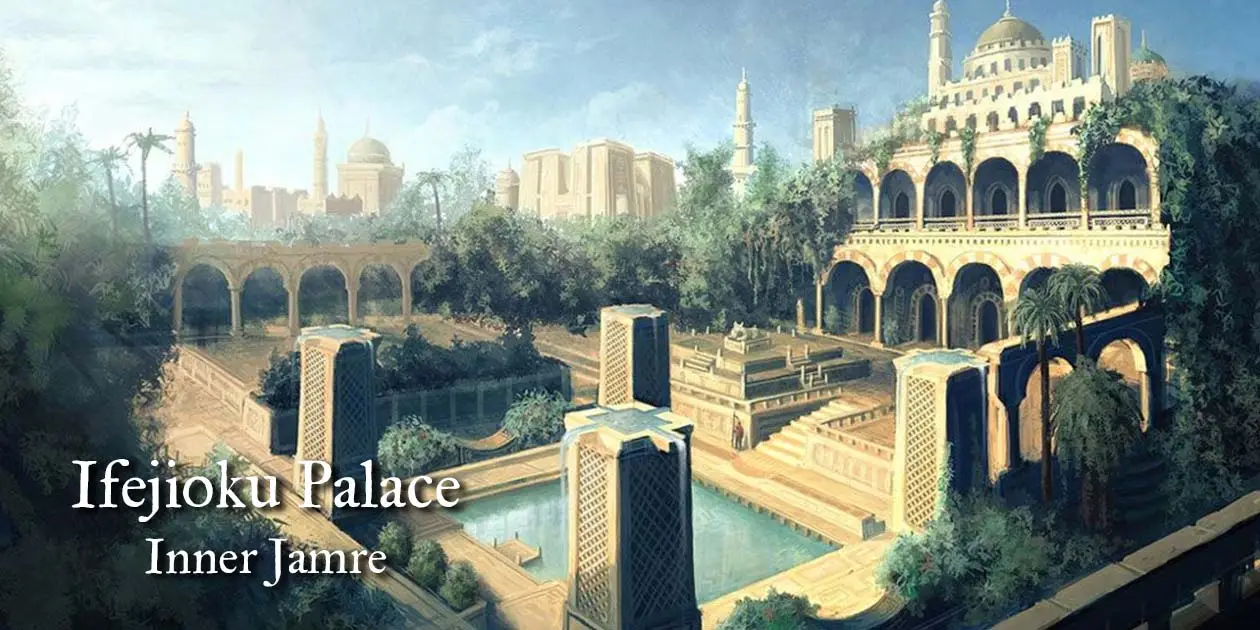
Ifejioku Palace. Within the inner Wall Imani are the gardens and villas that make up Ifejioku Palace, the center of Jamre and where the Lady Chieftess' palace stands. The beauty of the gardens is unparalleled, as countless gardeners work around the clock to maintain the lush tropical plants that are grown here. The administrative center of the Covenant is also within this district, including its barracks and offices.
(Art credit: Legend of Korra)
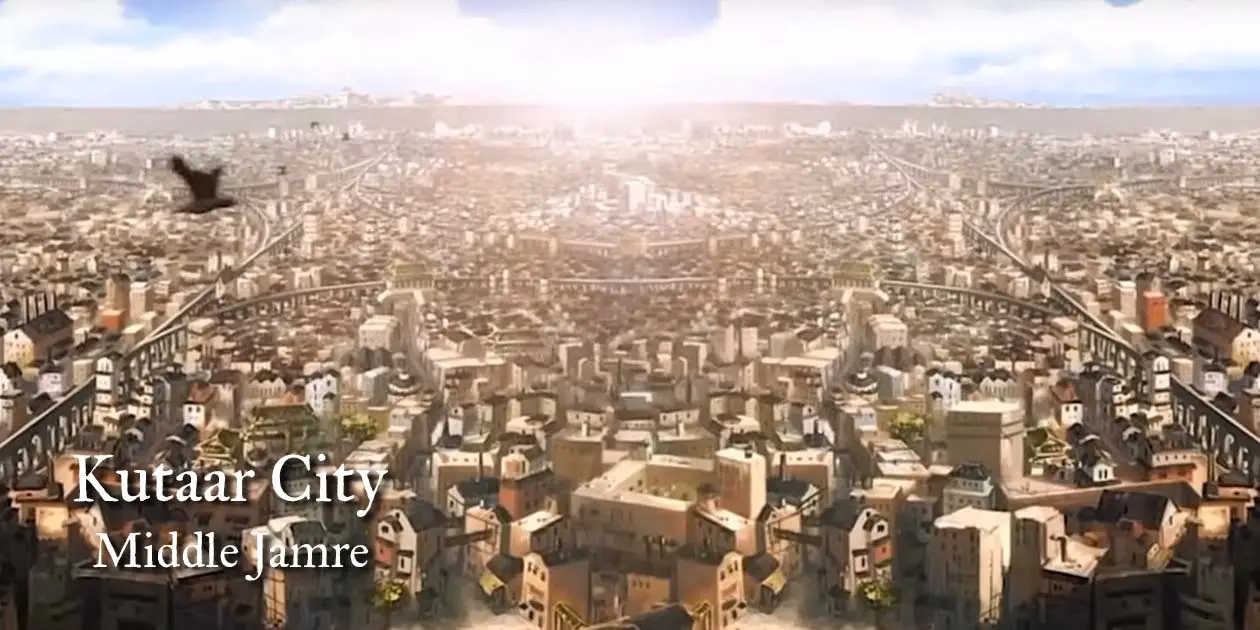
Kutaar City. In between Wall Uzima and Wall Imani is 'Middle Jamre', also known as Kutaar City. It is the most densely populated district within the city, and possibly the continent. There is a small railway system within the city for the sole purpose of getting people around the congested streets and markets. The cramped vistas of this district are what most people associate with the city. Some points of interest include:
The Jewelcat Casino, one of the largest casinos in the world, run by the Amadi Family.
The Worldtusk Armory, a large armory run by the Temokwo Family.
The Enchanter's Haven, a large magic shop run by an elderly human man and his young daughter.
(Art credit: Antonio Pacheco)
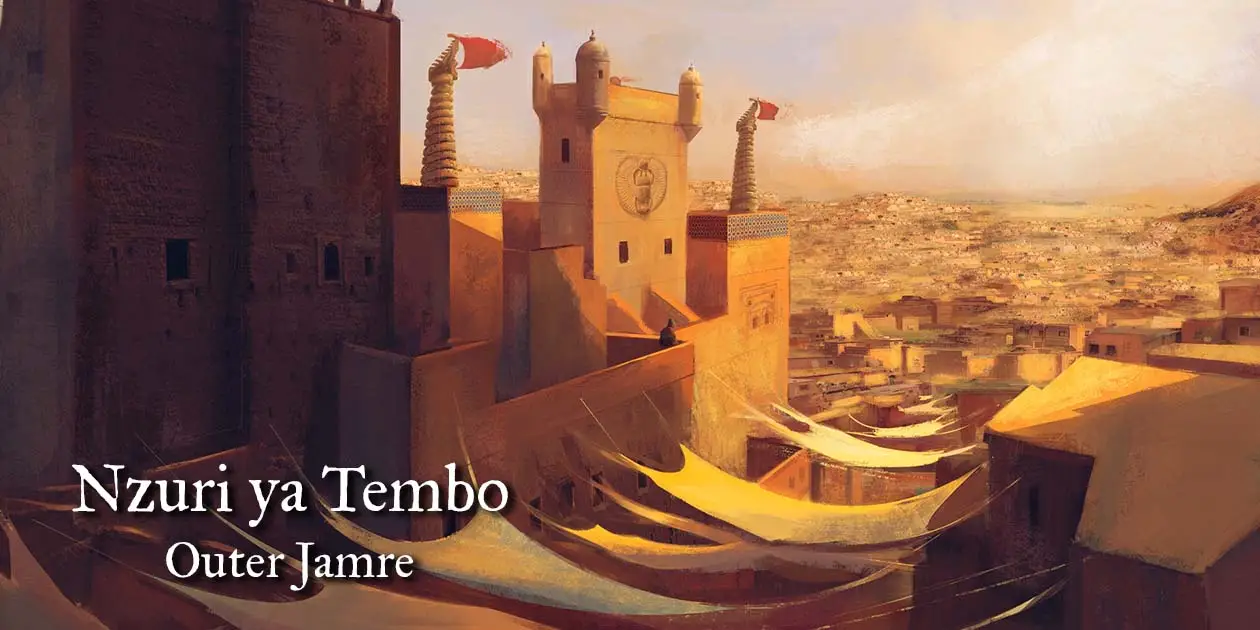
Nzuri ya Tembo. Also known as ‘Outer Jamre’, it is the district in between the outer Wall Marhaba and the middle Wall Uzima. Despite being geographically the largest district, it is mostly farmland with few urban centers and villages dotted around its parts. Mostly managed by House Temokwo and housing a great haanari population, the rural nature of the district fuels the food and grain demand of the inner city as a whole. Some points of interest include:
The Lunar Orc, a bar near the southern exit of the city. Many people of Lunar heritage gather here, often travelers.
(Art credit jordangrimmer)
Marhaba Villages. Dotted outside the four cardinal gates of the outermost wall, Wall Marhaba, are small villages that house many traders and travelers. With runoff from the walls, hills of garbage around some of them, and sewage around the riverside ones- these villages are generally not a good place to live, and crime flourishes. The city tries to clean these up to avoid a bad first taste of the city, but have little authority outside their walls. These gatefront villages prosper in the rare times when the city of Jamre goes into lockdown and closes its walls.