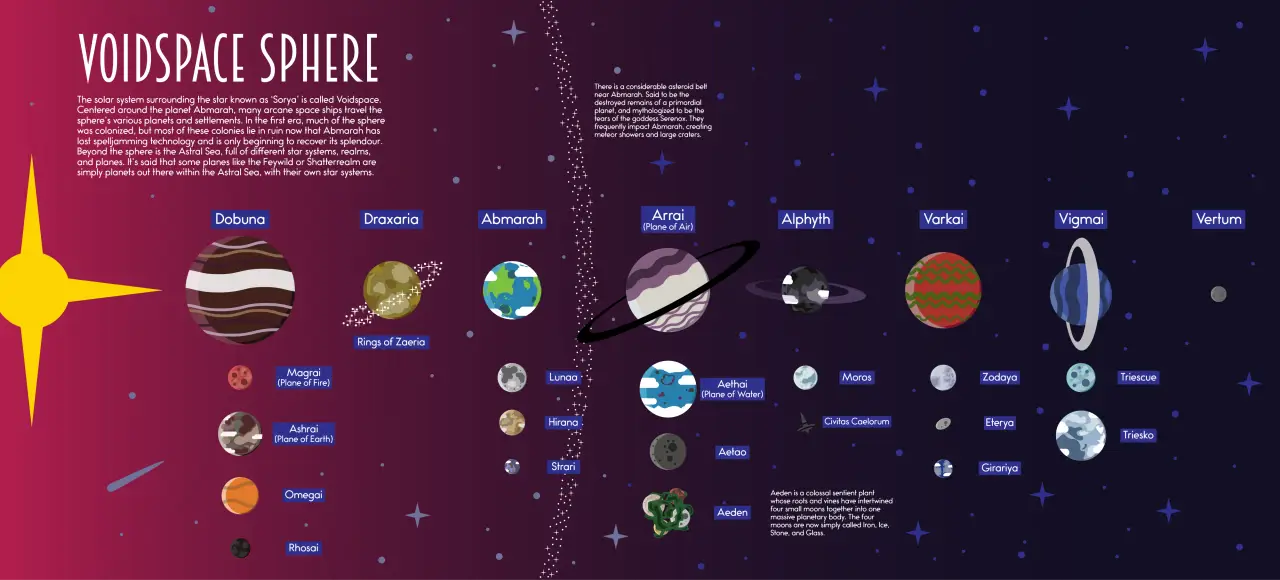
The solar system surrounding the star known as ‘Sorya’ is called Voidspace. Centered around the planet Abmarah, which is often considered to be the Material Plane itself or 'Primeworld'. Many arcane space ships travel the sphere’s various planets and settlements. In the first era, much of the sphere was colonized, but most of these colonies lie in ruin now that Abmarah has lost spelljamming technology and is only beginning to recover its splendor. Beyond the sphere is the Astral Sea, full of different star systems, realms, and planes. It’s said that some planes like the Feywild or Shatterrealm are simply planets out there within the Astral Sea, with their own star systems.
While the technology to create new spelljammer ships is lost, the existing ones leftover in Voidspace and its various planets still work. Skilled artificers repair and recycle spelljammer engines all the time, even if they lack the knowledge and arcana to create new ones. It's said that the Lunar Collective hoards as many of these ships and engines, few as they are. Some races out there in the Astral Sea such as the Gith or Illithids use Astral Ships, which work on similar principles but completely different technologies that are kept secret.
There is a considerable asteroid belt near Abmarah. Said to be the destroyed remains of a primordial planet, and mythologized to be the tears of the goddess Serenox. They frequently impact Abmarah, creating meteor showers and large craters.
Sorya / Sol / Sun
The Sun of Voidspace is much like our own, a bright yellow ball that rises in the east and sets in the west. Its sunshine and warmth give life to the world and is seen as a divine blessing of the gods.
Dobuna
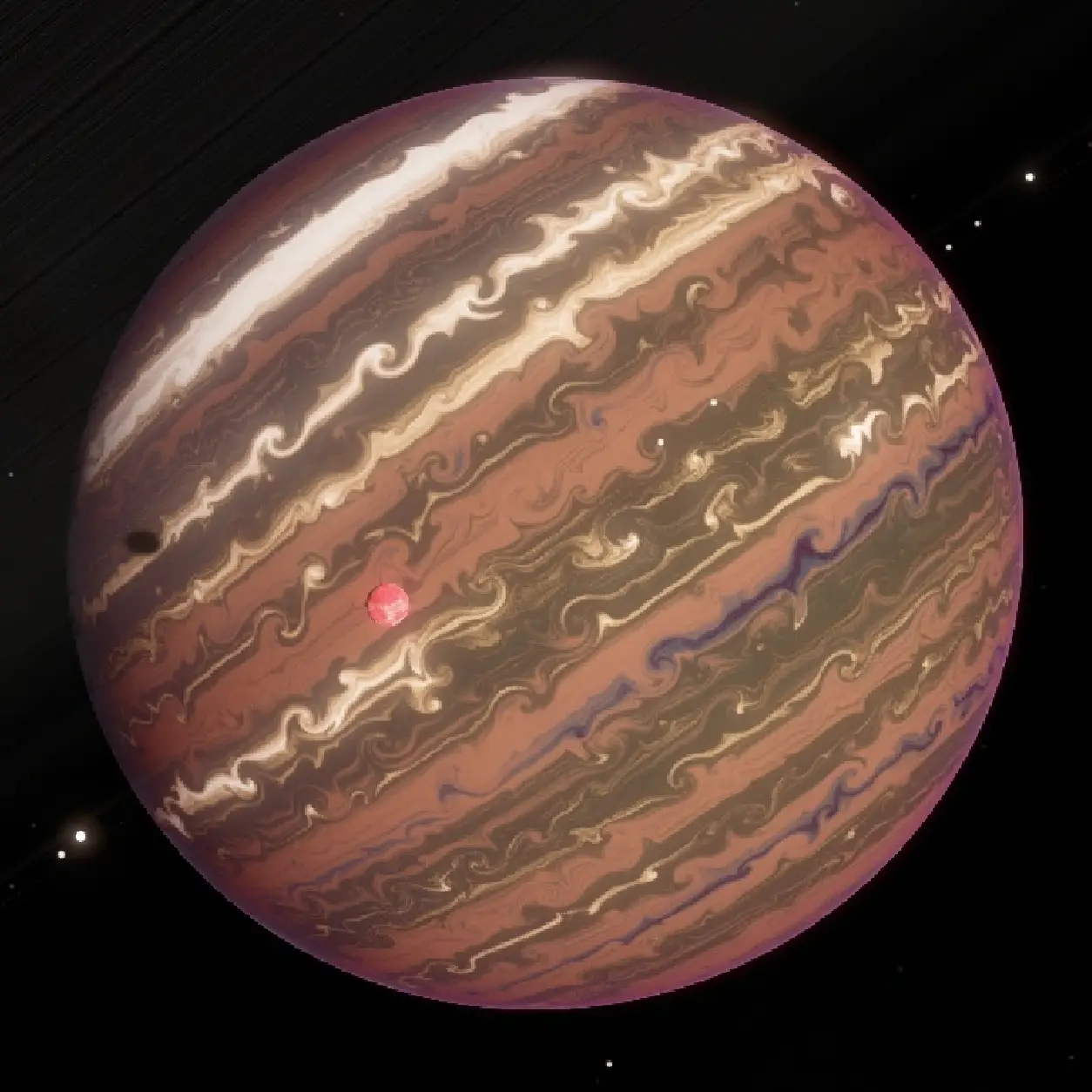
Said to be the Titanfather, Dobuna is the first planet in Voidspace. It is named after Elder Dobuna, one of the most important deities of chaos. A hot-jupiter-like planet, it is by far the largest planet in Voidspace. Its unique storm pattern gives it a distinctive look from the other gas giants, and it hosts nearly a hundred asteroid-moons.
It has four major moons that orbit it, all named after gods that have some relation to Elder Dobuna. The close distance to the sun makes all four of the dobunian moons incredibly hot and desert-like, inhospitable to most forms of life- although some do manage to eek by, especially creatures from the Plane of Fire.
Magrai (Plane of Fire)
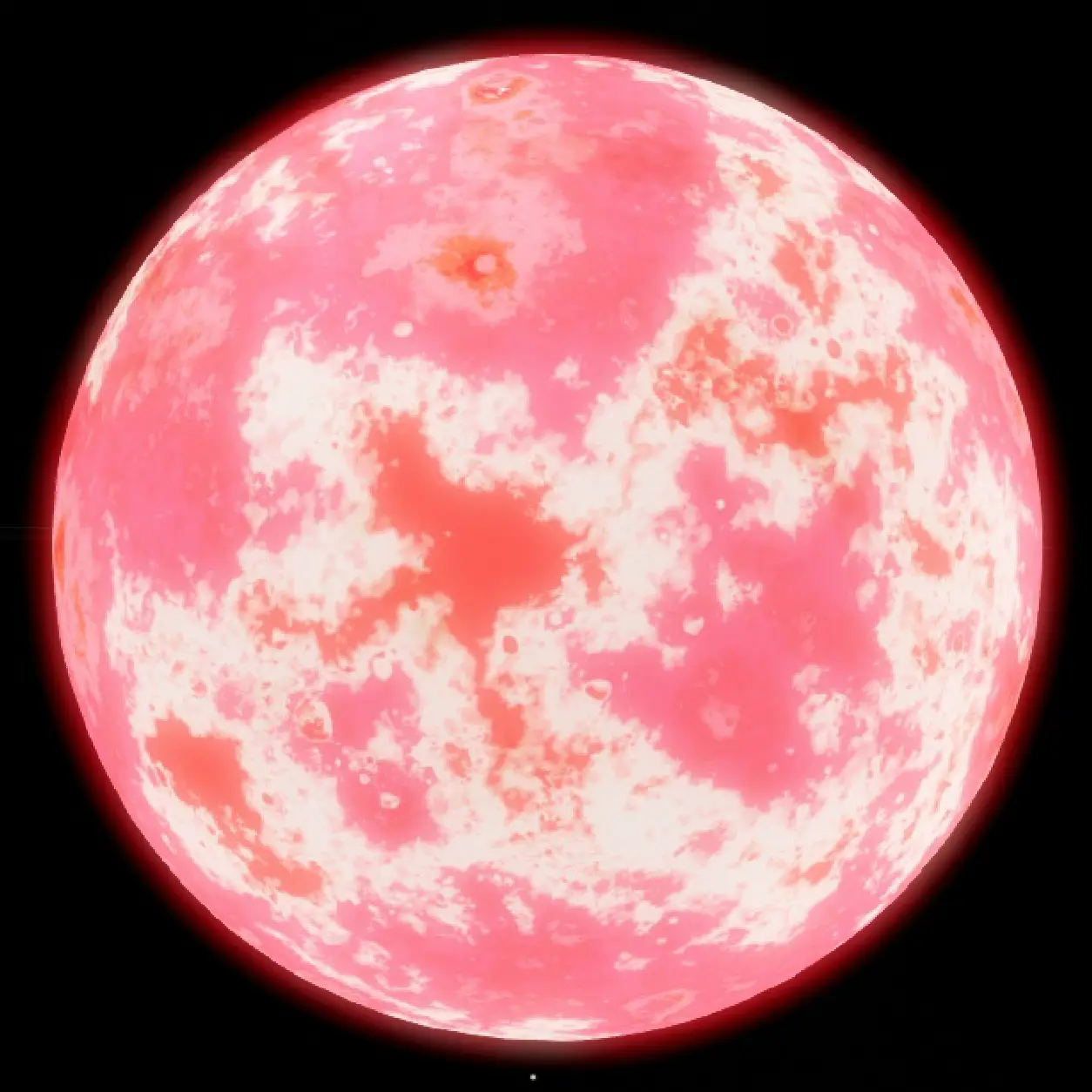
The first moon of Dobuna is called Magrai, named after the destroyer god Magmus. It is an inhospitable molten hell, heated from within by the intense tidal effects of being so close to Dobuna as well as the proximity to the sun. Volcanic eruptions, lava flows, seas of flame, sulfur rain, and a noxious atmosphere describe life on the moon.
After the Realmshatter, its said that the primordial chaos fused with many worlds within Voidspace, and the Plane of Fire and Magrai became one. This places iconic locations such as the City of Brass on Magrai, alongside all elementals such as Ifreeti as well as the other denizens of the plane. Thus, the moon is magically connected to the other elemental planet-planes, being Arrai, Aethai, and its sibling-moon Ashrai.
Ashrai (Plane of Earth)
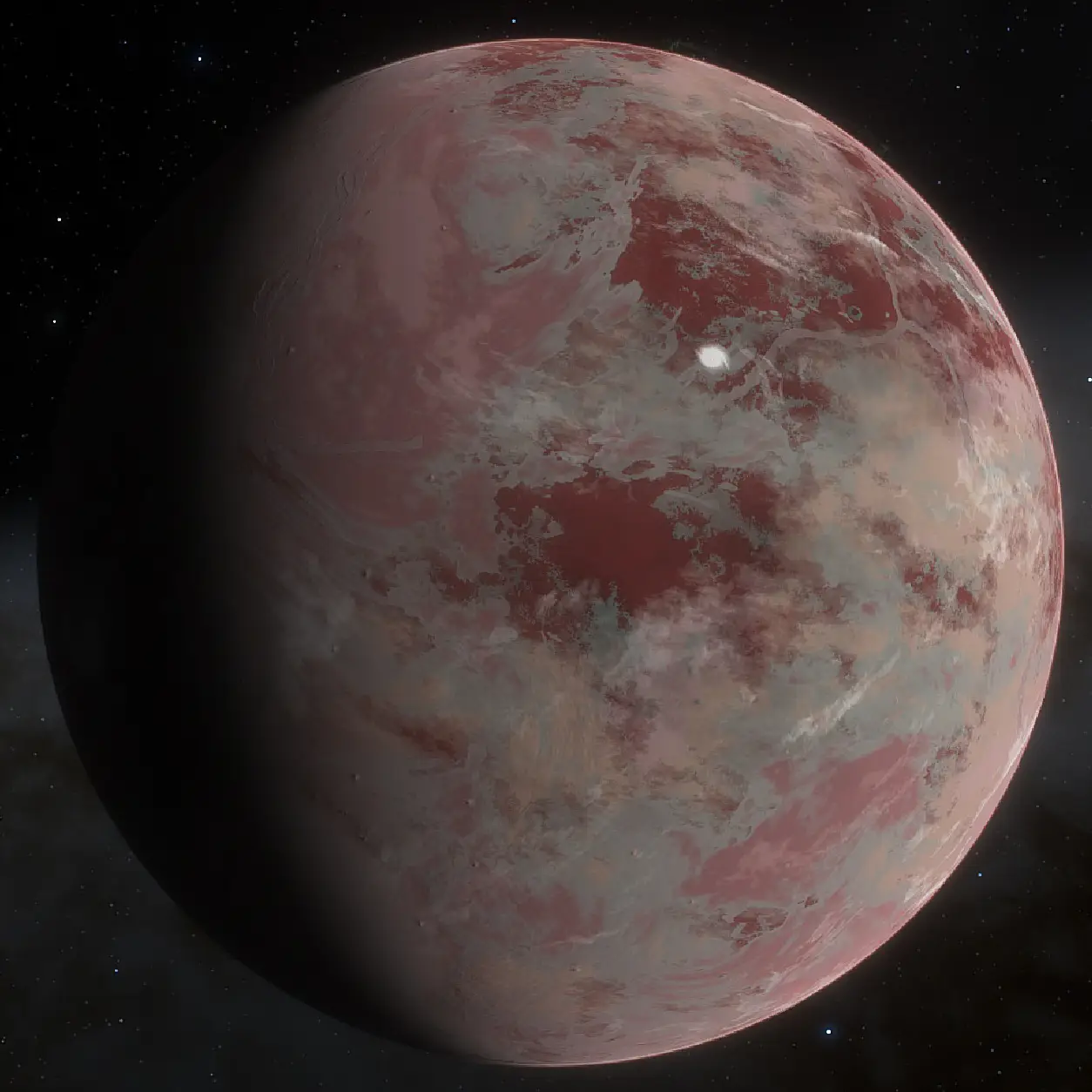
The second and largest moon of Dobuna is called Ashrai, named after the god of death Ashus. It is the third largest moon within Voidspace after Aethai and Triesko. It is a barren world full of large canyons and mesas, a desert that is inhospitable to life. While it does have some occasional oases and some water clouds, the atmosphere of Ashrai is noxious to all lifeforms that don't already call it home. Any mines on the resource-heavy ferrous moon thus have to make contained settlements underground where they can create a breathable atmosphere.
Underground is where most life actually lives on the moon. After the Realmshatter, its said that the primordial chaos fused with many worlds within Voidspace, and the Plane of Earth and Ashrai became one. This places iconic locations such as the Sevenfold Mazework on Ashrai, alongside all elementals such as Dao as well as the other denizens of the plane. Thus, the moon is magically connected to the other elemental planet-planes, being Arrai, Aethai, and its sibling-moon Magrai.
Omegai
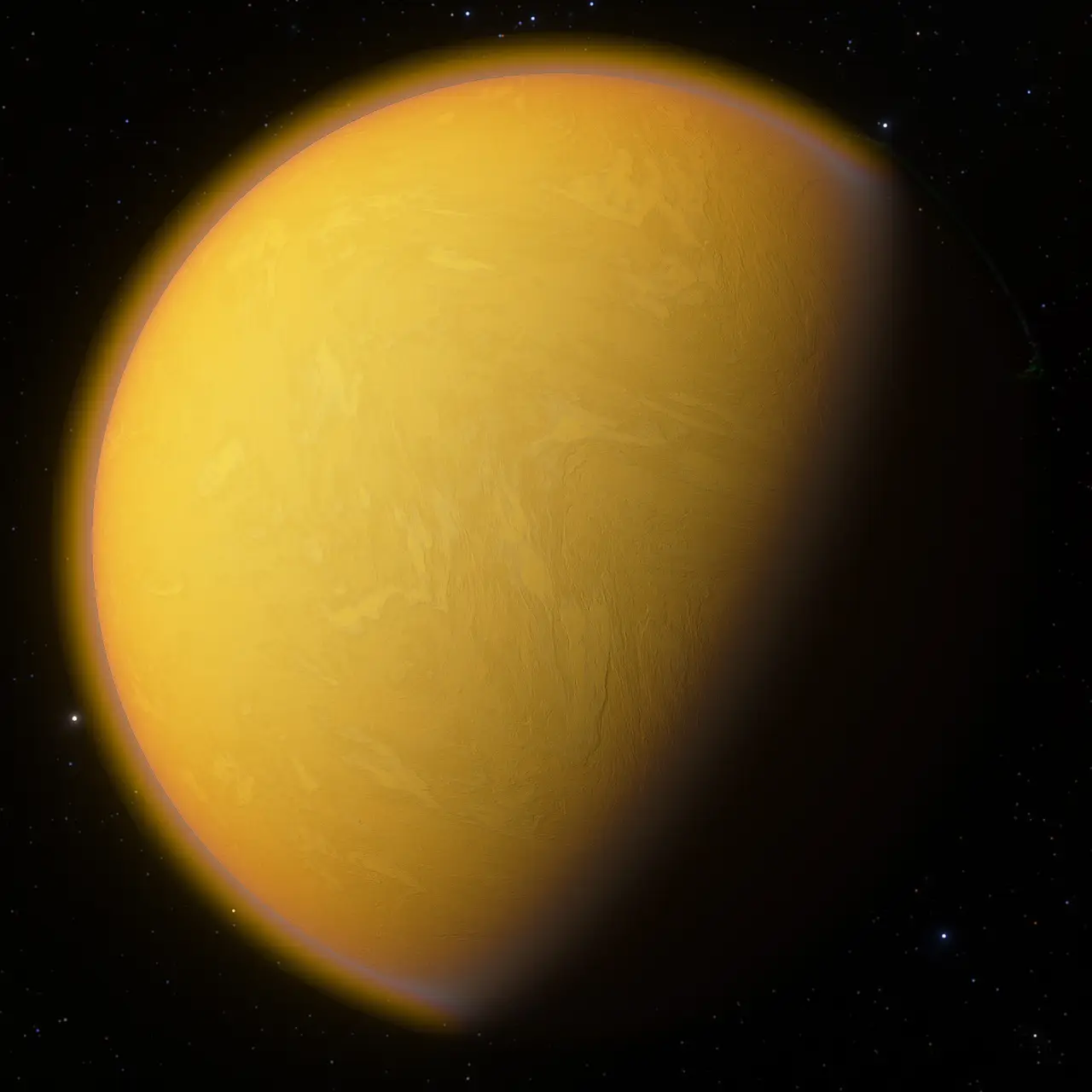
The third moon of Dobuna is called Omegai. A venus-like world, with a scorched surface inaccessible to anyone due to the intense atmospheric pressure of its dense cloud-shrouded sky. All four of Dobuna's moons are hot, but Omegai is by far the hottest location in Voidspace save for the sun itself. Little to no organisms can survive its harshness, and even fire elementals struggle to stay alive on its surface. It isn't hell, it is simply death.
When Dobuna and its system is viewed from afar, Omegai looks like an orange star that is brighter than all the other moons and occasionally outshining Dobuna itself. When viewed from a telescope from Abmarah, astronomers can spot two white, one red, and one orange moon around Dobuna, with the orange one making all the others harder to see.
Rhosai
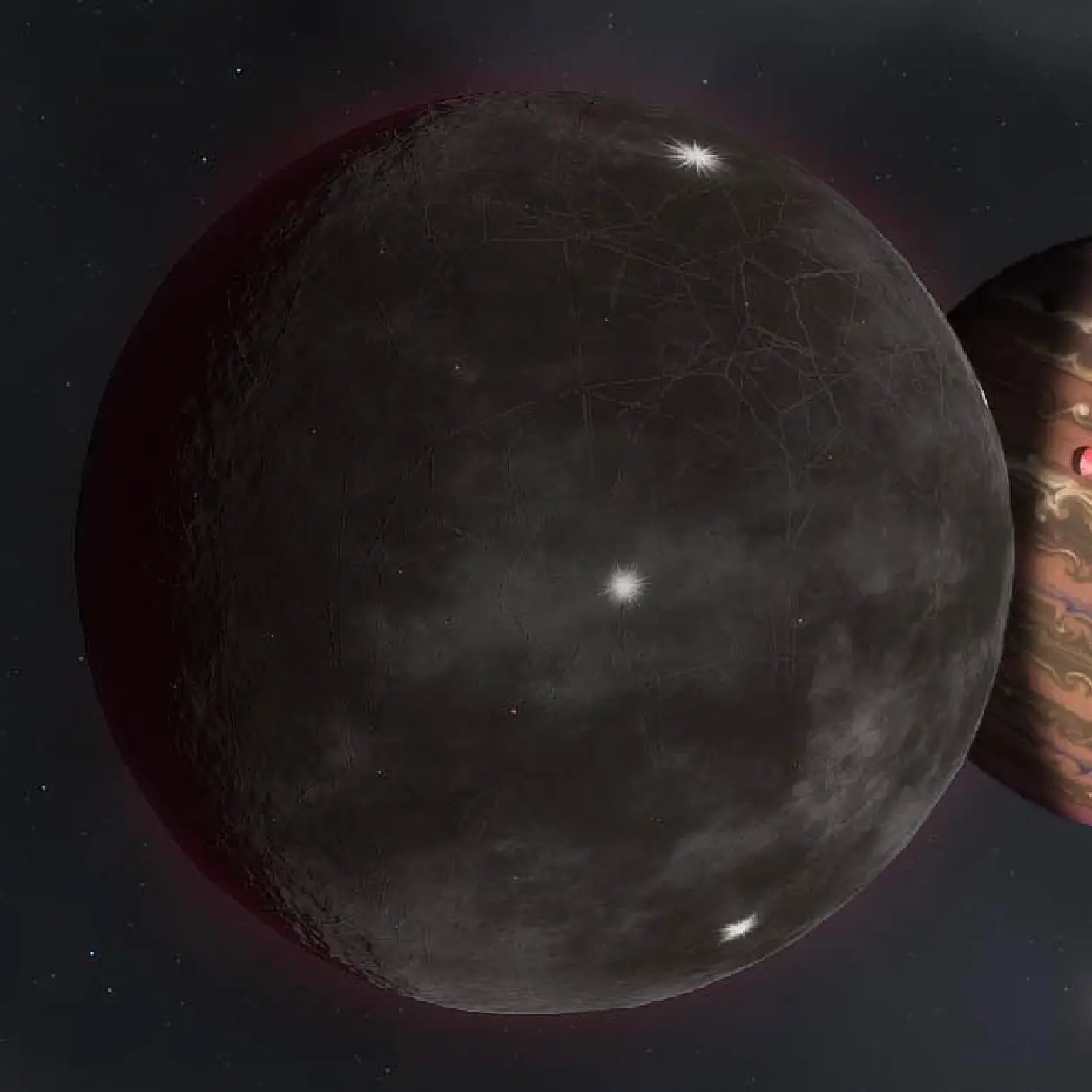
The smallest and furthest major moon of Dobuna, Rhosai is named after the dwarf titan Rhos. A barren volcanic world with an aura of red death, the moon is a scorched wasteland. Rhosai is toxic, Rhosai is dangerous, Rhosai is volcanic, but Rhosai has mines. It holds many mines from first era days, populated still by the dwarves who were left behind. The most important resource mined here is Arkaan, the meteoric black metal used in a lot of ancient Omniborn creations.
Despite its heat, some icy craters are found on the surface of Rhosai that are forever unable to melt. By its very nature as the furthest moon of Dobuna, being on the surface of Rhosai at the right time of year, month, and day would allow you to be the closest you can be to the sun.
Draxaria
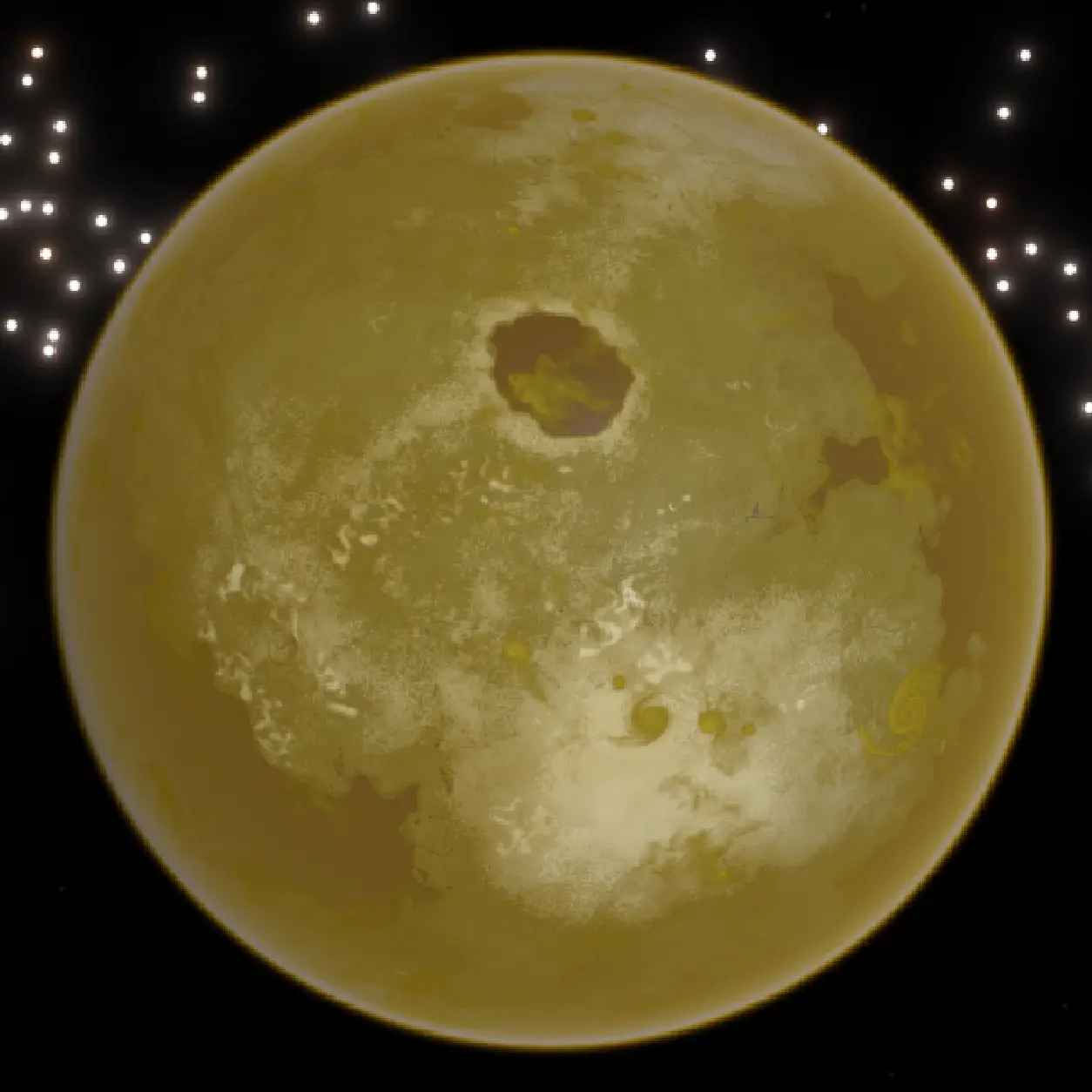
The second planet in Voidspace, Draxaria is said to be the sister-planet of Abmarah. It used to be called Derara named after the Eqosi Primordial and related to the god Deltus, the elven god of nature. It was named so because of its lush greenery and wilds, as it used to be a green marble that rivaled Abmarah. Once said to be the emerald to Abmarah's sapphire, the rich wilds of the planet were said to be more like the Feywild. It was settled by the Temporal Empire in the first era, and renamed to Draxaria after Khaz Draxal.
The Omniborn respected the planet's nature alongside the Elves, but its said that they started the slow pollution of the planet. However, pollution isn't the reason the planet looks like the way it does now, as during the Omniborn Crisis it was the site of many major battles. Eventually, the destruction of its moon Zaeria at the hands of the destroyer god Magmus alongside the pollution and destruction of war on its surface scarred and poisoned the planet, leading to its brown hues today.
Rings of Zaeria
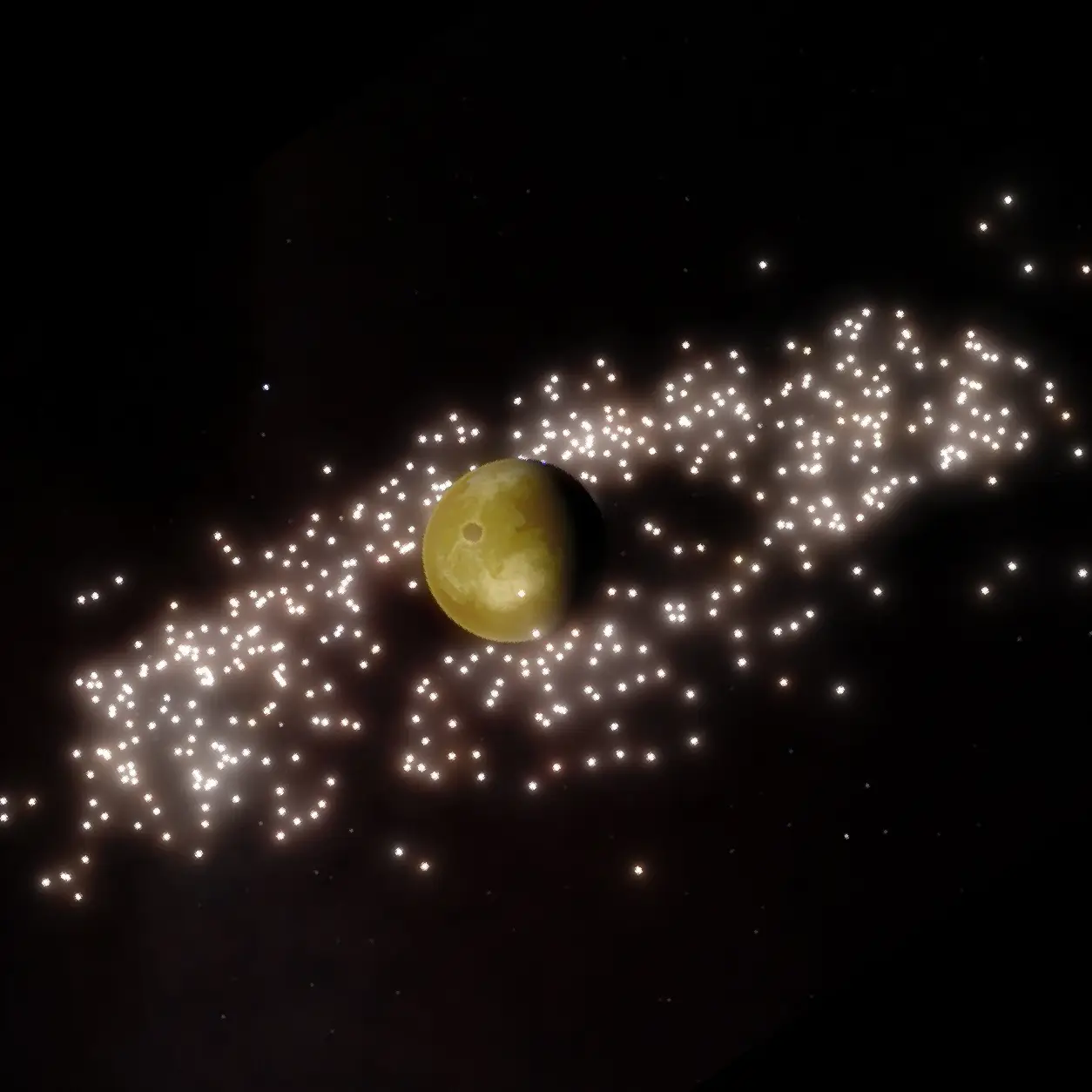
Draxaria used to have a moon called Zaeria named after Khaz Zaenak (originally called Neraa named after the Eqosi Primordial and related to the goddess Nosos.) that is said to have looked like an onyx, with black-white hues. It was the site of many mining colonies in its heyday in the first era. During the Omniborn Crisis, the destroyer god Magmus in a fit of rage destroyed the moon and all on it, turning it into the bright asteroid ring around Draxaria that is visible even from Abmarah.
Today, its said that the rings have become a pirate hotspot, with many pirate outposts hidden amidst the thousand asteroids of Zaeria. The largest such city within the rings is named Zaerock. It's hard to navigate the debris ring with large ships, and you need experienced navigators to find passages within the fast orbiting remains of the moon. Many shards in the ring rain as meteors onto the surface of Draxaria all the time, and its said that in a few thousand years the ring might coalesce back into a single moon.
Abmarah
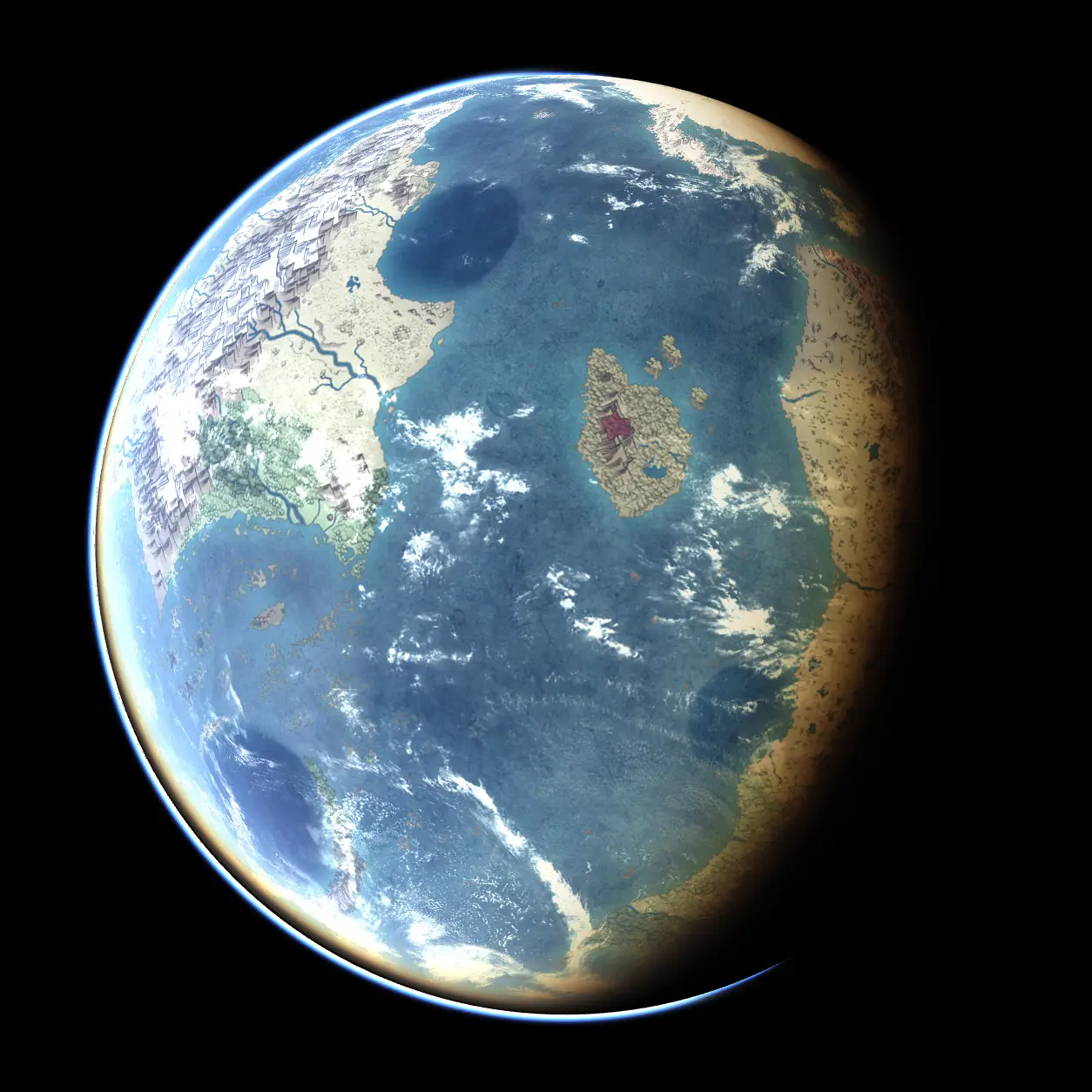
The third planet in Voidspace, Abmarah takes 364 days to orbit the sun. Said to be named after the primordial Abara, it is divided into three major continents- Eqos in the west, Aurial in the middle, and Eteru in the east. The planet is near an asteroid belt, and sees frequent impacts. It has three moons in the sky. Aurial was once whole, until the cometfall, when a magical comet impacted the continent and shattered it.
The primary location of most campaigns and stories set in our world, it is considered to be the jewel of the cosmos. In the first era, much of the sphere was colonized by the various nations of Abmarah, but most of these colonies lie in ruin now that the planet has lost spelljamming technology and is only beginning to recover its splendor. That being said, there are many groups all across Voidspace descended from these first civilizations who still have space ships.
The planet is also close-by to an asteroid belt, and as such sees regular meteor showers and meteorite impacts. While the Cometfall Sea related to the cometfall is the most obvious, Abmarah has a lot of large impact craters dotted around the world among countless smaller ones. An example of such a crater is Hafra Lake in Eqos.
Lunaa
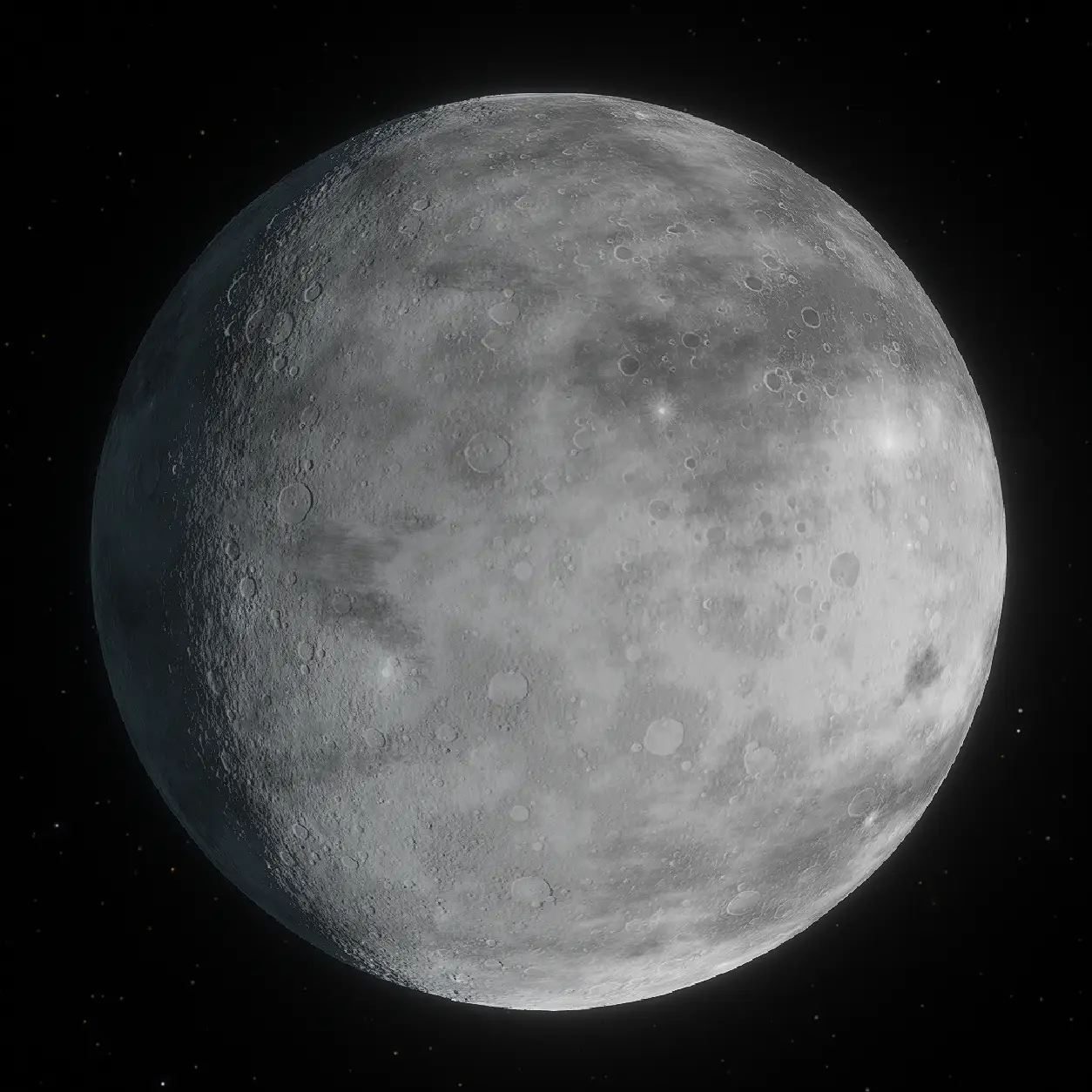
Lunaa is the largest and primary moon, a white-silver world much like Earth's Moon. Said to be named after the primordial Lunaa, and related to both the godesses Atrius and Arryestria. Visible on most nights, it takes up a good part of the sky and shines brightly. The phrase "lunar cycle" commonly refers to Lunaa's regular one-month orbital cycle. The brightness and phases of Lunaa are constant and predictable, and its surface is pocked with craters big and small. It is quite bright on a clear night, able to cast pale shadows.
Lunaa and its cycle dominate both the tides and arcane magic. Via mythology or some unknown properties, the magical nature of the moon affected Abmarah's magic quite substantially. For those who practiced lunar magic, the phase of the moon affected the potency of their spells, peaking in the full moon and dipping at the new moon. Similarly, the curse of Lycanthrophy is tied to Lunaa, as those afflicted forcibly transmogrify into their hybrid forms during Lunaa's full moon and often lose all control of themselves.
Hirana
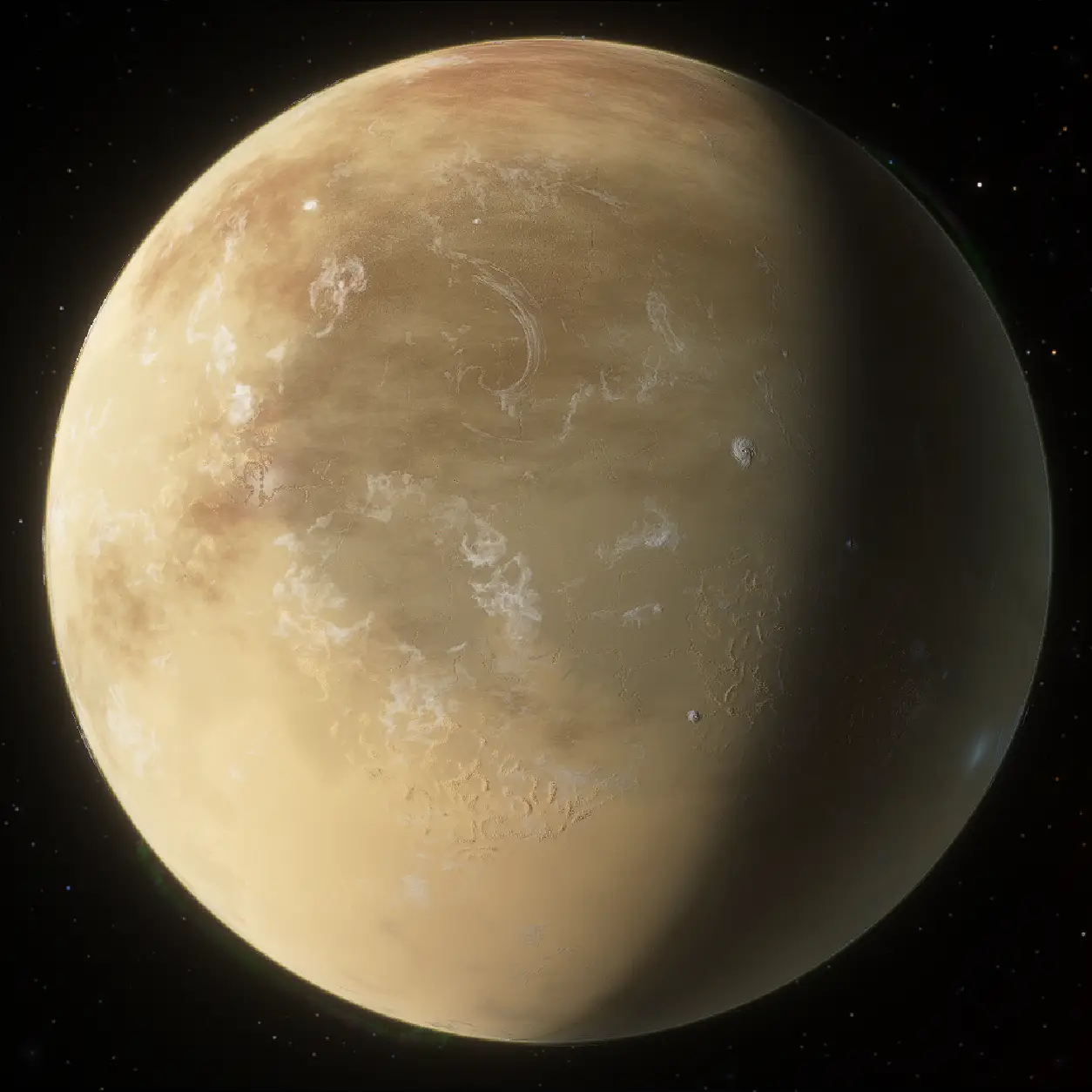
The second largest moon is a gold-brown desert world known as Hirana, or Hyron. Said to be named after the primordial Hirana, and related to the goddess Aklim. Visible on most nights, it takes up a smaller part of the sky and is out-shined by Lunaa, looking dull in comparison. Hirana is on a two-month orbital cycle, becoming full every two months. Seen from Abmarah, it appeared to fit within the size of a human fist held at arm's length.
Often said to be the greatest desert in Voidspace, despite the larger size of barren worlds like Ashrai or Aquesko. Many desert races call it home, whether leftover and isolated communities from before the Omniborn Crisis or people magically transported to the desert moon after getting lost in the Kav'orra Desert on Abmarah. It is a harsh world to survive on compared to any desert on Abmarah, with the only water that exists being in the few clouds in its dusty sky. Residents have learned to harvest the moisture from the air, and grow a very few desert crops in its sandy soil. Hirana, alongside Strari, has intense aurorae near its poles, sometimes visible even from Abmarah.
Strari
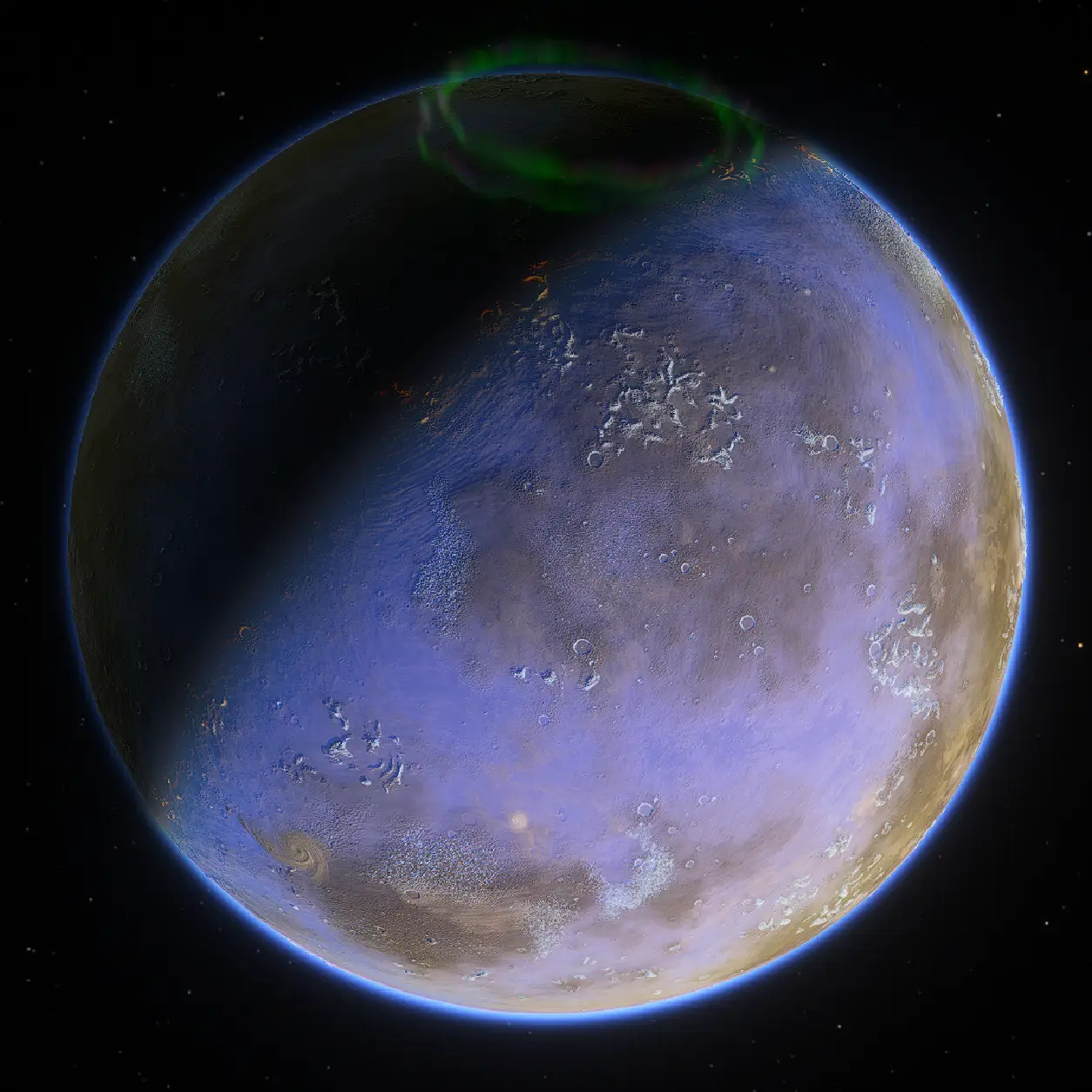
The smallest moon is known as Strari and is a small blue world much further out than the other two. Said to be named after the primordial Strari, and related to the god Aesin. On a rather long cycle and out-shined by the two larger moons, many people fail to even spot Strari in the sky on most nights, unless it is full, when it seems to magically appear larger (although this might be an optical illusion.) Abmari scholarship knows little about Strari and puts forward conflicting theories on its origins. Various folklore casts it as an ill omen, a curse to those that are born under its full light.
Through a telescope, striations of Strari's cerulean hue and topography, which includes mountains, are visible. The moon has an atmosphere, as stormy weather patterns with purple-brown clouds and lightning flashes are also visible through a telescope. These storms can be very intense, but also brief, disappearing as quickly as they form. Strari, alongside Hirana, has intense aurorae near its poles, sometimes visible even from Abmarah.
Arrai (Plane of Air)
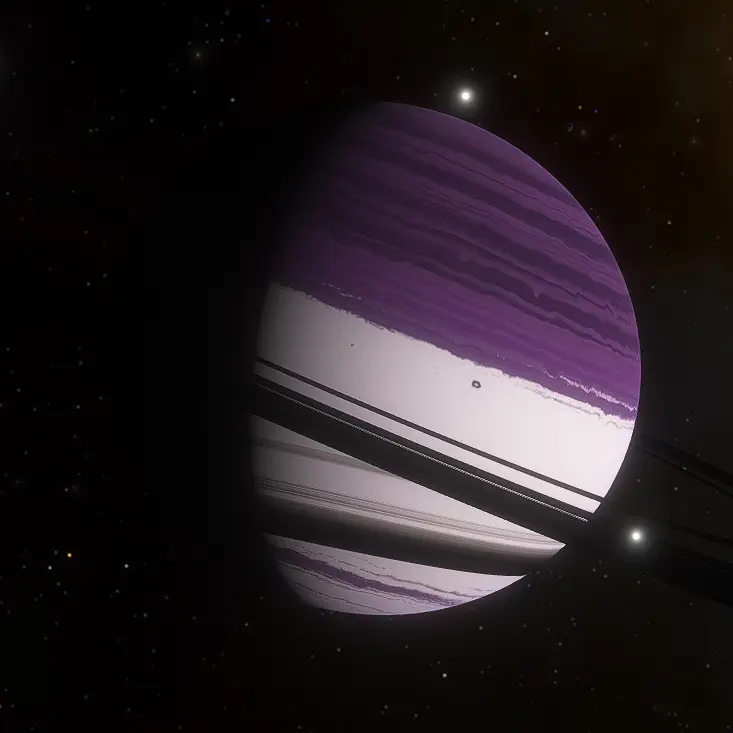
The fourth planet in Voidspace and the second largest after Dobuna, Arrai is a gas giant known for its iconic black rings. It is named after the goddess Arryestria of the Lunar Triad, and formerly named Nahrai or Olzai after the titaness Tempos. It has six major moons, although four of them have combined into the mass known as Aeden.
Below the top cloud cover, a large layer of the planet's atmosphere was transparent breathable air and occasional clouds, dotted with countless floating islands that orbited the planet's center of gravity at vastly different altitudes. Built atop the topmost islands were extremely tall structures that pierced the planet's top clouds and were visible from orbit. These reinforced towers served to safely guide ships arriving at the planet through the clouds to the docking ports below.
After the Realmshatter, its said that the primordial chaos fused with many worlds within Voidspace, and the Plane of Air and Arrai became one. This places iconic locations such as the Citadel of Ice and Steel on Arrai, alongside all elementals such as Djinni as well as the other denizens of the plane. Thus, the moon is magically connected to the other elemental planet-planes, being Magrai, Ashrai, and its moon Aethai.
Aethai (Plane of Water)
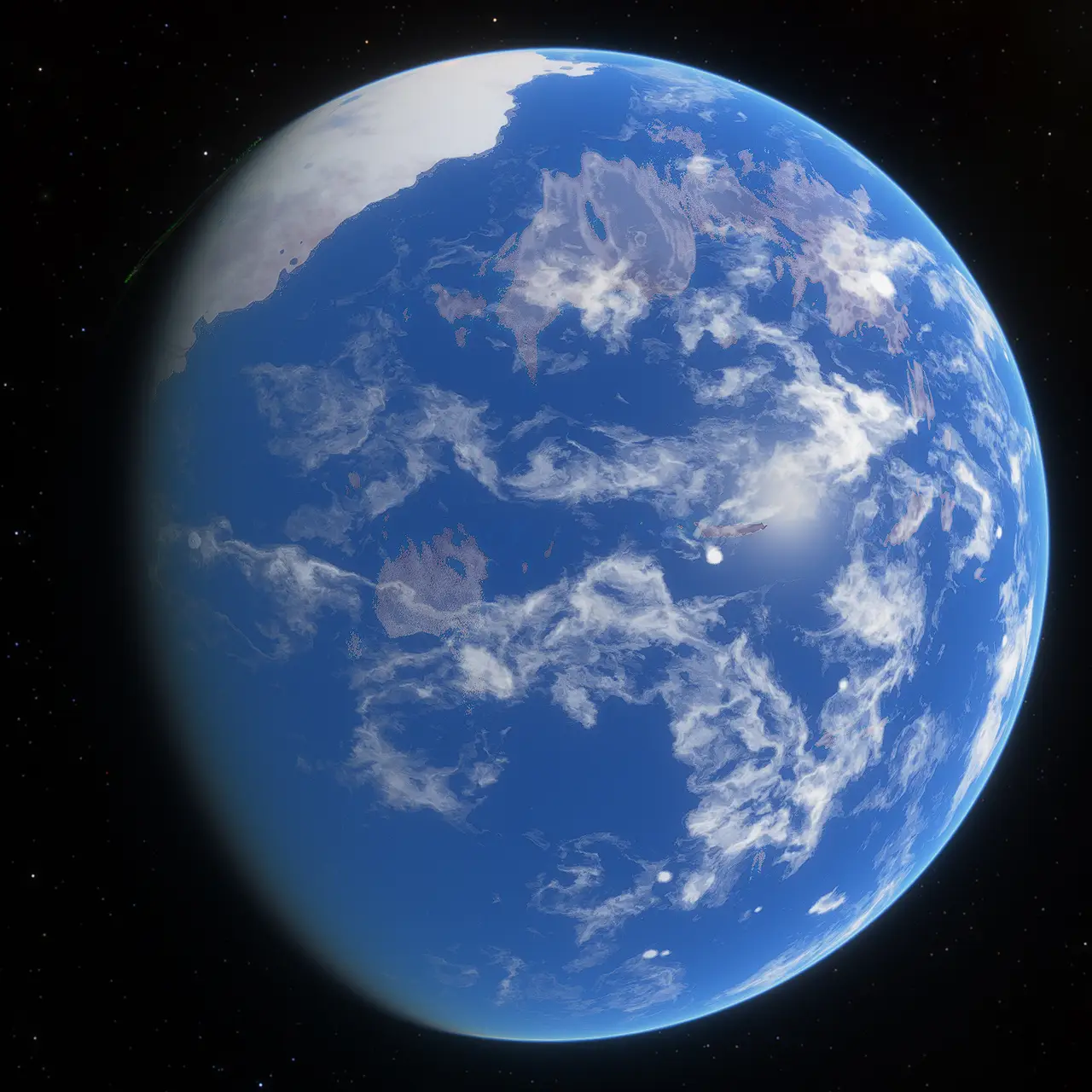
The largest and closest moon of Arrai, Aethai is an oceanic world with a bottomless ocean and a few floating islands with purple plantlife that are visible on the surface. It is named after the goddess Aethys. It is the largest moon within Voidspace, even bigger than the planet Alphyth. It's only just smaller than Abmarah and Draxaria, and it's often said to look like Abmarah but almost completely submerged. Many aquatic races call Aethai home, and generally all residents live underwater.
After the Realmshatter, its said that the primordial chaos fused with many worlds within Voidspace, and the Plane of Water and Aethai became one. This places iconic locations such as the Citadel of Ten Thousand Pearls on Aethai, alongside all elementals such as Marid as well as the other denizens of the plane. Thus, the moon is magically connected to the other elemental planet-planes, being Magrai, Ashrai, and its parent planet Arrai.
Aetao
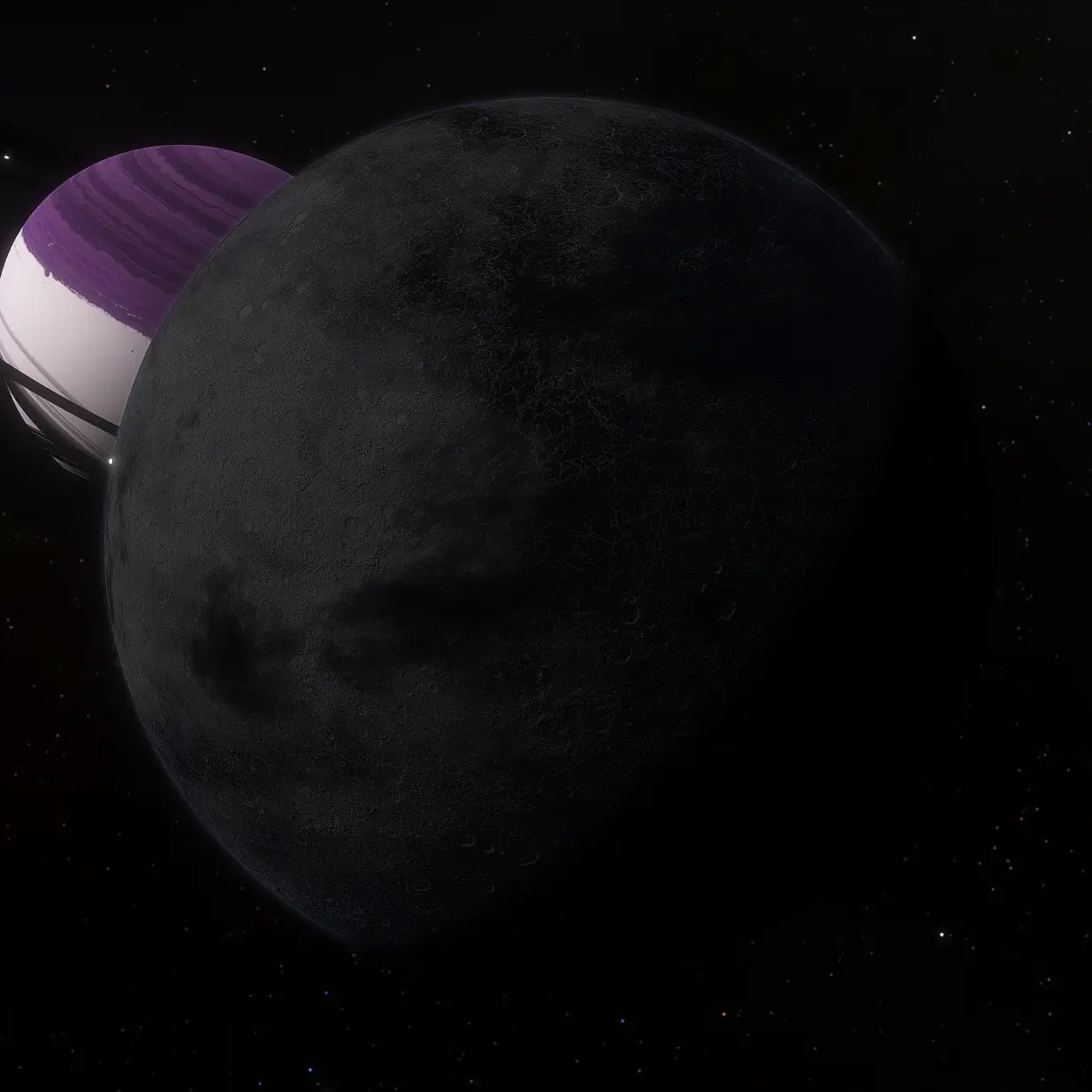
The second largest moon of Arrai, Aetao is a barren and lifeless world. The moon used to be called Ksai after the goddes Ksius who was the daughter of Tempos (Arrai's original namesake). Its name was changed by Triadists to Aetao, after the goddess Jakuna (especially after her previous planetary namesake Jakunai was corrupted into Varkai.)
The inky black surface of Aetao is the oldest and most heavily cratered landscape in Voidspace. Its surface is completely covered with impact craters, even more so than Lunaa. In fact, the crater density is close to saturation- any new crater will tend to erase an older one. The landscape is relatively simple, there are no large mountains, volcanoes, or other non-crater features. The cratered plains hold a few colonies still, subsiding on the underground ice of the moon.
Aeden
Aeden is a colossal sentient plant whose roots and vines have intertwined four small moons together into one massive planetary body. The four moons are now simply called Iron, Ice, Stone, and Glass.
Alphyth
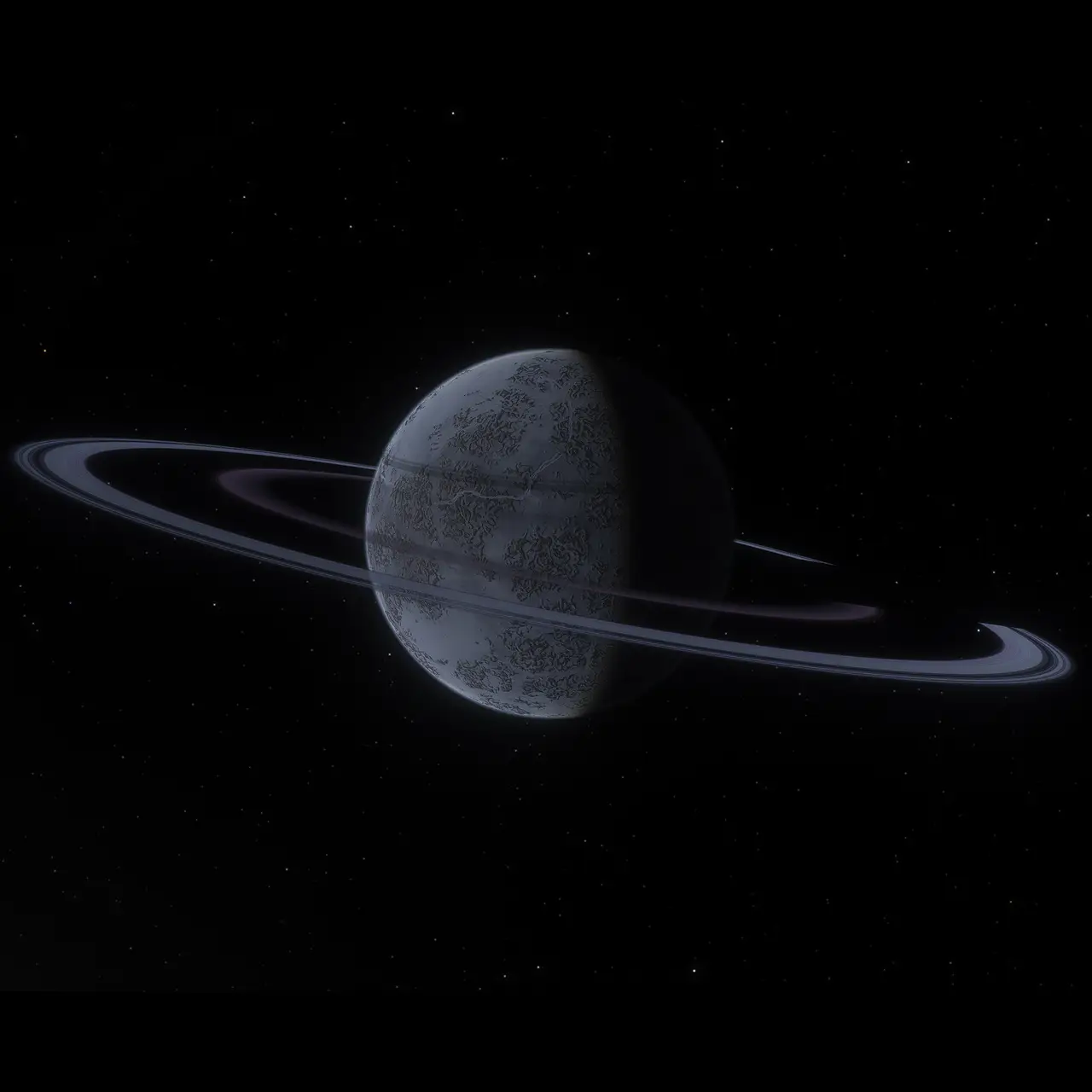
The fifth planet of Voidspace and perhaps one of the most infamous, Alphyth is farther away from the first four by a long shot, and marks the start of Outer Voidspace. It is named after the titaness Alphus. It is the smallest of the three rocky planets not including Vertum, even smaller than the moons Aethai and Triesko. It is Said to be obsidian-like, with a lavender-gray-black landscape dotted with vast barren fields and tall icy mountain ranges. The bluish-black planet is surrounded by two lavender-blue rings, visible with Abmari telescopes and giving the small world a larger apperance than it actually has.
A cold world, it has some of the fastest winds in the system. It's said that the winds of Alphyth can get so strong that the only permanent settlements have to be underground. The planet has become infamous as the heart of Illithid activity in Voidspace, with aberrations of all varieties living both above ground and below. It's said that the planet was once less cursed, and was the heart of a Duergar mining operation, until the Illithids came and took over the planet.
Many Duergar and Gith settlements remain on the planet, both underground and on the surface, forever fighting against the Illithids. The planet is often hearkened to the Underdark of Abmarah in its nature, although much harsher, more barren, and comparatively soul-less.
Moros
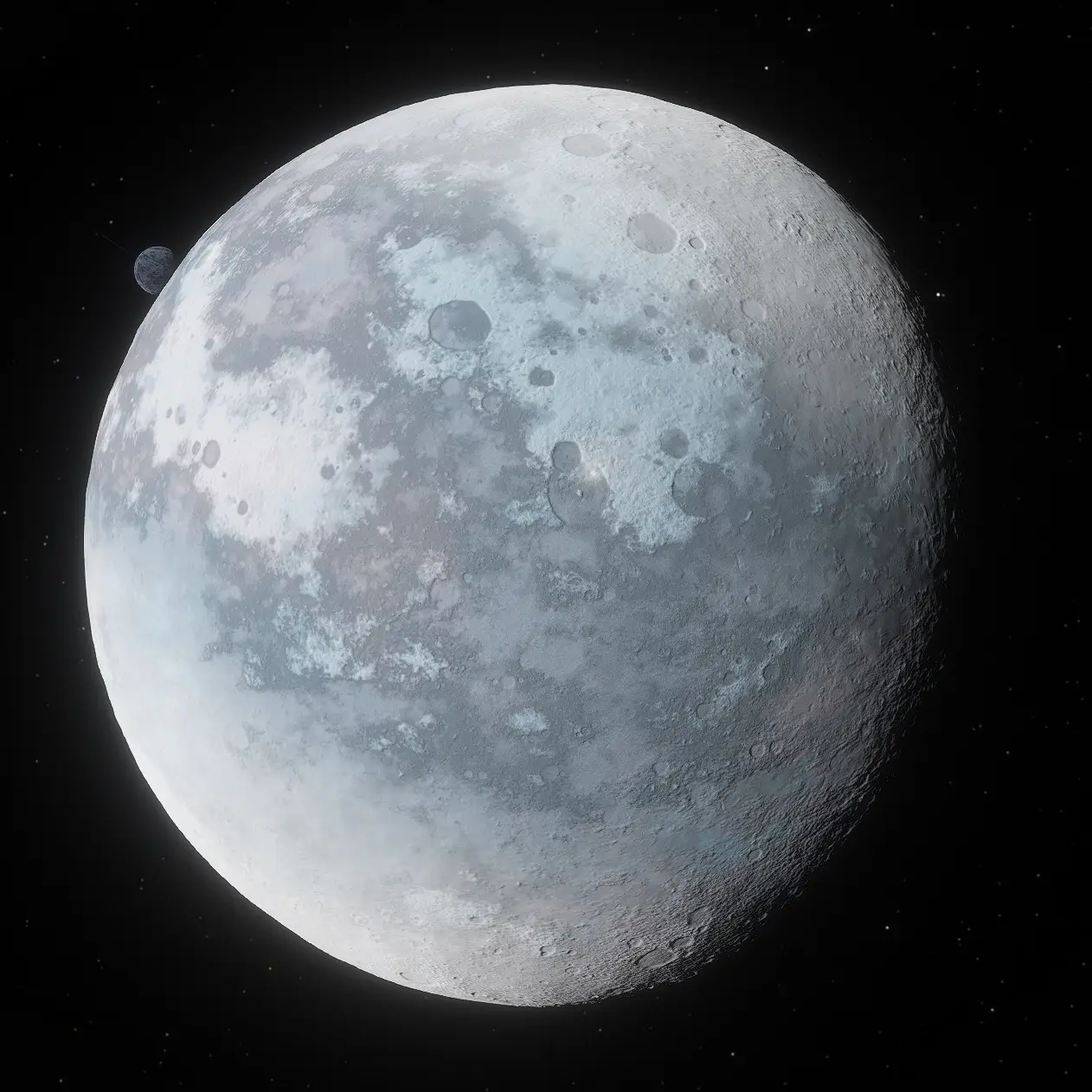
The relatively large and only moon of Alphyth, Moros is an icy, airless world named after the former god of death, Moros. It's size compared to Alphyth makes some scholars call them binary planets, as Moros creates a distinct orbital wobble on Alphyth. In fact, it is this exact tidal heating that gives these distant worlds their survivability- the interior heating that the two produce on each other makes the temperatures underground somewhat livable.
While Moros' surface is airless and inhospitable, it is said to house a sizable subsurface ocean, deep below the ice. As infested with aberrations as Alphyth now, its said that Aboleths stalk the ruins of the undersea settlements in its lightless ocean.
Civitas Caelorum
An ancient space station from the first era, it remains in orbit of Alphyth to this day. It was built by the high elves of the Imperium Alvanum Aeternum, under the orders of Pontiff Caelor III. It was built during the Omniborn Crisis to hold prisoners. This maximum security prison was abandoned after the cataclysm, but it remains in use by its now Illithid captors.
Varkai
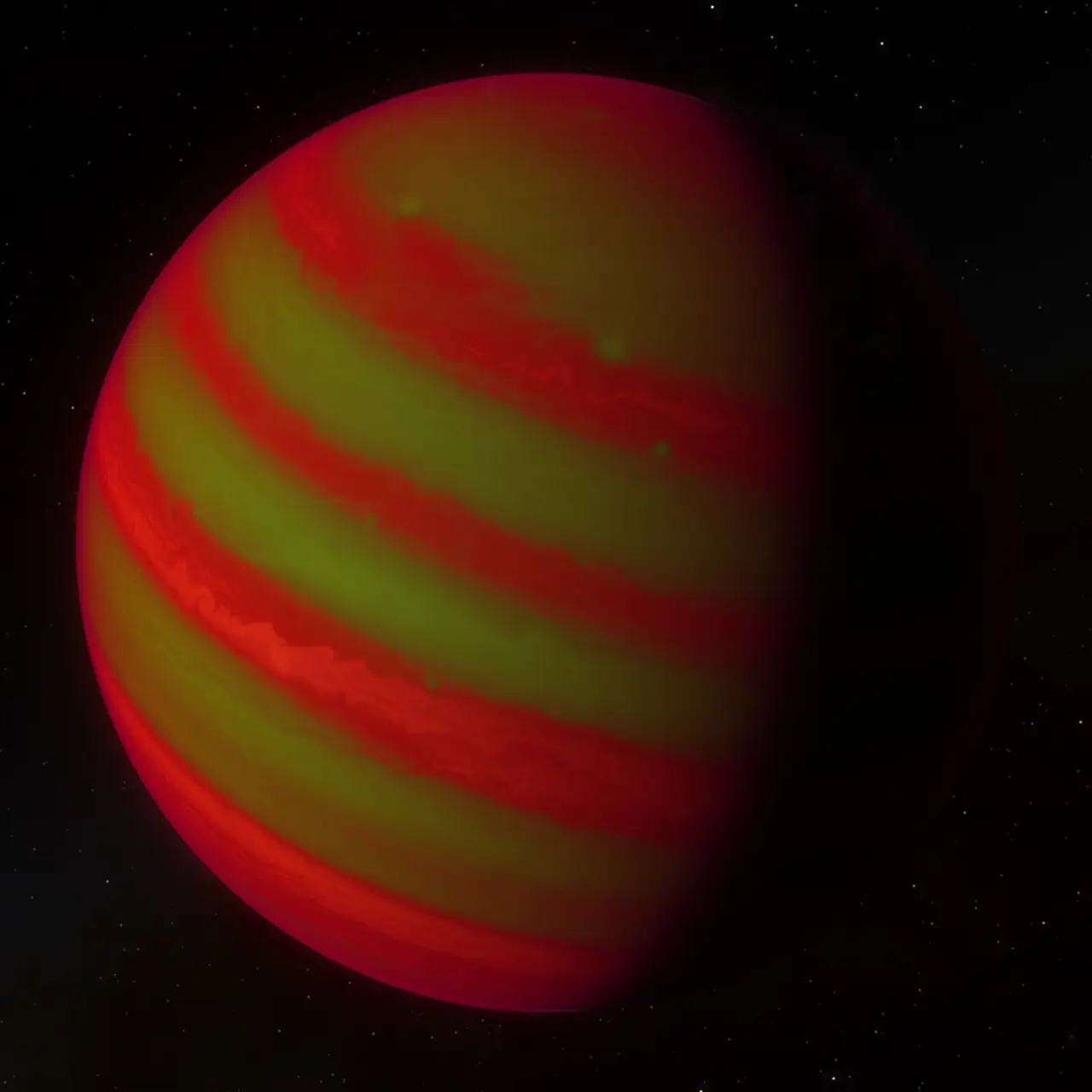
The sixth planet in Voidspace and the third largest, Varkai is an ice-gas giant with a distinctive red-green appearance. It's said that Varkai used to be blue-silver not unlike Vigmai, and that it used to be called Jakunai (named after the titaness Jakuna, who the moon Aetao is now named after.) but was corrupted by the god Varkanus who now gives the planet its name. It's said that the 'waters' of the planet turned to 'blood' under the influence of the blood god. The three moons of Varkai are still named after the three children of Jakuna.
Due to its connection to the god, it is considered to be an ill omen in astrology practiced on Abmarah. People who are under the influence of Varkai are said to face afflictions, challenges, delays, and obstacles in life. It is still considered to be the planet of justice and karma from its days of being Jakunai.
Zodaya
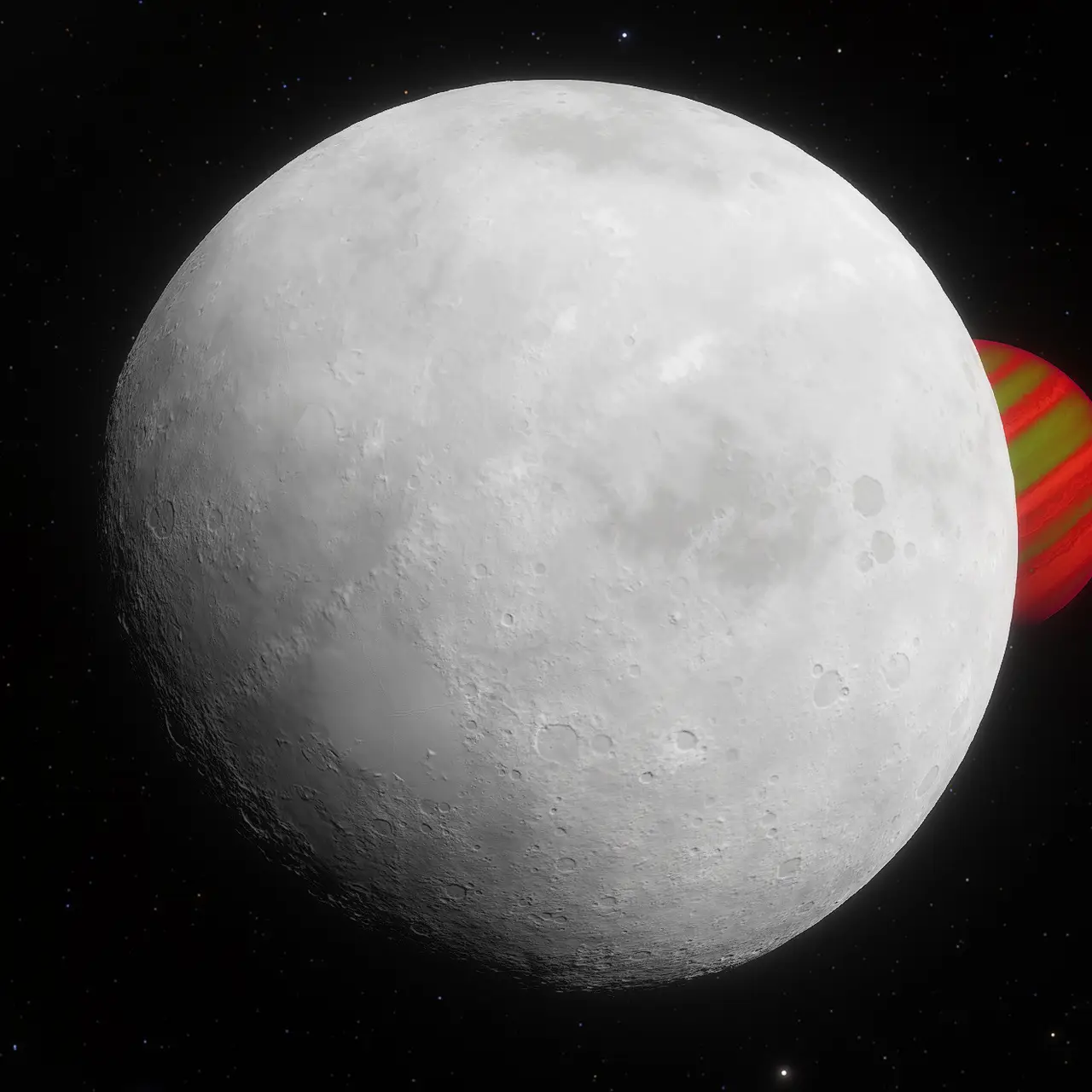
The first and largest moon of Varkai is a lifeless world called Zodaya. It is an airless and icy world with almost nothing to offer in terms of resources beyond ice and stone. It's hypothesized that Zodaya holds a subsurface lightless ocean much like Moros, but unlike on Moros no one has ever dug down deep enough to verify. If it does, the ocean is more than likely devoid of life and too cold to allow even elementals to survive. Some scholars have argued that if such an ocean exists, it might even have been transmuted into frozen blood due to Varkanus' influence on Varkai.
Eterya
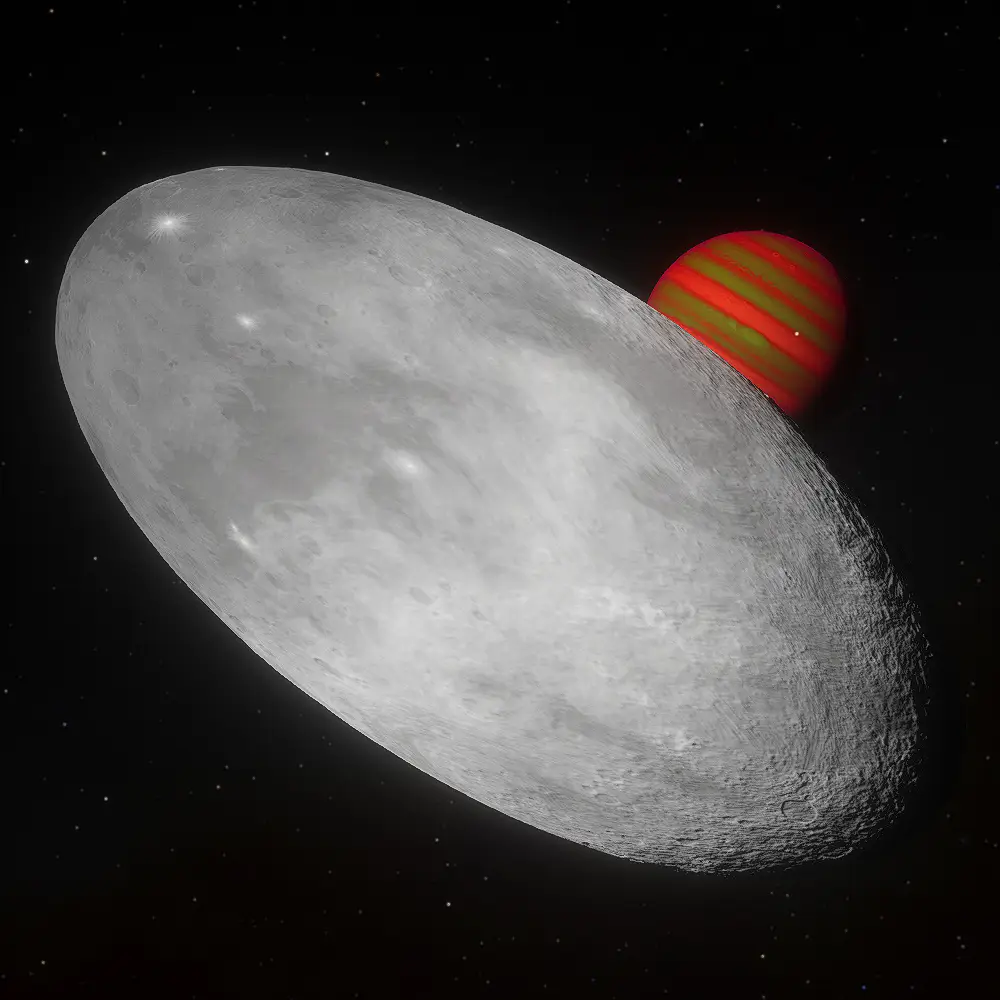
Eterya is the second and smallest of the major moons of Varkai. It is unique in Voidspace for its egg-like elliptical shape instead of a spherical globe like the others. There are many theories as to its shape, with scientific explanations ranging from an ancient collision to being a captured planetoid that used to have a high spin.
Mythological explanations include it being squashed by an ancient god, and the most popular one, it being an actual egg for an 'evil' lifeform that we do not yet understand. That might possibly even be true.
Girariya
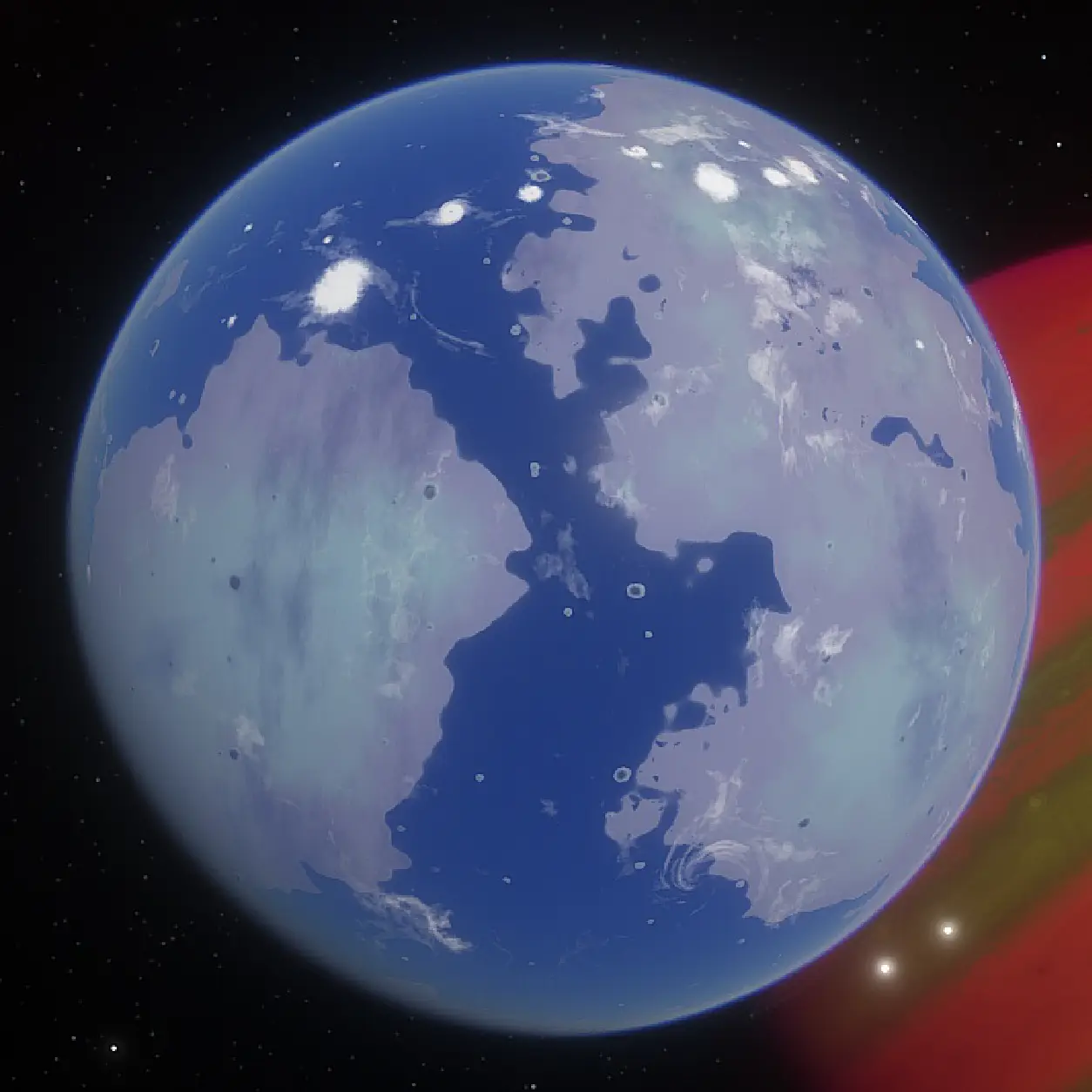
The outermost moon of Varkai is Girariya, named after the daughter of Jakuna, Giraros. Even though it is smaller than Zodaya, it is by far the most important moon in Outer Voidspace. Despite being in the cold reaches of space far from the warmth of the sun, the tiny moon supports a liquid ocean as well as life on its surface. In fact, the temperature of Girariya is uncharacteristically warm for its location. Scientifically said to be impossible, it is the result of ancient arcane terraforming done on the world by the Omniborn.
There are many cities on the surface of Girariya, populated by remnant peoples from the first era. More so than any other settlement in Voidspace, the cities of Girariya are full of outsiders from the Astral Sea. Any who enter Voidspace from the Astral Sea without teleportation encounter Girariya first, and the world has become somewhat of a border city. (There are a few settlements on icy Triesko further out, but it is deemed too hostile to support any large cities and is considered more of an outpost.)
Mythology says that the moon is actually a prison, holding the goddess Giraros sealed away inside its surface. It is unknown if this is true, or simply a part of the 'cursed' nature that people apply to the entire Varkai system.
Vigmai
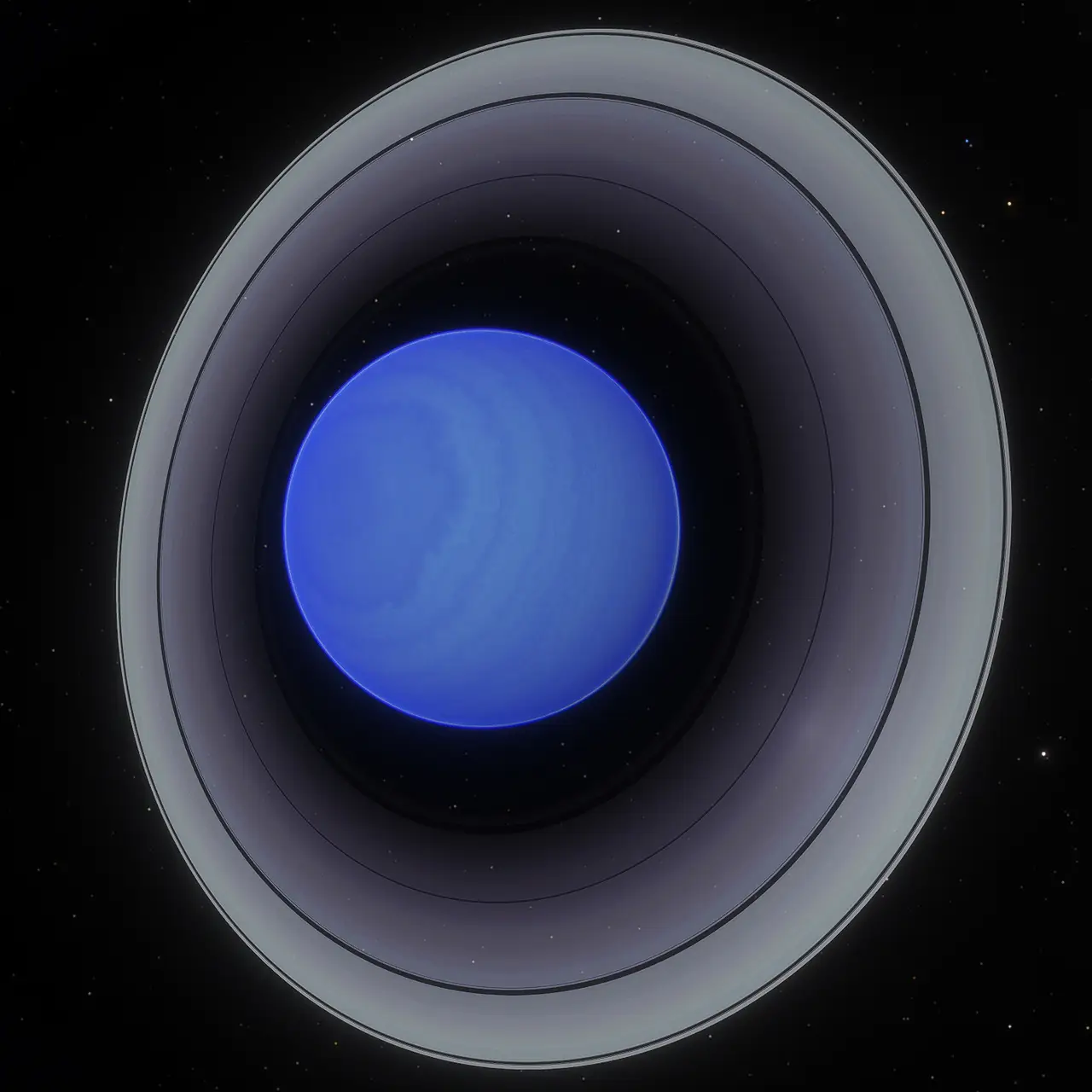
The seventh planet in Voidspace and the smallest of the four gas giants is Vigmai, named after the god of the seas, Sigmos. Known for its blue color and bright white rings, the most notable fact about Vigmai is its remarkable axial tilt (Not unlike Uranus) basically putting the planet on its side. Vigmai rotates on its side, causing it to essentially roll along its orbital path rather than spin conventionally.
While its ethereal atmosphere swirls blue hues and intense storms, Vigmai's clouds conceal a fabled "ocean" of sorts- a celestial expanse not of liquid water, but ice and hurricanes. This great icy 'ocean' is the reason for it being named after the god of the seas more so than any of the other worlds in Voidspace that have liquid water, such as Aethai, Girariya, Draxaria, or Abmarah itself.
Triescue
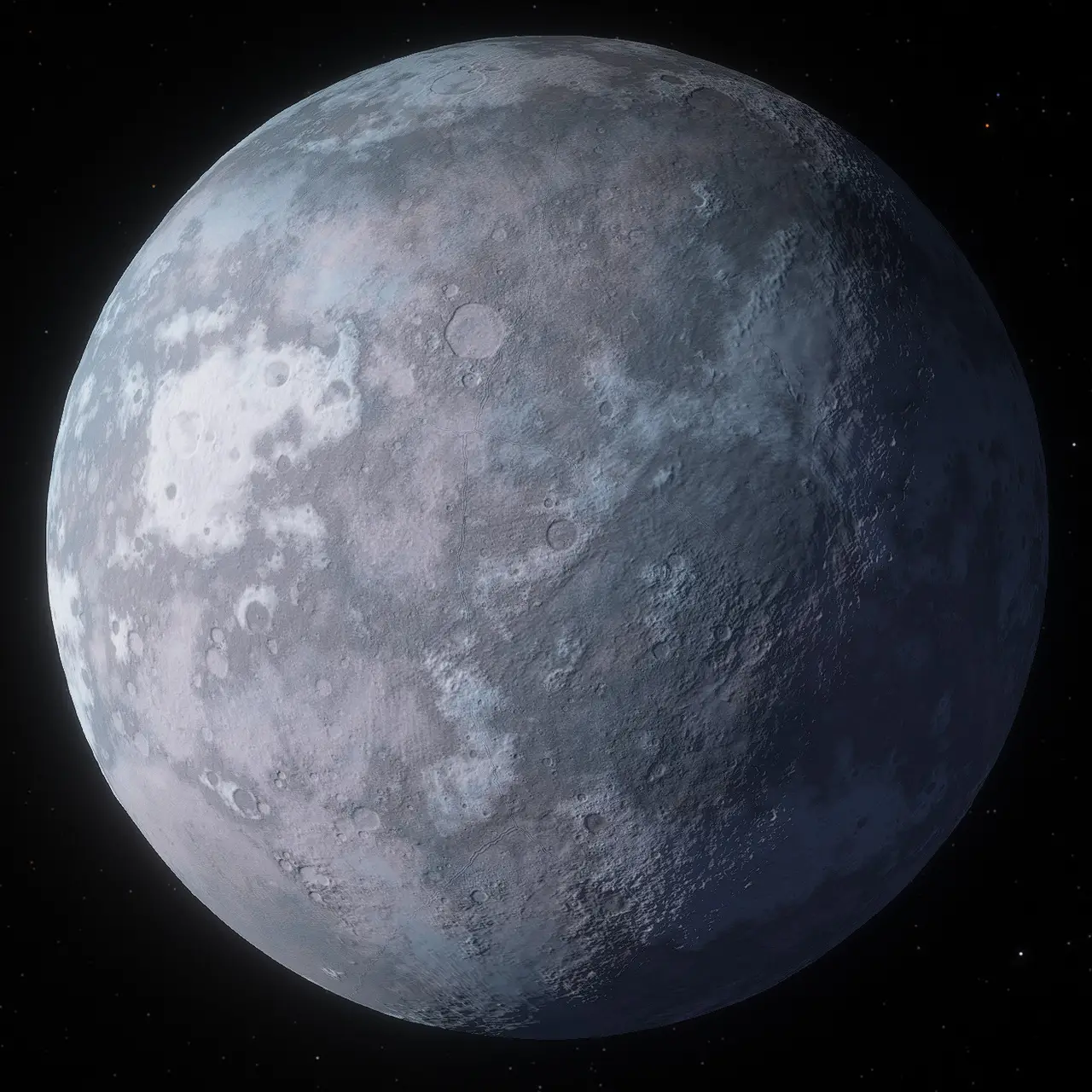
The first moon of Vigmai, Triescue is named after one of the daughters of Sigmos, the goddess Triescue. It is yet another ice world with a subsurface ocean, although it is by far the least explored and settled. There is only a single mining outpost cutting through its crust, extracting the few minerals trapped within the ice. The water within Triescue likely holds no leviathans or any complex life, and only microbes are hypothesized to exist within it.
Its surface is scattered with the crashed wrecks of many astral ships that tried to escape the Voidspace system but were shot down for one reason or another.
Triesko
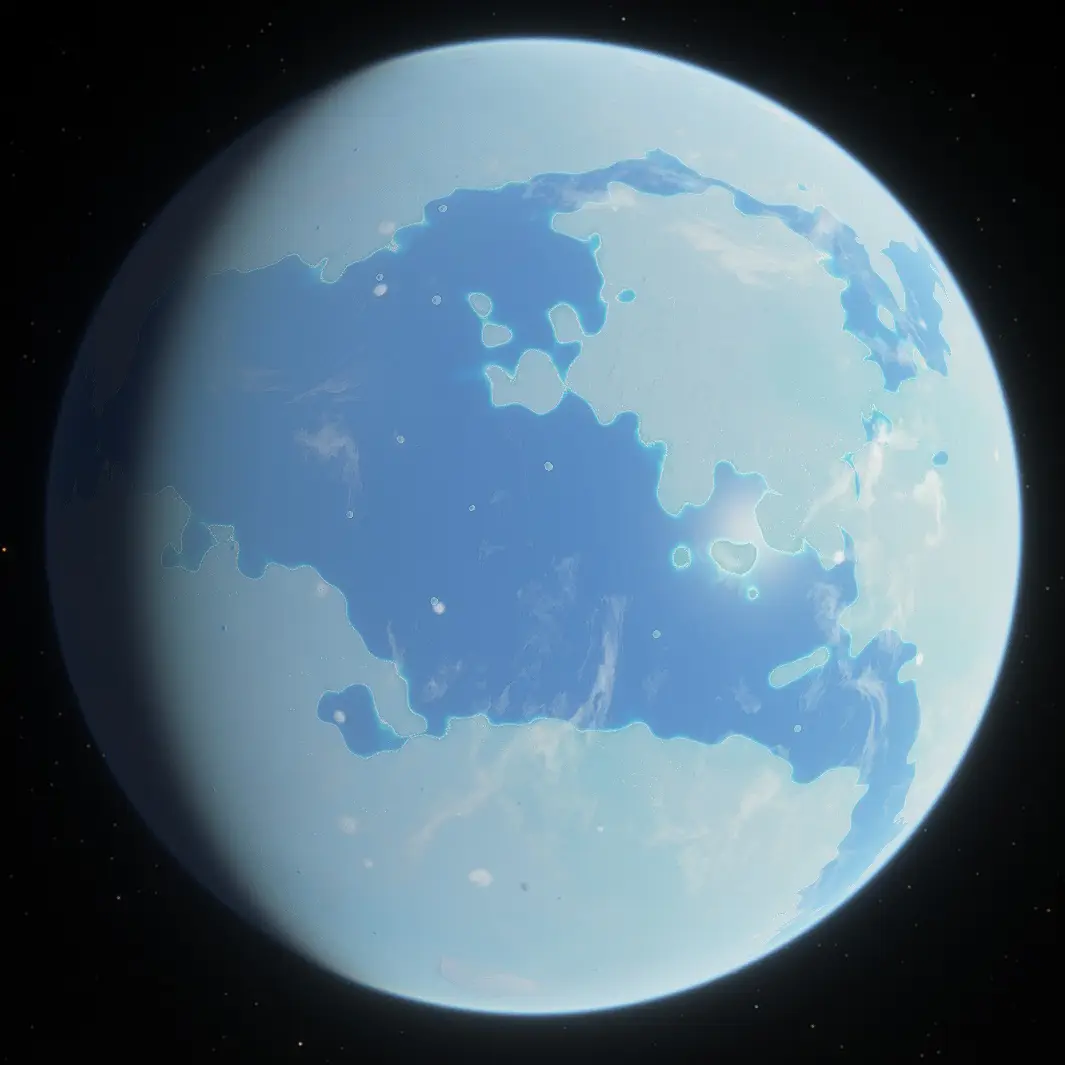
The second and largest moon of Vigmai, Triesko is named after the son of Sigmos, the god Triesko. It is the second largest moon within Voidspace after Aethai, and is even bigger than the planet Alphyth. The snowy world is deemed too hostile to support any large cities, and any outpost settlements across its large surface are barely the size of towns. If you get lost in the snowstorms, the likelihood of you finding civilization is near zero.
The icy moon does have liquid water on its surface, only maintained due to its intense atmospheric pressure. The moon has a unique, almost magical climate due to the same tilt of its parent planet, Vigmai. As the planet essentially rolls on its side, one pole always faces the sun while the other only faces darkness or Vigmai itself. As such, one side of the planet has light and a survival temperature, while the other half is frozen beyond survivability.
Vertum
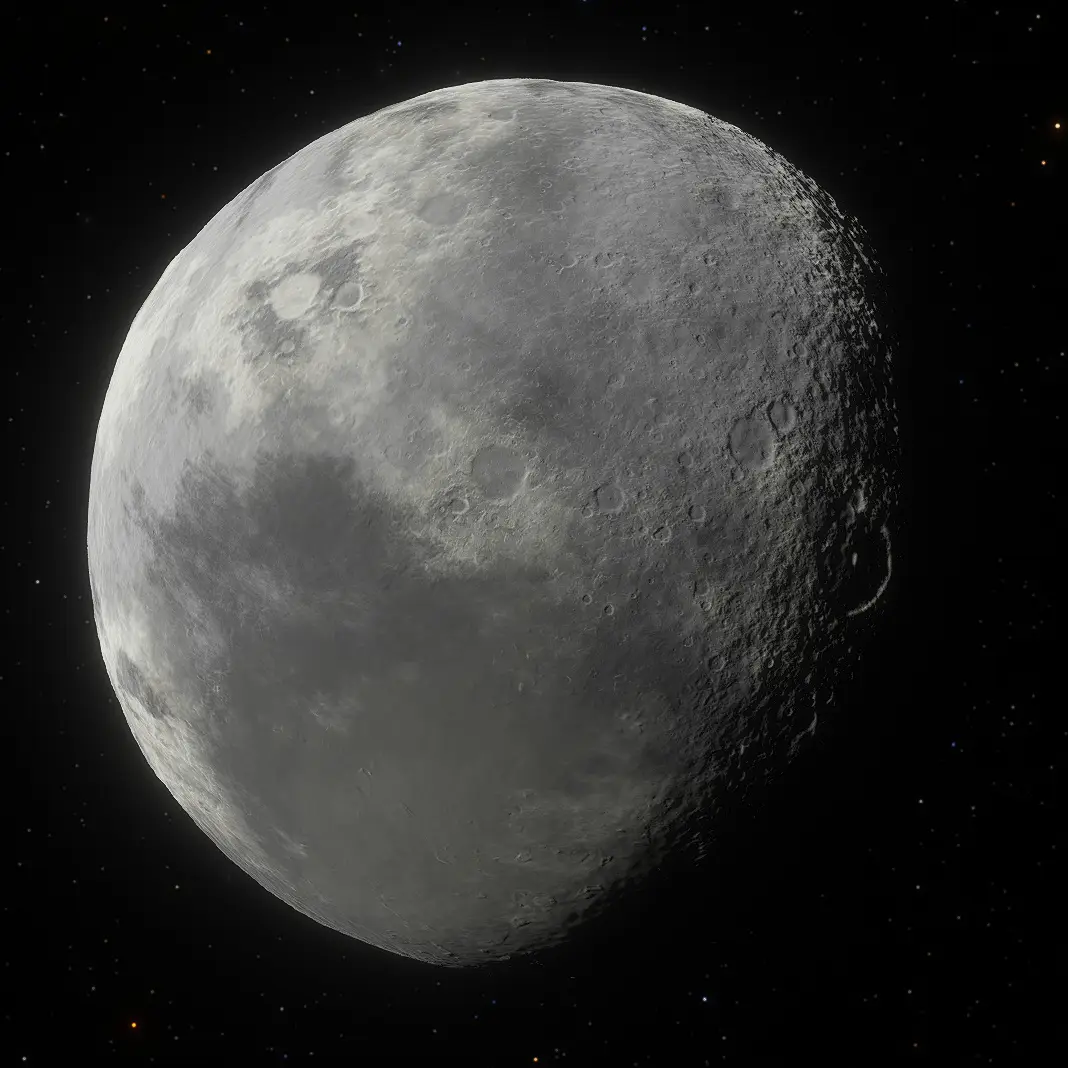
The outermost body of Voidspace is the small dwarf planet known as Vertum. The tiny gray ball orbits the sun amidst many icy asteroids and comets, and is named after the god Vertum, the messenger, as it covers the largest distance around Sorya than any other planet. It goes unnoticed by telescopes and travelers alike, and has no place within the practice of astrology. Only astronomers seem to include it within their charts, as it only seems to have scientific value.
There is no outpost or life on the planetoid, and ships entering or leaving Voidspace rarely pass by it. Triesko and Girariya serve as the border more than Vertum does, and it has only been visited a few times in known history. However, there is a small ruin on its airless surface, a shrine constructed to the god Vertum long ago by an unknown traveler sailing through Outer Voidspace.