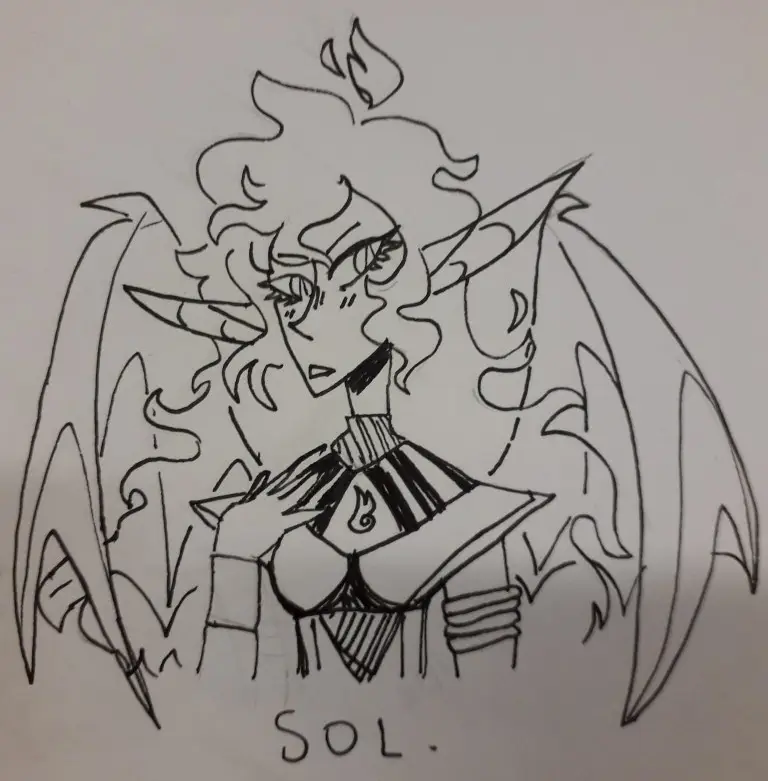
"Tomorrow, there shall be a new dawn for Abara- and the world, no, the cosmos will RECOGNISE a new domain. My clerics of light will look upon the sky and see a sunrise like no other. There shall be no more eclipses in my head, for I AM SOL SULTANA, GODDESS OF THE SUN. I AM SORYA REBORN, AND I WILL HAVE WHAT I AM OWED- MY RIGHTFUL PLACE AMIDST THE GODS THAT SEALED ME."
—Sol Sultana, upon her resurrection.
Considered to be one of Sorya’s reborn avatars, Sol Sultana (सोल सुल्ताना) grew up deified in the first era. A fiend-elf, she rose to create the greatest empire that Eqos had seen, the Surya Sultanate. Taking over much of the continent in her conquest, she was a skilled pyromancer and was a warlock of the god of the hells, Krros. She had made a pact with him to unlock her full potential, and in return she would become an archfiend after her death. She opened the eqosi gate to the elemental plane of fire, commanding legions of fire elementals and fiends alike.
However, this day of her agreed-upon death never came, as she aimed to escape the boundaries of rebirth and mortality. Her downfall was prophesied to be caused by the reborn avatar of Lunaa, so she hunted down and absorbed the soul of this young avatar born into the ancient city of Stearra. With this, she finally paused the cycle of rebirth that had been going for many eons.
Thinking of herself on the same level as gods, she supported the Omniborn in their rebellion against them. The gods fought her for many decades, and it is unknown how she was eventually defeated. Some speak of the god Magmus taking her down, or a betrayal by a close loved one similar to the primordial story of Abara and Sorya. Whatever the truth may be, she was sealed away by the gods into a demiplane prison for eternity never to be reborn, ironically granting her wish. However, her worship continued to grow even after the sultanate fell, and the Church of the Black Sun reveres her as their prime goddess. They have spread her influence across the Kav’orra.
Recently, she seems to have come back to life, and is searching for something across the cosmos. This happened during the course of the story of our third campaign, Tale of the Sunless Dunes, where Sol served as the primary antagonist. She became a goddess of knowledge and truth in addition to the sun by the end, becoming a void goddess disconnected from her former personality.
Followers
She is believed to be a true goddess in the modern day, her worship growing in the Kasaaqi Dynasty and Eqos as a whole through Solism. She seems to be awaiting her release from prison to bring endless drought to the world and transform the planet into a complete desert out of revenge. Some believe that Sol’s apocalypse would be much worse, and that her time in prison has made her bitter towards the core concepts of order and chaos themselves. They believe that she seeks out methods to end this cosmos and restart it anew, becoming a voidal god instead of a chaos one. Or perhaps there will be no apocalypse, as many of her less radical followers believe that her time in captivity has instead calmed her down and she is instead becoming a goddess of truth.
The Church of the Black Sun has considerable influence especially in the western Kav'orra Desert, primarily in the Km'mala mountains and the city of Dibayad.
"...our lady gives us strength, and the sun above is her might upon us. Sol is an incarnation of this light that gives us life. It grows our crops, it turns our skies blue, and it kills our enemies. We are the people of the desert- and yet, she gives us strength to carry on, under her scorching gaze. The Sun is not against us, my friends. Let every sunburn and drop of sweat remind you that without her light, there would be nothing but darkness and sunless dunes to swallow us whole. Be proud of these sands, for they are our home and they give us strength."
Biography
First Era
Born a fiend-elf named 'Shhaya Surya' in Makhet, Shhaya was recognized to be an avatar of Sorya near-instantly by the priests at the time. The then-Pharaoh of the Makhet Empire, Mathep IX, had Shhaya raised in his court. She grew up like a sister to his son, Masret V, and taught by the legendary high priest of the city, Wakhotep the Serpent. Sol was almost deified by the local population and the other nobles within Mathep’s court, and eventually the praise, preferential treatment, and expectations started to get to her. She slowly developed a god-complex, and her ambition grew unchecked after the death of Mathep IX. Wakhotep taught her dark magic, and Masret V had him arrested and mummified alive for “demon-worship”. A nokrborn priest named Karkhai would later feed into Sol’s delusions of grandeur, and provoke her into rising up in a rebellion against her brother. She made a pact with the Titan of the Hells, Krros, and gained the control of his fiendish armies.
Seeking power, Shhaya would rise to become Sol Sultana. She waged a fiendish war against her former “brother”, Pharaoh Masret V. She caused an uprising of religious fervor centered on her, eventually murdering him herself as well as the rest of his family. Sol crowned herself as the new god-empress of a new Sultanate, and marked the end of the Makhet Empire. One of her first decisions was to rename the city of Makhet to Kasaaq. She started to bring in indic beliefs similar to the Varkunasam Forest in the west, and created the kasaaqi language replacing most of the old makheti influence over the region. She renamed the city as the indo-vedic culture started to truly replace the egyptian roots of the land. Taking over much of the continent in her conquest, Sol opened the eqosi gate to the elemental plane of fire, commanding legions of fire elementals and fiends alike. She even managed to subdue the Kingdom of Dibayad in her conquest. The omniborn crisis eventually reached her Sultanate as well, as she started thinking of herself on the same level as gods. She supported the omniborn in their rebellion against the gods who refused to acknowledge her divinity, and fought her armies for many decades.
The god-empress was prophesied to be taken down by an avatar of the moon, Lunaa. She destroyed the western kav’orran Queendom of Stearra, a magical city inhabited by moon-worshiping nokrborn, in an attempt to prevent the prophecy. Somehow, she died soon after during the crisis. Some speak of the god Murudev taking her down, or a betrayal by a close loved one similar to the primordial story of Abara and Sorya. Some say that Krros realized that she would never honor their pact and join him in the hells, and turned against her. Whatever the truth may be, she was sealed away by the gods into a demiplane prison for eternity—never to be reborn, as she had once wished. However, her worship continued to grow even as the Sultanate fell, and the Church of the Black Sun reveres her as their prime goddess to this date.
Sealed Away
TBA
Tale of the Sunless Dunes
Sol plotted through the course of the third campaign behind the scenes, as she found out that Caeles and Lucine would be vital to her revival. Making Caeles her servant, she instructed him to protect Lucine no matter what. Throughout the course of the story, she continued to ask for wilder and wilder tasks of Caeles, from exploring an abandoned tomb for one of her sunswords to him literally killing himself to prove his devotion to her. Throughout this, the rest of the Chimera were apprehensive about Sol, distrusting the wannabe goddess and warning Caeles against her.
"Caeles, your role in my story comes to an end. You have served me faithfully, and will continue to do so. Ask for any reward, and it will be yours. But recognize this today, we are NOT equals. From now on, I am to you what Theratis is to her, or what she used to be for him. You do not stand by my side, general, you stand BENEATH me."
- Sol once she was done with Caeles.
She tricked Caeles into killing Lucine Lunaa, stealing her body for herself on Varkosi Arcanos within the Shadowwild. Reawakening as a new goddess, she left the Chimera behind and barely cared when Viera rescued Lucine from her subconscious. She sought counsel from the voidal planes, aiming to become a void goddess instead of a chaotic one. She is said to have succeeded in this effort, becoming a goddess of truth.
Gallery
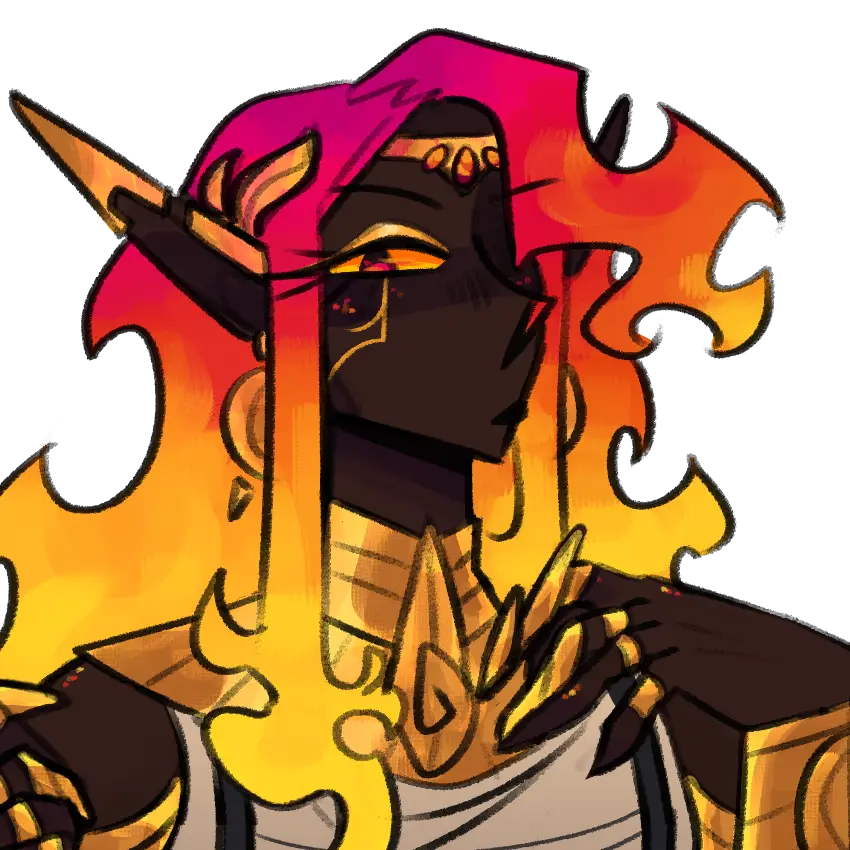
Sol Sultana Portrait (Credit: Rana)
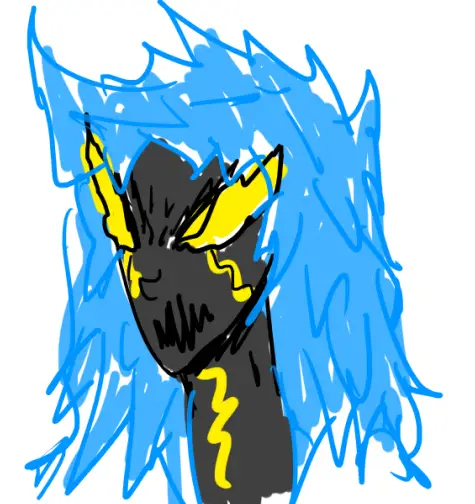
Bluefire Sol Doodle (Credit: Aaron)
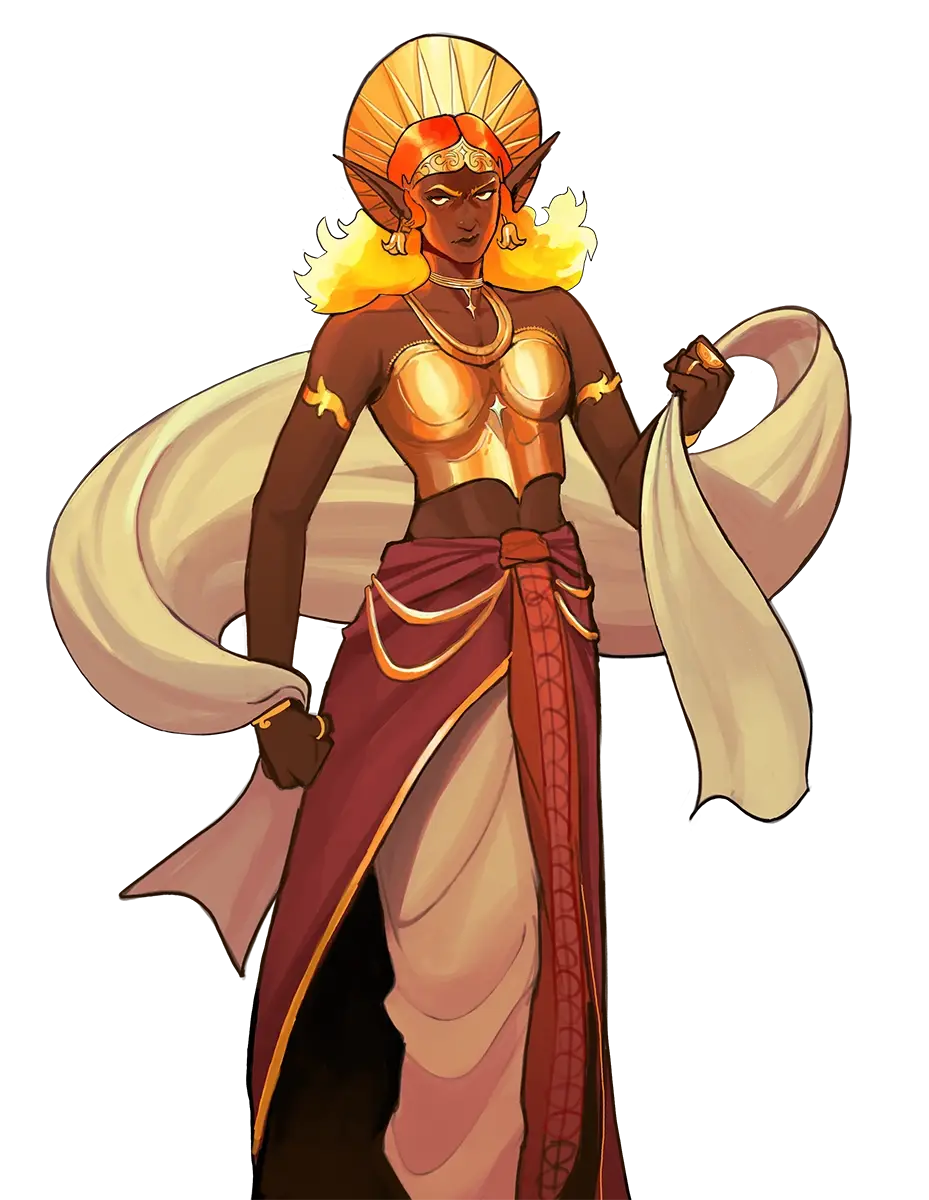
Sol Sultana Fullbody (Credit: Vijay)
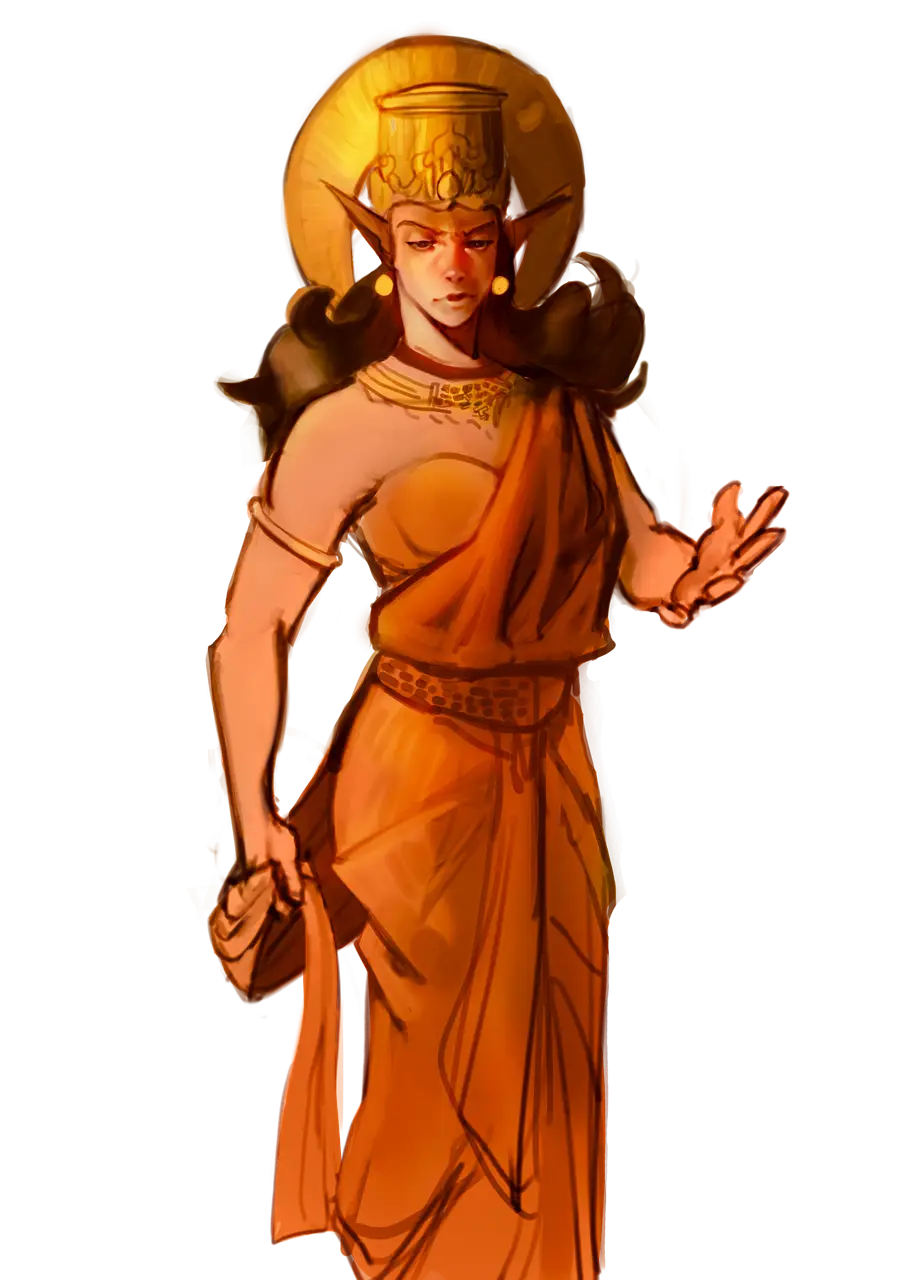
Sol's Older Ashtadharmic Interpretation (Credit: Vijay)
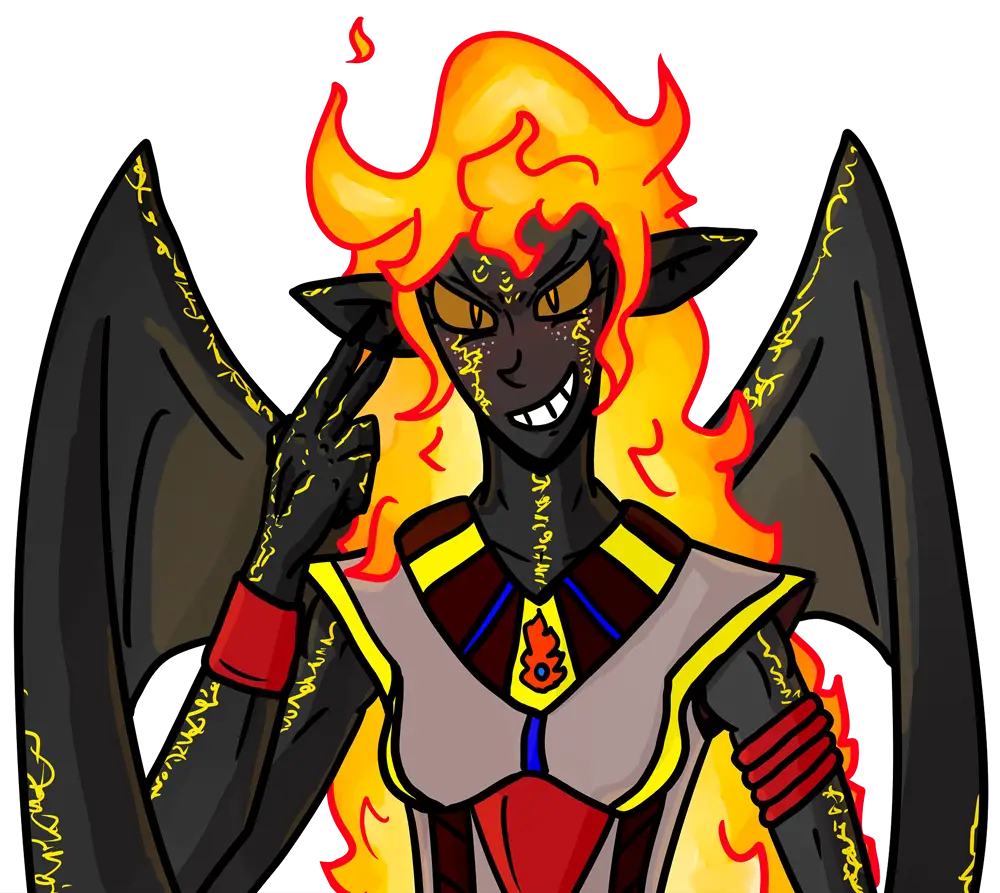
More fiendish design for Sol (Credit: Aaron)