Kasaaq (कसाक) is a bustling metropolis that serves as the heart of the Kasaaqi Hukumat and is one of the largest cities in the world. It is situated on the eastern shore of the country, along the mouth of the Rethi River. It is under the control of House Zaaba and is the seat of the Mahataraja’s Dynasty. Kasaaq is surrounded by towering walls that were built to keep the city safe from all sides, as it once used to be a lone city-state. It is a hub of commerce, trade, and culture, attracting people from all over the nation and beyond. Often combined into the same city in the modern day, the city of Renara (रेनारा or রেনারা) is functionally independent and yet connected to the city of Kasaaq outside its walls. Renara is a shortening of “Rethi Kinara”, which means the “Rethi Shore”. While it used to be a separate settlement, over time it has grown to the point that both Kasaaq and Renara are considered to be the same metropolitan area. The settlements around the river stretch long, and are fully under the control of Mahaan House Rethi.
One of the largest and oldest cities in the world, Kasaaq grew as a trade hub in the primordial era under the name of Makhet (माखेत). It was ruled by panshera Pharaohs for nearly a thousand years, before the egyptian-inspired roots were slowly replaced by the vedic-inspired influence from the west. The birthplace of Sol Sultana, it became the capital of her Surya Sultanate that ruled from the city after the Makheti Empire.
Serving as her seat during her conquest of the continent, it was heavily destroyed during the crisis that finally took her down. In the second era, the remnant nobles reorganized the city as a lone city-state, naming themselves the Suryag Sultanate. Considering themselves as the successors of the Surya Sultanate, they continued to rule and rebuild the city, until a large slave revolt and rebellion that led to the rise of Rakash Zaaba I, who took over the city and proclaimed himself the “Raja of Stars”. The city now serves as the seat of the Zaaba Dynasty, with its name synonymous with the country as a whole and even the language of the desert. The city is known throughout the world, as its goods make their way to every corner of Abmarah.
The city’s architecture is a mix of traditional kasaaqi styles and modern innovations, as the layers of the city have been built over pre-existing foundations over and over again. The city has evolved from its egyptian-inspired beginnings to its vedic-inspired heights, and now to the late mughal-inspired architecture of the modern day. The streets are lined with colorful buildings and bustling markets, with vendors selling everything from spices and textiles to exotic animals and magical artifacts. The city’s importance as a center of trade is reflected in its many ports and docks, which serve as gateways to the wider world. Kasaaq is also home to many grand palaces, temples, and museums, showcasing the city’s cultural heritage. The Kasaaqi Artisans Fair, held annually in the Chaadar Chowk district, is one of the most famous events in the city attracting artisans and visitors from all over the world. There are also the Valkani Games as well as the Seven’s Carnival which make the city their host every few years. It is one of the most populous cities in the world, with a population of over five hundred thousand people of all species. The poverty of many of the inhabitants is on full display in many of its districts, especially Gutterdune. The city is often described as overpopulated and overflowing with filth and people. This squalor isn’t visible in its inner districts, where most of the rich merchants and nobles reside. It’s true that when foreign dignitaries or nobles arrive to the city for the fair or for diplomacy, they never seem to head outside the inner walls of the city to see its true face. That being said, the size of Kasaaq is also its strength as it has become a melting pot of cultures, species, crime, ideas, and even religions. Between the thousands of native residents, you can also find travelers from far away whose species are never seen elsewhere on the continent. The sheer size of the population makes crime rampant across the city, only managed by the thousands of guards that patrol its streets.
The city is considered to be one of the holy cities of Ashtadharma, hosting both the newer Sitaradham Mandir of Saedevi as well as the older Grand Temple of Murudev. It even has one of the few structures holy to Solism, being the dilapidated colosseum known as Sol’s Sandpit. These colossal structures aside, you can find smaller temples and churches dedicated to all other gods and faiths within the streets of Kasaaq-Renara. While most of the city’s economy depends on agriculture and trade, a significant amount of money is made from the pilgrims who visit these holy sites. Yet another source of income for the city is its location at the mouth of the Rethi River as it controls taxes on the ships that pass through it to access all the cities upriver such as Dibayad, Nubarii, and Kaitzur, whether they belong to the Hukumat or not. The city has three walls for defence against the desert, including a southern wall on the other side of the river to protect against the southern edeni factions. The walls also divide the city into class-based divisions, with the richer residents deeper within the city. On the coastal end, the high cliffs of the city’s coast serve as natural defenses, but the open mouth of the river is both a defensive liability in addition to the benefits it provides for trading. While no navy has besieged the city in over a thousand years, it is the biggest vulnerability of Kasaaq and is thus protected by the navy throughout the day.
Areas of the city include:
(Art credit: Mario Bonilla)
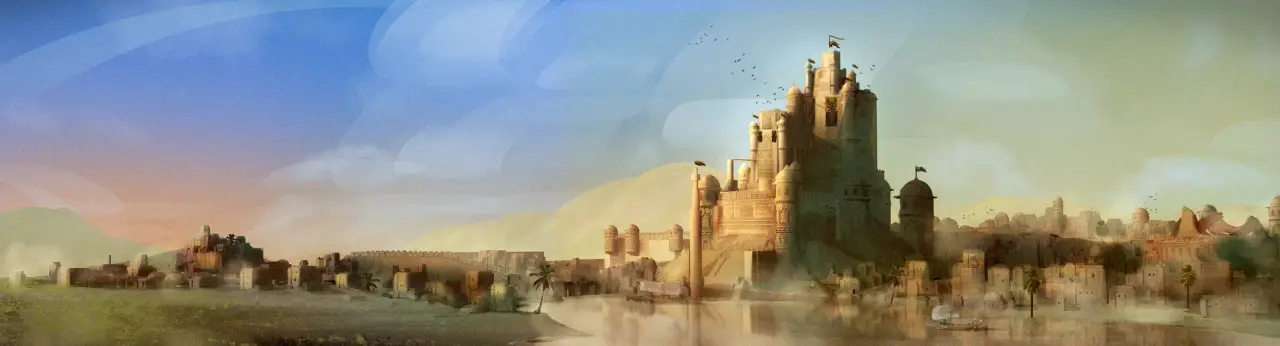
Sitara Qila. The center of government and the seat of the Dynasty, Sitara Qila (सितारा क़िला) was built by Rakash I over the remains of the older palace of the Suryag Sultanate. It was constructed over a series of elevated cliffs called Rakash’s Hill, and overlooks Starshine Bay and the Ashfall Sea beyond. This area is bustling with activity, with officials and bureaucrats moving in and out of government buildings, discussing the latest policies and laws. Some locations of interest other than the palace include:
The Bada Senaghar, which is the primary military and police center of the city and one of the largest senaghars in the Hukumat. The Kasaaqi Sena has barracks in this building along with a smaller jail, as all security operates out of here.
The Grand Bungalows, a neighborhood of large mansions and houses owned by the various mahaan houses and rich merchants from across the country and beyond. While many stay vacant when dignitaries are not actively visiting, they are always well maintained awaiting guests at any moment.
(Art credit: Jouweria)
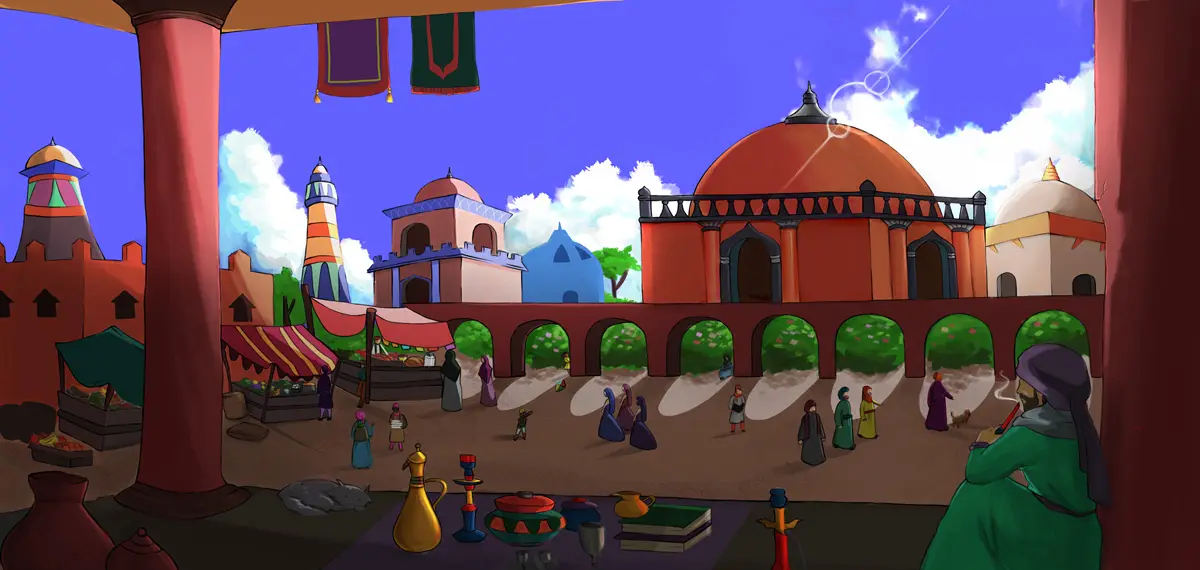
Chaadar Chowk. The most famed district of the city, Chaadar Chowk (चादर चौक) is a colorful upper-class district that contains the great market of Kasaaq. It is housed within the second walls of the city, and its wealth only seems to grow every year as it hosts the annual Kasaaqi Artisans Fair. The streets are lined with beautiful homes and elaborate shops, all bustling with activity from the merchants and artisans selling their wares to thousands of people. The residents of Chaadar Chowk are largely wealthy and influential, many of whom made their fortunes through the artisanship and trade that the city is famous for across the world. Many come to the city just to see Chaadar Chowk. Some locations of interest in the Great Market include:
Sitaradham Mandir, the largest temple in the nation, dedicated to Saedevi. It is situated on an elevated hill that overlooks much of the neighborhood. With House Zaaba’s deep respect for the stars and Saedevi, they built the temple to be much larger than the Grand Temple of Murudev that has existed for thousands of years. Some say that the temple used to be of Sol, but was destroyed and built over. It sees constant pilgrimages from across the country, but due to the light pollution from the surrounding city it can rarely see the constellations in the sky anymore.
The Taraa Inn, the most expensive hotel in the city made specifically for rich travelers from other nations visiting the city for trade or festivities. This bustling tavern and inn is considered to be one of the quintessential pillars of the city by tourists, who consider it a must-stay if they are able to afford the rooms within.
The Kasaaq Archaeological Museum, also known as the KAM, is owned and operated by the newly-formed archaeological survey consisting of educated merchants and nobles who have taken a keen interest in the history of the Kav’orra. They proudly exhibit jewelry, mummies, weapons, and other artifacts of note discovered within the sands of the desert.
Enyaa’s Golden Emporium, a three-story magic shop owned and operated by a middle-aged gold-dragonborn woman named Enyaa. She is one of the richest merchants of the city, and stocks magic items from across the world within her store.
Heimlok Custom Ironworks, a large smithy owned by a middle-aged red-dragonborn named Za’ael Heimlok. The ironworks—while open to orders from adventurers and travelers—are known primarily for creating the weapons and armor for the Kasaaqi Sena.
(Art credit: Greg Rutkowski)
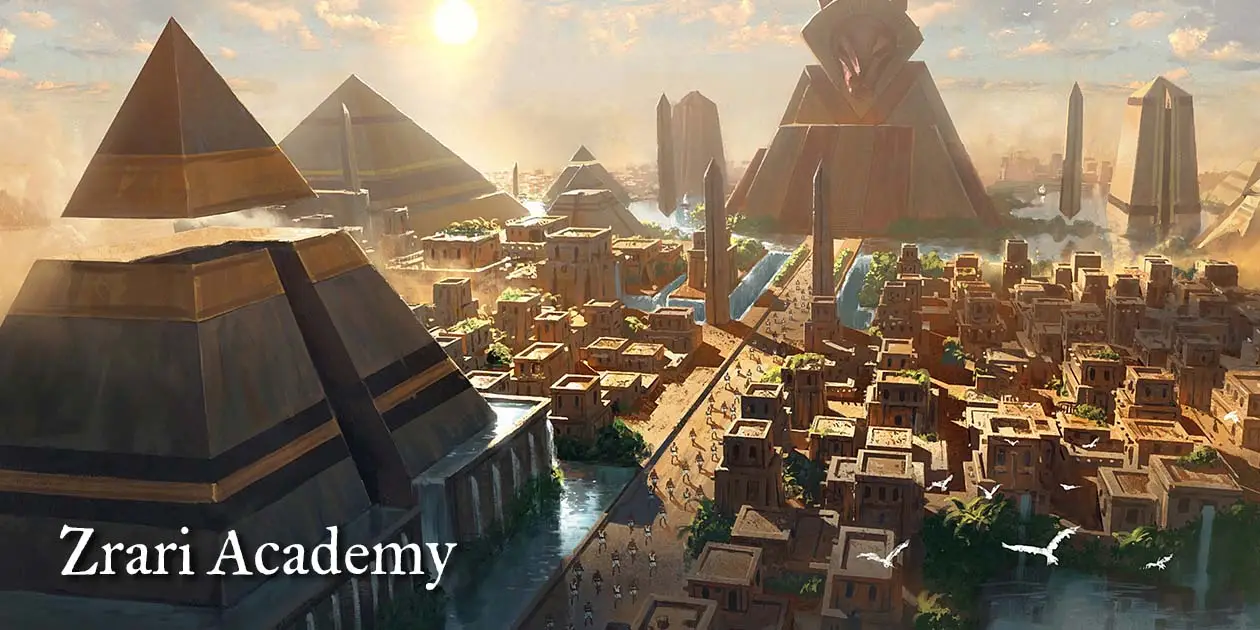
Zrari Academy, also known as Zrari Vishwavidyalaya, is the largest academy of knowledge and arcana in the Hukumat. Scholars and students alike flock to the city hoping for admission into the prestigious academy which serves as one of the most renowned magic institutions across Abmarah. It is an ancient structure from the city’s primordial days, and still has two large pyramids within its campus that feel more egyptian-inspired in nature. While they used to be a prominent feature of the skyline, they are dwarfed by the city’s other grand structures nowadays.
(Art credit: Daniel Alekow)
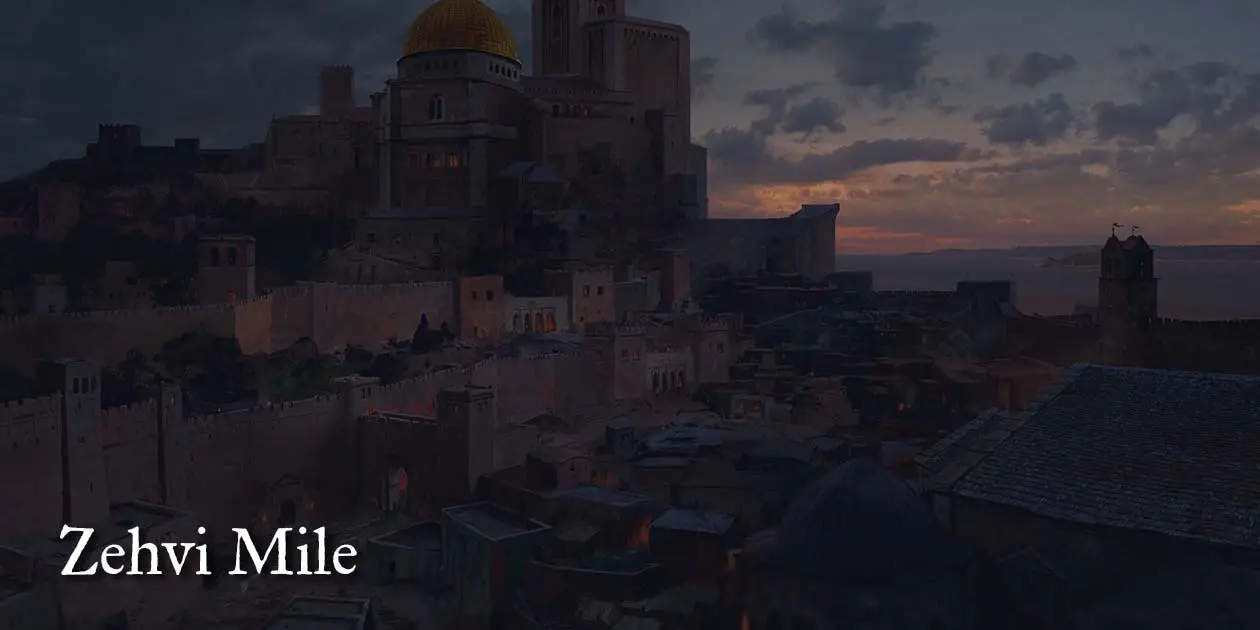
Zehwi Mile. As the largest neighborhood within the walled city, Zehwi Mile (ज़ेहवि कोस) is a bustling middle-class district and the biggest residential area protected by the walls. The streets are lined with modest homes and apartments, with markets and shops filling the spaces in between. There are a diverse mix of people from all walks of life here, such as hard-working artisans, merchants, traders, and families who have lived in Kasaaq for generations. Some locations of interest include:
Sand Gate Square, which is usually the first place visitors from the rest of the desert enter from. There are many famous inns here, along with provisional stores for travelers setting out for a long journey across the desert. For this, there are numerous stables of camels and horses present here.
Jakumandir-e-Kasaaq, a large temple dedicated to Jakuu smaller than the other famous temples of the city but still of considerable size. Much like others of its kind, it serves as a court of law for the lower and middle class residents of the city.
Lanniel’s Theatre, a large indoor amphitheater constructed by one of the former queens of the Hukumat many hundreds of years ago. It has seen better days, but still has theatre troupes and companies hosting plays and concerts throughout the months.
The Kasaaqi branch of the Department of Dungeons, which is the largest guildhall within the Hukumat and somewhat oversees all others.
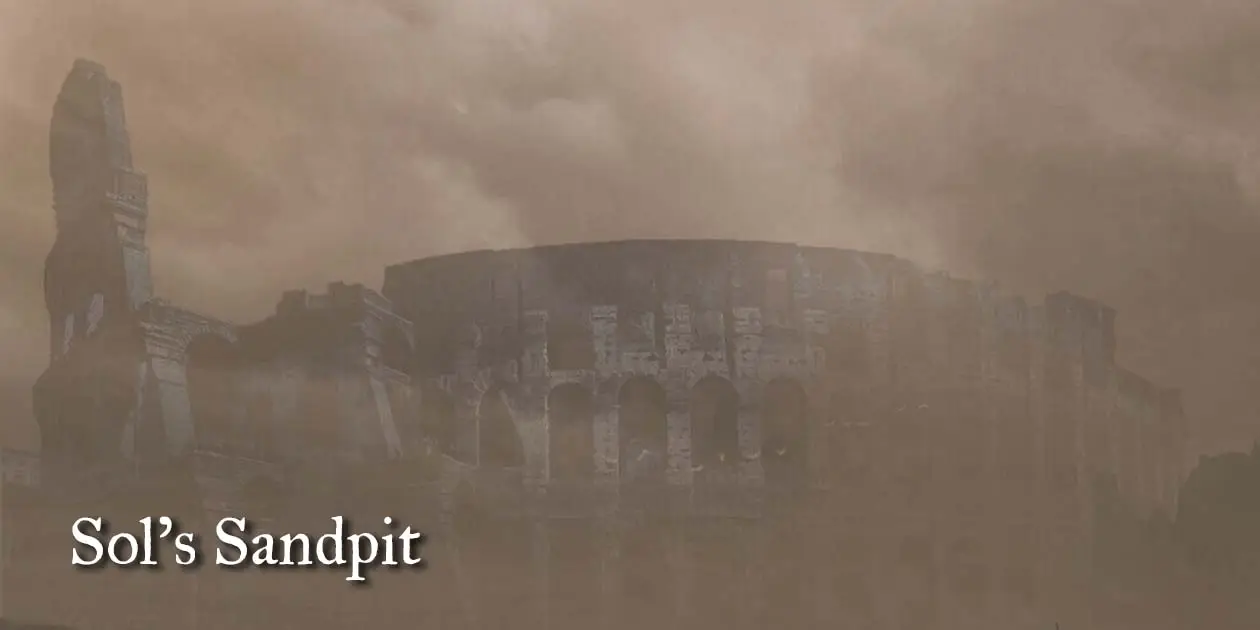
Sol’s Sandpit. Once the heart of the city’s Sultanate days, the crumbling Rethmaidan-e-Sol (रेथमैदान-ए-सोल) is the largest colosseum in Eqos and the only remaining large structure from the first era that wasn’t destroyed or replaced by House Zaaba. It hosts the Valkani Games, an annual gladiatorial contest that draws competitors and spectators from across the world which comes to Kasaaq every four years. When the Seven’s Carnival comes to the city once every eight years, they set up here as well bringing with them performers and entertainers from all over the world. It was often counted among the wonders of the ancient world before its gradual decline. Some locations of interest include:
The Ring Market, which surrounds the entire colosseum and sparks to life during any of the events held there. It is not as grand as Chaadar Chowk, and serves lower-class residents as a focus.
The Skyport of Kasaaq, built on the nearby cliff faces as a mooring point for foreign and local airships that aren’t owned by the Sena.
(Art credit: Peter Lee)
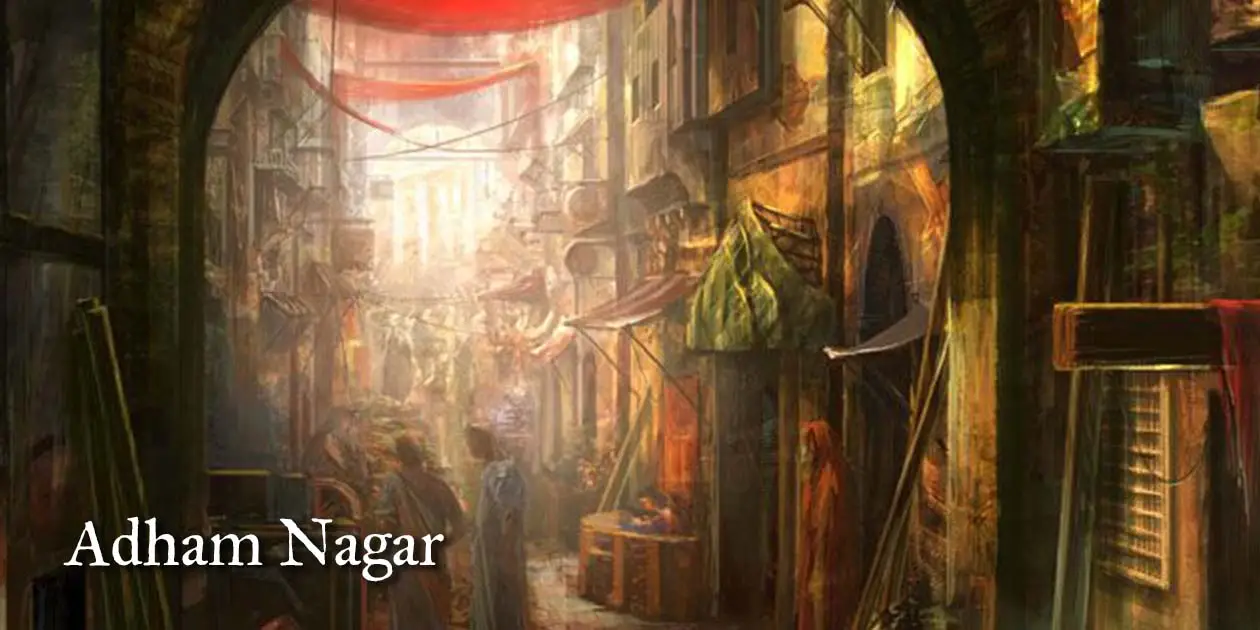
Adham Nagar. As the most congested and overpopulated district within the walls, Adham Nagar (अधम नगर) is a low-class neighborhood around the River Gate where unchecked construction and vertical growth have led to a host of problems. Crime is rampant here, and the cramped living conditions can be difficult to endure. Despite this, the residents make do with their lot in life, with many of them working tirelessly to make a better life for themselves and their families. It is the least appealing part of the walled city, and many Mahatarajas have tried and failed in renovating the district. Some locations of interest include:
Nanun’s Pub, a tavern popular for all sorts of folk traveling down the main Chayapath Road through Adham Nagar. However, under the pub secretly is the more expansive Nightfall Club, where all sorts of criminal interests gather including the Nemesis.
The Nightfall Coffin, a small magic store that is a front for Nanun’s enterprise, and serves as a fence for any of the thieves affiliated to the Nightfall Club. It is run by a vampire attendant, whose name is unknown to most.
(Art credit: flaviobolla)
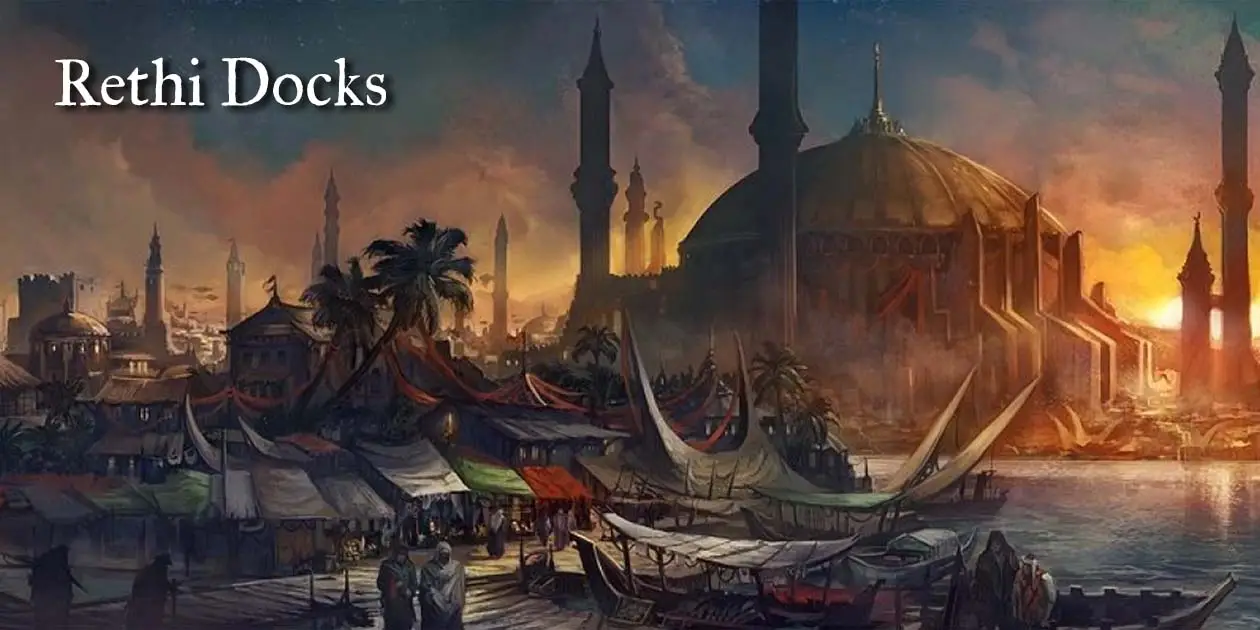
Rethi Docks. The largest docks of the city are run by Mahaan House Rethi, the most prominent and powerful trading house in the country. Ships from across Abmarah arrive here to trade goods and resupply, making the Rethi shipping route one of the most famous and well-traveled in the world. The Starshine Bay is always full of ships, and the air is thick with the sounds of sailors and merchants haggling over prices. Most of the docks are south of the river, with only a small segment connected to Chaadar Chowk. Some locations of interest include:
Raktii’s Bridge, which is one of the two great bridges across the Rethi River. Built during the Blood Queen’s time, Raktii used this bridge to send her troops south of the river during her conquest of the Edeni, replacing an older dilapidated bridge.
The Colossal Warehouses, the largest storage facility in the western hemisphere of Abmarah. As the city relies primarily on trade and annual trading functions, there is a great need for long-term storage, and these twenty-two warehouses are all as big as some forts.
(Art credit: Pengzhen Zhang)
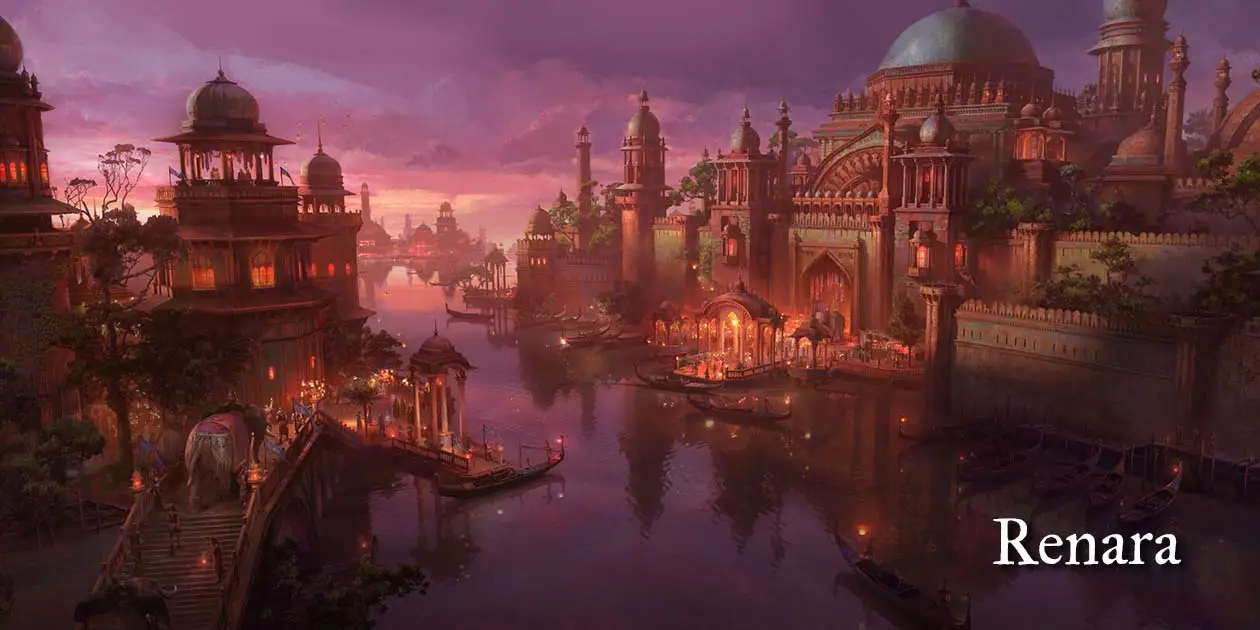
Renara. Stretching along the shores of the Rethi River for miles, Renara is a city that has grown organically over thousands of years with its own distinct culture and way of life. While many consider it functionally separate from the city of Kasaaq proper, it is still considered an integral part of the region with close ties to the people and politics of the walled city. It has its own neighborhoods such as Khunpura, Murunagar, Chaandni Docks, and Nosali Farmlands that we won’t go into further detail over. Renara is also the agricultural hub of the metropolitan area and the bread-basket of Kasaaq. Some locations of interest include:
Rethi Gardens, a large riverfront estate that houses the palace of Mahaan House Rethi. Built by the house’s founder Duin’hir, the gardens are beautiful and kept green year-around even in the arid climate of the area.
Zoshi da Dhaba, a small restaurant near the walls owned by a gruff older dune-orc named Asman Zoshi. Serving travelers who face discrimination due to their species or appearance, it is a small safe haven for those that are looked down upon.
(Art credit: Jourdan Tuffan)
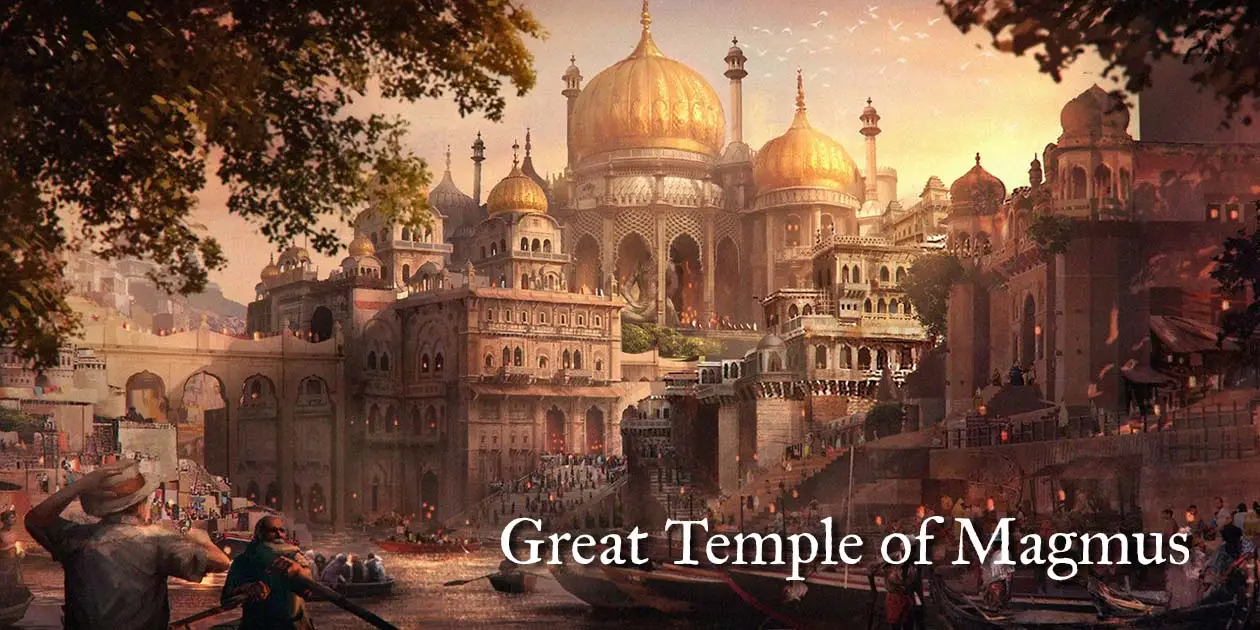
The Great Temple of Murudev, which is the oldest temple in this ancient city and the largest temple to the god. With his ever changing form, this temple has a large statue of him in his “original” panshera form, which many take the pilgrimage to behold with their own eyes. It was first built by the pharaohs of Makhet in the primordial era, but was renovated countless times afterwards.
(Art credit: Richard Wright)
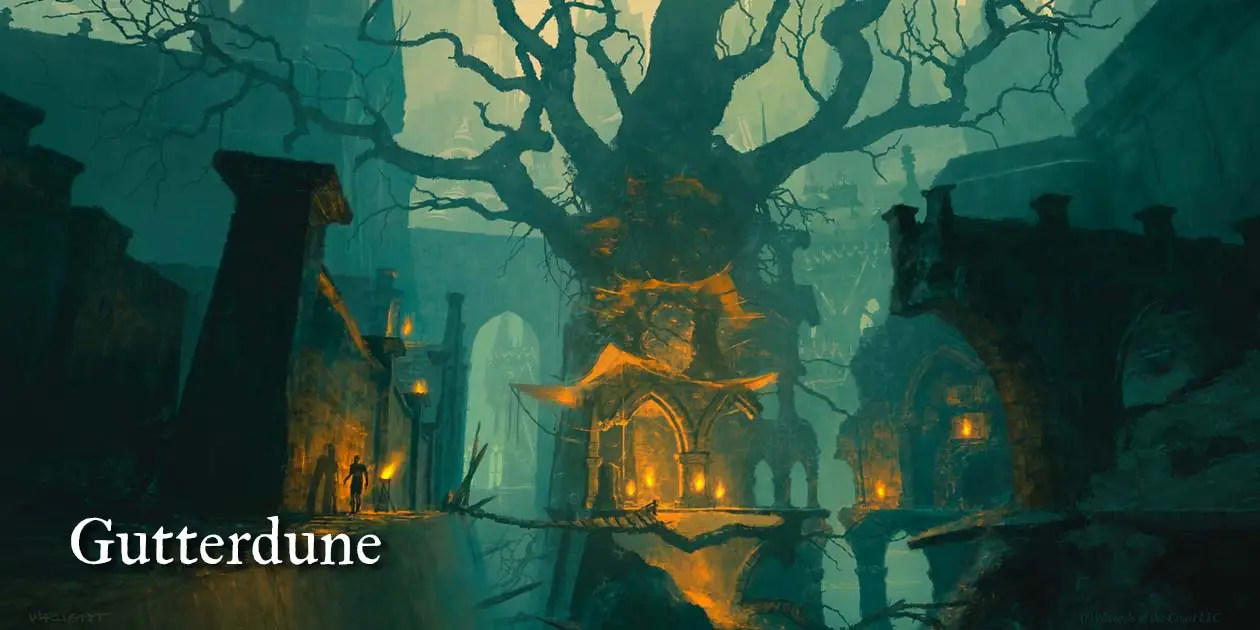
Gutterdune. These slums in the sand wastes under the towering walls of Kasaaq are a place of poverty and desperation. Gutterdune or Gutterteela (गटरटीला) is the first place that travelers from the desert visit when traveling to Kasaaq, which makes for a poor sight. The city does not dump its waste into the holy Rethi River, so instead, it is thrown over the northern wall onto the sands below. The people of Gutterdune make their homes amidst the garbage, struggling to survive in a poisoned environment. Despite this, many here still find ways to make a living, whether through scavenging, trade, or crime. It is by far the most shameful region of the city, carefully hidden away from foreigners by the outer walls. Some locations of interest include:
The Nazeem Jail, the largest prison in the Kav’orra built during the reign of Nazeem ud-Din Suryag in 2E435. It is a terrible location with tiny windows and waste-filled courtyards, built to house all prisoners of the city. Dangerous mages and fiends are also trapped here inside specialized antimagic cells, hidden away from sight and forgotten. It is believed that Nazeem himself was imprisoned here for the rest of his life after the slave revolt.
The Noshmimandir, a small unconsecrated temple to Noshmi built haphazardly by the residents of Gutterdune to pray away the disease of their homes.