Changelings are generally similar to their regular D&D counterparts as found in Monsters of the Multiverse. Changelings are a shapeshifter race with the ability to perfectly mimic any other humanoid race down to their voices and mannerisms. Changelings have a fluid relationship with gender, seeing it as one characteristic to change among many. They are related to and often confused with Doppelgangers, who could actually be a subrace of Changelings.
Changelings can shift their forms with a thought. Many changelings use this gift as a form of artistic and emotional expression. It's also an invaluable tool for grifters, spies, and others who wish to deceive. This leads many people to treat changelings with suspicion. With ever-changing appearances, changelings reside in many societies undetected. Each changeling can supernaturally adopt any face they like. For some changelings, a new face is only a disguise. For other changelings, a new face may reveal an aspect of their soul.
In their true form, changelings appear faded, their features almost devoid of detail. They are pale, with colorless eyes and silver-white hair. It is rare to see a changeling in that form, for a typical changeling changes their shape the way others might change clothes. However, some changelings prefer to stay in this natural form almost all the time. A casual shape—one created on the spur of the moment, with no depth or history—is called a mask. A mask can be used to express a mood or to serve a specific purpose and then might never be used again.
However, many changelings develop identities that have more depth, crafting whole personas complete with histories and beliefs. A changeling adventurer might have personas for many situations, including negotiation, investigation, and combat.
Personas can be shared by multiple changelings; a community might be home to three healer changelings, with whoever is on duty adopting the persona of Andrea, the gentle physician. Personas can even be passed down through a family, allowing a younger changeling to take advantage of contacts established by the persona's previous users. A changeling might use a different name for each mask and persona and adopt new names as easily as they change faces. The true name of a changeling tends to be simple and monosyllabic.
The first changelings in the multiverse appeared in the Feywild, and the wondrous, mutable essence of that plane lingers in changelings today—even in those changelings who have never set foot in the fey realm. Each changeling decides how to use their shape-shifting ability, channeling either the peril or the joy of the Feywild. Sometimes they adopt new forms for the sake of mischief or malice, and other times they don a new identity to right wrongs or delight the downtrodden.
Generally lacking settlements of their own, changelings used their shapeshifting powers to live in secret amongst others, including humans, goblinoids, and others. Wherever humans live, changelings reside as well. The question is whether their presence is known. Changelings are born to one of three paths. A few are raised in stable communities where changelings are true to their nature and deal openly with the people around them. Some are orphans, raised by other races, who find their way in the world without ever knowing another like themselves. Others are part of nomadic changeling clans spread across planes, families who keep their true nature hidden from the single-skins. Some clans maintain safe havens in major cities and communities, but most prefer to wander the unpredictable path of the god known as the Trickster.
The discovery of a changeling child—whether due to a changeling biological parent or by being swapped at birth for a human or other child—was not welcomed by all parents. Unwanted infants such as these and others might be abandoned at a local temple or monastery of a good shapeshifter deity, most often Magmus, and these foundlings would be taught and raised in the faith, with some even becoming monks.
Their abilities made them adept at infiltration and criminal activity, and many made the most of it, gravitating toward being rogues. They served as deep-cover spies and made up the core of a local criminal underbelly. Nevertheless, others preferred reputable professions, and they excelled as entertainers, spies and agents of their government, and occasionally as adventurers.
Changelings of Abmarah
Changelings blend into Abmari society easily. They are more accepted by the third era, although many still view them with suspicion. Although changelings rarely have big settlements, the city of Mapoli in the Crimson Empire has become a well known city where changelings live in the open often in their true forms. Mapoli has become a haven where they don't have to hide as much. Some changelings are even hailed as heroes, such as Kai Li of the Krono Krew.
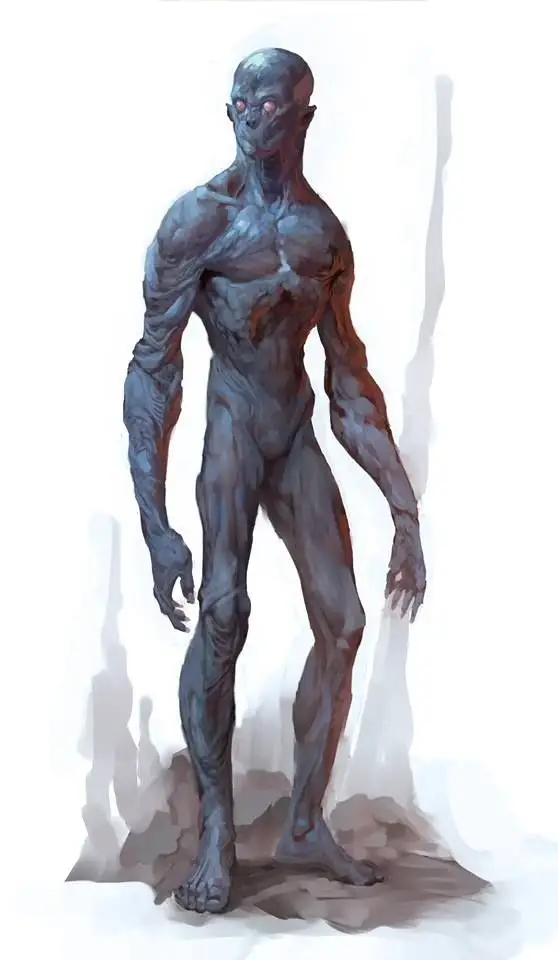
In Abmarah, Doppelgangers are considered to be a subrace of Changelings. With more monstrous true forms, they have a greater shapeshifting ability not limited to basic humanoid forms. In their true form, doppelgangers appeared as tall, elf-like, gray-skinned humanoids, whose thin hairless bodies made them appear, to human eyes, sexless. Their heads were bulbous, with formless faces and bulging eyes that were a pale yellow hue and lacked visible pupils. Though even this form was deceptive, as it gave the impression they were physically weak, when in fact they were quite strong and agile.
Doppelgangers are treated with a lot more caution and fear, as they were extremely self-centered and liable to look down on their victims. Because of their laziness and selfishness, they rarely ever had any interest in raising their young. Doppelgangers are inherently more parasitic than changelings, as they tend to use their shapeshifting to truly replace an individual and live their life instead of use their shapeshifting as a defense mechanism.