Orcs are generally similar to their regular D&D counterparts as found in Monsters of the Multiverse.
While vastly different orcish cultures exist around the world, most orcs are part of either a confederation of tribes loosely held together by a leader, or tribalistic family groups. While orcish cultures all revere strength, they are no more brutal than any other species. Most orcs outside of Eteru are people without a home, either wandering in nomadic groups or integrating into other cultures.
In the past, orcs were widely feared and hated by the other nations and races and were seen as nothing more than uncivilized beasts or savage barbarians with poor temperaments. Of course, in reality the orcs are as civilized as any of the other races, having worked hard to be seen as actual people especially in Aurial. However, many outcast tribes have leaned into the stereotypes instead, becoming more warlike by necessity.
Some things that are true about orcs as a people include the fact that they are somewhat impatient, and usually do not consider multiple ways of solving a problem. They are people of action, but not without thought. The orcish Khans of Morghül famously controlled much of Eteru at their height of power due to their effective planning and strategy.
While they differed greatly across cultures, orcs share certain physical qualities. Orcs of all kinds usually have stooped builds, grayish skin with red to green pigmentation, coarse black hair, and signature large lower canines similar to a boar's tusks. They also have wolf-like ears that are pointed on the ends. Orcs are roughly the same size as humans, though typically larger. Orcs grow up rather fast, reaching societal adulthood by the age of 12. However, they have slightly smaller lifespans as compared to humans, with the exceptions of druidic orcs who tend to live much longer due to magic.
Orcs of Abmarah
Orcs were said to be created when the shapeshifting god of wrath, Magmus (Called Magrath by the Orcs), was in Omniborn form during a fight against Nosos. Nosos poisoned and mutated Magmus in an attack, causing his red skin to turn green. Magmus turned into the first Orc, albeit with four arms. He ejected much of this poison from his body as green sweat, which created the race of the orcs who swore fealty to the god of destruction and helped him push Nosos back into her realm. Their warrior culture was born from this first fight that is reenacted to this day. The one-eyed god despite not being a true orc is seen as the father of all orcs even now, although the complete truth of this creation story is disputed. There are similarities between orcs and the omniborn that are hard to ignore, with orcs looking like somewhat bestial descendants of the araiborn.
The original orcs of Eteru have a mongol-inspired steppe culture and are widely spread across the continent where they are quite accepted. Soon after their creation, many orcs migrated to Eqos, where they became Dune Orcs. Much more recently, during the Great Aurian War, many orc hordes and slaves were hired and shipped to Aurial to fight in the war from both Eteru and Eqos. Most of the orcs sent to fight stuck around on the continent after the war, developing a unique culture separate from their origins, much more similar to the orcs seen in classic Dungeons & Dragons. Most people in Aurial consider them to be an invasive and primitive folk that are a threat to their way of civilized life, and force non-integrated orcs to stay within their outcast tribes. This racism has lessened over time in some places on the continent, but still widely practiced in others.
They have a few subraces seen across the world of Abmarah:
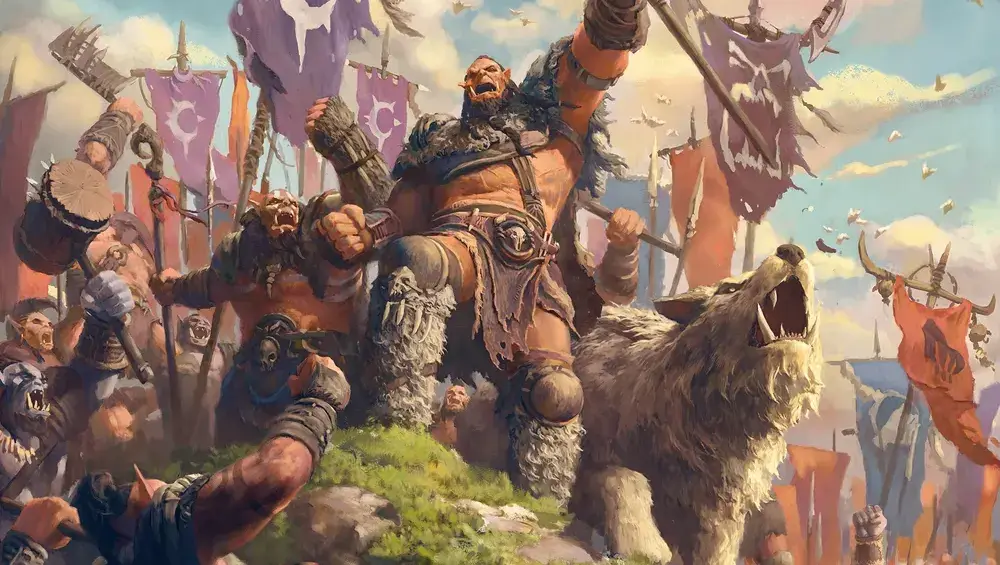
(Art credit: WoW)
Mountain-Orcs. Also known as "Aurian-Orcs", they are now the most common subrace of orcs and what most aurian people refer to when talking about orcs. They descended from the steppe and dune orcs that were brought to Aurial to fight in the The Great Aurian War. The orcs that live in isolated tribes across the continent have a culture similar to the stereotypical orcish culture found in the Forgotten Realms or Elder Scrolls. However, many of these orcs have integrated into the various cities of Aurial and adopted the cultures of those locations.
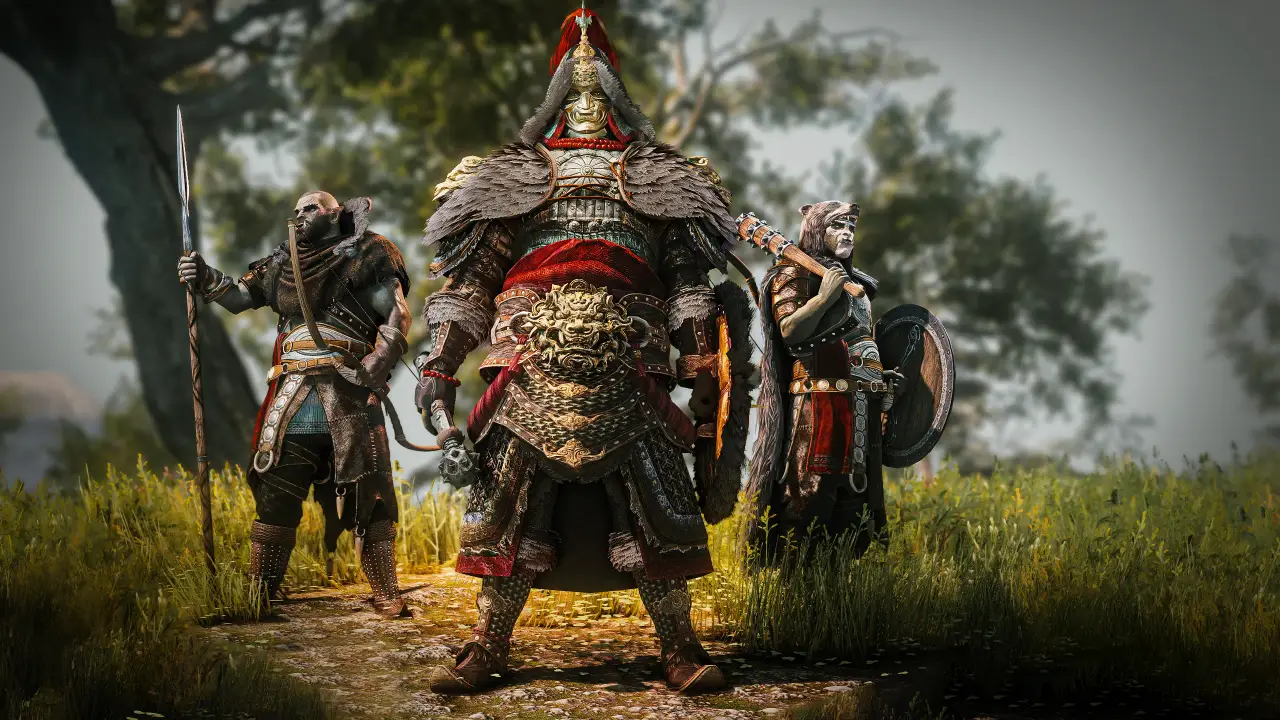
(Art credit: yeetM3out)
Steppe-Orcs. Also known as "Urukan-Orcs" or "Quosi-Orcs", they are the original subrace of orcs in Abmarah. With green-gray skin and tough builds, they have their origins in the Quosi Steppe of Eteru. They have a mongol-inspired culture that's allowed them to master the steppe that they call home.
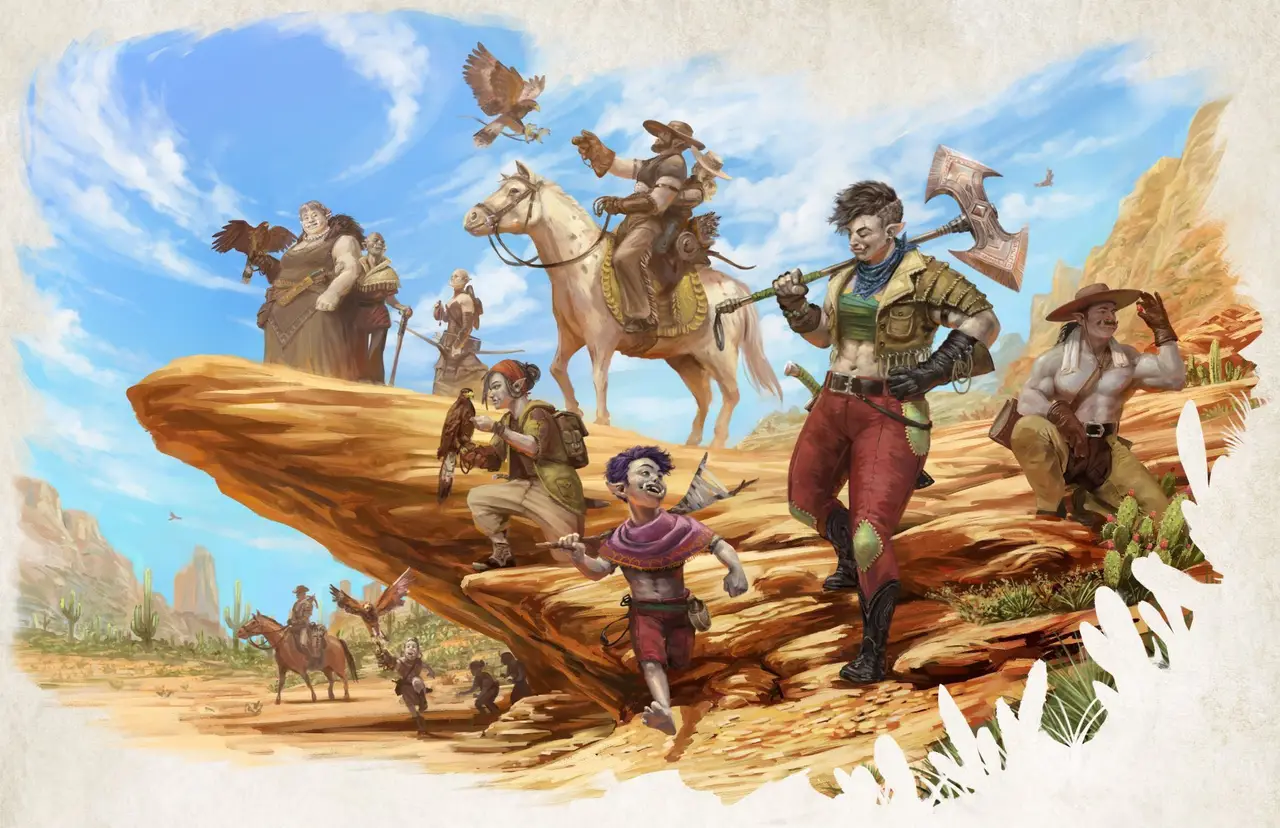
(Art credit: Mike Pape for PHB 2024)
Dune-Orcs. Dune Orcs, also known as "Tsölan-Orcs", are a lineage of orcs that have adapted to life in the harsh desert environments of Eqos. They have rough, leathery skin that is better suited to resist the extreme heat and sandstorms of the desert. Their eyes are also adapted to the bright sunlight and shifting sands, giving them better vision than traditional orcs in these conditions. Half of these orcs travel in nomadic tribes across the Kav'orra Desert and the Vyzum Wastes, while the others have assimilated into the various cities and nations of Eqos, either through peaceful means or by force. These orcs can be found in all walks of life, from farmers and traders to soldiers and mercenaries. Regardless of their lifestyle, all dune-orcs share a common sense of toughness and resilience that comes from surviving in one of the harshest environments on the planet. Some dune-orc tribes are also known as the Sand Chasers, a specific nomadic raider culture that moves from place to place in search of plunder and resources. They are called Sand Chasers because one of their tactics is to chase sandstorms, and attack any travelers that brave the weather. They are skilled at tracking and surviving in the desert, and their raiding parties are a constant threat to travelers and settlements in the region.
A Dune Orc character has the following racial traits.
Age. Orcs reach adulthood at age 16, and live up to 80 years.
Speed. Your base walking speed is 30 feet.
Size. Orcs stand easily 8 feet tall and corded with powerful muscles, weighing up to 280 pounds. Your size is Medium.
Darkvision. Accustomed to obscuring sandstorms, you have superior vision in dark and dim conditions. You can see in dim light within 60 feet of you as if it were bright light, and in darkness as if it were dim light. You can't discern color in darkness, only shades of gray.
Relentless Endurance. When you are reduced to 0 Hit Points but not killed outright, you can drop to 1 Hit Point instead. Once you use this trait, you can’t do so again until you finish a Long Rest.
Desert Hardened. You are accustomed to living in harsh desert conditions, and are resistant to the effects of extreme heat and fluctuations in temperature. You have advantage on Constitution saving throws made to avoid exhaustion as a result of extreme heat, and have resistance to fire and cold damage. In addition, you do not have disadvantage on Wisdom (Perception) checks in sandstorms.
Most of the traits of Dune Orcs are the same as the traits found in the Orcs of the SRD or the Player’s Handbook. However, Adrenaline Rush has been replaced with Desert Hardened to differentiate this lineage from regular Orcs, who are represented in Abmarah as a lineage known as ‘Mountain Orcs’.